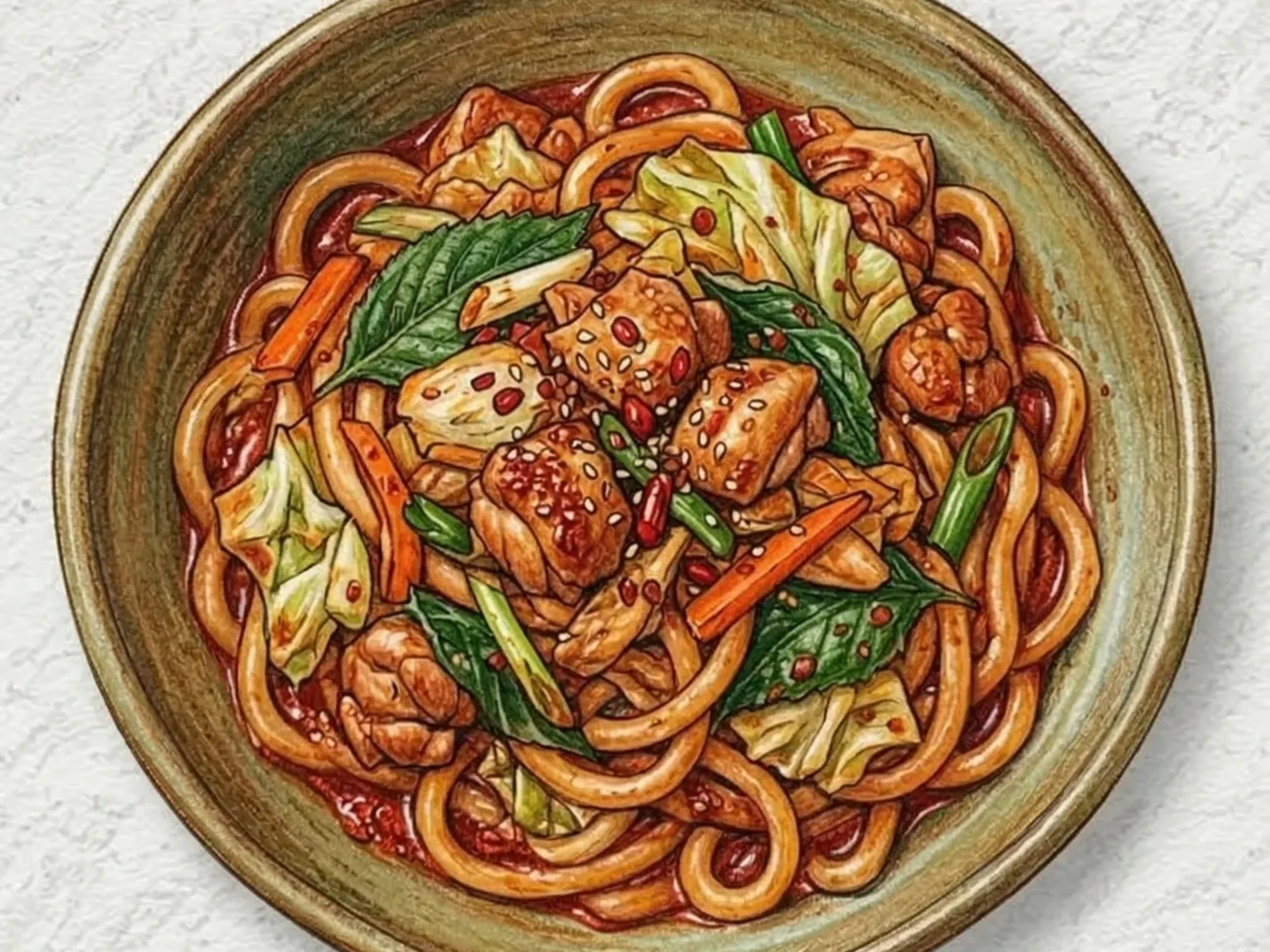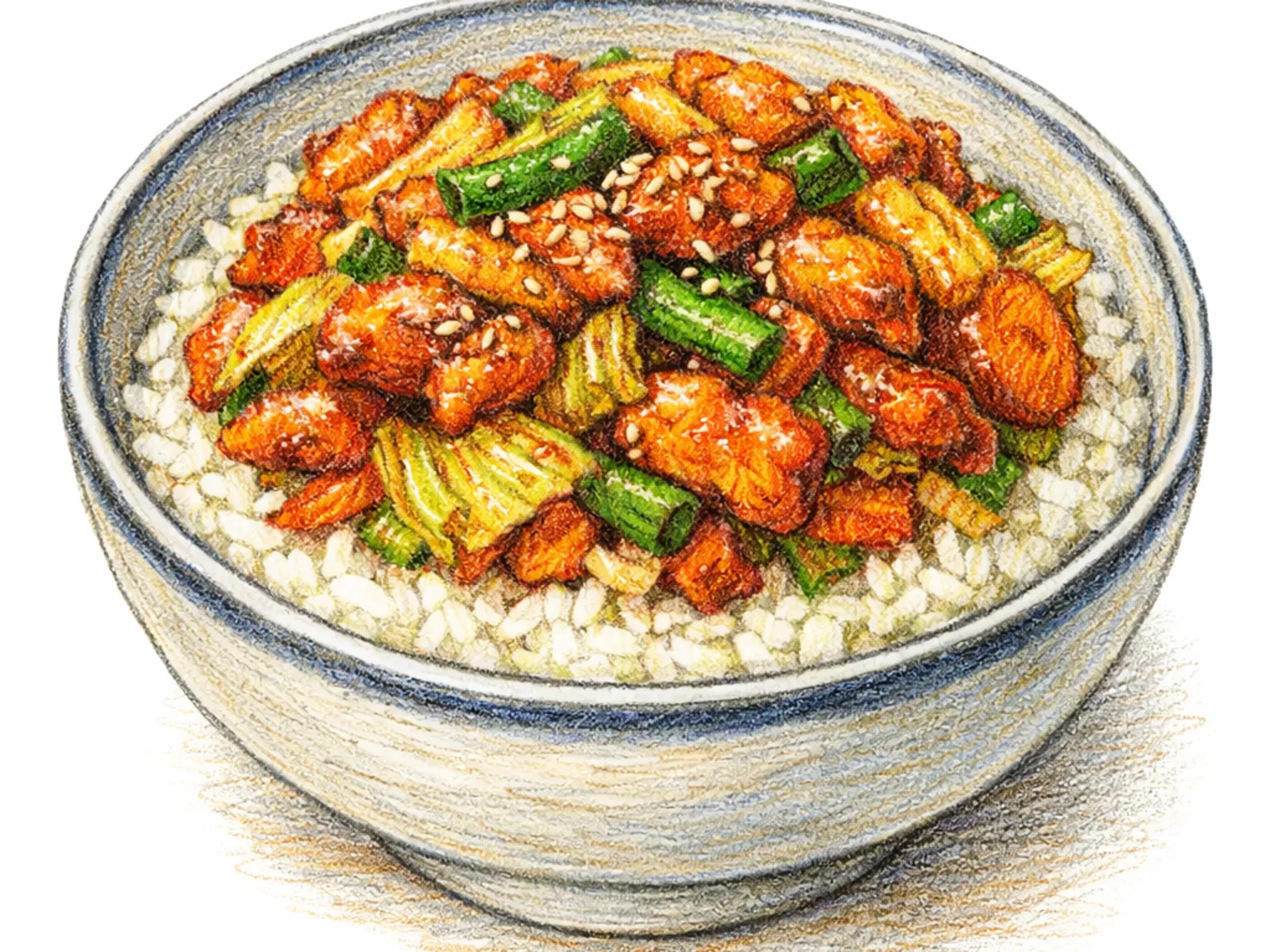
Korean Spicy Dakgalbi Rice Bowl
Dakgalbi deopbap brings the flavors of Chuncheon's famous spicy chicken to a single rice bowl. Boneless chicken thigh is stir-fried with cabbage, onion, and green onion in a gochujang-based marinade that balances heat with a touch of sweetness. High heat ensures the sauce caramelizes onto the chicken while the vegetables keep a slight crunch. A finishing drizzle of sesame oil adds a toasty fragrance that rounds out the bold seasoning. The dish captures the essence of a dakgalbi restaurant meal - the moment just before the leftover sauce gets turned into fried rice - and serves it as a complete, self-contained bowl that needs no side dishes.
Adjust Servings
Instructions
- 1
Cut chicken thigh into bite-size pieces and chop cabbage, onion, and green onion.
- 2
Mix gochujang, chili flakes, soy sauce, and sugar to make the sauce.
- 3
Cook chicken first until lightly browned, then add sauce and reduce for 2 minutes.
- 4
Add cabbage and onion, stir-fry until softened, then finish with green onion.
- 5
Turn off heat, drizzle sesame oil, and serve generously over rice.
As an Amazon Associate, we may earn from qualifying purchases.
Tips
Nutrition (per serving)
Variations
Cheesy Dakgalbi Rice Bowl
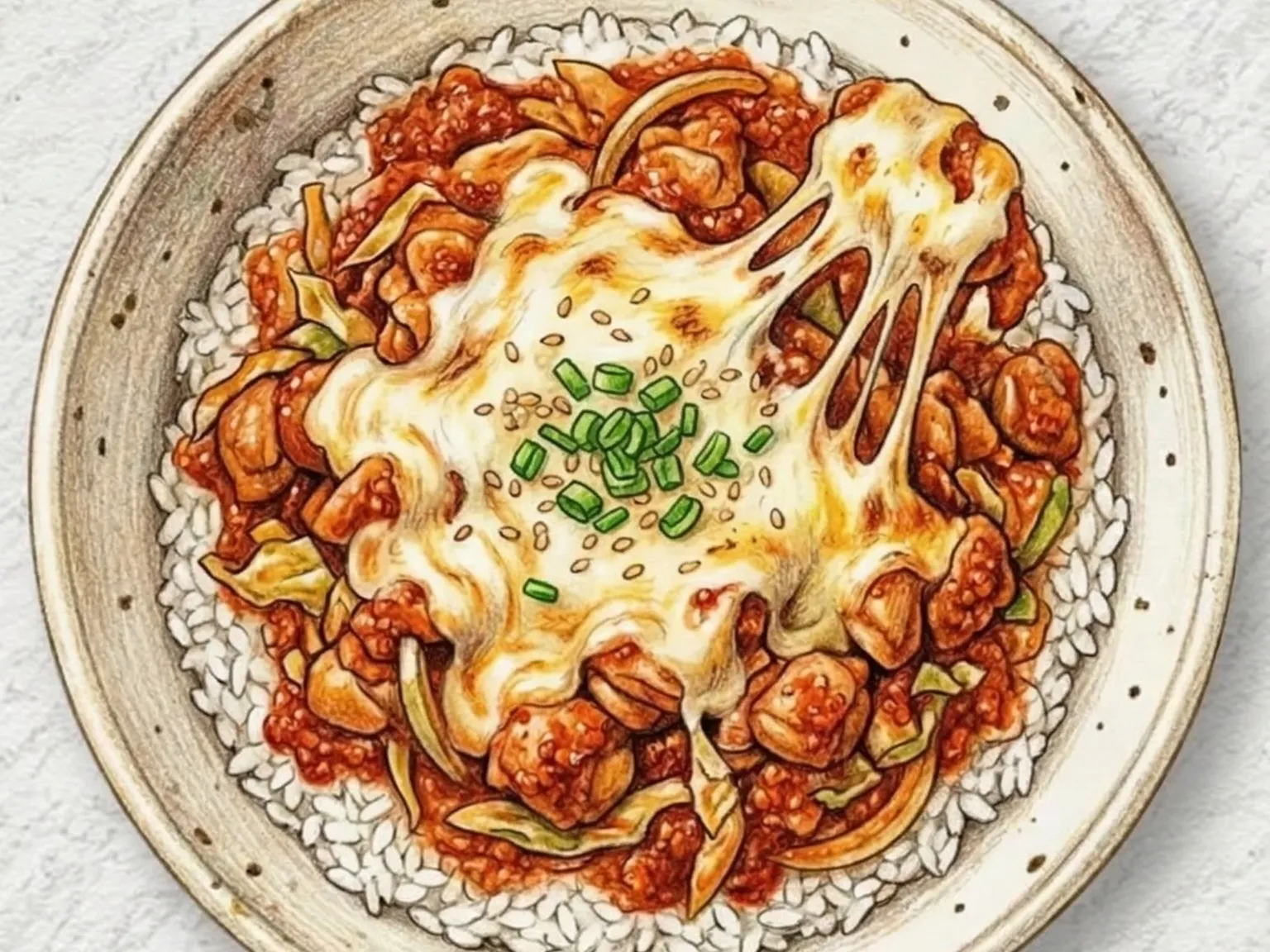
This spicy chicken bowl is topped with melted cheese for extra richness. The cheese softens the heat and adds a smooth finish.
More Recipes

Korean Cheesy Dakgalbi Rice Bowl
Cheese dakgalbi deopbap takes the beloved Chuncheon-style spicy chicken stir-fry and transforms it into a rice bowl crowned with melted mozzarella. Chicken thigh, marinated in gochujang, chili flakes, soy sauce, and sugar, is stir-fried with rough-cut cabbage and onion until the sauce caramelizes and clings to each piece. The cheese goes on while the pan is still hot, stretching into long, gooey strands that temper the chili heat with each pull. Cabbage retains enough crunch to offset the richness of the cheese and sauce, while the chicken thigh stays moist throughout cooking. The entire dish comes together in about fifteen minutes with ingredients found in most Korean kitchens, making it a reliable option for a solo dinner or late-night meal.

Korean Chicken Mayo Rice Bowl
Chikin mayo deopbap is a Korean rice bowl topped with pan-fried chicken breast glazed in a sweet-salty soy sauce and finished with a generous drizzle of mayonnaise. The chicken is cooked until golden on the outside while staying moist inside, and the soy-sugar glaze caramelizes slightly to create a sticky coating that clings to each piece. The mayonnaise adds creaminess that balances the saltiness of the glaze, and when it hits the warm chicken, it softens into a silky sauce that seeps down into the rice below. With only a few common ingredients and about fifteen minutes of total cooking time, it rivals any convenience store lunch box in speed while delivering noticeably better flavor and texture.

Korean Dakgalbi Fried Rice
Dakgalbi bokkeumbap is a Korean fried rice born from the tradition of stir-frying leftover dakgalbi sauce and ingredients with rice at the end of a Chuncheon-style chicken meal. Boneless chicken thigh marinated in gochujang is cooked with cabbage and onion before day-old rice is added and tossed over high heat until every grain absorbs the sweet-spicy marinade. Cabbage and perilla leaves cut through the richness, keeping the finish clean despite the bold seasoning. The high heat creates slightly charred bits of rice at the bottom of the pan, adding a smoky crunch that contrasts with the saucy grains above. It captures the full intensity of dakgalbi flavor in rice bowl form, delivering the same satisfaction with the convenience of a single dish.

Korean Eggplant Rice Bowl
Gaji deopbap is a Korean eggplant rice bowl where sliced eggplant is pan-fried quickly in generous oil and then braised briefly with ground pork in a soy-based sauce. Soaking the eggplant in salted water for five minutes before cooking draws out bitterness. High heat is essential - eggplant absorbs oil rapidly, and fast searing creates a lightly crisp exterior while the inside collapses into a silky, almost creamy texture. The soy, sugar, and garlic sauce reduces in two minutes into a dark glaze that coats each piece, while the ground pork adds a savory depth that makes the dish feel more substantial. The sauce pools around the base of the rice and soaks into the grains, ensuring consistent flavor throughout the bowl. Green onion and sesame oil finish the dish. Summer eggplant, when the flesh is at its softest and most yielding, produces the best results.

Korean Grilled Spicy Chicken Ribs
Dakgalbi-gui is the original Chuncheon-style grilled chicken dish where bone-in thigh and leg pieces marinate in a crimson paste of gochujang, soy sauce, sugar, garlic, sesame oil, and ginger, then cook directly over an open flame or on a hot pan. Unlike the more common iron-plate dakgalbi stir-fried with vegetables, this grilled version focuses solely on the meat, maximizing char and smoky flavor on the surface. Deboned thigh meat spread flat exposes more surface area to the marinade and heat, intensifying the flavor, and a minimum two-hour marination ensures the spice penetrates deep into the flesh. The gochujang caramelizes at high temperatures, creating edges that are simultaneously spicy, sweet, and slightly bitter from the char.

Korean Bunsik Kimchi Bokkeumbap (Kimchi Fried Rice)
Bunsik-style kimchi fried rice starts by making scallion oil from green onions, then stir-frying well-fermented kimchi to drive off moisture before seasoning with gochujang and soy sauce and tossing in day-old rice. The scallion oil lays a nutty base across the rice, and the aged kimchi's sharp acidity layers with the gochujang's heat to build depth. Cold leftover rice fries without turning mushy, keeping individual grains distinct, and the dish is topped with seaweed flakes and a runny fried egg. A small amount of sugar can be added if the kimchi's sourness is overpowering.