Charim

2686 Korean & World Recipes

2686+ Korean recipes, clean and organized. Ingredients to instructions, all at a glance.

Korean Wild Chive Pickle (Spring Chive Soy Brine)

Korean Wild Chive Pickle (Spring Chive Soy Brine)

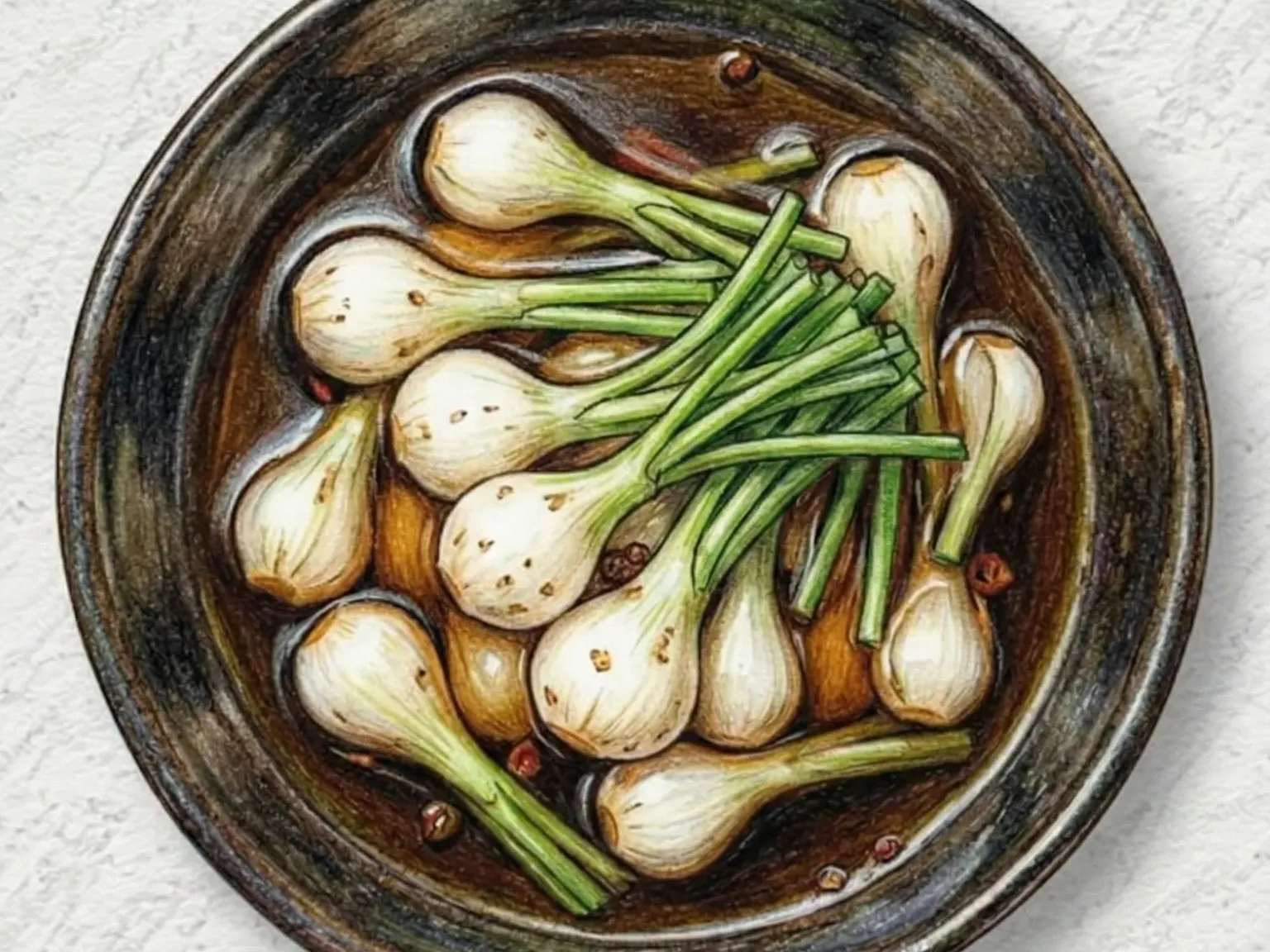
Dallae jangajji is a seasonal Korean pickle made by submerging spring wild chives in a brine of soy sauce, vinegar, and sugar with sliced Cheongyang chili and sesame seeds. Cleaning the dirt from the bulb-like roots and cutting the chives to five-centimeter lengths is the first step, after which the brine must be cooled past boiling point before pouring to preserve the wild chive's volatile, peppery aroma. Sesame seeds scattered on top add a mild toasted note. Ready after one day of refrigeration, this pickle is at its best as a springtime accompaniment to grilled meat, where the sharp, garlicky bite of the chives cuts cleanly through richness.

Prep 15min Cook 8min 2 servings

Adjust Servings

2servings
servings

Instructions

  1. 1

    Clean wild chives thoroughly, removing dirt from roots.

  2. 2

    Cut into 5 cm lengths and place in a jar.

  3. 3

    Add thinly sliced chili to the jar.

  4. 4

    Boil soy sauce, water, vinegar, and sugar for brine.

  5. 5

    Cool and pour brine over chives, then add sesame seeds and seal.

  6. 6

    Refrigerate for one day before serving.

🛒Shop Ingredients on Amazon

As an Amazon Associate, we may earn from qualifying purchases.

Tips

Cool brine before pouring to preserve aroma.
Serve with grilled meat to cut richness.

Nutrition (per serving)

Calories
86
kcal
Protein
3
g
Carbs
14
g
Fat
2
g

More Recipes

Korean Coastal Herb Pickle
KimchiEasy

Korean Coastal Herb Pickle

Bangpungnamul jangajji is a Korean soy-pickled side dish made from coastal hog fennel, a spring herb with a distinctive fragrance and mild bitterness. The pickling liquid is prepared by boiling soy sauce, water, vinegar, and sugar together, then pouring it hot over the cleaned herb in a jar. Garlic cloves and ginger slices added to the brine contribute additional aromatic depth. After about two days of marination, the herb absorbs enough of the soy-vinegar liquid to become flavorful, and the taste continues to develop over subsequent weeks. The pickle keeps for over a month under refrigeration and is served in small portions alongside rice. Its pungent, slightly bitter character acts as a palate stimulant between bites of milder dishes.

🍱 Lunchbox
Prep 18minCook 10min4 servings
Korean Wild Chive Kimchi (Spring Quick Gochugaru)
KimchiEasy

Korean Wild Chive Kimchi (Spring Quick Gochugaru)

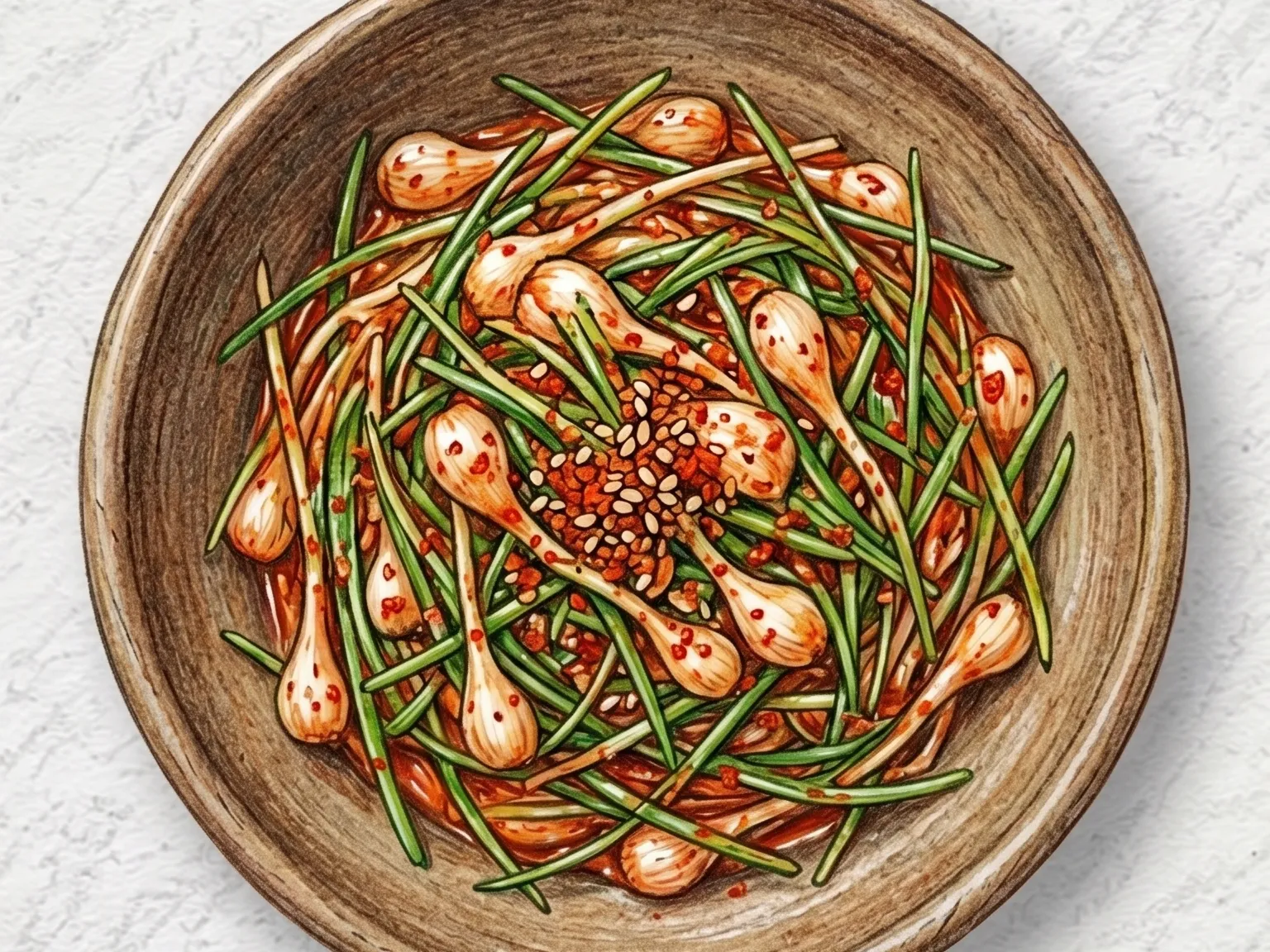
Dallae kimchi is a quick spring kimchi where wild chives are salted for just eight minutes to barely wilt them, then dressed in gochugaru, sand lance fish sauce, plum extract, and Korean pear juice. The bulb-end roots carry the strongest aroma, so they should not be trimmed too short, and seasoning from the root upward ensures even flavor distribution. Pear juice adds moisture and a gentle fruit sweetness that buffers the chili heat, while sand lance fish sauce provides a lighter umami than standard anchovy versions. This kimchi tastes fresh and fragrant immediately after preparation, but one day of refrigeration allows a mild fermented depth to develop, making it a seasonal side dish worth the brief wait.

🏠 Everyday🍱 Lunchbox
Prep 20minCook 5min4 servings
Korean Aster Leaf Soy Pickle
KimchiEasy

Korean Aster Leaf Soy Pickle

Chwinamul jangajji is a Korean soy pickle of aster leaves that are blanched for just ten seconds to preserve their mountain-herb fragrance while softening any tough fibers, then squeezed dry and packed into a jar with garlic and dried chili. A brine of soy sauce, vinegar, and sugar is boiled, cooled, and poured over the greens. During the pickling process the garlic's sharpness and the chili's mild warmth gradually infuse the leaves, while the aster's distinctive fresh, slightly bitter aroma meets the soy's umami for a clean, layered finish. After two to three days in the refrigerator the seasoning distributes evenly, and the jangajji can be eaten over rice or chopped fine as a filling for rice balls.

🍱 Lunchbox
Prep 16minCook 10min4 servings
Korean Gomchwi Leaf Jangajji
KimchiEasy

Korean Gomchwi Leaf Jangajji

Gomchwi jangajji is a Korean mountain herb pickle made by submerging gomchwi (ligularia) leaves in a boiled brine of soy sauce, vinegar, and sugar. The broad, thick leaves carry a potent wild-green fragrance that deepens when paired with soy umami, while vinegar keeps the finish clean. Their generous surface area absorbs the brine well, and when draped over rice and eaten as a wrap, the leaf's aroma and salty seasoning soak directly into the grains, creating a self-contained bite that needs no other accompaniment. Garlic and cheongyang chili in the brine add a warm pungency that prevents the mountain herb flavor from becoming one-dimensional.

🍱 Lunchbox
Prep 18minCook 7min4 servings
Korean Seasoned Wild Chive
Side dishesEasy

Korean Seasoned Wild Chive

A pungent, no-cook spring side dish - raw Korean wild chives with a sharp garlic kick that clears the palate in one bite. Dallae emerges from hillsides in March, thinner and far more intense than cultivated chives. Dressed in soy sauce, gochugaru, vinegar, sugar, and sesame oil, the tiny bulbs and slender leaves deliver a nose-clearing zing. Koreans pair this muchim with doenjang-jjigae, where the raw chive's sharpness contrasts the stew's depth.

🏠 Everyday🍱 Lunchbox
Prep 10min4 servings
Korean Soy-Marinated Soybean Leaves
Side dishesMedium

Korean Soy-Marinated Soybean Leaves

Kongnip-jangajji is soybean leaves preserved in a seasoned soy brine - one of the two major leaf jangajji traditions alongside perilla leaf (kkaennip) jangajji. Soybean leaves are larger and thicker than perilla leaves, taking longer to absorb the pickling liquid but offering a more substantial chew, with each leaf large enough to wrap around a spoonful of rice. The brine - soy sauce, water, vinegar, and sugar boiled together - must cool completely before pouring over the leaves; hot liquid softens them into a limp state, destroying the desired texture. Garlic cloves, cheongyang chili, and onion slices added to the jar infuse the brine with aromatic complexity during the curing process, producing a more layered flavor than plain soy. A minimum of two days of refrigerated aging is needed for the seasoning to reach the leaf interior, and flipping the layers once daily ensures even penetration. The most common way to eat it is draped over hot steamed rice, ssam-style.

🏠 Everyday🍱 Lunchbox
Prep 15minCook 10min4 servings
More Kimchi →