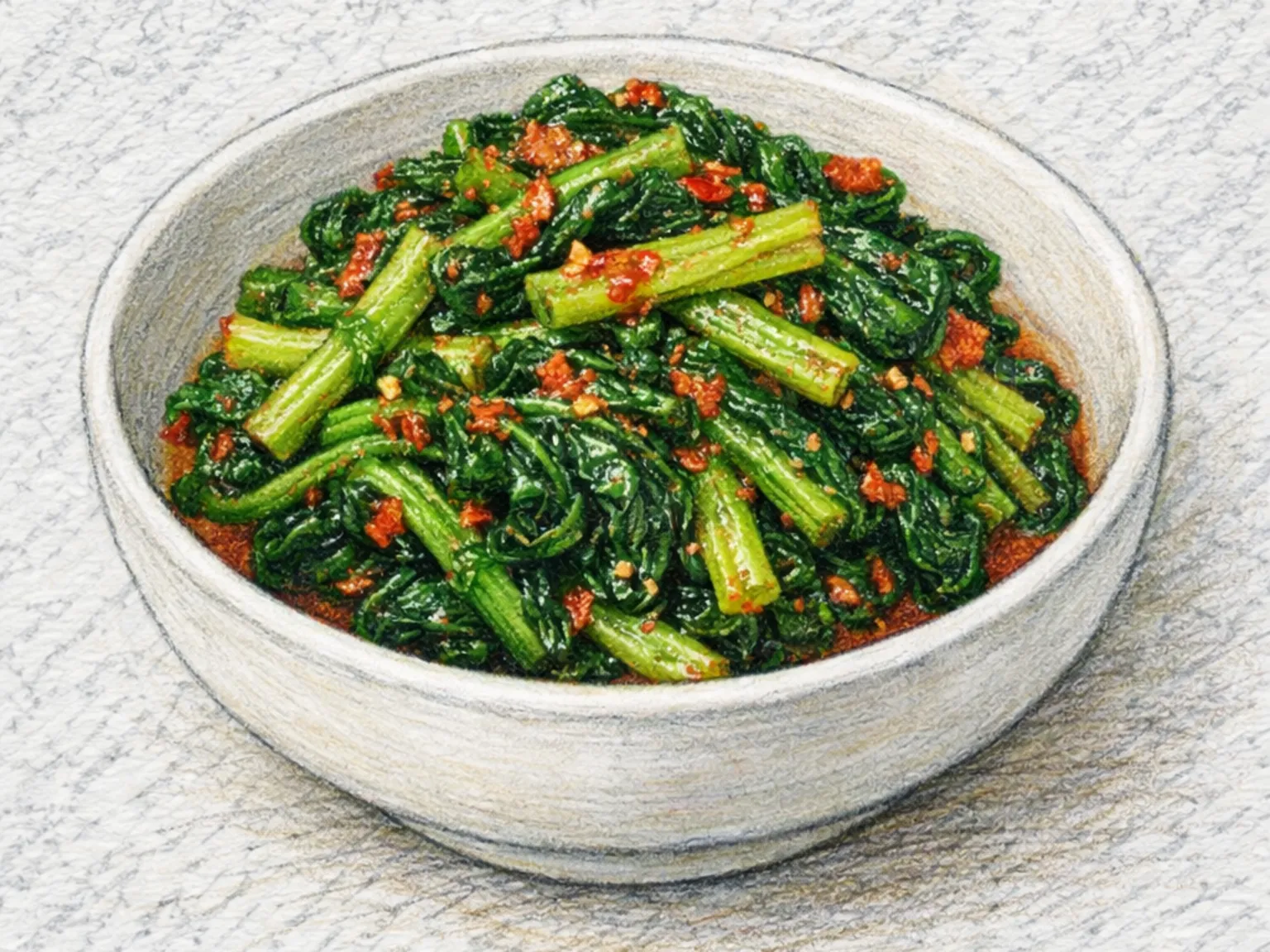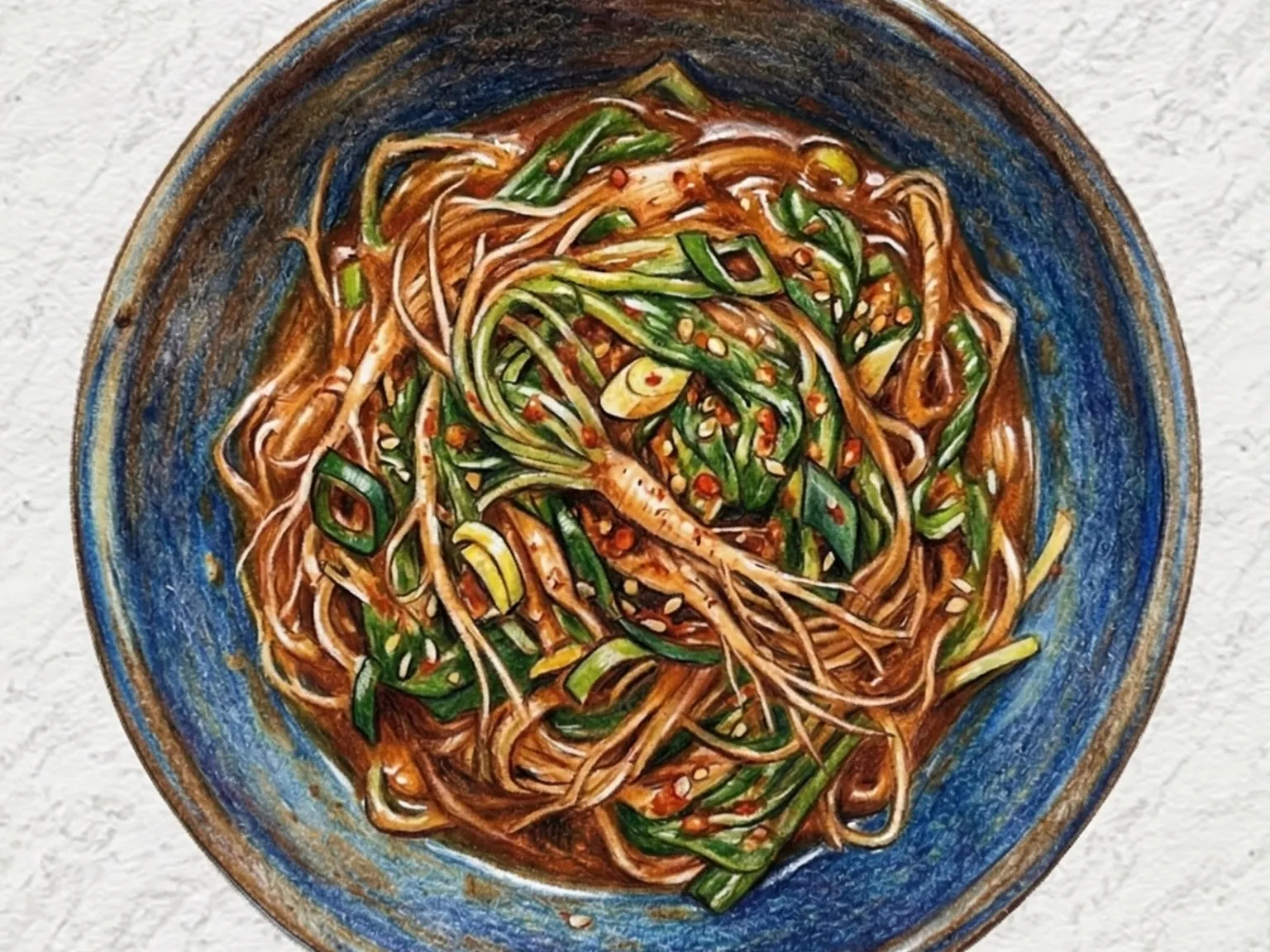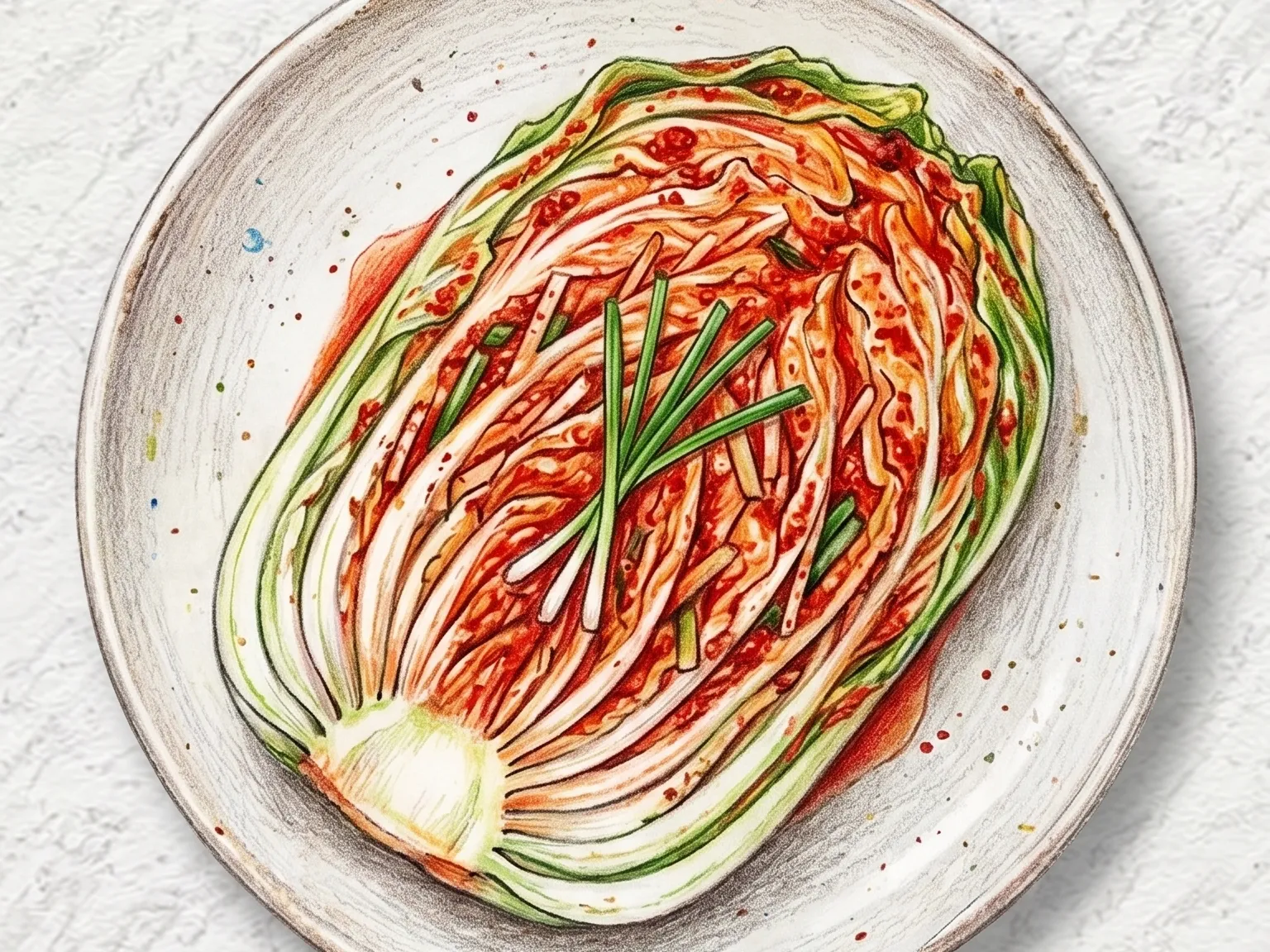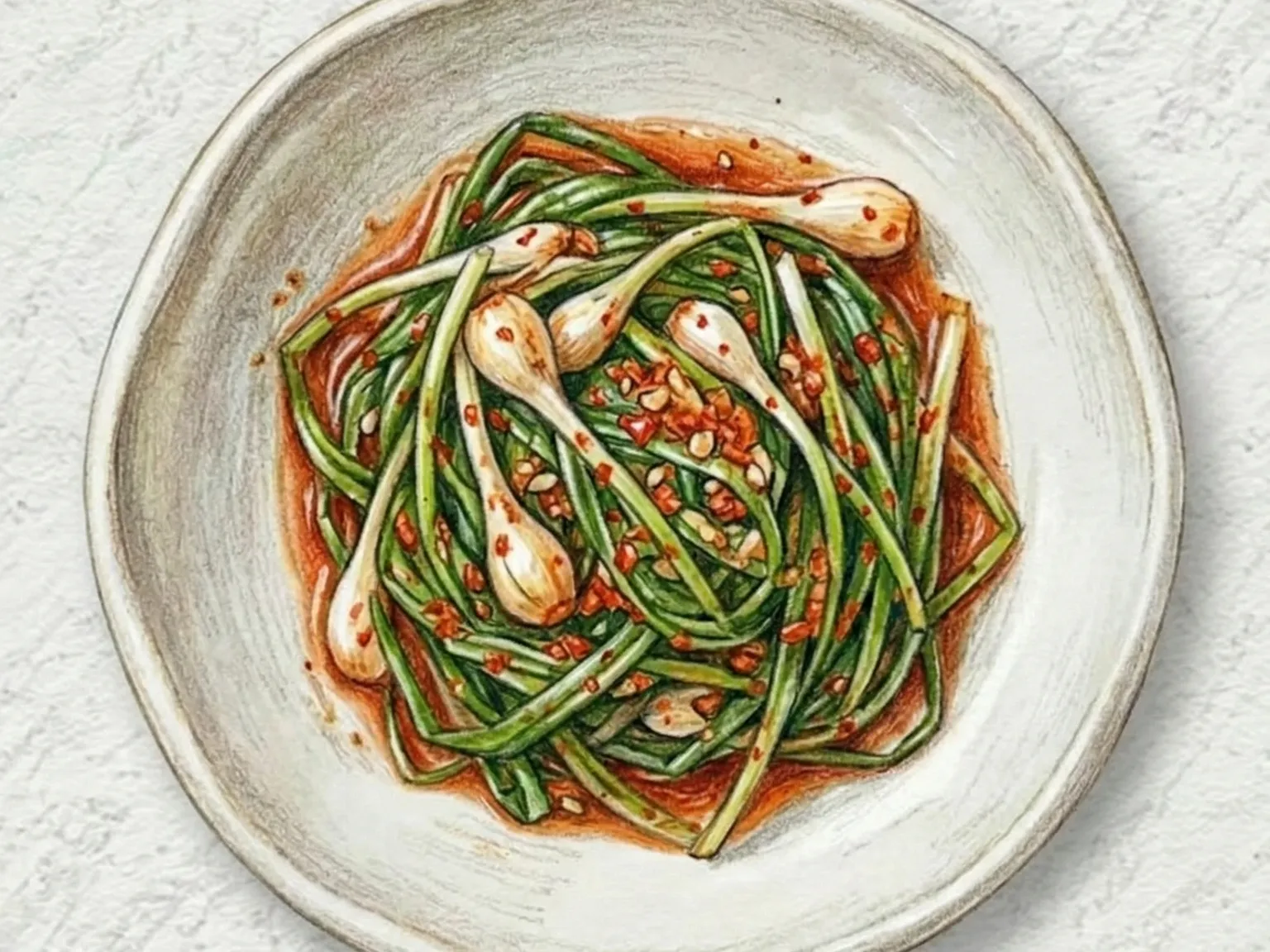
Korean Wild Chive Kimchi (Spring Quick Gochugaru)
Dallae kimchi is a quick spring kimchi where wild chives are salted for just eight minutes to barely wilt them, then dressed in gochugaru, sand lance fish sauce, plum extract, and Korean pear juice. The bulb-end roots carry the strongest aroma, so they should not be trimmed too short, and seasoning from the root upward ensures even flavor distribution. Pear juice adds moisture and a gentle fruit sweetness that buffers the chili heat, while sand lance fish sauce provides a lighter umami than standard anchovy versions. This kimchi tastes fresh and fragrant immediately after preparation, but one day of refrigeration allows a mild fermented depth to develop, making it a seasonal side dish worth the brief wait.
Adjust Servings
Instructions
- 1
Wash off root dirt thoroughly and halve long wild chives.
- 2
Salt for 8 minutes, rinse lightly, and drain in a sieve.
- 3
Mix chili flakes, fish sauce, garlic, ginger, plum extract, and pear juice.
- 4
Add dallae and gently coat, starting from the root ends.
- 5
Finish with sesame seeds, transfer to a container, and refrigerate.
- 6
Enjoy immediately, or ferment one day for deeper flavor.
As an Amazon Associate, we may earn from qualifying purchases.
Tips
Nutrition (per serving)
More Recipes

Korean Wild Chive Pickle (Spring Chive Soy Brine)
Dallae jangajji is a seasonal Korean pickle made by submerging spring wild chives in a brine of soy sauce, vinegar, and sugar with sliced Cheongyang chili and sesame seeds. Cleaning the dirt from the bulb-like roots and cutting the chives to five-centimeter lengths is the first step, after which the brine must be cooled past boiling point before pouring to preserve the wild chive's volatile, peppery aroma. Sesame seeds scattered on top add a mild toasted note. Ready after one day of refrigeration, this pickle is at its best as a springtime accompaniment to grilled meat, where the sharp, garlicky bite of the chives cuts cleanly through richness.

Korean Seasoned Wild Chive
A pungent, no-cook spring side dish - raw Korean wild chives with a sharp garlic kick that clears the palate in one bite. Dallae emerges from hillsides in March, thinner and far more intense than cultivated chives. Dressed in soy sauce, gochugaru, vinegar, sugar, and sesame oil, the tiny bulbs and slender leaves deliver a nose-clearing zing. Koreans pair this muchim with doenjang-jjigae, where the raw chive's sharpness contrasts the stew's depth.

Korean Chive Kimchi Jeon (Spicy Fermented Kimchi Pancake)
Buchu-kimchi-jeon is a Korean pancake combining well-fermented aged kimchi and garlic chives in a batter made with cold water and a splash of kimchi brine. The brine does double duty: it tints the batter red and infuses it with the deep, tangy umami that only long-fermented kimchi produces. Cold water is essential here because it limits gluten development, resulting in a shatteringly crisp exterior rather than a chewy one. Thinly sliced hot green chili adds a sharper heat on top of the kimchi's sour spiciness, and the pancake must be cooked on a well-preheated pan over medium-high heat until the edges darken to a deep golden brown.

Korean Bitter Herb Kimchi
Sseumbagwi kimchi is a traditional Korean fermented side dish made from sseumbagwi, a wild bitter herb harvested in spring. The herb is soaked in cold water for twenty minutes to temper its pronounced bitterness, salted for fifteen minutes, then dressed in a thick paste of gochugaru, sand lance fish sauce, minced garlic, ginger, sweet rice paste, and plum syrup alongside scallion pieces. The rice paste gives the seasoning enough body to cling to the thin stems and leaves, and the plum syrup smooths out both the bitterness and the salt's sharpness. Five hours of room-temperature fermentation followed by refrigeration allows lactic acid to develop gradually, layering a tangy depth over the herb's inherent bitter-green character. The flavor is most complex around day three. If the bitterness is too strong, an additional change of soaking water before seasoning brings it under control.

Korean Garlic Scape Kimchi
Maneul jong kimchi is a Korean garlic scape kimchi made by lightly brining the scapes, then dressing them in a paste of gochugaru, fish sauce, and plum syrup blended with pureed onion and pear. The scapes' sharp, peppery garlic aroma survives fermentation while the stems maintain their crisp snap, delivering alternating waves of heat and umami with each bite. Pear lays a fruit sweetness into the base that buffers the chili intensity, and fish sauce adds the fermented depth expected in Korean kimchi. Trimming the woody bottoms before seasoning improves the texture, and the flavor settles into balance after about two days of fermentation.

Korean Radish Greens Kimchi
Mucheong kimchi is a Korean radish greens kimchi made by trimming tough parts, cutting greens into 5 cm pieces, brining in coarse salt, then dressing them in a paste of sweet rice flour, gochugaru, anchovy fish sauce, garlic, ginger, and onion. The fibrous stems absorb the seasoning deeply while retaining a substantial chew, and the rice paste acts as a binding agent that keeps the coating even throughout fermentation. Anchovy fish sauce contributes a deep seafood umami, and onion buffers the chili heat with natural sweetness. Beyond serving as a standalone side dish, this kimchi adds concentrated flavor when torn and stirred into siraegi soup or doenjang jjigae.