Korean Soy-Vinegar Carrot Pickles

Korean Soy-Vinegar Carrot Pickles

Quick answer

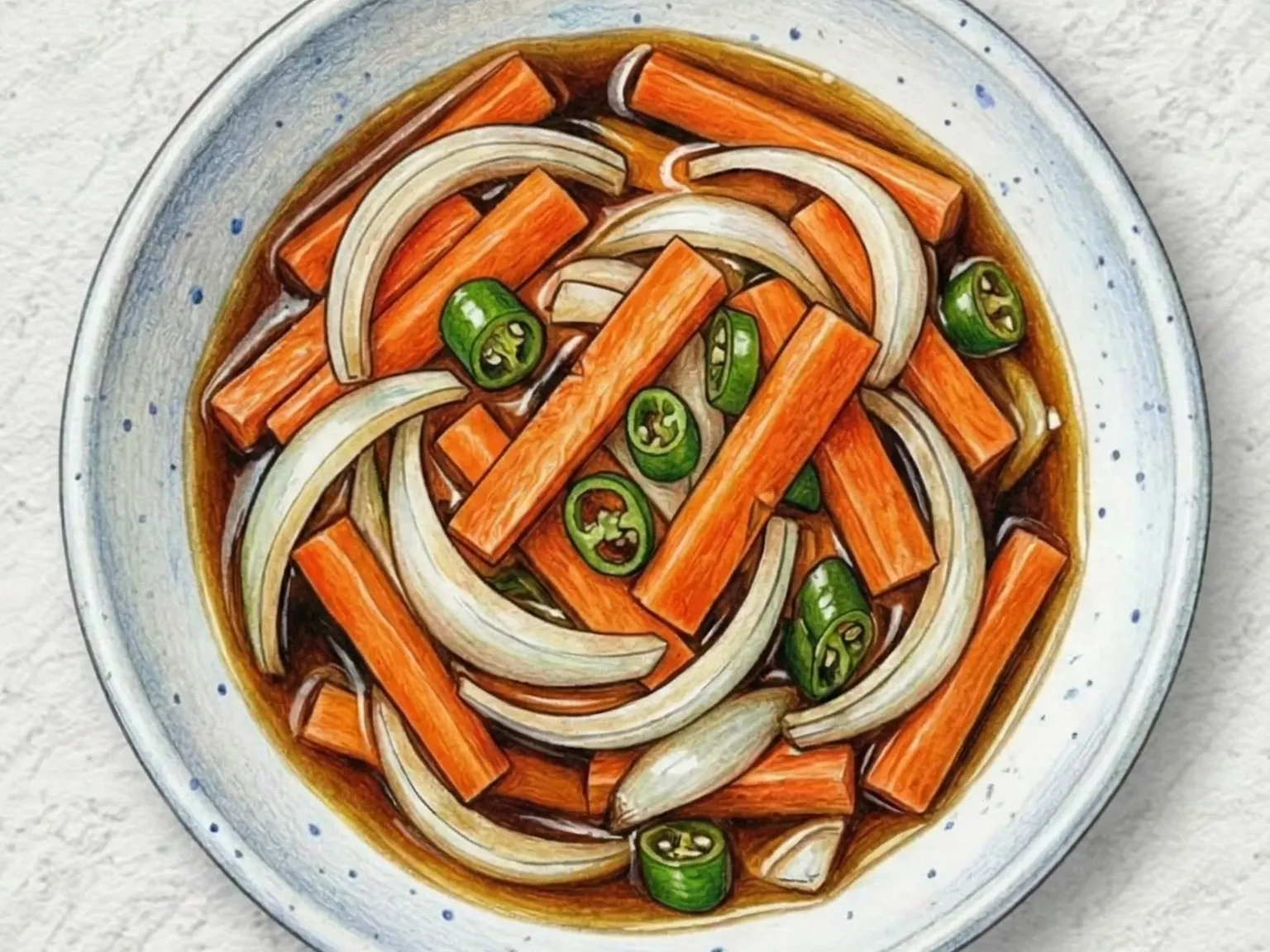
Danggeun jangajji is a Korean pickled carrot made by cutting carrots into uniform half-centimeter sticks and layering them with onion, halved Cheongyang chili, and whole...

What makes this special

  • Uniform carrot sticks in danggeun jangajji ensure even brine penetration through each piece.
  • Uniform 0.5 cm sticks ensure even brine penetration throughout
  • Carrot's natural sweetness contrasts sharply with soy salt and vinegar acid
Total time
23 min
Level
Easy
Servings
4 servings
Ingredients
8
Calories
96 kcal
Protein
2 g

Key ingredients

carrotonionCheongyang chilisoy saucevinegar

Core cooking flow

  1. 1 Peel 500 g carrots and cut them into even 0.5 cm sticks so they pickle at the same speed.
  2. 2 Dry the sterilized glass jar completely before filling it.
  3. 3 Pour 180 ml soy sauce, 180 ml vinegar, and 180 ml water into a pot, then add 120 g sugar.

Danggeun jangajji is a Korean pickled carrot made by cutting carrots into uniform half-centimeter sticks and layering them with onion, halved Cheongyang chili, and whole garlic in a sterilized jar, then covering with a boiled brine of soy sauce, vinegar, water, and sugar. Keeping the carrot sticks the same thickness ensures they pickle at an even rate for consistent crunch in every bite. The brine must be boiled until the sugar and salt dissolve completely, then cooled before pouring; adding hot liquid can make the vegetables go soft, and undissolved solids cause uneven seasoning and shorten shelf life. The carrot's natural sweetness plays against the soy's salinity and the vinegar's tartness, producing three distinct flavors in each piece. After cooling completely at room temperature and refrigerating, the pickle is ready in twenty-four hours. If the brine turns cloudy after a few days, reboiling and cooling it before pouring it back extends the shelf life considerably. Served alongside fatty meat dishes, the acidity and snap of the pickle cut through the richness and leave the palate clean.

Prep 15min Cook 8min 4 servings

Instructions

Read the steps as a cooking flow: prep, heat, seasoning, doneness control, and finish.

6 steps
  1. 1
    Prep

    Peel 500 g carrots and cut them into even 0.5 cm sticks so they pickle at the same speed.

    Slice half an onion into thick 1 cm strips, keeping the pieces close in size to the carrots.

  2. 2
    Step

    Dry the sterilized glass jar completely before filling it.

    Pack in the carrots, onion, one halved Cheongyang chili, and 6 whole garlic cloves, pressing gently so there are few air gaps but the vegetables are not crushed.

  3. 3
    Control

    Pour 180 ml soy sauce, 180 ml vinegar, and 180 ml water into a pot, then add 120 g sugar.

    Bring to a boil over high heat, stirring the bottom until no sugar grains remain.

  4. 4
    Control

    When the brine boils and looks clear, turn off the heat and let the steam settle before pouring.

    Do not add it while very hot, because high heat can soften the carrot and weaken the crunch.

  5. 5
    Prep

    Pour the cooled brine slowly along the side of the jar.

    Use chopsticks to release trapped air, then press the vegetables lightly so every piece stays under the liquid and does not spoil at the surface.

  6. 6
    Finish

    Leave the jar open until it cools completely at room temperature, then seal and refrigerate.

    Serve cold after 24 hours; if the brine turns cloudy after 2 to 3 days, boil it, cool it, and pour it back.

After the steps

Pick a recipe that fits this dish.

Continue with shared ingredients, meal pairings, or a similar method.

Recipes That Go Well With This

More Kimchi →

Based on shared ingredients and meal pairing

Korean Cauliflower Jangajji (Pickled Cauliflower)
Shared ingredient: onion Kimchi

Korean Cauliflower Jangajji (Pickled Cauliflower)

Korean pickled cauliflower made by soaking bite-sized florets in a boiled-and-cooled brine of soy sauce, vinegar, and sugar. The dense, compact structure of cauliflower absorbs the pickling liquid at a gradual pace, developing flavor over time without turning soft - a texture advantage over vegetables like cucumber or radish that break down faster. Vinegar and sugar balance each other cleanly, and the soy sauce adds a low layer of umami beneath the bright, tangy top note. The pickle works well as a palate cleanser alongside fried or grilled food, and holds up just as well as a plain rice side. The preparation is simple: boil the brine, let it cool, pour it over the florets, and wait.

Korean Soy-Pickled Eggplant
Shared ingredient: cheongyang chili Kimchi

Korean Soy-Pickled Eggplant

Gaji jangajji is a Korean-style pickled eggplant that starts by blanching the eggplant in boiling water for just over a minute to soften only the outer surface, leaving the inside intact. The briefly cooked eggplant is submerged in a pickling brine of soy sauce, vinegar, and sugar that has been brought to a boil and then cooled. The eggplant absorbs the brine rapidly and deeply, like a sponge, while holding a soft, yielding texture at its core. Vinegar sharpens the eggplant's otherwise flat flavor, and garlic together with cheongyang chili pressed into the brine build a low heat and quiet complexity that goes beyond basic preservation. Ready to eat after a single day in the refrigerator, this jangajji holds its texture for more than ten days when kept cold, which makes it a practical banchan to prepare in advance and pull out over multiple meals.

Korean Braised Eggplant in Seasoned Soy Sauce
Serve together Steamed

Korean Braised Eggplant in Seasoned Soy Sauce

Gaji yangnyeom jorim is a Korean braised eggplant side dish made with soy sauce, gochugaru, garlic, and sesame oil. Briefly sauteing the eggplant in oil before adding the braising liquid is important: pre-cooking the surface prevents the eggplant from releasing too much water into the sauce, which keeps the seasoning concentrated and helps it penetrate evenly. A small amount of sugar or plum extract is added to the sauce, giving the finished dish its characteristic glossy sheen. Scallions are stirred in only after the heat is off to preserve their color and texture. The result is a compact, salty-spicy banchan with a deep lacquered surface on each piece. Keeping a batch in the refrigerator means it is available as a side dish for three or more days, and the leftover braising liquid works well as seasoning in bibimbap.

Korean Soy Pickled Burdock
Similar recipe Kimchi

Korean Soy Pickled Burdock

Ueong jangajji is a soy-pickled burdock root prepared by soaking cut burdock in vinegar water to prevent browning, blanching to remove any earthiness, then submerging in a brine of soy sauce, vinegar, and sugar. Kelp, dried red chili, and whole peppercorns boiled into the brine contribute umami depth and a subtle warmth. The root's natural nuttiness and earthy aroma meld with the sweet-salty-tangy brine into a layered, lingering flavor. Its firm, crunchy texture holds up well over days of storage, and reboiling the brine on the third day extends the pickle's shelf life further. Because burdock oxidizes quickly once cut, transferring it to the vinegar soak immediately after slicing is essential for keeping the finished pickle looking clean and bright rather than muddy.

Serve with this

Korean Sesame Porridge (Toasted Sesame Silky Rice Porridge)
Rice Easy

Korean Sesame Porridge (Toasted Sesame Silky Rice Porridge)

Kkaejuk is a traditional Korean porridge made by grinding toasted sesame seeds to a fine powder and simmering them with soaked rice, water, and milk until the mixture reaches a silky, cream-soup consistency. Toasting the seeds before grinding is not optional -- raw sesame lacks the deep, roasted fragrance that defines the dish, and the heat of toasting develops oils and aroma compounds that grinding alone cannot produce. Constant stirring over low heat prevents the mixture from scorching and coaxes the rice grains into breaking down completely, merging with the sesame base so no distinct texture remains. Milk enriches the body beyond what water alone provides and gives the finished porridge a warm ivory color. The simplest version is seasoned with nothing but salt and served with a drizzle of honey or rice syrup, letting the roasted sesame flavor carry the bowl without distraction. Easily digestible and gentle on the stomach, kkaejuk has a long tradition as a morning meal, a recovery food for the sick, and a postpartum nourishment dish in Korean households.

🥗 Light & Healthy 🏠 Everyday
Prep 15min Cook 30min 2 servings
Korean Soy-Glazed Grilled Lotus Root
Grilled Easy

Korean Soy-Glazed Grilled Lotus Root

This side dish features lotus root sliced into rounds and pan-grilled with a sweet and salty soy glaze. The peeled root is sliced and soaked in vinegar water for ten minutes, then blanched in boiling water for two minutes to eliminate astringency while locking in its signature crunch. After draining, the slices are seared in a pan with cooking oil for two minutes on each side until lightly browned. The glaze, composed of soy sauce, oligosaccharide syrup, minced garlic, and sesame oil, is poured in over medium-low heat. It is critical to turn the slices quickly and remove the pan from the heat as soon as they become glossy, before the syrup hardens. The holes of the lotus root capture the glaze, distributing the savory-sweet flavor evenly in every bite. Sprinkled with sesame seeds, it is left to cool briefly to let the coating settle, making it a clean, non-sticky addition to daily meals.

🍺 Bar Snacks 🏠 Everyday
Prep 18min Cook 12min 2 servings
Korean Sigeumchi Dubu Jjigae (Spinach Tofu Stew)
Stews Easy

Korean Sigeumchi Dubu Jjigae (Spinach Tofu Stew)

Sigeumchi-dubu-jjigae is a Korean stew built from fresh spinach and soft tofu simmered in anchovy-kelp stock, seasoned with soup soy sauce and perilla oil. The process starts by warming perilla oil in the pot and softening minced garlic until its sharpness mellows into a rounded fragrance that transfers into the oil, giving the broth a subtle depth that would be absent if the garlic were added raw. Zucchini and onion release their natural sweetness as they cook, rounding out the broth and preventing it from tasting flat or austere. Soft tofu, added mid-way, absorbs the seasoned liquid gradually as it heats through, holding its shape while taking on the flavor of the broth around it. Spinach goes in last, only long enough to wilt, because extended cooking destroys the color and reduces the leaves to a limp, dull mass that works against the dish. The iron-forward earthiness of spinach pairs naturally with the mild creaminess of tofu and the nutty undercurrent of perilla oil, producing a stew that reads as simple but carries enough layered flavor to satisfy. This is a standard of Korean home cooking that earns its place at the table for being genuinely easy on the stomach, particularly welcome when appetite is low or the body calls for something clean.

🥗 Light & Healthy 🏠 Everyday
Prep 12min Cook 18min 2 servings

Similar recipes

Korean Soy Pickled Asparagus
Kimchi Easy

Korean Soy Pickled Asparagus

This pickle applies the Korean jangajji tradition - soy-brine preservation - to asparagus, a vegetable that arrived in Korean cooking relatively recently but now appears freely across banchan preparations. The asparagus is blanched for just 20 seconds to fix its color and soften the fibrous outer layer, then immediately shocked in ice water to lock in a vivid green and a firm, snapping texture. Packed upright in a sterilized jar, the spears are covered with a boiling brine of soy sauce, rice vinegar, sugar, and water that partially cooks the surface while leaving the core crisp and springy. Within 24 hours the brine penetrates enough for the pickle to be edible, but the flavor peaks at three days when the sweet-sour-salty balance has fully developed. Unlike most jangajji that rely on root vegetables or dense greens like radish and napa cabbage, asparagus brings a distinctive grassy, almost herbal note to the preserved format - a quality that stands on its own without the weight of fermentation. Keeps refrigerated for two weeks, and works well alongside rich or oily dishes where its acidity provides contrast.

🍱 Lunchbox 🏠 Everyday
Prep 20min Cook 12min 4 servings
Korean Pickled Garlic Scapes
Side dishes Easy

Korean Pickled Garlic Scapes

Maneuljjong-jangajji is a preserved side dish of garlic scapes pickled in a boiled soy sauce, vinegar, and sugar brine. The preservation principle is identical to that of whole garlic jangajji, but the scape, meaning the flowering stalk of the garlic plant, is used instead of the bulb, and there is one crucial technique difference. The scapes are cut into 4 cm lengths, packed tightly into glass jars, and covered with the brine immediately while it is still boiling hot. The heat partially cooks the outer layer of each scape, which creates a clean, crisp snap when the scape is bitten, unlike the soft texture that results from the cold-pour method used for whole garlic. Whole black peppercorns included in the jar release their warmth and spicy aroma slowly into the liquid during the aging period, adding a dimension beyond the straightforward salt-and-acid base. The pickles are ready after a single day, but day three is when seasoning has penetrated to the center while the scapes still push back satisfyingly under the teeth. The brine can be drained, reboiled, and poured back over the scapes once during storage, which significantly extends shelf life by suppressing bacterial growth. On the Korean table, these sharp, vinegary pickles serve as a natural counterbalance to fatty meat dishes, cutting through richness and clearing the palate between bites.

🏠 Everyday 🍱 Lunchbox
Prep 15min Cook 8min 4 servings
Korean Pickled Celtuce Stems
Side dishes Medium

Korean Pickled Celtuce Stems

Gungchae is the dried stem of celtuce (Lactuca sativa var. asparagina), known in Chinese as wosun, and in Korea it carries the name meaning palace vegetable, reflecting its historical association with royal court cuisine. When rehydrated from its dried state, the stems regain a firm, almost cartilaginous crunch that is the defining quality of the ingredient and the entire reason to use it. Packed into sterilized glass jars, the stems are covered with a boiling brine of soy sauce, vinegar, sugar, and water poured in while still hot, which drives the seasoning into the outer layers while preserving the interior snap. The pickle is edible after a single day, but three days is when the balance of tangy, salty, and sweet flavors reaches its peak. Served alongside grilled meats or rich main dishes, the crisp texture and bright acidity cut through heaviness and refresh the palate between bites, making it a natural companion to oily or heavily seasoned Korean mains.

🏠 Everyday 🍱 Lunchbox
Prep 20min Cook 10min 4 servings

Tips

Keep carrot thickness uniform for consistent texture.
If brine turns cloudy after 2-3 days, reboil, cool, and pour again.

Nutrition (per serving)

Calories
96
kcal
Protein
2
g
Carbs
20
g
Fat
0
g