Sweet Red Bean Porridge (Korean Adzuki Rice Dessert Soup)
Desserts Medium

Sweet Red Bean Porridge (Korean Adzuki Rice Dessert Soup)

Quick answer

Danpat-juk is a Korean sweet red bean porridge prepared by cooking dried red beans until fully tender, then straining two-thirds through a fine sieve for a smooth paste w...

What makes this special

  • Danpat-juk red bean porridge balances sieved smooth paste with whole beans for textural contrast.
  • Two-thirds sieved smooth, one-third left whole for texture in every spoonful
  • First boiling water discarded to remove astringency, skipping leaves a bitter aftertaste
Total time
65 min
Level
Medium
Servings
2 servings
Ingredients
7
Calories
342 kcal
Protein
12 g

Key ingredients

dried red beanswatersugarsaltglutinous rice flour

Core cooking flow

  1. 1 Rinse 180g red beans, place in a pot with plenty of water, boil over high he...
  2. 2 Add 1200ml fresh water and simmer over low heat for 35 to 40 minutes until t...
  3. 3 Pass two-thirds of the cooked beans through a sieve to make a smooth red bea...

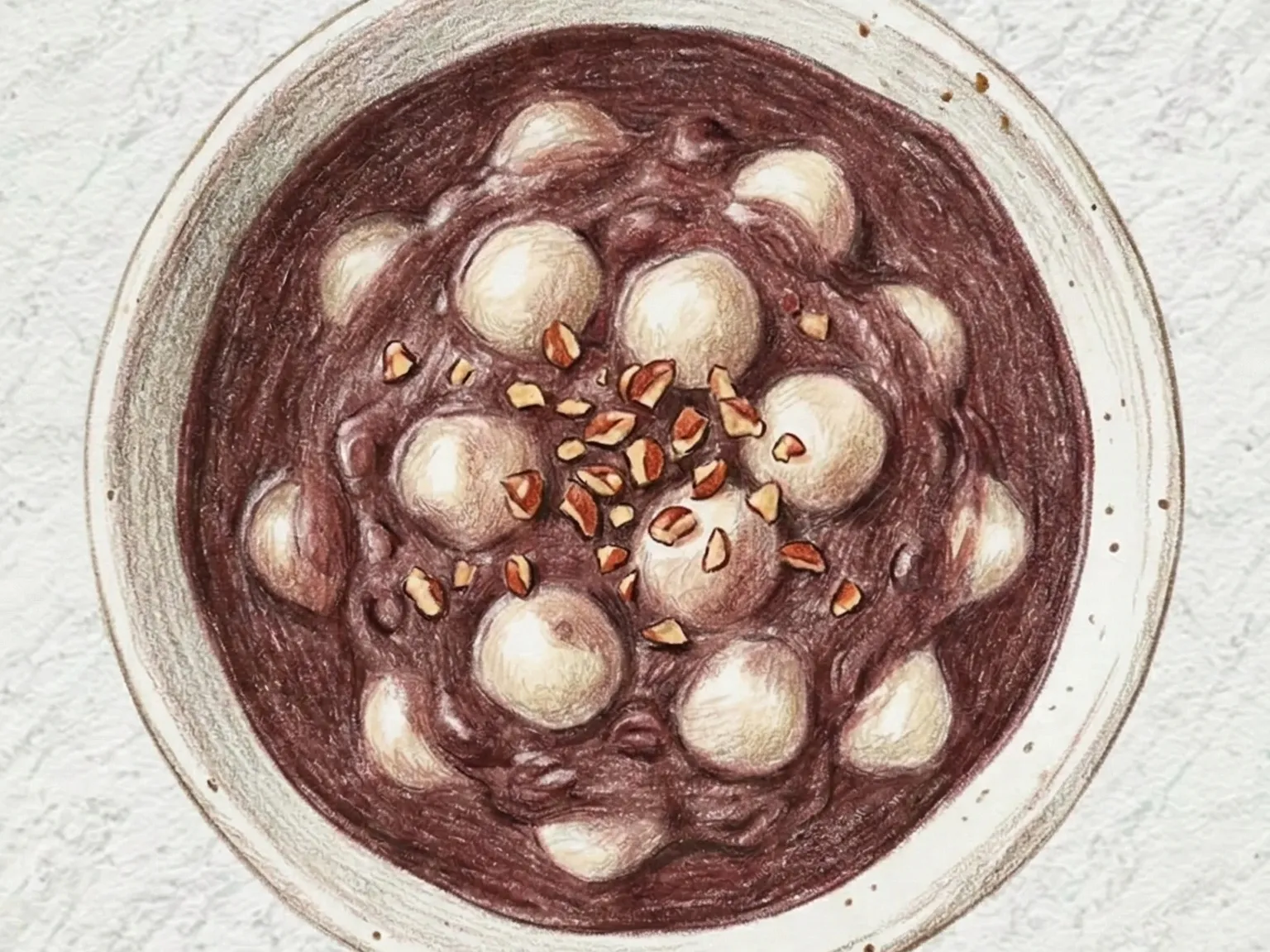
Danpat-juk is a Korean sweet red bean porridge prepared by cooking dried red beans until fully tender, then straining two-thirds through a fine sieve for a smooth paste while keeping the remaining third whole to provide textural contrast throughout the bowl. The water from the initial boil is discarded to eliminate the raw astringency that fresh red beans carry before the flavor fully develops. Sugar, salt, and a small measure of cinnamon season the finished porridge, with the cinnamon adding a warm spiced note without overpowering the bean itself. Small glutinous rice dumplings called saealsim, hand-shaped from glutinous rice flour mixed with boiling water, are dropped into the simmering liquid and float to the surface once cooked through, introducing a chewy counterpoint to the smooth broth. Because the porridge thickens noticeably as it cools, pulling it from the heat while still slightly thinner than the intended final consistency ensures the bowl reaches the table at the right texture.

Prep 15min Cook 50min 2 servings

Instructions

Read the steps as a cooking flow: prep, heat, seasoning, doneness control, and finish.

6 steps
  1. 1
    Control

    Rinse 180g red beans, place in a pot with plenty of water, boil over high heat for 10 minutes, then discard the first water to remove bitterness and cloudiness from the beans.

  2. 2
    Control

    Add 1200ml fresh water and simmer over low heat for 35 to 40 minutes until the beans crush effortlessly when pressed between two fingers.

  3. 3
    Heat

    Pass two-thirds of the cooked beans through a sieve to make a smooth red bean paste, and leave the remaining third as whole beans to provide texture.

  4. 4
    Step

    Add 35ml hot water to 50g glutinous rice flour in small amounts to form a soft, earlobe-pliable dough, then roll into small balls 1.5 to 2cm in diameter.

  5. 5
    Season

    Bring the red bean liquid to a boil with 45g sugar, 2g salt, and 1g cinnamon, drop in the rice balls, and once they float, cook for 1 more minute to ensure they are cooked through.

  6. 6
    Finish

    Check the consistency and add a splash of water if too thick, simmer 3 more minutes, then ladle into bowls and serve immediately while hot.

After the steps

Pick a recipe that fits this dish.

Continue with shared ingredients, meal pairings, or a similar method.

Recipes That Go Well With This

More Desserts →

Based on shared ingredients and meal pairing

Pan-Fried Sweet Rice Cake
Shared ingredient: glutinous rice flour Desserts

Pan-Fried Sweet Rice Cake

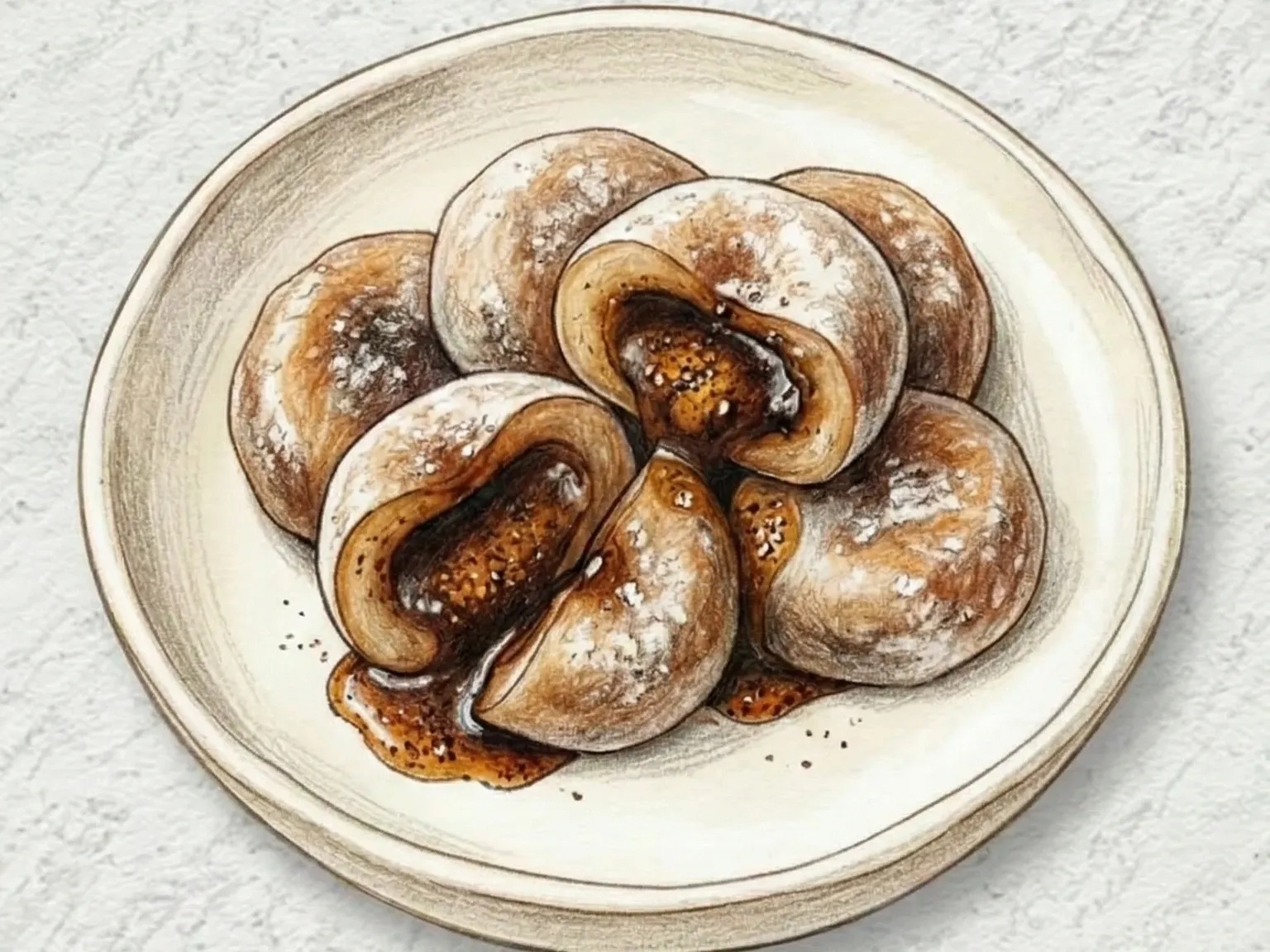
Bukkumi is a traditional Korean pan-fried rice cake made from glutinous rice flour dough filled with sweet red bean paste seasoned with cinnamon and sugar. Using hot water to form the dough partially gelatinizes the starch, creating a pliable skin that stretches without cracking - though the dough must stay covered with a damp cloth throughout assembly to prevent the surface from drying out. Folding the dough into half-moon shapes seals in a cinnamon-laced bean paste filling that lifts the dense sweetness of the red bean with a warm spice note. Pan-frying on low heat builds a golden crust on each side while keeping the filling warm and molten at the center. A light drizzle of honey or a pinch of sugar right after frying adds a final layer of sweetness.

Korean Red Bean Porridge (Velvety Adzuki Porridge with Rice Dumplings)
Shared ingredient: dried red beans Rice

Korean Red Bean Porridge (Velvety Adzuki Porridge with Rice Dumplings)

Pat-juk is a traditional Korean red bean porridge made by boiling dried red beans until very soft, straining them to extract a smooth, deeply colored paste, and simmering that paste with rice until it thickens into a velvety porridge. Small dumplings rolled from glutinous rice flour - called saeal-sim - are dropped in toward the end, giving each spoonful a chewy counterpoint to the creamy base. The porridge carries a gentle, natural sweetness from the red beans, which can be adjusted with a touch of sugar. A dusting of cinnamon on top complements the earthy bean flavor. Traditionally served on the winter solstice, pat-juk is equally satisfying as an everyday warm meal or a light late-night dish.

Yuzu Poppy Seed Loaf Cake
Serve together Baking

Yuzu Poppy Seed Loaf Cake

This loaf cake pairs the fragrant acidity of 80 grams of yuja marmalade with 12 grams of poppy seeds that add a subtle crunch to every slice. Creaming 120 grams of room-temperature butter with sugar traps air in the batter, producing a fine, tender crumb once baked. Eggs are added one at a time to maintain emulsion, and the dry ingredients are folded in gently to avoid toughening the gluten. Bits of yuja peel and pulp appear throughout the cross-section, releasing bursts of citrus when bitten. Baked at 175 degrees Celsius for 40 to 45 minutes, the loaf develops a golden crust on top while staying plush inside, holding its moisture well for a day or two after cooling.

Red Bean Pastry (Korean Gyeongju Soft Bun with Anko)
Similar recipe Desserts

Red Bean Pastry (Korean Gyeongju Soft Bun with Anko)

Gyeongju-ppang is a baked Korean pastry made from a yeast-leavened dough enriched with milk and butter, wrapped generously around a core of sweet red bean paste. The dough is rolled thin, formed around the filling with the seam placed down, and baked at 180 degrees Celsius until the top domes up smooth and the surface takes on a pale golden color. Because the filling-to-dough ratio is deliberately high, the dominant flavor in each bite is the dense, sweet red bean, with the thin enriched shell contributing a quiet dairy aroma. The pastry traces its lineage to hwangnam-ppang, originating in the Hwangnam district of Gyeongju, and has become one of the city's defining food souvenirs. It stays moist after cooling, which makes it practical both as a packaged gift and as an everyday snack eaten at room temperature.

Serve with this

Korean Chrysanthemum Bean Cakes
Street food Medium

Korean Chrysanthemum Bean Cakes

Gukhwa-ppang is a Korean winter street pastry baked in a chrysanthemum flower-shaped cast-iron mold, filled with sweet red bean paste at the center. The batter of flour, baking powder, sugar, milk, egg, and melted butter is stirred together with minimal mixing to keep gluten development low, then poured to fill only one-third of the mold before a spoonful of bean paste is placed in the middle and covered with more batter, ensuring the filling sits centered in the finished pastry. Cooking over medium-low heat for three to four minutes on each side produces a golden crust with sharply defined flower-petal ridges pressed into the surface, while the bean paste inside stays soft and flows when the pastry is broken apart. It is often grouped with bungeoppang as a sibling street food, but the dough ratio is heavier and the shell is noticeably thicker, giving it a stronger bread-forward flavor and a slightly smaller proportion of filling to outer crust. The pastry is best eaten immediately after cooking, while the exterior is still crisp and the paste still hot. In recent years vendors have begun filling gukhwa-ppang with cream, chocolate, and sweet potato paste as alternatives to the traditional red bean filling.

🧒 Kid-Friendly 🏠 Everyday
Prep 20min Cook 18min 4 servings
Korean Ssanghwa Herbal Tea
Drinks Hard

Korean Ssanghwa Herbal Tea

Ssanghwa-cha is a traditional Korean tonic tea made by slow-simmering astragalus root, angelica root, cinnamon bark, licorice, and jujube in approximately 1800 ml of water over low heat for more than fifty minutes. The prolonged extraction coaxes layered complexity from each herb, producing a brew that is simultaneously bitter, sweet, and warmly aromatic with cinnamon woven through every sip. Jujubes added during the simmer soften the sharpest herbal edges while contributing a mild natural sweetness that rounds the overall profile. Honey is stirred in after straining to let each person adjust the sweetness to taste. The tea is poured hot into a ceramic cup and finished with a small cluster of pine nuts whose oil blooms on contact with the steaming surface, releasing a gentle, nutty fragrance. The deep medicinal warmth lingers in the throat long after each sip, making the drink a reliable remedy for fatigue and cold weather.

🍺 Bar Snacks 🎉 Special Occasion
Prep 10min Cook 60min 4 servings
Beef Empanadas
Western Medium

Beef Empanadas

Beef empanadas wrap a cumin-and-paprika-seasoned filling of ground beef, onion, olives, and boiled egg inside flour dough, folded into a half-moon shape and baked until the crust turns golden and flaky. The oven heat crisps the outer shell while the meat filling steams inside, staying moist against the dry exterior. Cumin gives the beef a deep, earthy warmth that distinguishes these from other stuffed pastries; olives add pockets of briny saltiness, and sliced boiled egg introduces a softer texture throughout the interior. Pressing the edges firmly with a fork before baking is essential to keep the juices sealed inside. Compact enough to eat with one hand, each empanada delivers a burst of concentrated, layered flavor the moment the crust breaks, earning its place as both a convenient snack and a genuinely satisfying one.

🧒 Kid-Friendly 🎉 Special Occasion
Prep 30min Cook 25min 4 servings

Similar recipes

Sweet Pumpkin Porridge (Korean Kabocha Glutinous Rice Porridge)
Desserts Easy

Sweet Pumpkin Porridge (Korean Kabocha Glutinous Rice Porridge)

Hobakjuk is a Korean sweet pumpkin porridge made by steaming kabocha squash, blending it smooth with water, and simmering the puree with a glutinous rice flour slurry over medium-low heat until thick and velvety. Steaming the squash with the skin on concentrates its natural sugars, and blending with 300 ml of water creates a uniform, smooth base. The rice flour slurry gelatinizes as it heats, giving the porridge its characteristic viscosity, while a pour of milk rounds out the texture with a creamy richness. Pine nuts scattered on top add a fatty, resinous aroma over the squash, and sweetness is best adjusted at the very end to account for natural variation in pumpkin sugar content.

🧒 Kid-Friendly
Prep 15min Cook 25min 2 servings
Korean Sweet Red Bean Latte
Drinks Medium

Korean Sweet Red Bean Latte

Pat-latte is a Korean red bean milk drink built around two simultaneous uses of the same cooked beans. Most of the beans are blended smooth with water into a thick puree, while the remainder are left whole and stirred in afterward to provide soft, chewy pockets of texture throughout. That combined bean base goes into a saucepan with milk and warms over medium-low heat as sugar, sweetened condensed milk, a pinch of salt, and vanilla extract are added one by one. The condensed milk transforms the beans' mild natural sweetness into something denser and more complex, landing somewhere between caramel and roasted grain. Salt does not make the drink taste salty but instead sharpens the contrast that makes the sweetness register more clearly on the palate. Vanilla rounds off the earthy, slightly rustic edge of red bean aroma and brings the whole flavor profile together. Served hot, the drink takes on the gentle warmth of traditional red bean porridge. Poured over ice, the same flavors tighten and become more concentrated. Either way, stirring once before drinking keeps the whole beans evenly distributed rather than settled at the bottom.

🍺 Bar Snacks 🌙 Late Night
Prep 12min Cook 20min 2 servings
Walnut Cakes (Korean Bite-Sized Red Bean Walnut Pastries)
Desserts Medium

Walnut Cakes (Korean Bite-Sized Red Bean Walnut Pastries)

Hodu-gwaja are bite-sized Korean walnut cakes baked in a dedicated walnut-shaped cast iron mold, made from a batter of cake flour, baking powder, eggs, milk, and melted butter. Each cavity is half-filled with batter, then topped with sweet red bean paste and a toasted walnut half, sealed with a second pour of batter, and cooked over medium-low heat for six to eight minutes per side. The result is a thin, lightly browned shell encasing a moist, soft interior. Toasting the walnut halves at 160 degrees Celsius for five minutes beforehand makes a noticeable difference: the finished cakes carry a deeper, more fragrant nut aroma compared to those made with untoasted walnuts. Resting the batter for ten minutes before using it relaxes the gluten, which reduces air pockets during pouring and produces a smoother exterior surface. The cake originated as a regional specialty of Cheonan in South Chungcheong Province and has since become one of the most recognized snacks sold at highway rest stops and traditional markets across the country.

🧒 Kid-Friendly 🎉 Special Occasion
Prep 25min Cook 20min 4 servings

Tips

Do not skip discarding the first boil to reduce beany off-flavor.
Porridge thickens as it cools, so finish slightly thinner.

Nutrition (per serving)

Calories
342
kcal
Protein
12
g
Carbs
67
g
Fat
3
g