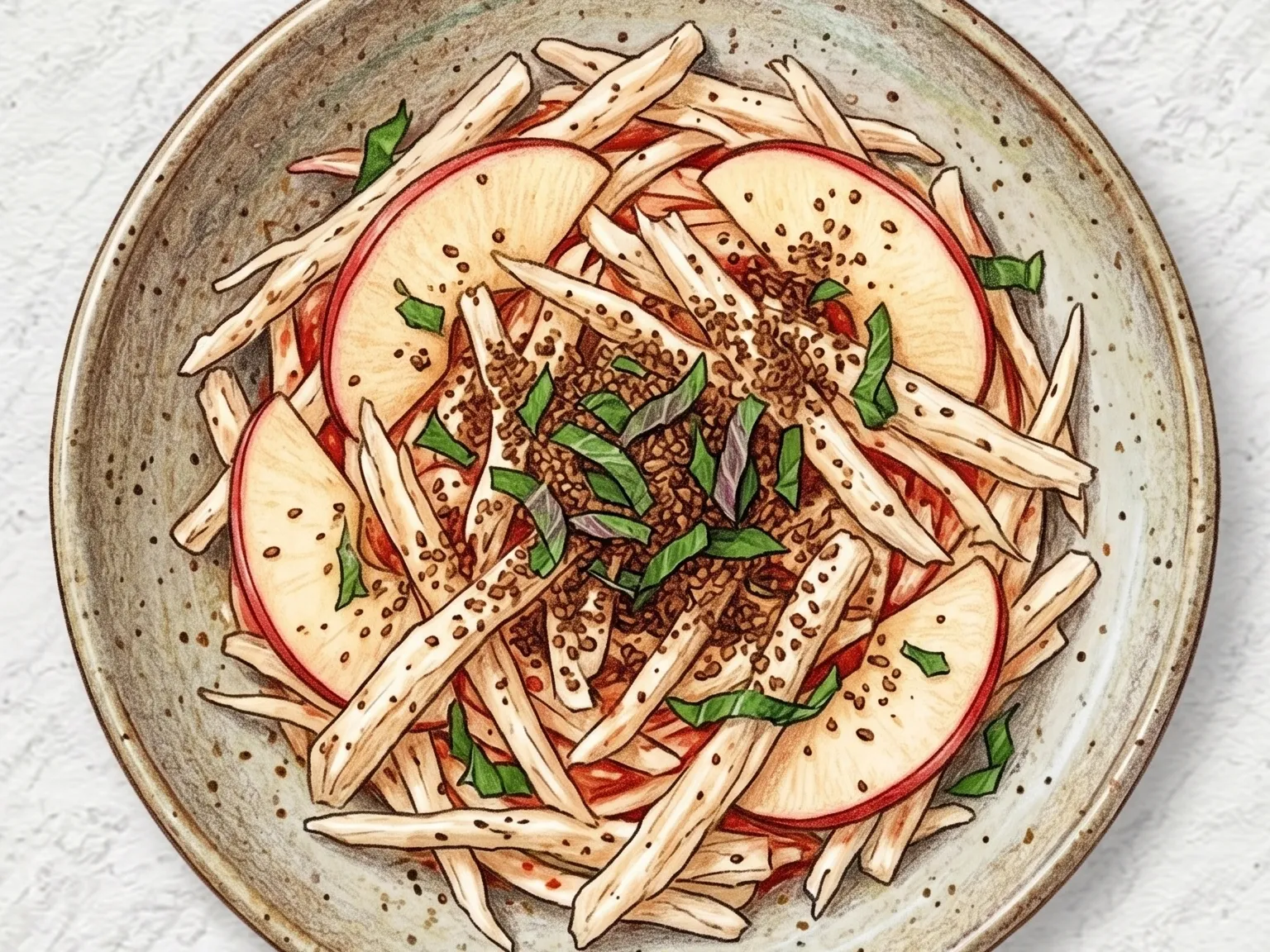
Deodeok Apple Perilla Salad (Bellflower Root Salad)
Deodeok (codonopsis root) is pounded with a mallet to split its fibers, releasing its distinctive herbal fragrance and creating a chewy, shredded texture. Thin apple slices add crisp sweetness that tempers the root's mild bitterness. The dressing combines gochujang and vinegar for a tangy-spicy profile, while ground perilla seeds contribute a nutty finish. Deodeok is in season from autumn through early spring and is traditionally used in Korean cooking for grilling and seasoned dishes, though it also works well raw in salads.
Adjust Servings
Instructions
- 1
Peel deodeok, gently flatten with the back of a knife, then tear into long strips.
- 2
Soak deodeok in cold water for 5 minutes to reduce bitterness, then drain.
- 3
Lightly toast deodeok in a pan over low heat for 2-3 minutes to bring out aroma.
- 4
Julienne the apple and toss immediately with lemon juice to prevent browning.
- 5
Mix gochujang, vinegar, oligodang syrup, perilla oil, and ground perilla seeds into a thick dressing.
- 6
Toss deodeok, apple, and baby greens gently with the dressing and plate to serve.
As an Amazon Associate, we may earn from qualifying purchases.
Tips
Nutrition (per serving)
More Recipes

Bomdong Strawberry Doenjang Salad
Bomdong strawberry doenjang salad pairs the crisp, mild leaves of early-spring bomdong cabbage with ripe strawberries and a dressing built on fermented soybean paste. Doenjang dissolved into olive oil and vinegar creates a savory base that gives the otherwise neutral greens a deep, umami-driven character, while the strawberries' natural acidity neutralizes the paste's saltiness. Walnuts bring a crunchy, toasted contrast between the soft fruit and tender leaves, and sliced cucumber adds a cooling moisture. The salad should be dressed just before serving - tossing too early draws juice from the strawberries and dilutes the bowl.

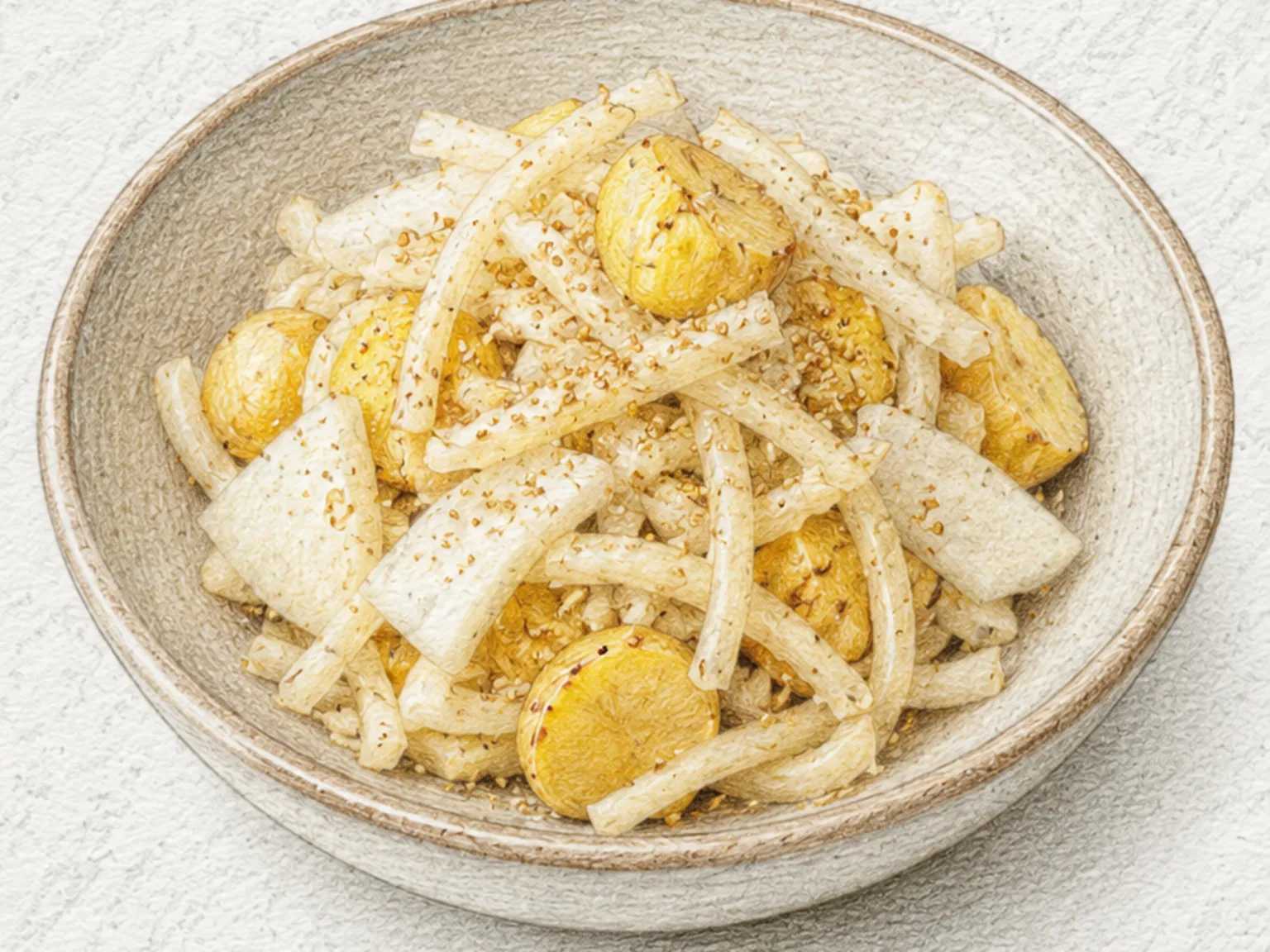
Bellflower Root, Chestnut & Perilla Salad
Blanched doraji retains a clean, mild bitterness that pairs with the warm sweetness of boiled chestnuts and the cool juiciness of Korean pear. Ground perilla seeds coat everything in a nutty, toasty layer that softens the root's edge. The dressing balances apple cider vinegar's acidity with honey, and olive oil smooths the transitions between ingredients. Both chestnuts and bellflower root peak in autumn, making this salad most flavorful during that season.

Grilled Mackerel Perilla Salad
Grilled mackerel perilla salad salts mackerel fillets for five minutes, then pan-sears them skin-side first until crisp, breaks the fish into pieces, and scatters them over romaine, perilla leaves, cucumber, and radish sprouts. Patting the fillet dry and salting it draws surface moisture out, so the skin crisps rapidly in the pan and any fishiness fades. Cooking skin-side down for four minutes before flipping for just two keeps the flesh moist inside. A dressing of soy sauce, yuzu marmalade, and sesame oil uses the yuzu's aromatic acidity to cut through the oily richness of the mackerel. Slicing perilla into thin ribbons with a knife distributes its herbal fragrance evenly across every bite.

Korean Melon Cucumber Perilla Salad
Korean melon cucumber perilla salad cuts chamae into half-moons and cucumber on the diagonal, centering the dish on their cool, crisp bite. Red onion is soaked in cold water for five minutes to tame its sharpness, and perilla leaves are rolled and chiffonaded to spread their distinctive fragrance evenly. The dressing combines lemon juice, olive oil, honey, and ground perilla seed, where the perilla's nuttiness and lemon's acidity draw out the melon's clean sweetness. Ground perilla is added just before serving to preserve its toasted aroma, and a 10-minute chill lets fruit juices blend with the dressing into a natural sauce.

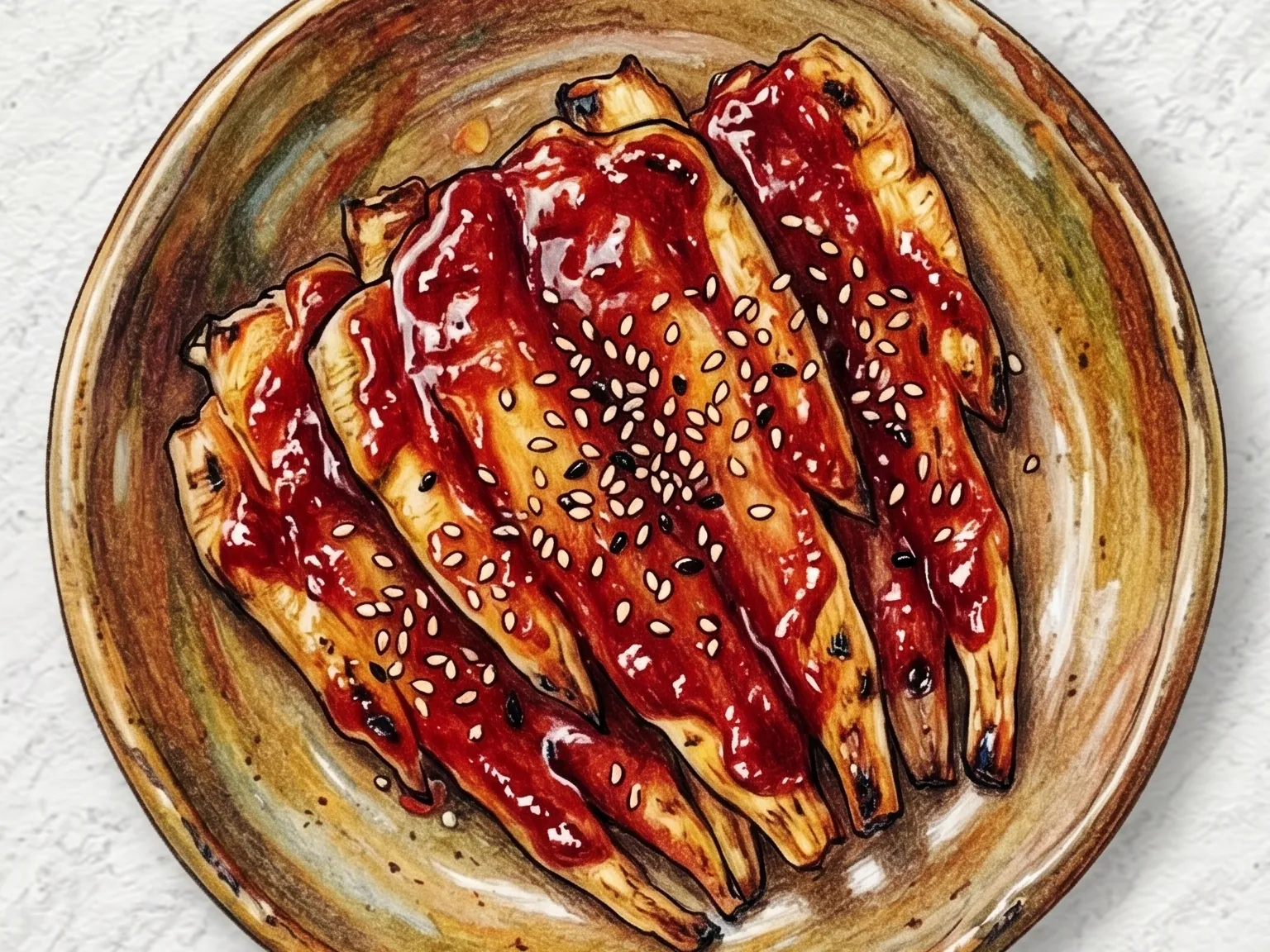
Korean Vinegared Bellflower Root Pickle
Deodeok chojeolim is a Korean vinegar pickle of bellflower root, prepared by peeling, splitting, and gently pounding the roots flat, then soaking them in a cooled brine of vinegar, water, sugar, and salt. A brief ten-minute salting before rinsing draws out the root's inherent bitterness while leaving its earthy, aromatic fragrance intact. The brine must be fully cooled before pouring to preserve the root's distinctive chewy, almost springy texture. After one day of refrigeration the pickle is dressed with a light toss of gochugaru and sesame oil just before serving, adding a spicy warmth and nutty finish. Served chilled, this side dish offers a rare combination of tangy acidity and deep root-vegetable aroma.

Korean Perilla Braised Tofu
Deulkkae dubu-jorim is a Korean braised tofu side dish finished with ground perilla seeds for a distinctly nutty, creamy character. Firm tofu slabs are lightly pan-seared, then simmered in a soy sauce and garlic broth with sliced onion. Ground perilla powder is stirred in toward the end, thickening the sauce into a pale, velvety coating that clings to each piece. A final drizzle of sesame oil and a scattering of green onion rounds out the dish with fragrant warmth.