Charim

2686 Korean & World Recipes

2686+ Korean recipes, clean and organized. Ingredients to instructions, all at a glance.

Korean Vinegared Bellflower Root Pickle
Kimchi Medium

Korean Vinegared Bellflower Root Pickle

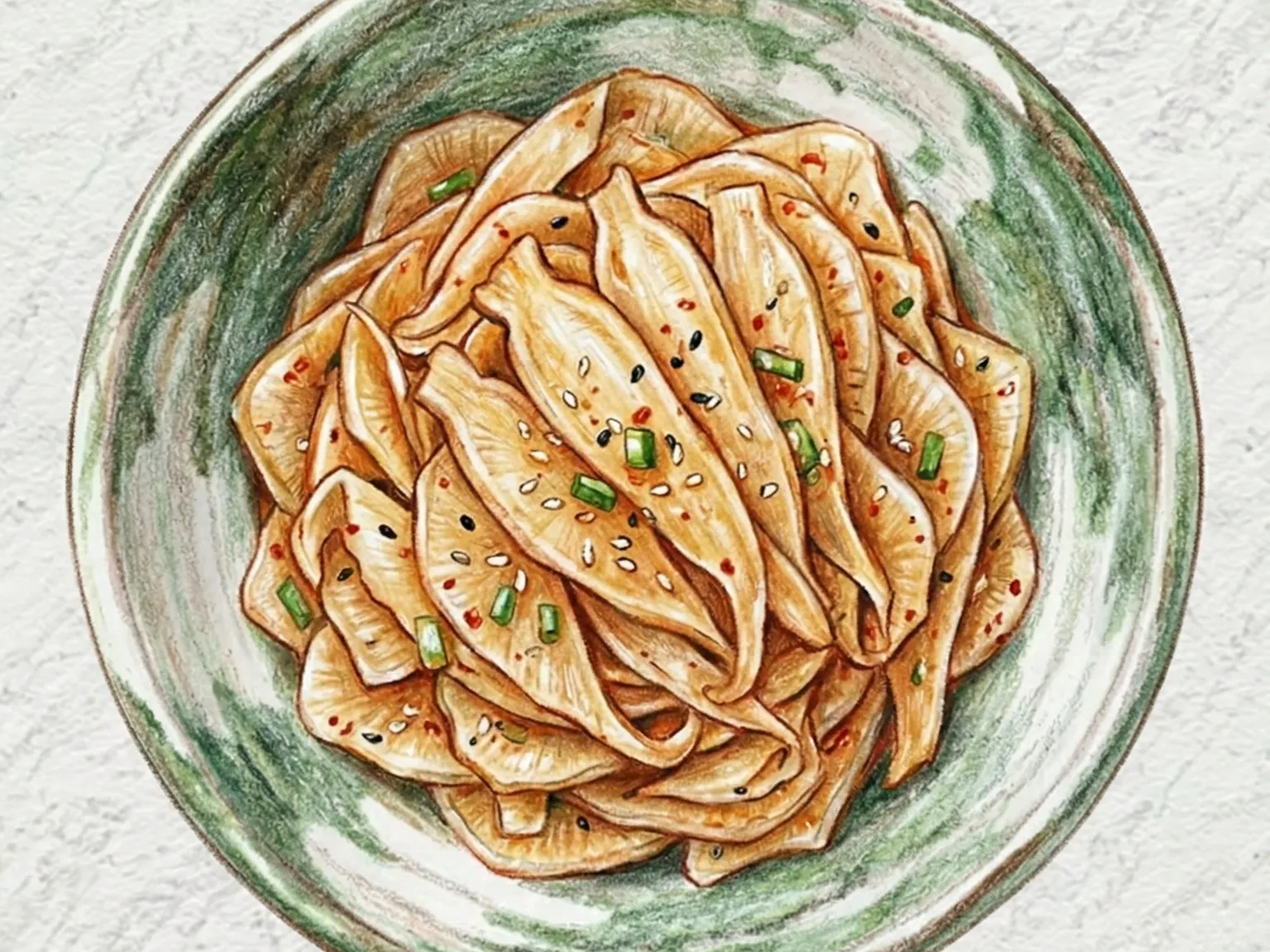
Deodeok chojeolim is a Korean vinegar pickle of bellflower root, prepared by peeling, splitting, and gently pounding the roots flat, then soaking them in a cooled brine of vinegar, water, sugar, and salt. A brief ten-minute salting before rinsing draws out the root's inherent bitterness while leaving its earthy, aromatic fragrance intact. The brine must be fully cooled before pouring to preserve the root's distinctive chewy, almost springy texture. After one day of refrigeration the pickle is dressed with a light toss of gochugaru and sesame oil just before serving, adding a spicy warmth and nutty finish. Served chilled, this side dish offers a rare combination of tangy acidity and deep root-vegetable aroma.

Prep 25min Cook 8min 2 servings

Adjust Servings

2servings
servings

Instructions

  1. 1

    Peel bellflower roots, split lengthwise, and gently flatten.

  2. 2

    Lightly salt for 10 minutes, then rinse.

  3. 3

    Boil vinegar, water, sugar, and salt to make pickling liquid.

  4. 4

    Cool and pour over roots, then refrigerate for 1 day.

  5. 5

    Before serving, lightly toss with chili flakes and sesame oil.

  6. 6

    Serve chilled as a side dish.

🛒Shop Ingredients on Amazon

As an Amazon Associate, we may earn from qualifying purchases.

Tips

Soak in milk for 5 minutes to reduce bitterness.
Add chili flakes right before serving for brighter color.

Nutrition (per serving)

Calories
98
kcal
Protein
2
g
Carbs
21
g
Fat
1
g

More Recipes

Korean Pickled Deodeok Root
KimchiMedium

Korean Pickled Deodeok Root

Deodeok jangajji is a traditional Korean pickle where peeled bellflower roots are briefly soaked in salted water to remove their sharp edge, split lengthwise, and submerged in a hot brine of soy sauce, vinegar, water, sugar, garlic, and ginger. Pouring the brine while still hot quickly firms the root's outer surface while keeping the interior chewy. Garlic and ginger develop layered aromatic depth alongside the root's intense earthy fragrance during the pickling period, and soy sauce anchors the umami. After at least three days of refrigeration the brine has penetrated fully, producing a mountain-vegetable preserve with a bold, concentrated flavor that pairs well with plain steamed rice.

🍱 Lunchbox
Prep 35minCook 12min4 servings
Korean Bellflower Root Pickles
KimchiMedium

Korean Bellflower Root Pickles

Doraji jangajji is a Korean soy-pickled bellflower root dish made by peeling and salting the roots to draw out bitterness, then submerging them in a boiled brine of soy sauce, vinegar, and sugar. The bellflower's characteristic bitter-herbal note softens as it meets the brine's acidity, revealing a fragrant, almost floral flavor that builds with each chew. Ginger in the brine neutralizes any earthy undertone, and the seasoning penetrates the root's fibrous structure as the liquid cools. After two or more days of curing, the pickle reaches a balanced sweet-sour-salty profile that makes it a reliable banchan to keep on hand.

🏠 Everyday🍱 Lunchbox
Prep 25minCook 10min4 servings
Korean Coastal Herb Pickle
KimchiEasy

Korean Coastal Herb Pickle

Bangpungnamul jangajji is a Korean soy-pickled side dish made from coastal hog fennel, a spring herb with a distinctive fragrance and mild bitterness. The pickling liquid is prepared by boiling soy sauce, water, vinegar, and sugar together, then pouring it hot over the cleaned herb in a jar. Garlic cloves and ginger slices added to the brine contribute additional aromatic depth. After about two days of marination, the herb absorbs enough of the soy-vinegar liquid to become flavorful, and the taste continues to develop over subsequent weeks. The pickle keeps for over a month under refrigeration and is served in small portions alongside rice. Its pungent, slightly bitter character acts as a palate stimulant between bites of milder dishes.

🍱 Lunchbox
Prep 18minCook 10min4 servings
Korean Celery Jangajji (Blanched Soy Lemon Pickle)
KimchiEasy

Korean Celery Jangajji (Blanched Soy Lemon Pickle)

Celery jangajji is a Korean soy pickle made by briefly blanching celery stalks to soften their fibrous exterior, then submerging them in a boiled brine of soy sauce, vinegar, and sugar. Peeling the tough outer strings and cutting into five-centimeter pieces before a thirty-second blanch removes the raw grassy edge while preserving the celery's distinctive cool, herbal fragrance. Lemon slices and whole garlic cloves added to the jar contribute a gentle citrus brightness and mild pungency that develop as the pickle rests. After two days in the refrigerator, the brine penetrates fully, producing a crisp, tangy side dish that pairs especially well with rich or oily main courses.

🍱 Lunchbox
Prep 15minCook 8min4 servings
Korean Grilled Deodeok Root
GrilledMedium

Korean Grilled Deodeok Root

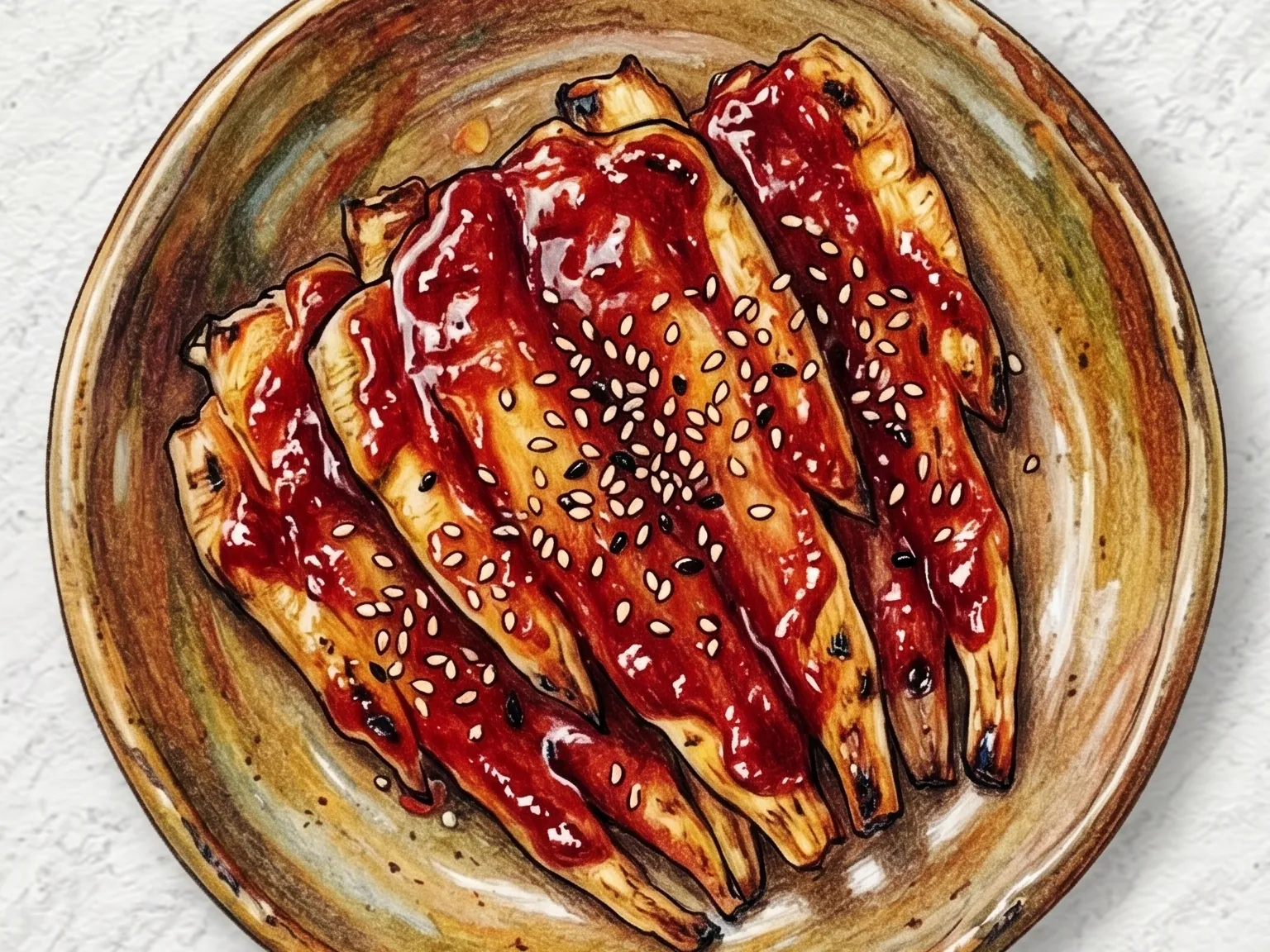
Deodeok-gui is a traditional Korean mountain vegetable dish where peeled deodeok (codonopsis lanceolata) roots are pounded flat with a mallet, coated in a paste of gochujang, gochugaru, honey, sesame oil, and garlic, then grilled over high heat. The pounding step is critical: it breaks down the tough fibers so the seasoning absorbs evenly and the root develops a pleasant chewiness instead of remaining stringy. Deodeok has a distinctive bittersweet, slightly medicinal aroma that sits in balance between the fermented spice of gochujang and the sweetness of honey. Quick grilling at high temperature chars the glaze just enough to add smokiness while keeping the interior moist, and toasted sesame seeds scattered on top contribute nuttiness to the wild herb's earthy character.

🍺 Bar Snacks
Prep 20minCook 10min2 servings
Korean Soy-Braised Deodeok Root
SteamedMedium

Korean Soy-Braised Deodeok Root

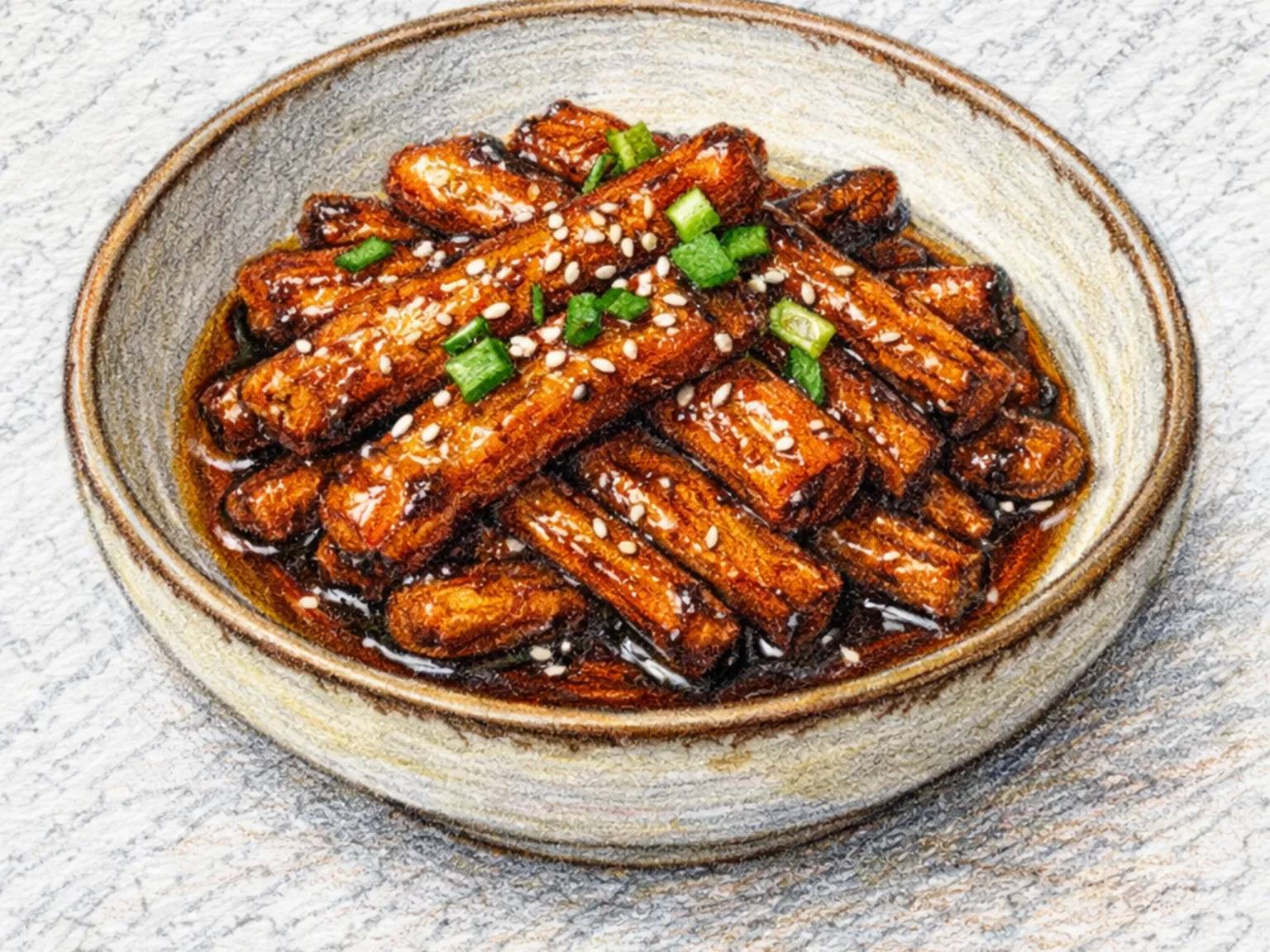
Deodeok-jorim is mountain root braised in soy sauce, rice syrup, garlic, and sesame oil. The root's distinctive bitter-herbal aroma softens as the sweet-salty glaze coats it during simmering, while the interior stays dense and slightly chewy. A single green chili adds a quiet heat at the finish, and sesame seeds scattered on top bring a toasted nuttiness. It is a banchan that preserves the wild, earthy character of foraged deodeok and pairs naturally with other vegetable side dishes on a Korean table.

🏠 Everyday🍱 Lunchbox
Prep 20minCook 18min2 servings
More Kimchi →