Korean Grilled Deodeok Root
Grilled Medium

Korean Grilled Deodeok Root

Quick answer

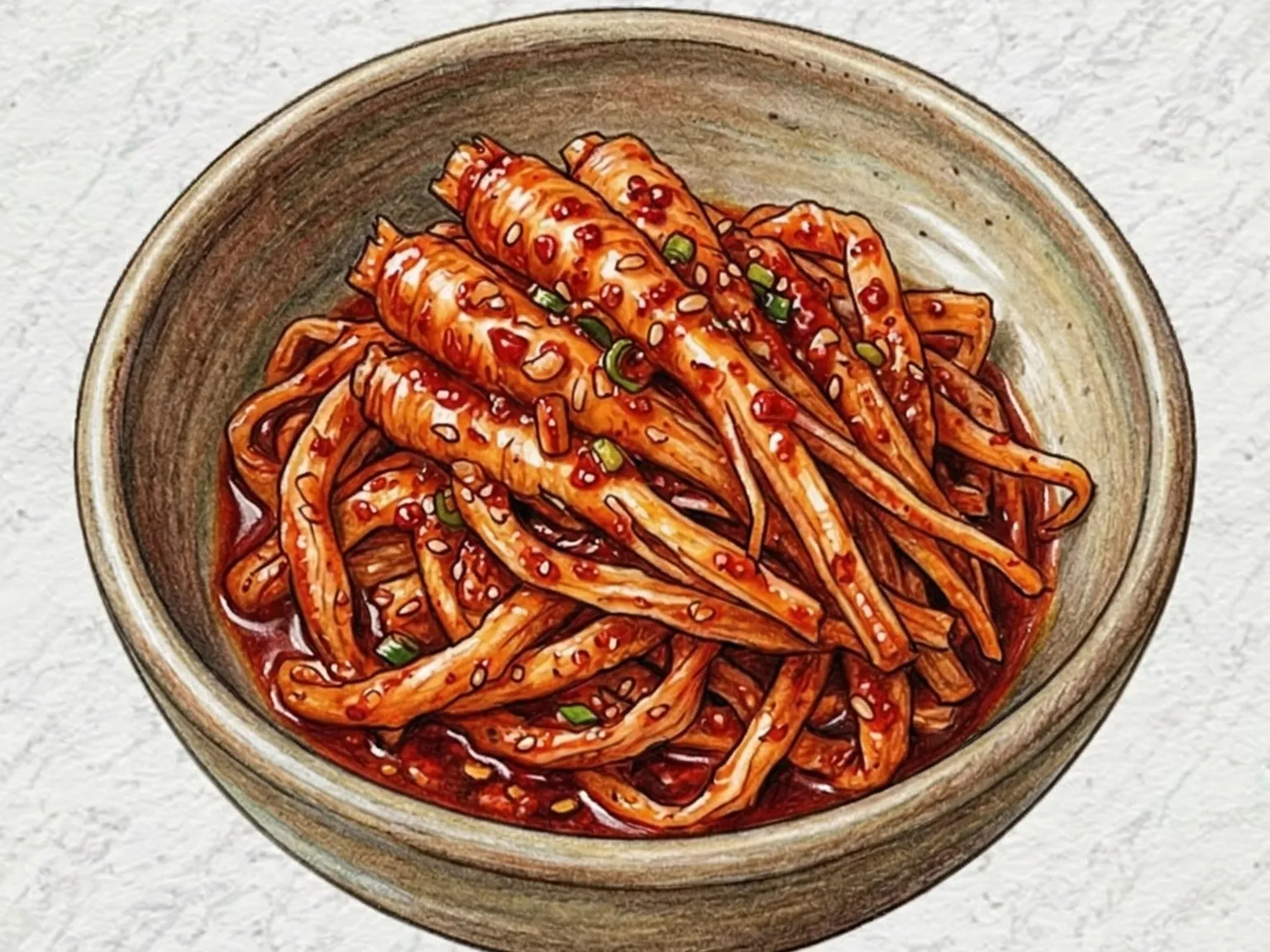
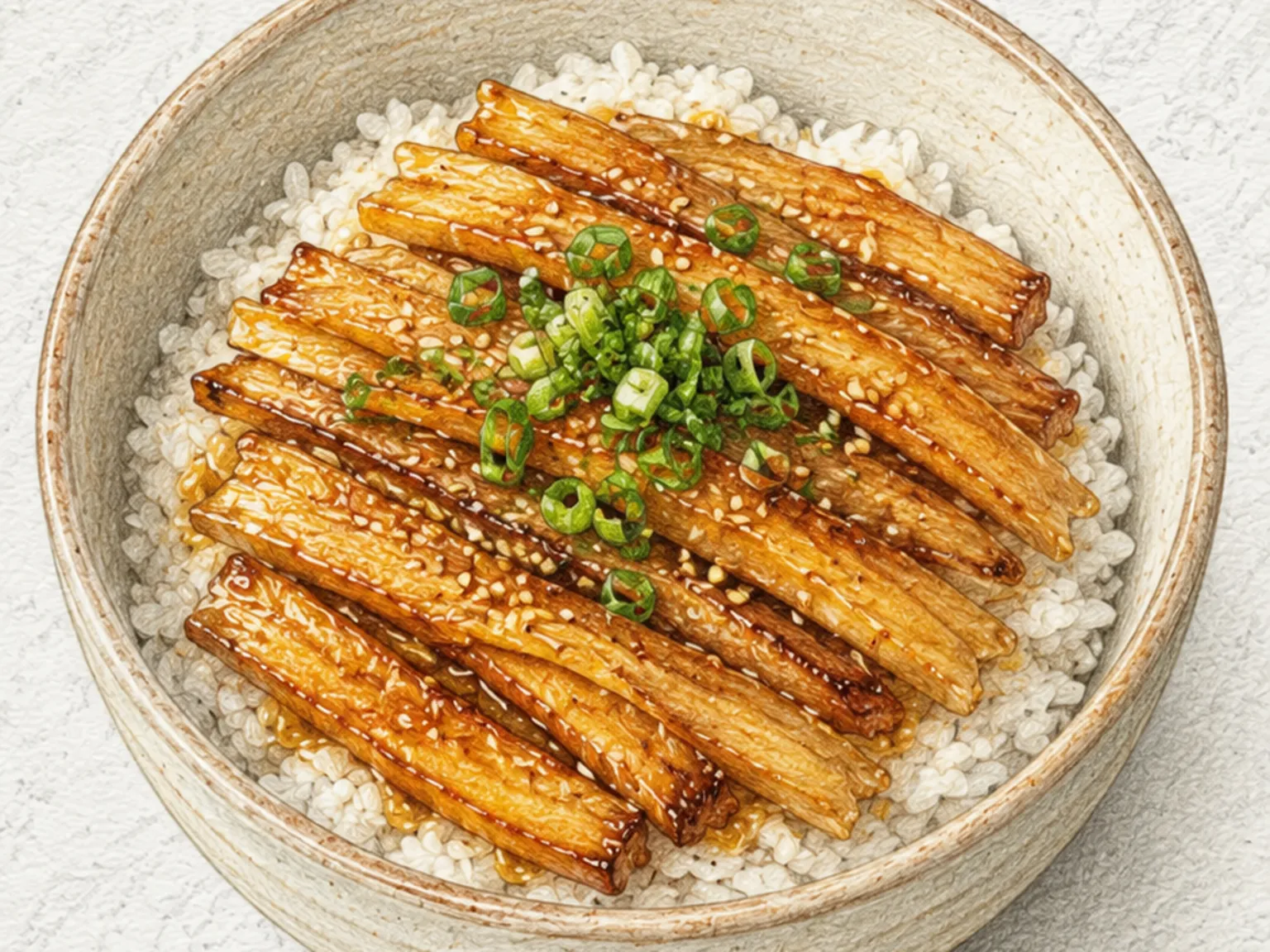
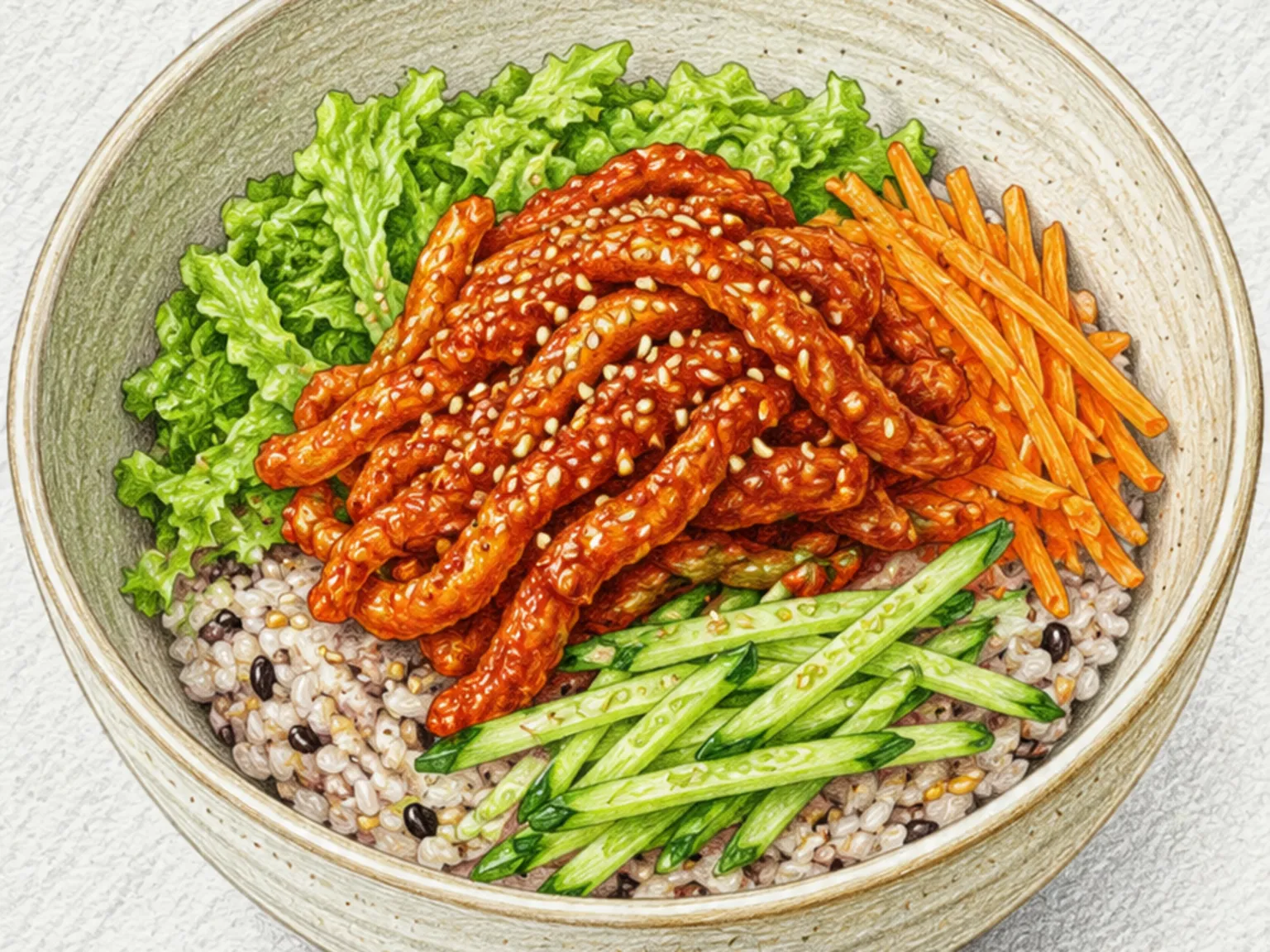
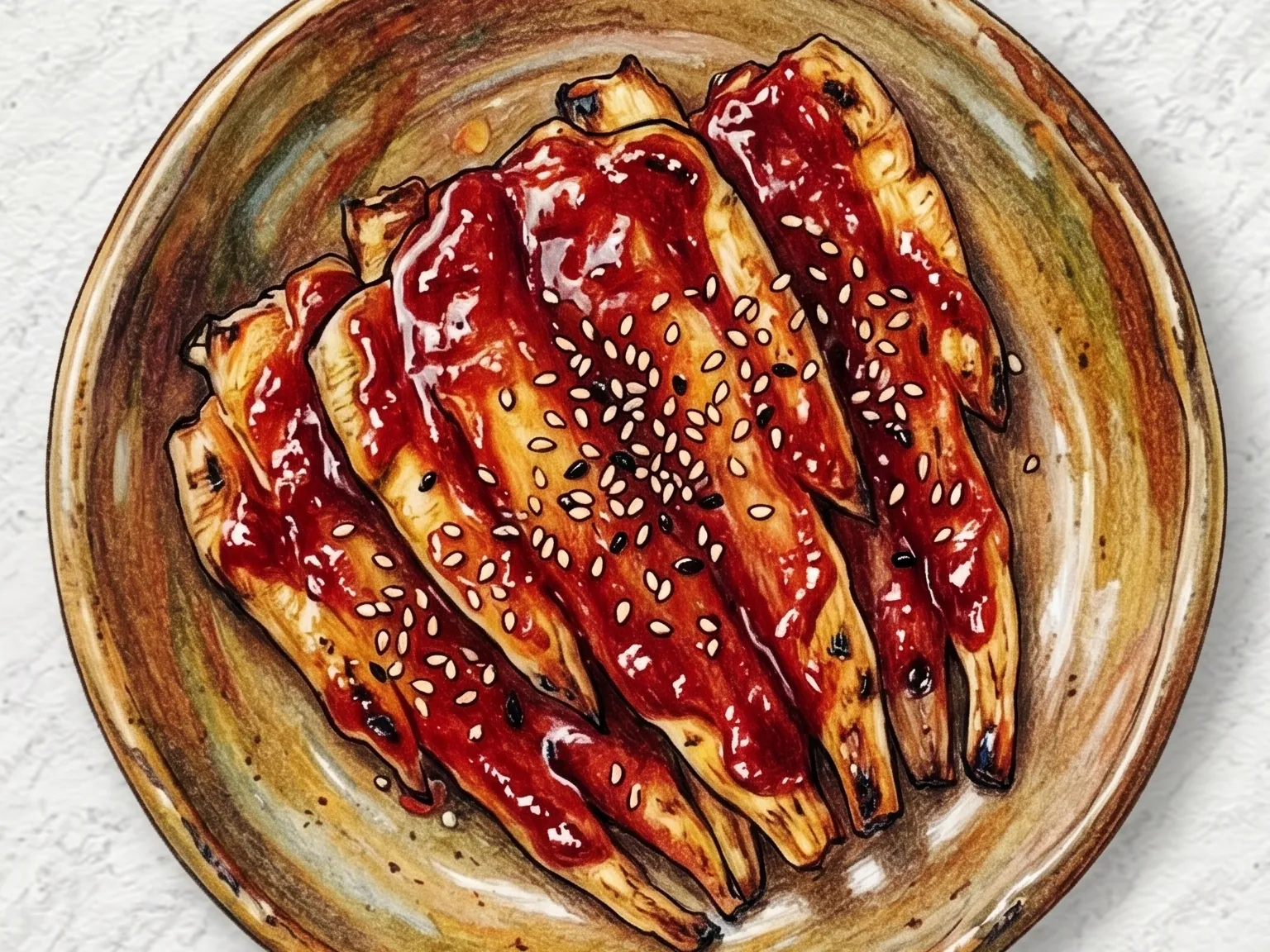
Deodeok-gui is a traditional Korean mountain vegetable dish where peeled deodeok roots are pounded flat with a mallet, coated in a paste of gochujang, gochugaru, honey, s...

What makes this special

  • Pounding deodeok roots with a mallet tenderizes the fibrous flesh for this Korean Grilled Deodeok Root.
  • Pounding with a mallet opens fibrous flesh so marinade penetrates and texture improves
  • 30-minute saltwater soak pulls out bitterness, leaving only the herbaceous mountain aroma
Total time
30 min
Level
Medium
Servings
2 servings
Ingredients
8
Calories
150 kcal
Protein
4 g

Key ingredients

Deodeok rootGochujangRed pepper flakesHoneySesame oil

Core cooking flow

  1. 1 Peel 200g deodeok and pound flat with a rolling pin or meat mallet to loosen the fibers.
  2. 2 Soak the flattened deodeok in cold water for 10 minutes to remove bitterness...
  3. 3 Combine 1.5 tbsp gochujang, half a tablespoon of chili powder, 1 tbsp honey...

Deodeok-gui is a traditional Korean mountain vegetable dish where peeled deodeok roots are pounded flat with a mallet, coated in a paste of gochujang, gochugaru, honey, sesame oil, and garlic, then grilled over high heat. The pounding step is critical: it breaks down the tough fibers so the seasoning absorbs evenly and the root develops a pleasant chewiness instead of remaining stringy. Soaking the peeled deodeok in lightly salted water for about thirty minutes before pounding draws out the sharpest bitterness, leaving only the characteristic mellow, slightly medicinal aroma the root is known for. That bittersweet quality sits in balance between the fermented spice of gochujang and the sweetness of honey. Quick grilling at high temperature chars the glaze just enough to add smokiness while keeping the interior moist; applying the seasoning paste in two stages during grilling builds a thicker, glossier layer on the surface. Toasted sesame seeds scattered on top contribute nuttiness that complements the wild herb's earthy, resinous character.

Prep 20min Cook 10min 2 servings

Instructions

Read the steps as a cooking flow: prep, heat, seasoning, doneness control, and finish.

6 steps
  1. 1
    Heat

    Peel 200g deodeok and pound flat with a rolling pin or meat mallet to loosen the fibers.

    This step is essential, allowing the marinade to penetrate deeply and giving the root a satisfying chew when cooked.

  2. 2
    Step

    Soak the flattened deodeok in cold water for 10 minutes to remove bitterness, then lift out and press dry completely with paper towels.

  3. 3
    Prep

    Combine 1.5 tbsp gochujang, half a tablespoon of chili powder, 1 tbsp honey, 1 tsp sesame oil, and minced garlic from 2 cloves into an even marinade.

  4. 4
    Season

    Brush or rub the marinade evenly over both sides of the deodeok, pressing into the fiber gaps so the sauce reaches the interior.

  5. 5
    Control

    Heat 1 tsp oil in a pan over medium heat, place the deodeok, and press each side for 3 to 4 minutes until a deep brown color develops. The moment the surface turns a rich golden brown signals that the honey sugar is caramelizing.

  6. 6
    Finish

    Transfer to a plate, sprinkle 1 tsp sesame seeds evenly for nuttiness, and serve immediately while the characteristic slightly bitter aroma of the deodeok is still vivid.

After the steps

Pick a recipe that fits this dish.

Continue with shared ingredients, meal pairings, or a similar method.

Recipes That Go Well With This

More Grilled →

Based on shared ingredients and meal pairing

Korean Deodeok Honey Latte (Bellflower Root Latte)
Shared ingredient: deodeok root Drinks

Korean Deodeok Honey Latte (Bellflower Root Latte)

Deodeok honey latte is made by peeling and chopping bellflower root, blanching it for two minutes to soften its natural bitterness, then blending it smooth with a portion of milk and honey to form the base. The base is combined with the remaining milk and warmed gently over low heat, then finished with condensed milk, vanilla extract, and a pinch of salt to build a rich, creamy body. The deodeok's earthy character, a faintly medicinal and mineral quality, persists just beneath the layers of sweetness, giving this latte an herbal depth that sets it apart from standard cafe drinks. A light dusting of cinnamon over the surface ties the flavors together on the finish. It represents a category of Korean yakseon beverages that draw on mountain ingredients traditionally valued for their nutritional properties.

Korean Grilled Bellflower Root
Shared ingredient: toasted sesame seeds Grilled

Korean Grilled Bellflower Root

Bellflower root is shredded lengthwise, soaked in salted water, and blanched for one minute to draw out its characteristic bitterness without eliminating it entirely. A ten-minute soak in a sauce of gochujang, gochugaru, soy sauce, oligosaccharide syrup, garlic, and sesame oil seasons the root before it hits a medium-heat pan for three to four minutes per side. The result has a crisp, crunchy bite - distinct from any other vegetable - with a red-glazed surface that carries moderate heat. Open-flame grilling adds a smoky dimension that pairs well with the spicy coating, and sesame seeds provide a finishing touch.

Korean Namhae-Style Clam Broth
Serve together Soups

Korean Namhae-Style Clam Broth

Namhae-jogae-tang is a southern coastal Korean clam soup that relies on an abundance of clams and minimal interference to produce a broth of startling clarity and depth. The clams are purged in salted water, then cooked in water spiked with rice wine, which tempers any raw ocean smell. As the shells pop open, they release their natural liquor - briny, faintly sweet, and concentrated - which becomes the soup's defining flavor. Sliced green and red chilies add gentle heat and color without overwhelming the shellfish, while garlic and green onion contribute a quiet aromatic layer. Salt is added cautiously, since the clams themselves bring significant salinity. The result is a transparent, intensely flavored bowl that tastes like the sea distilled into its purest form, and it is traditionally enjoyed as both a drinking companion and a light meal.

Korean Vinegared Bellflower Root Pickle
Similar recipe Kimchi

Korean Vinegared Bellflower Root Pickle

Deodeok chojeolim is a Korean vinegar pickle of bellflower root, made by peeling, splitting, and gently pounding the roots flat before soaking them in a fully cooled brine of vinegar, water, sugar, and salt. A brief ten-minute salting before rinsing draws out the root's inherent bitterness while leaving its earthy, aromatic fragrance completely intact. The brine must be cool before pouring - adding it hot would soften the root and destroy the distinctive chewy, springy texture that makes this pickle worth eating. After one day of refrigeration, the pickle gets a light toss of gochugaru and sesame oil just before serving, adding spicy warmth and a nutty finish. Served cold, it delivers a rare combination of clean acidity and deep root-vegetable aroma that sets it apart from most Korean side dishes.

Serve with this

Korean Stir-Fried Sweet Potato Stems
Side dishes Medium

Korean Stir-Fried Sweet Potato Stems

Goguma julgi - sweet potato stems - are the above-ground vines of the sweet potato plant, a byproduct that Korean cooks transform into a summer namul rather than discarding. The most labor-intensive step is peeling each stem by hand, pinching the outer skin with a fingernail and pulling it away to reveal the tender core beneath. After blanching for two minutes and rinsing in cold water, the stems are stir-fried in perilla oil with garlic and seasoned with soup soy sauce. Perilla powder stirred in at the end thickens the remaining liquid into a nutty glaze. In season during summer, the stems are harvested from sweet potato fields before the tubers themselves are dug up.

🏠 Everyday 🍱 Lunchbox
Prep 30min Cook 10min 4 servings
Korean Grilled Eel Rice Bowl
Rice Medium

Korean Grilled Eel Rice Bowl

Jangeeo deopbap is a bowl of grilled freshwater eel over steamed rice, where the key technique is building up a thick, lacquered glaze through multiple applications of a sweet-salty sauce reduced from soy sauce, mirin, sugar, and ginger juice. The eel starts skin-side down on the grill over medium heat for around five minutes to crisp the skin, then is flipped and basted repeatedly with the sauce as it finishes cooking. A single coat of sauce produces a pale, thin color, so at least two applications and ideally three or more are needed to build the characteristic glossy surface. With each additional coat, the sugars in the sauce react with heat through both Maillard browning and caramelization, layering flavor with every pass. Because freshwater eel is naturally fatty, fat drips during grilling can cause flare-ups, so heat control is important throughout the process. Sansho pepper dusted on at the end cuts through the eel's inherent richness with a sharp, numbing fragrance that balances the sweet glaze and keeps the dish from feeling heavy.

🎉 Special Occasion 🏠 Everyday
Prep 10min Cook 15min 1 servings
Korean Thistle Greens Pickles
Kimchi Medium

Korean Thistle Greens Pickles

Gondre-jangajji is a pickled banchan made from gondre, a Korean mountain thistle foraged in Gangwon Province each spring. The greens are blanched briefly to soften the fibrous stems before being submerged in a curing liquid of dark soy sauce, brown rice vinegar, rice syrup, minced garlic, and ginger. The blanching step is essential: raw gondre has a toughness that pickling liquid alone cannot fully penetrate, and a short time in boiling water opens the cell structure just enough to allow the marinade to work through without turning the greens limp. Rice syrup wraps the combined salt and acid in a mild sweetness that prevents the sharpness of either from dominating. A cheongyang chili adds a gentle heat at the finish that keeps the overall flavor from reading as one-dimensional. Because the fibrous texture holds the liquid within the grain of the vegetable, the jangajji stays moist and pliable throughout a week or more of refrigerated storage.

🍱 Lunchbox 🏠 Everyday
Prep 18min Cook 10min 4 servings

Similar recipes

Korean Grilled Eggplant (Soy Garlic Glazed Charred Eggplant)
Grilled Easy

Korean Grilled Eggplant (Soy Garlic Glazed Charred Eggplant)

Gaji-gui is Korean grilled eggplant, halved lengthwise, scored, and cooked slowly over medium heat until the flesh turns soft and creamy while the skin side holds a slight firmness. Salting the cut surface and resting it for ten minutes before cooking pulls out bitter moisture through osmosis and also reduces how aggressively the eggplant absorbs oil during grilling. The scoring pattern is functional as well as visual, creating channels that allow heat to penetrate into the thick interior so the eggplant cooks through evenly rather than remaining hard at the center while the outside chars. Covering the pan after laying the eggplant cut-side down traps steam and gently cooks the flesh from within. A sauce of soy sauce, sesame oil, Korean chili flakes, minced garlic, and sliced green onion is spooned over the grilled surface while the eggplant is still hot, and the residual heat releases the fragrance of garlic and sesame oil while the liquid seeps into the scored channels and seasons the interior. Toasted sesame seeds scattered over the top add a final layer of nuttiness that gives the otherwise mild eggplant the complexity needed to hold its own as a proper banchan.

🍺 Bar Snacks ⚡ Quick
Prep 10min Cook 10min 2 servings
Korean Pickled Deodeok Root
Kimchi Medium

Korean Pickled Deodeok Root

Deodeok jangajji is a traditional Korean pickle made by peeling fresh bellflower root, briefly soaking it in salted water to draw out the sharpness, splitting it lengthwise, and submerging the pieces in a hot brine of soy sauce, vinegar, water, sugar, garlic, and ginger. Pouring the brine while still at full heat quickly firms the outer surface of the root while leaving the interior tender and slightly chewy - a contrast that defines the texture of a well-made deodeok pickle. Garlic and ginger contribute layered aromatic warmth that gradually merges with the root's distinctive earthy fragrance over the course of the pickling period. Soy sauce anchors the umami and deepens the natural mountain-herb flavor of the deodeok. After a minimum of three days in the refrigerator, the brine penetrates all the way through, producing a preserve with a bold, concentrated flavor that is substantial enough to stand on its own alongside plain steamed rice.

🍱 Lunchbox 🥗 Light & Healthy
Prep 35min Cook 12min 4 servings
Grilled Squid & Bellflower Root Salad
Salads Medium

Grilled Squid & Bellflower Root Salad

Grilled squid and bellflower root citrus salad combines seared squid with soaked bellflower root, romaine, and orange segments in a yuzu-gochugaru dressing, drawing on classic Korean flavors to build a salad with genuine textural and flavor complexity. The squid tubes are scored in a crosshatch pattern before cooking, which ensures that heat penetrates evenly so the flesh cooks uniformly without curling into a tight coil; limiting each side to one to two minutes over high heat is equally important, as even a minute more will produce a rubbery result. Bellflower root is a traditional Korean ingredient with a pleasantly bitter edge that requires brief preparation: shredded into thin strips and soaked in lightly salted water for five minutes, it releases enough bitterness to become mild and yielding while retaining a satisfying crunch. The dressing is the component that unifies the dish: yuzu marmalade contributes a floral, layered acidity quite different from straightforward lemon or lime juice, while rice vinegar sharpens the finish, olive oil emulsifies and rounds the texture, and gochugaru adds a slow-building warmth that lingers after the citrus flavors fade. This combination bridges the savory, slightly smoky character of the squid and the subtle bitterness of the bellflower root. Fresh orange segments provide the final note, bursting with bright juice on each bite to lift the entire salad. The visual contrast between the ivory bellflower root, the charred squid, and the vivid orange makes the finished plate as attractive to look at as it is to eat.

🥗 Light & Healthy 🏠 Everyday
Prep 22min Cook 8min 4 servings

Tips

Pound deodeok inside a plastic bag to keep fibers intact.
If too bitter, extend the soaking time in salted water.
Charcoal grilling gives a much better aroma.

Nutrition (per serving)

Calories
150
kcal
Protein
4
g
Carbs
20
g
Fat
7
g