Korean Perilla Seed Porridge
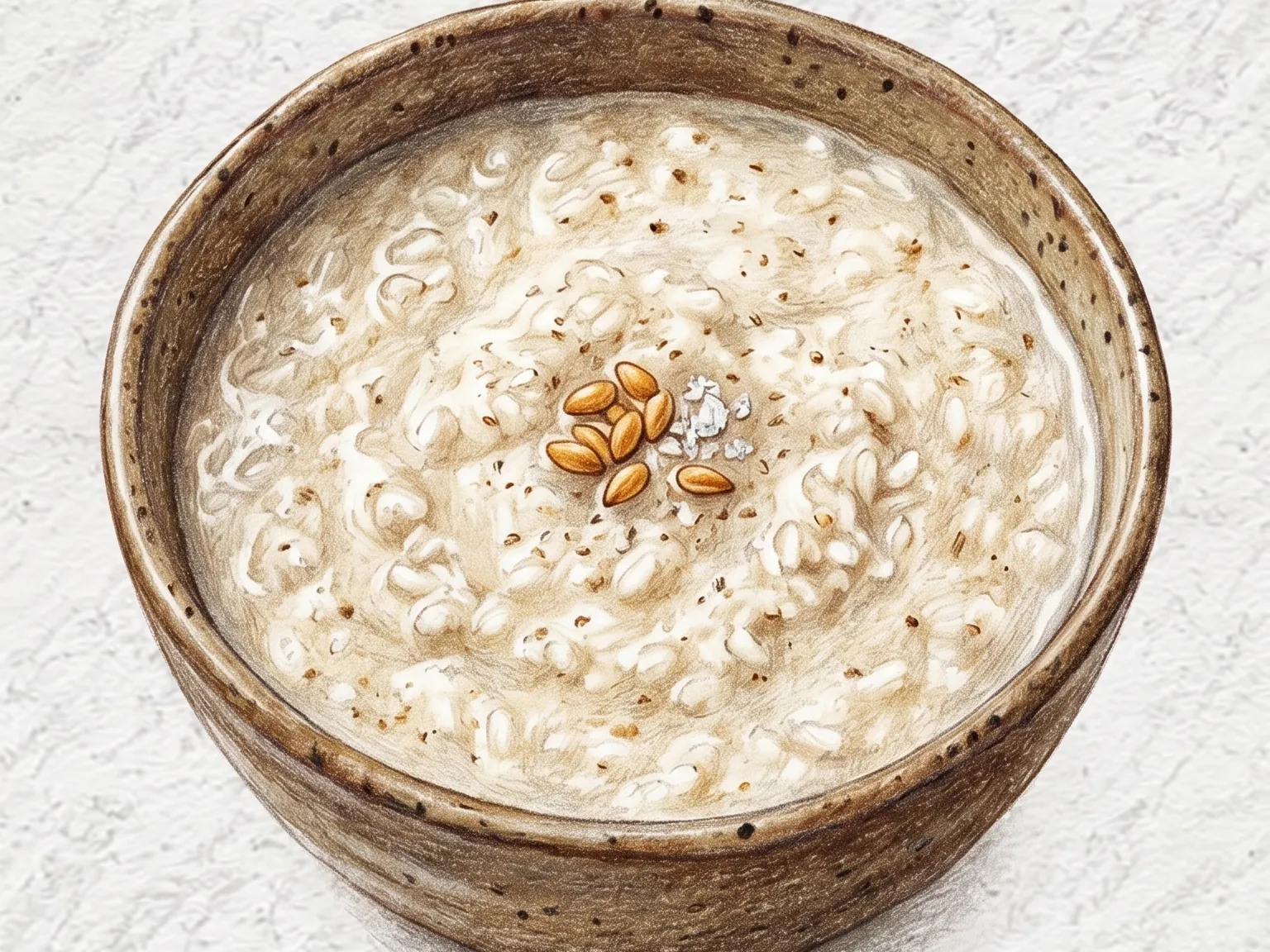
Deulkkae juk is a traditional Korean porridge made by blending toasted perilla seeds into a smooth liquid and simmering it with soaked rice. Toasting the seeds beforehand unlocks a deep, earthy nuttiness that defines every spoonful of the finished porridge. The rice is first stir-fried briefly in sesame oil, then the perilla liquid is poured in and the mixture is stirred over low heat until the starch from the rice and the natural oils from the seeds combine into a thick, creamy consistency. Salt is the only seasoning needed - the perilla carries enough flavor on its own to make the bowl complete. The porridge is easy to digest and coats the stomach gently, making it suitable as a morning meal or a restorative dish during illness. In Korean tradition, deulkkae juk has long served as a warming winter food, valued for its ability to nourish without burdening the body.
Adjust Servings
Instructions
- 1
Soak rice for 30 minutes.
- 2
Blend perilla seeds with some water until smooth.
- 3
Bring rice and water to a boil in a pot over low heat, stirring continuously.
- 4
When the rice is tender, stir in perilla liquid, season with salt, and finish with sesame oil.
As an Amazon Associate, we may earn from qualifying purchases.
Tips
Nutrition (per serving)
More Recipes

Korean Black Sesame Porridge
Black sesame seeds are blended smooth with water to create a dark paste, which is stirred into softened soaked rice over low heat until the porridge turns a deep charcoal color. Pre-toasting the sesame seeds before blending doubles their nutty intensity, producing a complex flavor that lands somewhere between toasted grain and roasted nut. Adding the sesame liquid after the rice has already softened makes it easier to control thickness, and a small amount of sugar introduces a subtle sweet layer beneath the nuttiness. Black sesame is naturally rich in anthocyanins and unsaturated fats, which is why this porridge has long been served as a restorative meal.

Korean Butterfish Porridge
Butterfish (byeongeo) is cut into pieces and simmered slowly with rice and water over low heat until the fish flesh dissolves into the porridge, releasing a gentle sweetness. This lean white fish carries minimal fat, so the finished juk stays light and clean on the palate. Careful bone removal before cooking is essential for a smooth eating experience. Seasoned with just salt and a drop of sesame oil, the porridge lets the fish flavor stand on its own - a traditional Korean comfort food prized for its easy digestibility and soothing warmth.

Korean Kimchi Porridge (Fermented Kimchi Pork Rice Porridge)
Well-fermented napa kimchi is chopped, stir-fried with ground pork in sesame oil, then slow-simmered with soaked rice and water for thirty minutes. Extended cooking softens the raw heat of the chili while spreading the fermentation tang evenly through the porridge, and the pork builds a savory backbone. Soup soy sauce adjusts the salt, and a scatter of sesame seeds adds a final nutty note. The more sour the kimchi, the more complex the finished juk becomes - a traditional Korean porridge meant to warm and soothe when appetite or digestion needs a gentle reset.

Korean Hemp Seed Rice (Nutty Protein-Rich Grain Rice)
Cheongsam bap is a Korean nutritional rice made by cooking toasted hemp seeds together with short-grain rice. The hemp seeds bring a nutty flavor and a pleasant pop of texture that transforms plain white rice into something more interesting, while also adding a meaningful boost of plant protein and healthy fats. The preparation is as simple as regular rice cooking - just add the seeds and a pinch of salt before starting the cooker. The mild, toasty flavor of the hemp seeds pairs well with virtually any side dish, or the rice can stand on its own as a wholesome, understated bowl.

Korean Perilla Seed and Potato Stew
A comforting potato jjigae enriched with ground perilla seeds, which give the broth a nutty thickness reminiscent of a light porridge. Potatoes and zucchini simmer in anchovy stock until the potatoes begin to break down, naturally thickening the stew. Three tablespoons of perilla seed powder are stirred in to create the signature creamy, toasty flavor that defines this dish. Seasoned simply with soup soy sauce and garlic, it showcases how a few humble ingredients can produce a deeply satisfying meal.

Korean Perilla Seed Hand-torn Noodle Soup
Deulkkae sujebi is a Korean hand-torn noodle soup where rested wheat dough is pulled into thin, irregular pieces and dropped into an anchovy-kelp broth enriched with ground perilla seeds. The thirty-minute rest gives the dough enough elasticity to tear thin while keeping a satisfying chew once cooked. Potato and zucchini simmer alongside the dough, contributing sweetness and a soft texture to the bowl. The perilla powder turns the broth milky and opaque, filling each spoonful with a roasted, creamy depth. This is a rainy-day and winter staple in Korean home cooking, valued for its warmth and the hands-on simplicity of tearing the dough.