Charim

2686 Korean & World Recipes

2686+ Korean recipes, clean and organized. Ingredients to instructions, all at a glance.

Korean Sedum Water Kimchi

Korean Sedum Water Kimchi

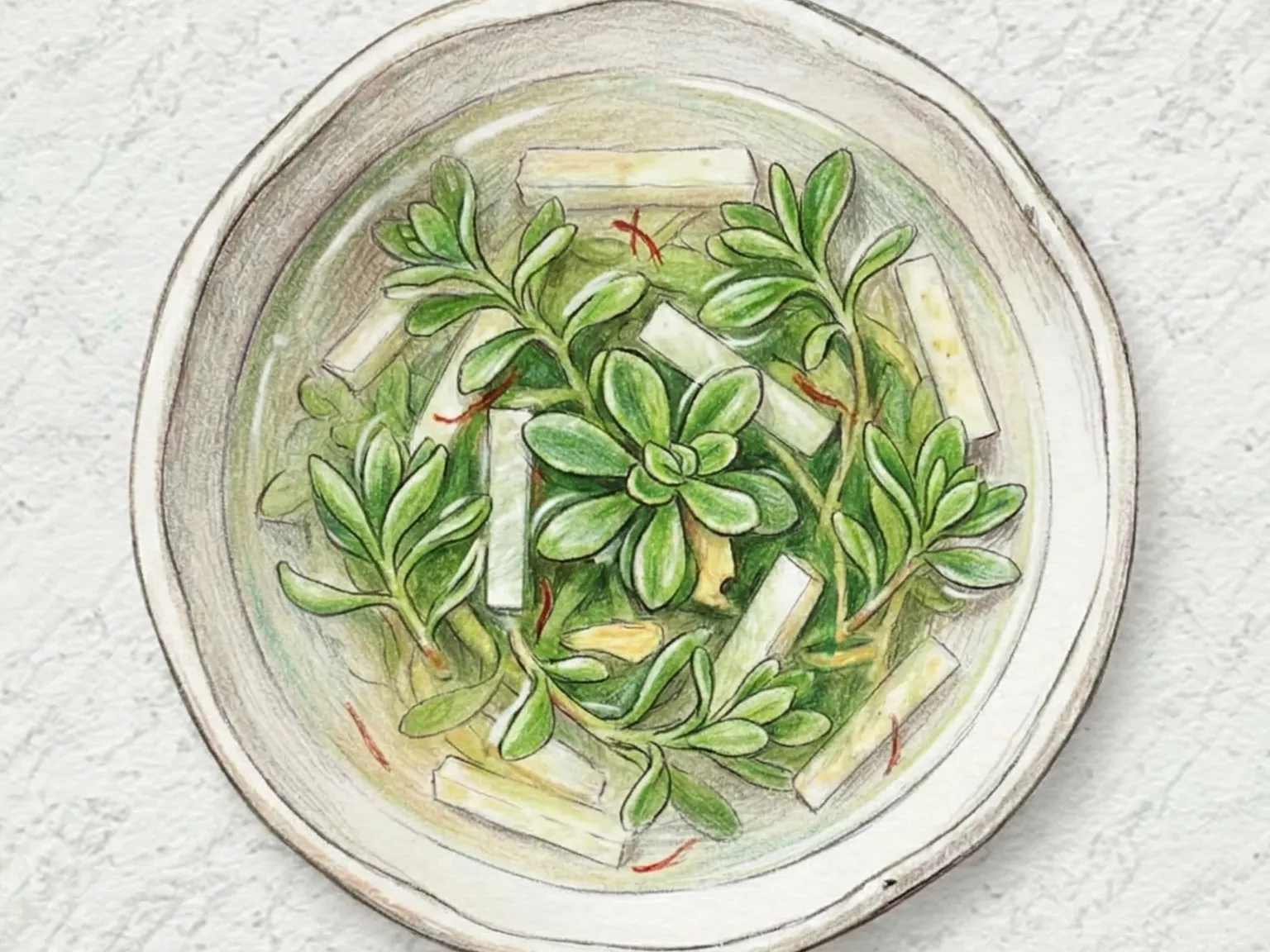
Dolnamul mul kimchi is a Korean water kimchi made with sedum greens, Korean radish, pear, and scallions fermented in a light, clear brine. Thinly sliced radish is salted to draw out moisture, while julienned pear dissolves natural sweetness into the liquid. Wrapping gochugaru in cheesecloth and steeping it in the brine imparts a gentle chili aroma and pale blush of color without clouding the broth. The sedum is added last to preserve its crisp, succulent texture. One day of fermentation at room temperature generates a mild effervescence and refreshing tang, after which the kimchi is refrigerated and served cold. Ladled over rice as a cold soup, this seasonal preparation captures the vitality of early spring.

Prep 25min Cook 10min 4 servings

Adjust Servings

2servings
servings

Instructions

  1. 1

    Pick out wilted leaves from the sedum, rinse quickly in cold water, and drain well.

  2. 2

    Julienne the radish into thin 3 cm strips, cut pear to match, and slice scallions into 4 cm lengths.

  3. 3

    Bring water to a boil, dissolve salt and sugar, then turn off the heat and cool the brine completely.

  4. 4

    In a bowl, mix a little cooled brine with red pepper flakes, garlic, ginger, and fish sauce to make seasoning liquid.

  5. 5

    Place radish, pear, scallion, and sedum in a kimchi container, then pour in the seasoning liquid and remaining brine.

  6. 6

    Ferment at room temperature for 8 to 12 hours, then refrigerate and serve chilled within 1 to 2 days.

🛒Shop Ingredients on Amazon

As an Amazon Associate, we may earn from qualifying purchases.

Tips

Rinse sedum briefly; soaking too long can make it grassy.
If the broth tastes flat, adjust with a pinch of salt and a few drops of vinegar before serving.

Nutrition (per serving)

Calories
42
kcal
Protein
2
g
Carbs
8
g
Fat
0
g

More Recipes

Korean Young Radish Water Kimchi
KimchiMedium

Korean Young Radish Water Kimchi

Yeolmu mul-kimchi is a water kimchi in which salted young radish greens are submerged in a clear broth infused with garlic, ginger, scallions, and sliced radish. The garlic and ginger are squeezed through cloth rather than added directly, producing a transparent, clean-tasting liquid. Plum syrup contributes a natural sweetness and acidity that develops further during fermentation. After eight hours at room temperature and twelve more in the refrigerator, the brine becomes effervescent and refreshingly tart, making it ideal to serve cold alongside bibim guksu or steamed rice in summer. Using filtered cold water ensures the cleanest possible flavor.

🥗 Light & Healthy🍱 Lunchbox
Prep 30min4 servings
Korean Chamnamul Kimchi (Pimpinella Kimchi)
KimchiMedium

Korean Chamnamul Kimchi (Pimpinella Kimchi)

Chamnamul kimchi is a spring kimchi made by salting chamnamul greens for just ten minutes to wilt them slightly, then dressing them in gochugaru, anchovy fish sauce, and salted shrimp without rinsing. Skipping the rinse allows the residual salt to convert into umami during fermentation, deepening the overall flavor. Pureed Korean pear and onion blended with sweet rice paste form the seasoning base, contributing natural sweetness that softens the chili heat. After three hours of initial fermentation at room temperature followed by refrigeration, the kimchi reaches its best balance within one to two days, when the grassy herbal aroma of chamnamul meets the fermented depth of the fish sauce.

🍱 Lunchbox
Prep 30minCook 5min4 servings
Korean Garlic Scape Kimchi
KimchiEasy

Korean Garlic Scape Kimchi

Maneul jong kimchi is a Korean garlic scape kimchi made by lightly brining the scapes, then dressing them in a paste of gochugaru, fish sauce, and plum syrup blended with pureed onion and pear. The scapes' sharp, peppery garlic aroma survives fermentation while the stems maintain their crisp snap, delivering alternating waves of heat and umami with each bite. Pear lays a fruit sweetness into the base that buffers the chili intensity, and fish sauce adds the fermented depth expected in Korean kimchi. Trimming the woody bottoms before seasoning improves the texture, and the flavor settles into balance after about two days of fermentation.

🍱 Lunchbox
Prep 30minCook 5min4 servings
Korean Young Napa Kimchi (Spring Cabbage Quick Ferment)
KimchiMedium

Korean Young Napa Kimchi (Spring Cabbage Quick Ferment)

Eolgari kimchi is a spring kimchi made with young napa cabbage that is briefly salted, then dressed in gochugaru, fish sauce, garlic, and glutinous rice paste before fermenting at room temperature for about a day. The young leaves are thinner and the stems more tender than mature napa, so the seasoning penetrates quickly and fermentation produces a pleasant acidity within twenty-four hours. Salted shrimp compensates for the short fermentation period by adding immediate depth, and the young cabbage itself contributes a clean sweetness that balances the chili heat without any added sugar. This is a seasonal kimchi meant as a lighter alternative to aged kimchi when temperatures start rising in spring.

🏠 Everyday🍱 Lunchbox
Prep 40minCook 10min4 servings
Korean Potato Salad (Creamy Mashed Potato Ham Cucumber)
Side dishesEasy

Korean Potato Salad (Creamy Mashed Potato Ham Cucumber)

Korean potato salad (gamja salad) arrived via Japan's yoshoku tradition but evolved its own identity in Korean home kitchens. Potatoes are boiled and mashed while hot, leaving some lumps for textural contrast - uniformly smooth is not the goal. Diced ham is pan-seared to render excess fat, then mixed with salt-drained cucumber and boiled carrot. The dressing is simply mayonnaise adjusted with sugar and salt, producing the distinctly sweet-creamy profile that separates Korean potato salad from Western versions. Chilling for at least an hour before serving lets the seasoning equalize throughout the mixture.

🏠 Everyday🍱 Lunchbox
Prep 20minCook 15min4 servings
Korean Zucchini Namul (Sesame-Dressed Bibimbap Topping)
Side dishesEasy

Korean Zucchini Namul (Sesame-Dressed Bibimbap Topping)

Hobak namul is julienned zucchini stir-fried with sesame oil and garlic - a foundational Korean namul that appears as one of the five-color toppings in bibimbap. Though it looks similar to hobak-bokkeum, the cut makes the difference: namul uses thin julienne strips rather than half-moons, so the strands integrate seamlessly with rice grains when mixed. Salting and thoroughly squeezing out moisture is essential; leftover water makes the pan soggy and turns bibimbap rice gummy. Seasoning stays minimal - salt and sesame oil - with garlic gently sauteed first to lay down an aromatic base without burning. Three minutes over medium heat is enough, and the cooked strands hold their shape well even after cooling, which makes this a reliable lunchbox option.

🏠 Everyday🍱 Lunchbox
Prep 10minCook 10min4 servings
More Kimchi →