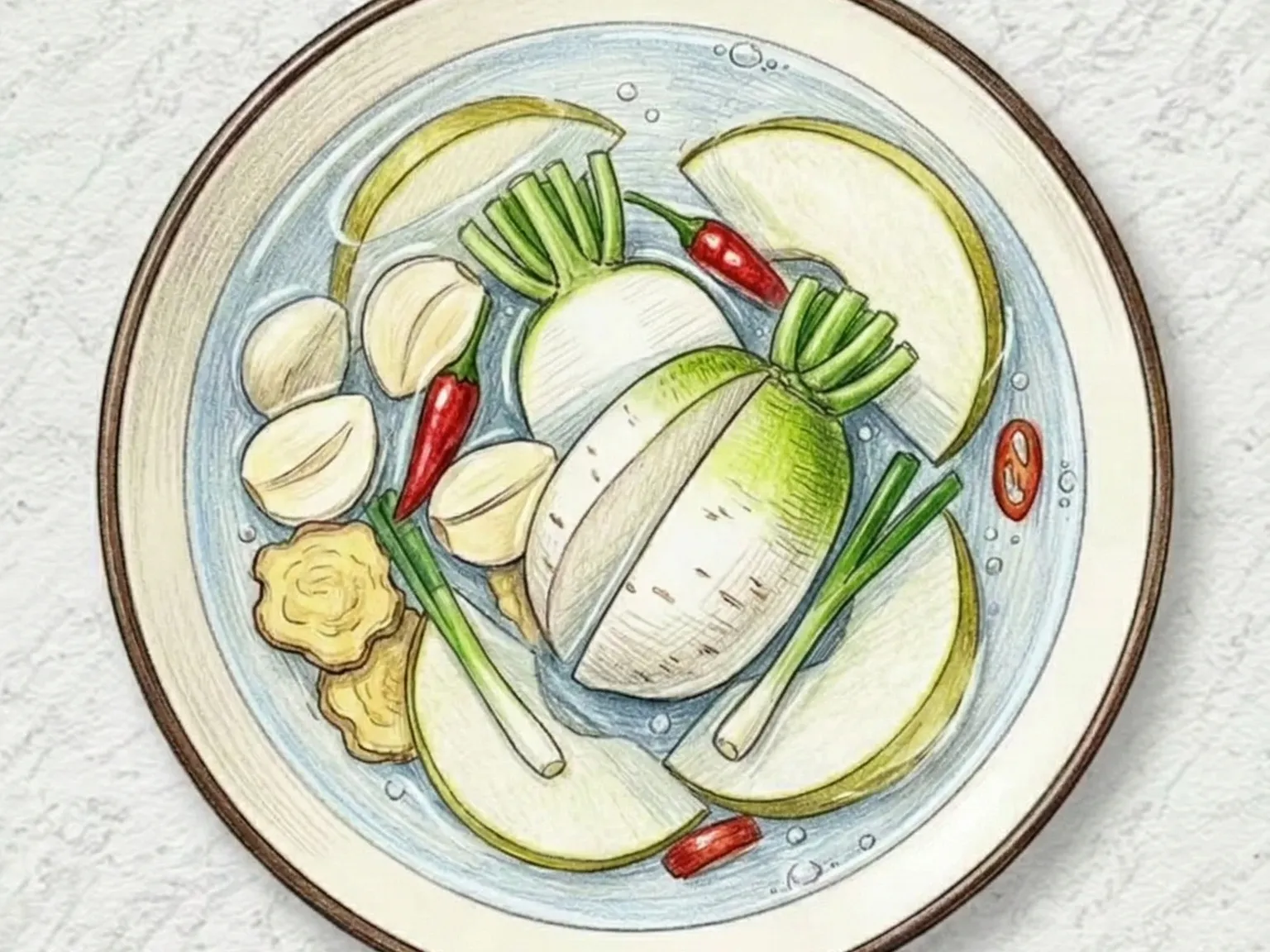
Korean Dongchimi Radish Water Kimchi
Cut 1.2 kg Korean radish into large 4 to 5 cm chunks, since smaller pieces soften faster during fermentation, and salt them with 60 g coarse salt for 2 hours, turning once. Tie 200 g pear, 8 garlic cloves, and 20 g ginger in cheesecloth and steep them in 2.5 L lightly salted water for 30 minutes, then pour that brine over the rinsed, drained radish until everything is submerged. Leave it at room temperature for 1 to 2 days, refrigerate once tiny bubbles appear, and age it at least 4 more days.
Quick answer
- Active time
- 35 min
- Waiting
- See the steps
- Level
- Easy
- Servings
- 4 servings
- Ingredients
- 9
About this dish
As dongchimi ferments, the clear brine around chunks of radish turns cool, tangy and faintly fizzy, with a soft fruitiness from pear and a clean finish from ginger.
Read more
The radish is cut large, 4 to 5 cm, because small pieces go soft once the kimchi ripens, and a firm, medium-sized radish holds up better than a small one. Keeping every piece under the brine stops stray microbes, and the jar moves to the fridge once small bubbles appear. In winter the chilled broth becomes a base for cold noodles or is ladled alongside rich, fatty meat. Strained, the ripe broth tastes cleaner, and it keeps refrigerated for 2 to 3 weeks.
Ingredients
Instructions
- 1
Wash 1200 g of Korean radish well, then cut it into large 4 to 5 cm chunks.
Avoid cutting it too small, since smaller pieces soften faster during fermentation and lose the crisp texture dongchimi needs.
- 2
Sprinkle 60 g of coarse salt evenly over the radish and toss so every cut side is coated.
Salt for 2 hours, turning the pieces once halfway through so the seasoning penetrates evenly.
- 3
When the radish bends slightly and releases moisture, rinse it once lightly in cold water.
Drain in a colander for at least 10 minutes so excess surface water does not dilute the brine.
- 4
Dissolve a little salt in 2500 ml of water to make a clear brine.
Tie 200 g of pear, 8 garlic cloves, and 20 g of ginger in cheesecloth, then steep for 30 minutes to season the liquid cleanly.
- 5
Pack the radish, 60 g of scallions, and 2 pierced green chilies into a sterilized container.
Pour in the infused brine until every ingredient is fully submerged, which helps prevent spoilage during fermentation.
- 6
Leave at room temperature for 1 to 2 days, then move it to the refrigerator once tiny bubbles appear.
Age for at least 4 more days, serve well chilled, and strain the broth if you want a cleaner finish.
Use-up ingredient planner
Turn these ingredients into two more meals
The overlap excludes basic seasonings. Open the next recipe and your selected dishes will stay with you.
Korean White Kimchi (Non-Spicy Napa Pear Fermented)
Korean radish, coarse salt
Beet Water Kimchi
Korean radish, coarse salt
Korean Sedum Water Kimchi
Korean radish, coarse salt