Bellflower Root, Chestnut & Perilla Salad
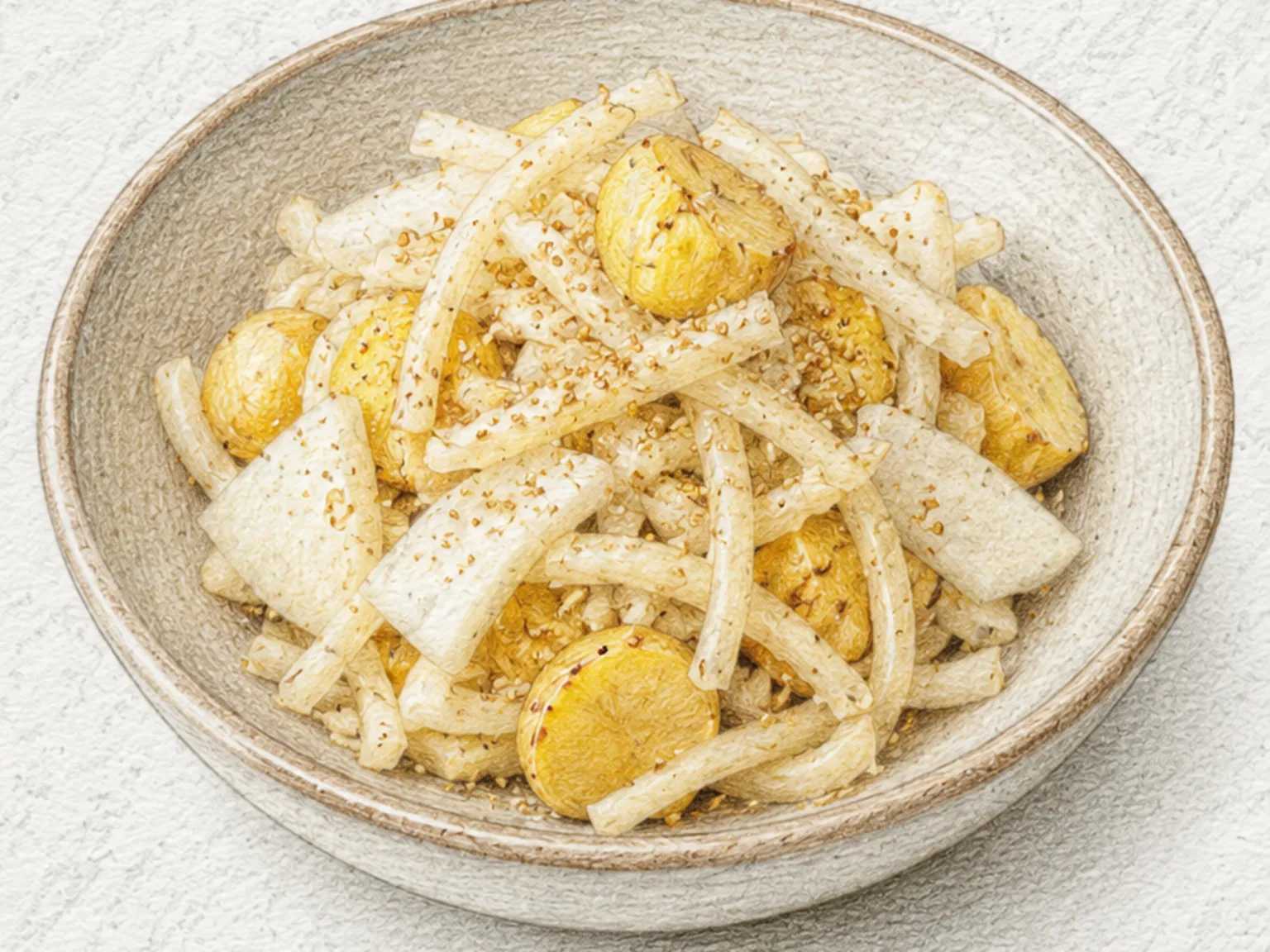
Blanched doraji retains a clean, mild bitterness that pairs with the warm sweetness of boiled chestnuts and the cool juiciness of Korean pear. Ground perilla seeds coat everything in a nutty, toasty layer that softens the root's edge. The dressing balances apple cider vinegar's acidity with honey, and olive oil smooths the transitions between ingredients. Both chestnuts and bellflower root peak in autumn, making this salad most flavorful during that season.
Adjust Servings
Instructions
- 1
Shred bellflower root, soak in salted water for 10 minutes, then rinse to reduce bitterness.
- 2
Blanch bellflower root for 40 seconds, shock in cold water, and squeeze dry.
- 3
Julienne pear and quarter chestnuts to keep texture.
- 4
Whisk vinegar, honey, olive oil, perilla powder, and salt into a smooth dressing.
- 5
Combine bellflower root, pear, chestnuts, and baby greens; toss with dressing.
- 6
Plate and serve within 5 minutes for maximum crunch.
As an Amazon Associate, we may earn from qualifying purchases.
Tips
Nutrition (per serving)
More Recipes

Bellflower Root and Pear Salad
Doraji (bellflower root) is rubbed with salt to draw out its bitterness, then briefly blanched to achieve a texture that is both crisp and yielding. Julienned Korean pear brings cool sweetness and moisture to balance the root's dryness. The seasoning follows a traditional Korean muchim structure: gochugaru for heat, vinegar for tang, and fish sauce for depth. A drizzle of sesame oil finishes the dish with a toasted aroma. The pear's high water content keeps each bite juicy.

Deodeok Apple Perilla Salad (Bellflower Root Salad)
Deodeok (codonopsis root) is pounded with a mallet to split its fibers, releasing its distinctive herbal fragrance and creating a chewy, shredded texture. Thin apple slices add crisp sweetness that tempers the root's mild bitterness. The dressing combines gochujang and vinegar for a tangy-spicy profile, while ground perilla seeds contribute a nutty finish. Deodeok is in season from autumn through early spring and is traditionally used in Korean cooking for grilling and seasoned dishes, though it also works well raw in salads.

Lotus Root Crab Yuja Salad
Thinly sliced lotus root, blanched until just crisp-tender, provides the structural crunch at the center of this salad, while gently separated crab meat drapes a delicate sweetness and umami over each bite. The yuja mayo dressing - yuja marmalade folded into mayonnaise with lemon juice - delivers citrus fragrance and creamy richness simultaneously. Half-moon cucumber slices and thin red onion add contrasting crunch, and a bed of mixed baby greens brings color and freshness to the plate. Keeping the blanching time under four minutes is critical; even a minute longer turns the lotus root soft and robs it of its signature snap.

Chamnamul Pear Tofu Salad
Chamnamul pear tofu salad pan-sears firm tofu cubes for 6-8 minutes until the exterior turns golden and crisp while the inside stays soft. Chamnamul is cut into 5 cm lengths to preserve its fragrant mountain-herb character, and Korean pear is julienned thin so its clean juice sweetens each bite. A dressing of perilla oil, lemon juice, and soup soy sauce delivers nuttiness and umami in a single drizzle, and halved cherry tomatoes contribute a pop of acidity. Slicing the pear just before assembly minimizes browning, and toasted sesame seeds scattered on top add a final layer of warm, nutty aroma.

Korean Grilled Bellflower Root
Bellflower root is shredded lengthwise, soaked in salted water, and blanched for one minute to draw out its characteristic bitterness without eliminating it entirely. A ten-minute soak in a sauce of gochujang, gochugaru, soy sauce, oligosaccharide syrup, garlic, and sesame oil seasons the root before it hits a medium-heat pan for three to four minutes per side. The result has a crisp, crunchy bite - distinct from any other vegetable - with a red-glazed surface that carries moderate heat. Open-flame grilling adds a smoky dimension that pairs well with the spicy coating, and sesame seeds provide a finishing touch.

Korean Bellflower Root Pickles
Doraji jangajji is a Korean soy-pickled bellflower root dish made by peeling and salting the roots to draw out bitterness, then submerging them in a boiled brine of soy sauce, vinegar, and sugar. The bellflower's characteristic bitter-herbal note softens as it meets the brine's acidity, revealing a fragrant, almost floral flavor that builds with each chew. Ginger in the brine neutralizes any earthy undertone, and the seasoning penetrates the root's fibrous structure as the liquid cools. After two or more days of curing, the pickle reaches a balanced sweet-sour-salty profile that makes it a reliable banchan to keep on hand.