Korean Bellflower Root Pickles
Doraji jangajji is a Korean soy-pickled bellflower root dish made by peeling and salting the roots to draw out bitterness, then submerging them in a boiled brine of soy sauce, vinegar, and sugar. The bellflower's characteristic bitter-herbal note softens as it meets the brine's acidity, revealing a fragrant, almost floral flavor that builds with each chew. Ginger in the brine neutralizes any earthy undertone, and the seasoning penetrates the root's fibrous structure as the liquid cools. After two or more days of curing, the pickle reaches a balanced sweet-sour-salty profile that makes it a reliable banchan to keep on hand.
Adjust Servings
Instructions
- 1
Clean and shred bellflower root, rub with salt to reduce bitterness.
- 2
Rinse in cold water and squeeze out moisture.
- 3
Boil soy sauce, water, vinegar, sugar, and ginger for brine.
- 4
Pack roots into a jar and cover with cooled brine.
- 5
Refrigerate for 4 days before serving.
As an Amazon Associate, we may earn from qualifying purchases.
Tips
Nutrition (per serving)
More Recipes

Korean Pickled Deodeok Root
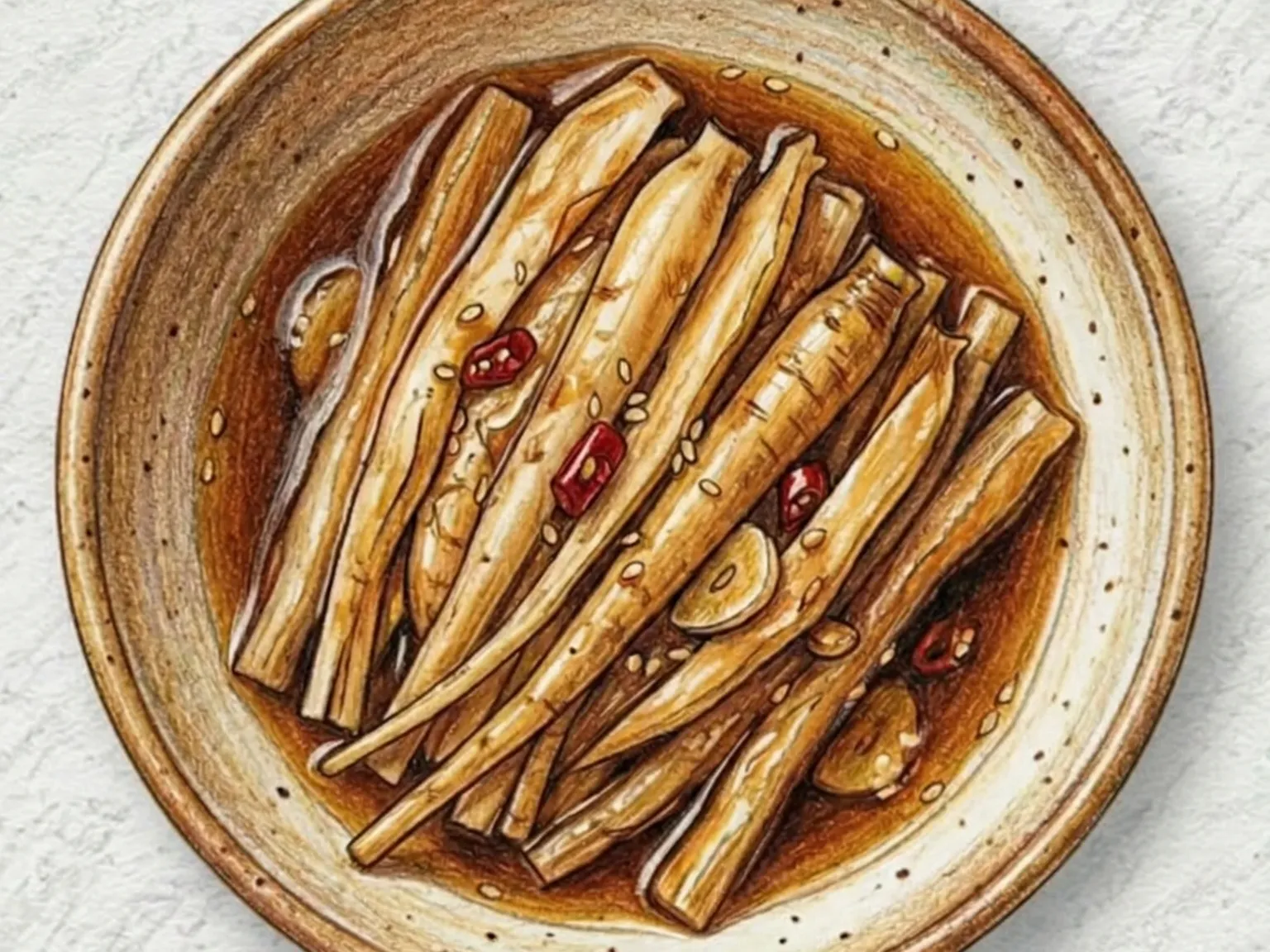
Deodeok jangajji is a traditional Korean pickle where peeled bellflower roots are briefly soaked in salted water to remove their sharp edge, split lengthwise, and submerged in a hot brine of soy sauce, vinegar, water, sugar, garlic, and ginger. Pouring the brine while still hot quickly firms the root's outer surface while keeping the interior chewy. Garlic and ginger develop layered aromatic depth alongside the root's intense earthy fragrance during the pickling period, and soy sauce anchors the umami. After at least three days of refrigeration the brine has penetrated fully, producing a mountain-vegetable preserve with a bold, concentrated flavor that pairs well with plain steamed rice.

Korean Celery Jangajji (Blanched Soy Lemon Pickle)
Celery jangajji is a Korean soy pickle made by briefly blanching celery stalks to soften their fibrous exterior, then submerging them in a boiled brine of soy sauce, vinegar, and sugar. Peeling the tough outer strings and cutting into five-centimeter pieces before a thirty-second blanch removes the raw grassy edge while preserving the celery's distinctive cool, herbal fragrance. Lemon slices and whole garlic cloves added to the jar contribute a gentle citrus brightness and mild pungency that develop as the pickle rests. After two days in the refrigerator, the brine penetrates fully, producing a crisp, tangy side dish that pairs especially well with rich or oily main courses.

Korean Garlic Scape Soy Pickles
Maneul jong jangajji is a Korean garlic scape pickle made by cutting scapes into 5 cm lengths, packing them in a sterilized jar with cheongyang chili, and pouring over a brine of boiled soy sauce, vinegar, sugar, and kelp. The scapes' sharp garlic bite melds with the soy's salty savory character to build a flavor that deepens with every chew, and the kelp infuses the brine with a subtle seaweed umami. Vinegar cuts through the salt to keep the taste clean, and the chili adds a lingering warmth at the finish. Reboiling and repouring the brine after two days extends the shelf life, allowing this banchan to last over a month in the refrigerator.

Korean Lotus Root Jangajji
Yeongeun jangajji is a soy-pickled lotus root made by blanching sliced root in vinegar water to prevent discoloration, then soaking it in a hot brine of soy sauce, sugar, peppercorns, and bay leaf. The brine seeps through the root's characteristic holes, distributing a balanced salty-sweet flavor evenly in every bite. Bay leaf tempers the heaviness of the soy base while whole peppercorns add a mild spice undertone. The result is a pickle with a dual texture - simultaneously chewy and crisp - that keeps well for days and works as a lunchbox side or everyday banchan.

Korean Grilled Bellflower Root
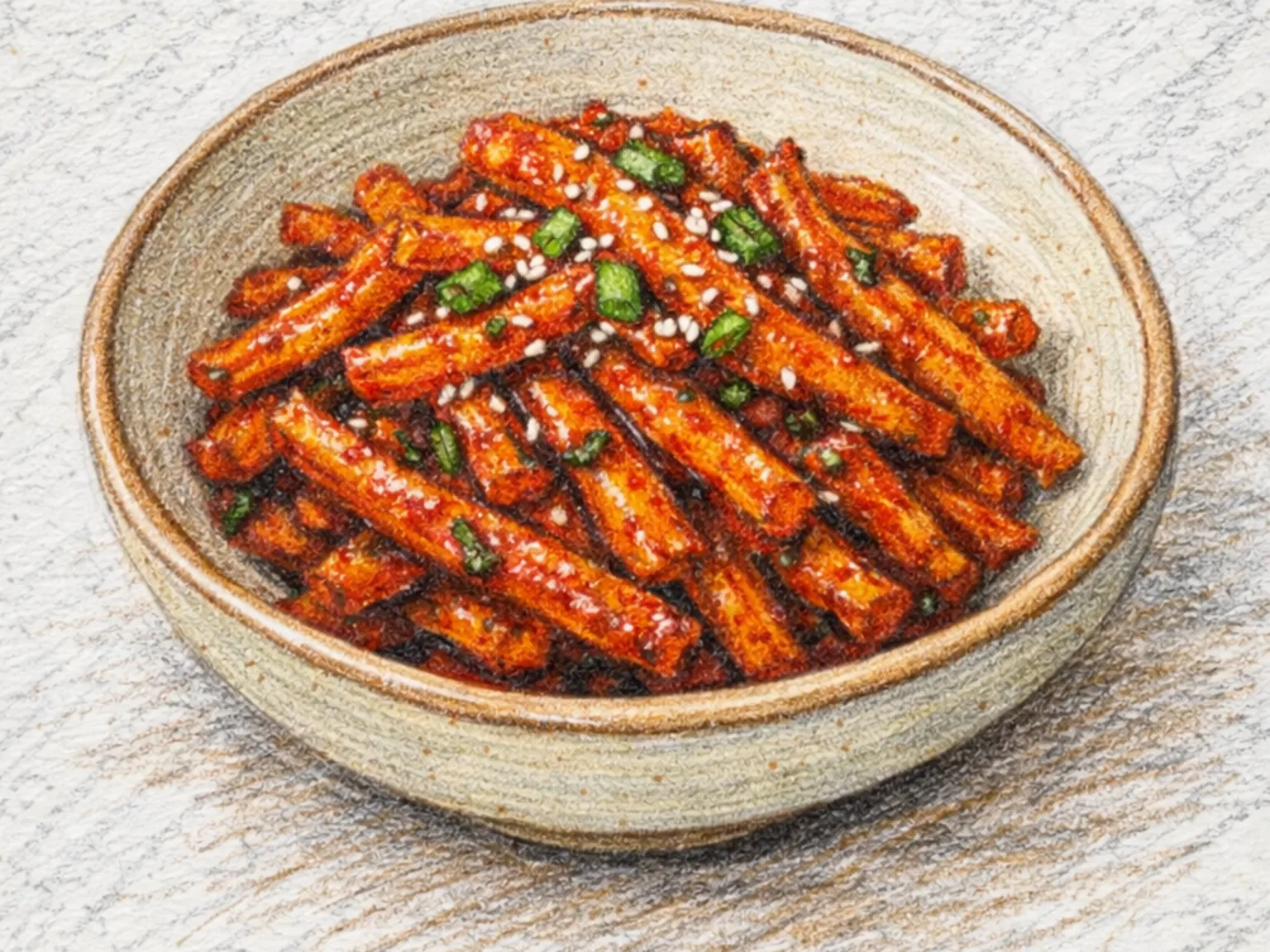
Bellflower root is shredded lengthwise, soaked in salted water, and blanched for one minute to draw out its characteristic bitterness without eliminating it entirely. A ten-minute soak in a sauce of gochujang, gochugaru, soy sauce, oligosaccharide syrup, garlic, and sesame oil seasons the root before it hits a medium-heat pan for three to four minutes per side. The result has a crisp, crunchy bite - distinct from any other vegetable - with a red-glazed surface that carries moderate heat. Open-flame grilling adds a smoky dimension that pairs well with the spicy coating, and sesame seeds provide a finishing touch.

Korean Soy-Marinated Soybean Leaves
Kongnip-jangajji is soybean leaves preserved in a seasoned soy brine - one of the two major leaf jangajji traditions alongside perilla leaf (kkaennip) jangajji. Soybean leaves are larger and thicker than perilla leaves, taking longer to absorb the pickling liquid but offering a more substantial chew, with each leaf large enough to wrap around a spoonful of rice. The brine - soy sauce, water, vinegar, and sugar boiled together - must cool completely before pouring over the leaves; hot liquid softens them into a limp state, destroying the desired texture. Garlic cloves, cheongyang chili, and onion slices added to the jar infuse the brine with aromatic complexity during the curing process, producing a more layered flavor than plain soy. A minimum of two days of refrigerated aging is needed for the seasoning to reach the leaf interior, and flipping the layers once daily ensures even penetration. The most common way to eat it is draped over hot steamed rice, ssam-style.