Dotori-Muk Vegetable Salad (Acorn Jelly Salad)
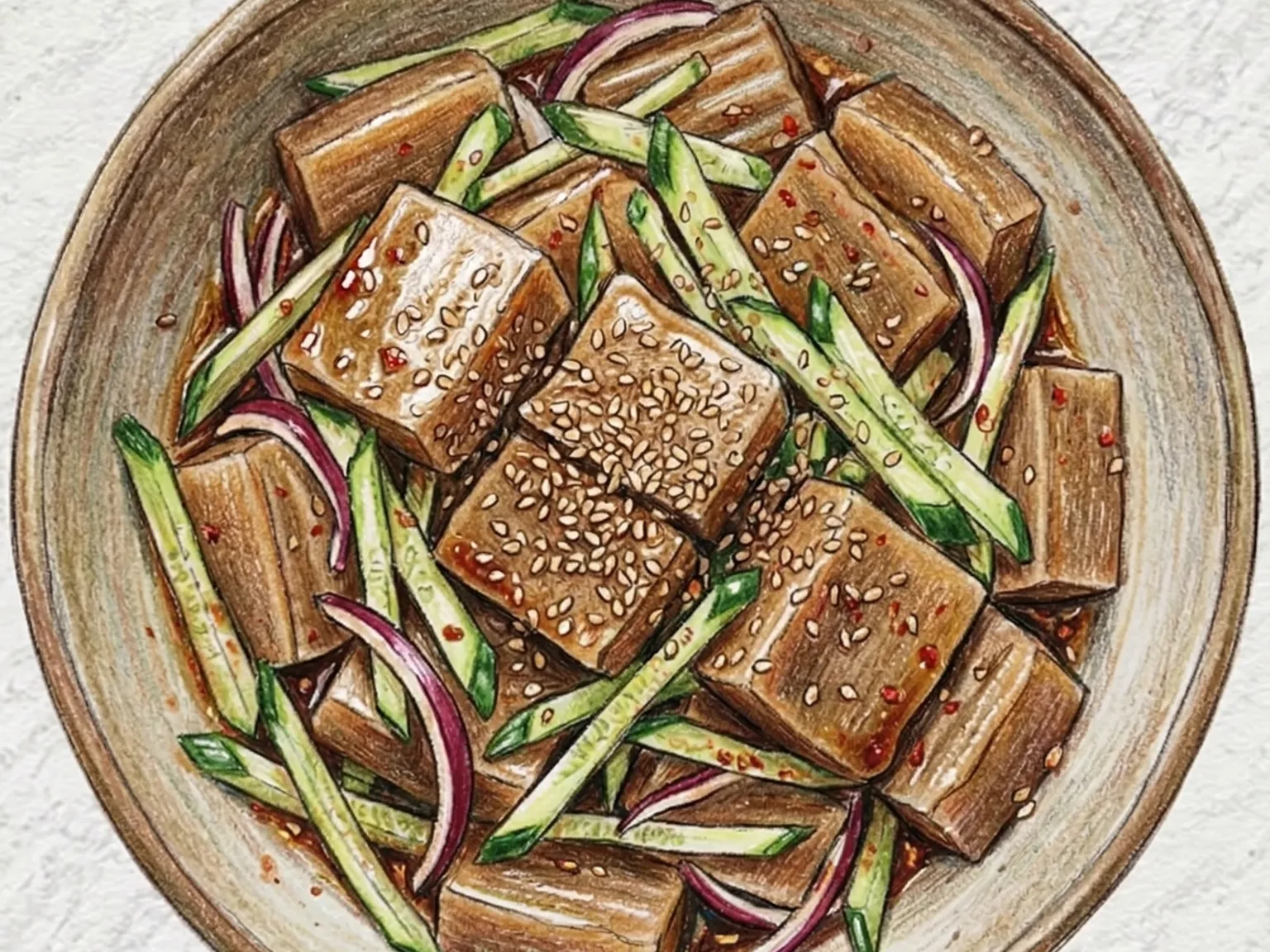
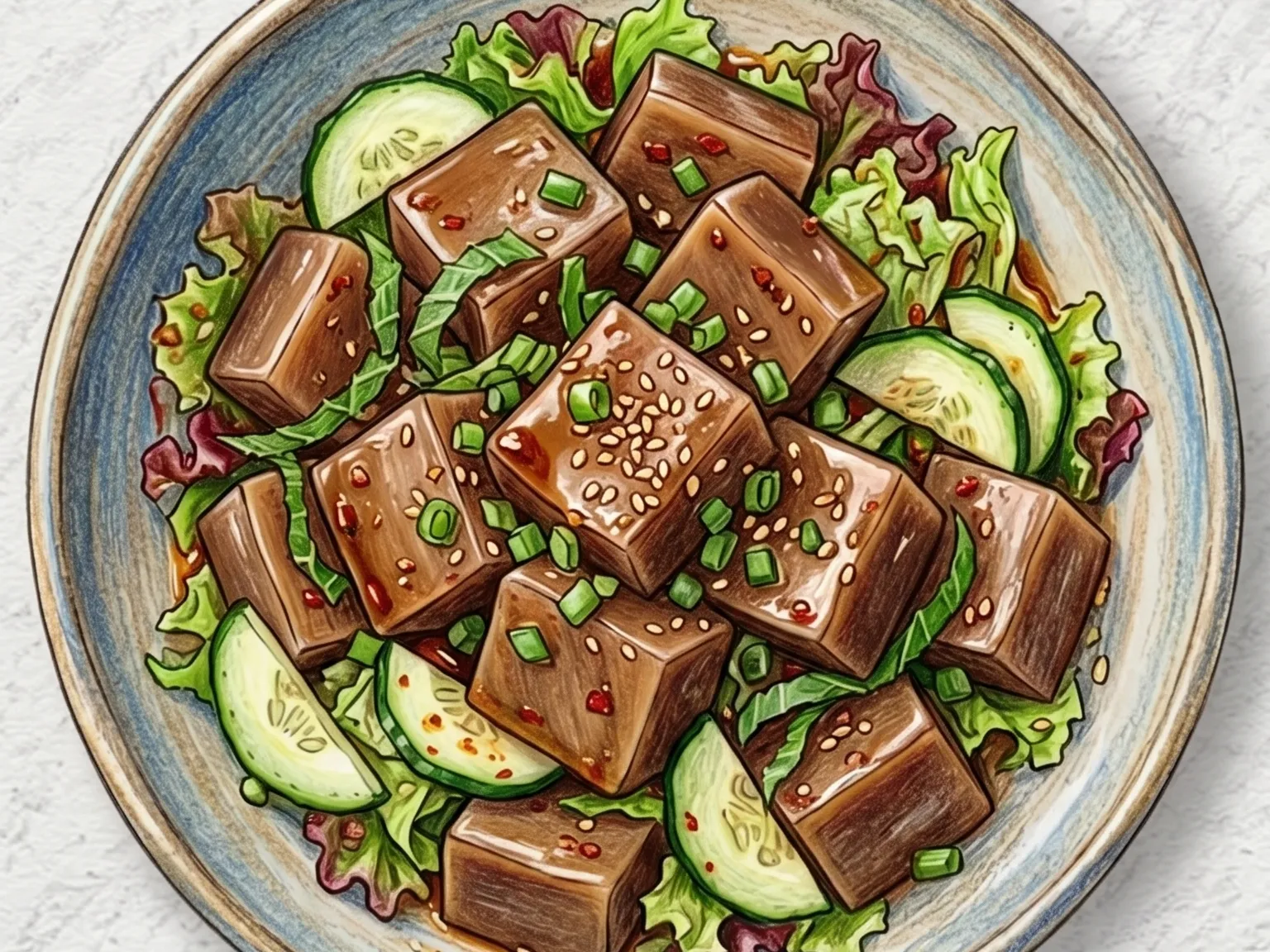
Dotori-muk (acorn jelly) is cut into bite-sized blocks and served with fresh lettuce, cucumber, and perilla leaves in this Korean salad. The jelly's smooth, firm texture creates a distinct contrast against the crunchy vegetables, while scallion lifts the overall aroma. A seasoning sauce of soy sauce, vinegar, gochugaru, and sesame oil gives the mild-flavored jelly a salty-tangy kick. Acorn jelly is notably low in calories and high in dietary fiber, originating as a foraged food during lean times in Korean history.
Adjust Servings
Instructions
- 1
Cut acorn jelly into 1 cm slices and gently pat dry with paper towels.
- 2
Tear lettuce, slice cucumber into half-moons, shred perilla leaves, and chop scallions.
- 3
Mix soy sauce, vinegar, gochugaru, sugar, and sesame oil until the sugar dissolves.
- 4
Place vegetables and acorn jelly in a large bowl, then gently toss with 80% of the dressing.
- 5
Adjust seasoning with the remaining dressing and finish with generous sesame seeds.
As an Amazon Associate, we may earn from qualifying purchases.
Tips
Nutrition (per serving)
More Recipes

Smoked Duck Chive Salad (Korean Chive Salad)
Smoked duck chive salad sears smoked duck in a hot pan for two to three minutes to render excess fat, then combines it with Korean chives cut into four-centimeter lengths, shredded cabbage, and sliced bell pepper in a soy-mustard dressing. The duck's dense smokiness and fatty richness are tempered head-on by the chives' sharp, pungent grassiness, and a dressing of soy sauce, mustard, vinegar, honey, and sesame oil layers a nose-clearing heat with sweet-sour acidity to clean the palate after each oily bite. Crisp cabbage provides textural relief against the chewy duck meat, and toasted sesame seeds finish with a nutty fragrance. Adding the chives last preserves their fresh aroma, and keeping the searing time short prevents the duck from turning tough.

Seaweed Stem and Apple Mustard Salad
Salted seaweed stems are soaked to remove excess brine, then blanched briefly to achieve a firm, slightly chewy bite that defines this Korean salad's texture. Julienned apple adds crisp sweetness that contrasts with the seaweed's oceanic mineral flavor. Thinly sliced onion, soaked to mellow its sting, contributes a subtle sharpness. The dressing mixes Korean mustard paste with vinegar and oligosaccharide syrup - the mustard delivers a sharp nasal heat, while the syrup smooths the vinegar's acidity into something rounder. Tossing the apple with lemon juice first prevents browning, and a three-minute rest after dressing lets the flavors meld without overdressing the delicate stems.

Charred Cabbage Gamtae Salad
Charred cabbage gamtae salad quarters baby napa cabbage lengthwise, brushes the cut sides with perilla oil, and sears them on a hot pan for 3-4 minutes per side until deeply browned. The intense heat replaces raw cabbage's grassy bite with caramelized sweetness and smoky char, and gamtae seaweed crumbled by hand at the very end adds a crisp texture and concentrated ocean umami. A dressing of dark soy sauce, maesil syrup, brown rice vinegar, and perilla oil provides a salty-tangy base, while halved cherry tomatoes contribute juicy acidity. Serving the salad warm preserves both the cabbage's char aroma and the seaweed's crispness.

Bellflower Root and Pear Salad
Doraji (bellflower root) is rubbed with salt to draw out its bitterness, then briefly blanched to achieve a texture that is both crisp and yielding. Julienned Korean pear brings cool sweetness and moisture to balance the root's dryness. The seasoning follows a traditional Korean muchim structure: gochugaru for heat, vinegar for tang, and fish sauce for depth. A drizzle of sesame oil finishes the dish with a toasted aroma. The pear's high water content keeps each bite juicy.

Korean Broccoli Doenjang Salad
Blanched broccoli in doenjang dressing - a modern Korean banchan bridging Western ingredients with traditional seasoning logic. Florets and thinly sliced stems blanch ninety seconds, then are shocked in cold water for vivid green and a firm bite. The dressing combines doenjang with vinegar and oligosaccharide syrup - fermented salt, acidity, and gentle sweetness that lifts mild bitterness. Ready in under ten minutes and keeps refrigerated for days.

Korean Perilla Leaf Kimchi
Kkaennip kimchi is an instant-style Korean perilla leaf kimchi assembled by spreading a thin layer of soy sauce, gochugaru, minced garlic, and sesame oil seasoning between each leaf in a stacked arrangement. The perilla's bold herbal scent softens when paired with the toasted richness of sesame oil, while the chili flakes provide a steady, gentle heat. Soy sauce builds the salty-savory framework, and chopped scallion adds a fresh note that ties the flavors together. No fermentation is needed - this kimchi is ready to eat immediately, served on top of rice or used as an aromatic wrap in place of lettuce with grilled meat.