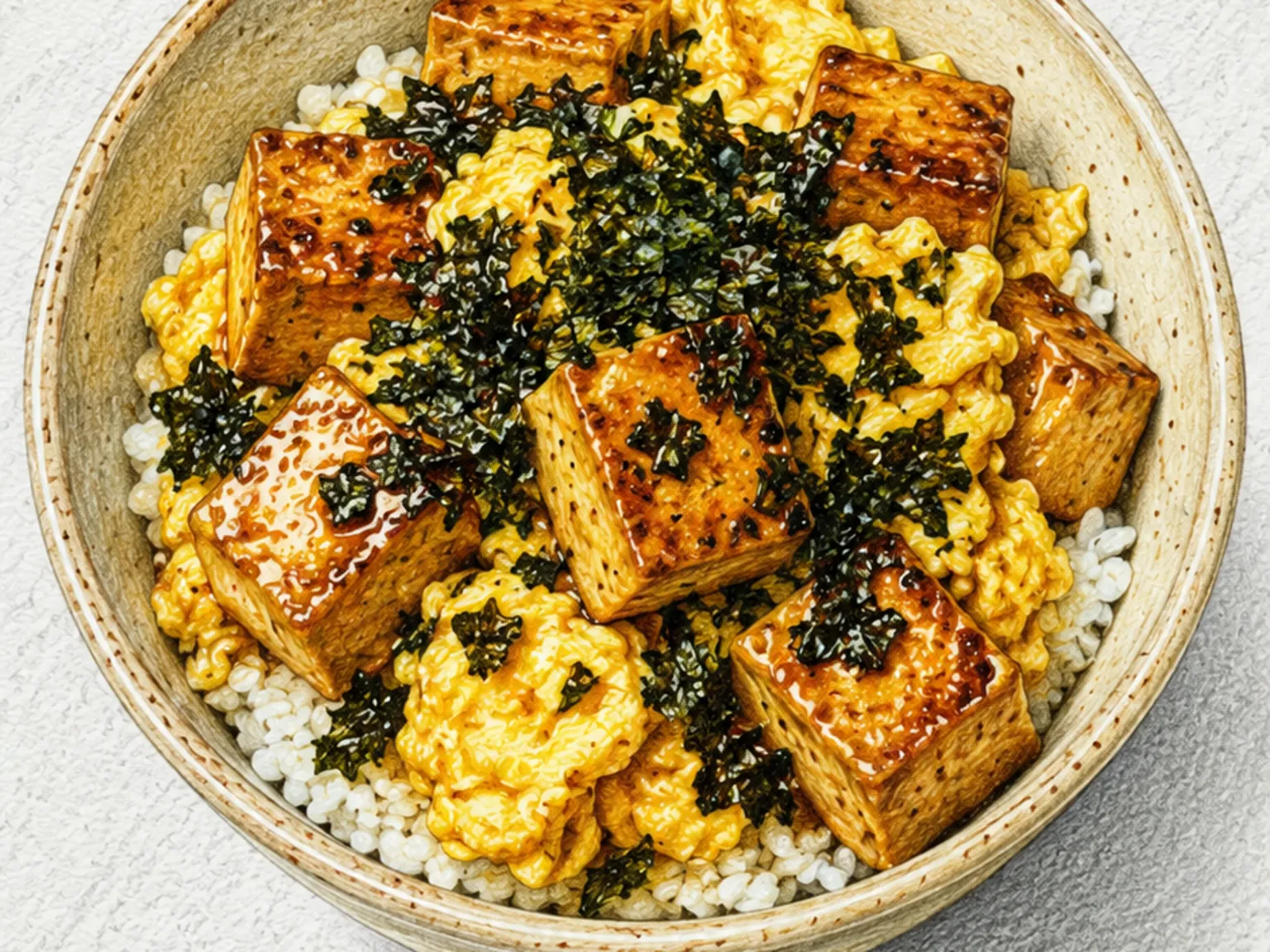
Korean Tofu Seaweed Egg Rice Bowl
Rice Easy

Korean Tofu Seaweed Egg Rice Bowl

Quick answer

Dubu gim gyeran deopbap is a Korean rice bowl built from three pantry staples: pan-fried tofu, soft scrambled egg, and roasted seaweed flakes, all layered over a bowl of...

What makes this special

  • Soy-glazed tofu and roasted seaweed provide a sweet and salty topping for this Tofu Rice Bowl.
  • Drained tofu stir-fried with soy and oligosaccharide forms a sweet-salty crust
  • Soft-scrambled egg contrasts the firm tofu in every spoonful
Total time
22 min
Level
Easy
Servings
2 servings
Ingredients
9
Calories
490 kcal
Protein
22 g

Key ingredients

Cooked riceFirm tofuEggsRoasted seaweed flakesSoy sauce

Core cooking flow

  1. 1 Place 200g of tofu between two layers of paper towels and press for 5 minute...
  2. 2 Cut the drained tofu into 1.5cm cubes.
  3. 3 Flip the tofu, add 1 tablespoon of soy sauce and 1 teaspoon of oligosacchari...

Dubu gim gyeran deopbap is a Korean rice bowl built from three pantry staples: pan-fried tofu, soft scrambled egg, and roasted seaweed flakes, all layered over a bowl of steamed rice. The tofu is pressed dry, cut into cubes, and seared until the edges turn golden before being tossed with soy sauce and syrup to form a salty-sweet glaze that coats each piece. Eggs are scrambled to a barely-set, custard-like consistency rather than cooked through, creating a deliberate contrast with the firm, glazed tofu beneath them. Crumbled seaweed scattered over the top introduces a brittle crunch and a faintly briny, toasty aroma that lingers with each bite. A final drizzle of sesame oil draws all three components together into a coherent flavor. Because tofu, eggs, and dried seaweed are refrigerator and pantry staples in most Korean households, the dish can be assembled in roughly ten minutes without a special shopping trip, making it one of the most dependable meals for busy mornings or quick lunches.

Prep 10min Cook 12min 2 servings

Instructions

Read the steps as a cooking flow: prep, heat, seasoning, doneness control, and finish.

6 steps
  1. 1
    Step

    Place 200g of tofu between two layers of paper towels and press for 5 minutes to remove about 20% of its moisture.

    Thorough draining is key to achieving a golden-brown crust in the pan.

  2. 2
    Control

    Cut the drained tofu into 1.5cm cubes.

    Heat 1 tablespoon of oil in a pan over medium heat and cook the tofu for 4 minutes without moving it so one side browns evenly.

  3. 3
    Control

    Flip the tofu, add 1 tablespoon of soy sauce and 1 teaspoon of oligosaccharide syrup, reduce to low heat, and stir for 1 minute.

    The soy sauce forms a glossy glaze on the surface of the tofu.

  4. 4
    Control

    Push the tofu to one side, pour in 2 beaten eggs, and scramble gently with chopsticks over low heat.

    Mix with the tofu when the eggs are about 70% set to keep them moist and creamy.

  5. 5
    Prep

    Place one serving of rice in a bowl, top with the tofu and egg mixture, then generously sprinkle 2 tablespoons of dried seaweed flakes and scatter green onions on top.

  6. 6
    Finish

    Drizzle 1 teaspoon of sesame oil in a circular motion and serve immediately.

    The dried seaweed softens quickly, so eat right away after plating.

After the steps

Pick a recipe that fits this dish.

Continue with shared ingredients, meal pairings, or a similar method.

Recipes That Go Well With This

More Rice →

Based on shared ingredients and meal pairing

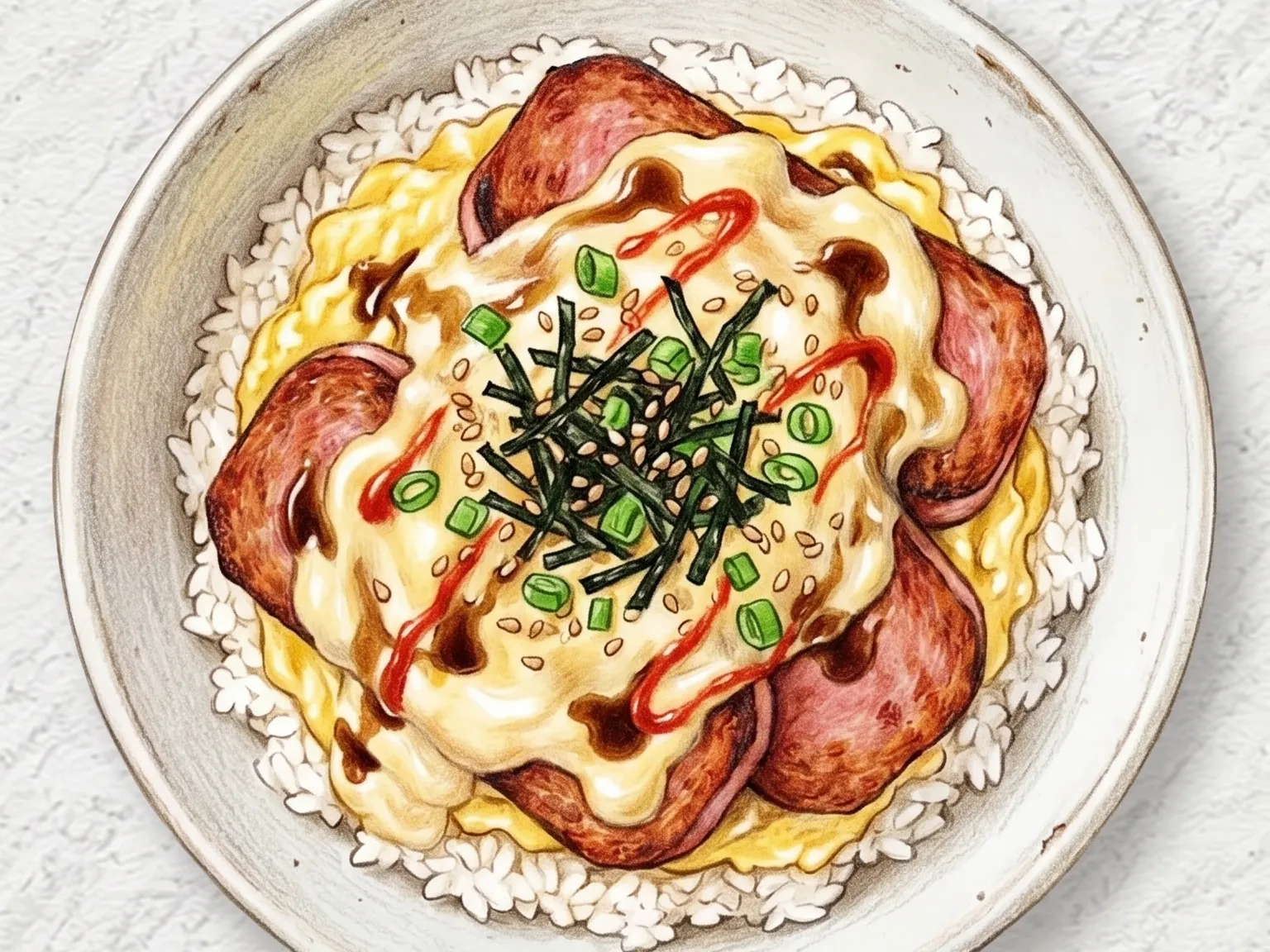
Korean Spam Mayo Rice Bowl
Shared ingredient: cooked short-grain rice Rice

Korean Spam Mayo Rice Bowl

Thick-cut spam is pan-seared until the edges turn golden and crisp while the center stays moist. Soft-scrambled eggs are folded loosely so they remain creamy, then layered over steaming rice alongside the spam. A generous drizzle of mayonnaise sauce melts gently against the warm rice, binding the salty meat and silky egg together. A dash of soy sauce or sriracha adds a sharp accent that cuts through the richness and keeps each bite interesting. Controlling resting time and grain texture helps the ingredients cook evenly while keeping the final seasoning balanced.

Korean Kkaennip Deulgireum Gyeran Bap (Perilla Egg Rice)
Shared ingredient: cooked short-grain rice Rice

Korean Kkaennip Deulgireum Gyeran Bap (Perilla Egg Rice)

Kkaennip-deulgireum-gyeran-bap is a simple one-bowl rice dish built on three main flavors: the deep roasted-nut aroma of perilla oil, the herb-like fragrance of fresh perilla leaves, and the richness of soft scrambled eggs. The eggs are cooked low and slow in butter, set aside, and then rice is stir-fried briefly in perilla oil over moderate heat. Perilla oil has a low smoke point, so high heat rapidly destroys its distinctive aroma. Soy sauce drizzled along the hot rim of the pan picks up a faint caramel char as it hits the surface, adding depth beyond straightforward saltiness. The scrambled eggs and the rice are folded together with thinly sliced perilla leaves off the heat, because the leaves lose their volatile oils quickly when exposed to sustained warmth. Finishing with a generous amount of whole sesame seeds adds a repeated crunch and further layers of nuttiness through every bite. With ingredients this minimal, the quality of the perilla oil and the freshness of the leaves determine the final result.

Korean Scallion Egg Soup (Quick Two-Ingredient Clear Broth)
Serve together Soups

Korean Scallion Egg Soup (Quick Two-Ingredient Clear Broth)

Daepa gyeran-guk is a Korean scallion and egg soup that comes together in under ten minutes with just two main ingredients. Adding the green onion in two separate stages is what gives the broth complexity: the first portion simmers for three minutes, sweetening and deepening the stock, while the second goes in raw at the very end for a sharp, grassy bite. The egg must be drizzled in a thin, steady stream over reduced heat and left completely undisturbed for thirty seconds - this produces silky, delicate ribbons rather than broken scrambled pieces. Adding the egg over high heat or stirring immediately causes the broth to turn cloudy and the egg to clump. Soup soy sauce seasons the broth cleanly without darkening it, and a single drop of sesame oil finishes the bowl with a subtle, nutty fragrance that underscores the sweetness of the green onion.

Korean Fried Rice (Simple Leftover Rice Stir-Fry)
Similar recipe Rice

Korean Fried Rice (Simple Leftover Rice Stir-Fry)

Korean fried rice is the ultimate utility dish, built to turn leftover rice and whatever vegetables remain in the refrigerator into a satisfying meal in under ten minutes. Green onion hits the hot oil first to create a fragrant scallion-infused base, followed by diced carrot and beaten egg that gets scrambled into rough curds before the rice goes in. Cold rice is essential here - its lower moisture content prevents clumping and allows a thin film of oil to coat each grain, carrying seasoning evenly through the whole pan. Soy sauce poured along the rim sizzles on contact with the hot metal, developing a toasted depth that distinguishes a well-made fried rice from a mediocre one. A crack of black pepper and a final swirl of sesame oil complete the seasoning. The recipe is intentionally open-ended: ham, kimchi, shrimp, canned tuna, or any leftover protein slots in without altering the basic method, which is why this dish appears on Korean dinner tables more often than almost any other. The total active cooking time rarely exceeds five minutes, making it the default choice on busy weekdays and late nights alike.

Serve with this

Korean Young Napa Soft Tofu Stew
Stews Easy

Korean Young Napa Soft Tofu Stew

Eolgari-sundubu-doenjang-jjigae is a gentle Korean stew that pairs soft tofu with young napa cabbage (eolgari baechu) in a kelp stock base seasoned with doenjang and a small measure of gochujang. The doenjang brings fermented soybean depth to the broth, while the gochujang adds a measured spiciness that stays mild rather than sharp -- the two pastes work together to produce a broth that is simultaneously savory, slightly sweet, and lightly spiced. Potato and onion are added early to contribute their natural sugars, and the potato softens gradually into the liquid, lending slight body to the stock. Soft tofu should be spooned in gently rather than stirred, as it breaks apart easily -- rocking the pot from side to side distributes it without tearing the curds into pieces. Once in the stew, the soft tofu slowly releases some of its moisture and takes on the broth around it, spreading a silky, almost cream-like texture throughout the liquid. Young napa cabbage provides a light crunch that contrasts with the velvet texture of the tofu and the smoothness of the broth. A finishing addition of minced garlic and a drop of perilla oil deepens the savory fragrance just before serving. The stew is mild enough to work as a morning meal and substantial enough to stand as a light dinner.

🏠 Everyday ⚡ Quick
Prep 12min Cook 16min 2 servings
Korean Seasoned King Oyster Mushroom
Side dishes Easy

Korean Seasoned King Oyster Mushroom

Saesongi-beoseot-muchim steams 250 grams of king oyster mushrooms, torn into strips along the grain, for six minutes over high heat to preserve their chewy, fibrous texture better than boiling would. After cooling slightly and squeezing out excess moisture, the strips are tossed in a dressing of soy sauce, vinegar, chili flakes, garlic, and sugar. The vinegar provides a tangy lift, while the chili flakes introduce gentle warmth without overwhelming the mushroom's mild flavor. Sesame oil and sesame seeds finish the dish with a nutty aroma. It holds up well when chilled and served cold, making it a convenient banchan to prepare ahead of time.

🥗 Light & Healthy 🏠 Everyday
Prep 10min Cook 8min 2 servings
Korean Kohlrabi Soy Pickle
Kimchi Easy

Korean Kohlrabi Soy Pickle

Kohlrabi jangajji is a Korean soy pickle made by thickly peeling kohlrabi, cutting it into 2 cm cubes, and submerging the pieces with garlic and dried chili in a pickling brine of boiled soy sauce, vinegar, and sugar. Kohlrabi's dense cellular structure absorbs the brine slowly, holding a firmer crunch and more pronounced sweetness than radish over several days of pickling. The soy sauce's savory depth and the vinegar's acidity draw out the kohlrabi's natural sugars, while dried chili contributes a subtle warmth and color to the brine. Pouring the brine only after it has fully cooled preserves the kohlrabi's crunch, as hot liquid softens the cell walls and reduces the staying power of the pickle. This pickle works well as a palate cleanser alongside grilled meat or samgyeopsal, cutting through richness with its tart, sweet bite, and stored in the refrigerator it holds its crisp texture for two to three weeks. Adjusting the ratio of vinegar to sugar in the brine shifts the pickle toward more sour or more sweet depending on preference.

🍱 Lunchbox 🏠 Everyday
Prep 20min Cook 12min 4 servings

Similar recipes

Korean Eggplant Rice Bowl
Rice Easy

Korean Eggplant Rice Bowl

Gaji deopbap is a Korean eggplant rice bowl where sliced eggplant is pan-fried quickly in generous oil and then braised briefly with ground pork in a soy-based sauce. Soaking the eggplant in salted water for five minutes before cooking draws out bitterness and moisture. High heat is essential - eggplant absorbs oil rapidly, and fast searing creates a lightly crisp exterior while the inside collapses into a silky, almost creamy texture. The soy, sugar, and garlic sauce reduces in two minutes into a dark glaze that coats each piece, while the ground pork adds a savory depth that makes the dish feel more substantial. The sauce pools around the base of the rice and soaks into the grains, ensuring consistent flavor throughout the bowl. Green onion and sesame oil finish the dish. Summer eggplant, when the flesh is at its softest and most yielding, produces the best results. Kept cold, the eggplant holds its texture well enough to pack as a side dish for lunch.

🏠 Everyday ⚡ Quick
Prep 10min Cook 10min 2 servings
Korean Tofu Kimchi Bibim Myeon
Noodles Easy

Korean Tofu Kimchi Bibim Myeon

Dubu kimchi bibim myeon is a Korean mixed noodle dish built on two separate preparations that come together in the bowl. Ripe, deeply fermented kimchi is stir-fried in perilla oil over high heat until the sharp acidity rounds out and the umami moves to the foreground, then combined with gochugaru and gochujang to form the spicy dressing that coats every strand of boiled noodles. The tofu requires its own treatment: all surface moisture must be pressed out before the block goes into a dry, screaming-hot pan, which creates a golden, crisp crust outside while the center remains silky, giving the dish a clean textural counterweight against the bold noodles. A halved soft-boiled egg placed on top rounds out the heat when the yolk slowly folds into the dressing, adding a creamy richness that binds the kimchi tang, the chili punch, and the nutty oil into one cohesive sauce.

🏠 Everyday 🌙 Late Night
Prep 15min Cook 10min 2 servings
Korean Street Egg Toast (Cabbage Egg Omelet Sandwich with Sweet Ketchup)
Street food Easy

Korean Street Egg Toast (Cabbage Egg Omelet Sandwich with Sweet Ketchup)

Gilgeori egg toast is a Korean street food sandwich built around a rectangular omelet of shredded cabbage, carrot, and beaten egg, layered between slices of bread that have been toasted in butter until golden. The defining touch is a sprinkle of white sugar over ketchup applied directly to the bread before the omelet goes in. That sugar-ketchup combination produces a sweet-tangy sauce that balances the savory egg and the mild crunch of the vegetables in a way that no other condiment quite replicates. The egg and vegetable batter is folded over itself on the pan to create a thick, layered patty, so each bite delivers alternating textures of soft egg and crunchy toasted bread. Street vendors began selling this sandwich in front of Korean schools during the 1990s, and it has remained a constant fixture of Korean street food culture ever since, available at food stalls and snack trucks across the country as both a breakfast option and an afternoon snack.

🧒 Kid-Friendly 🌙 Late Night
Prep 12min Cook 10min 2 servings

Tips

Removing tofu moisture helps seasoning absorb better.
Add seaweed right before serving to keep it crisp.

Nutrition (per serving)

Calories
490
kcal
Protein
22
g
Carbs
58
g
Fat
18
g