Korean Braised Tofu Rice Bowl
Quick answer
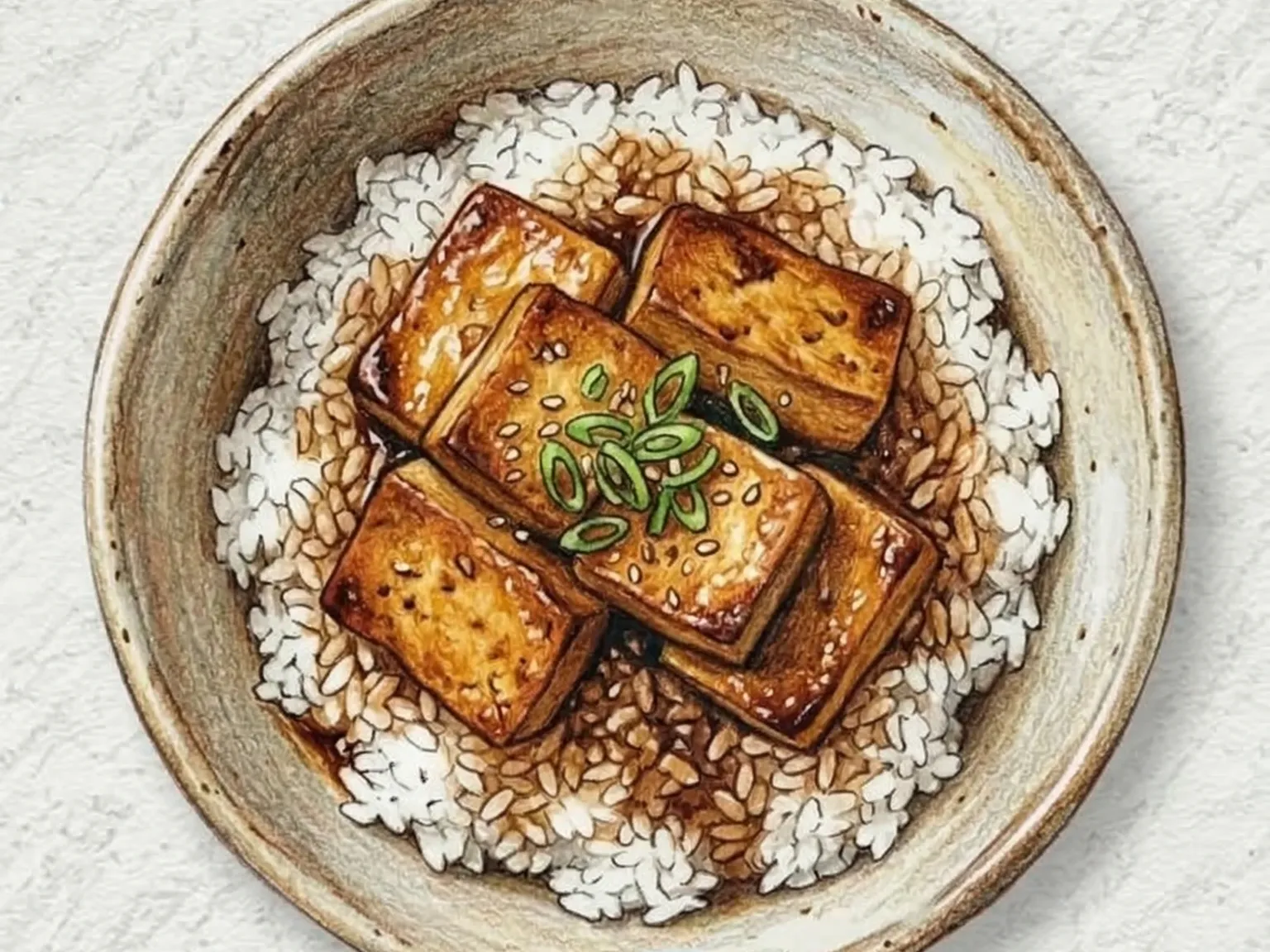
Dubu jorim deopbap places soy-braised tofu over a bowl of hot steamed rice, using the reduced braising glaze as the primary seasoning for the entire dish.
What makes this special
- Pan-frying the tofu first allows it to absorb the braising sauce while maintaining its shape.
- High-heat crust before braising lets tofu absorb sauce without losing shape
- Onion fully dissolves into sauce during braising, adding sweetness and body
Key ingredients
Core cooking flow
- 1 Slice 200g of tofu into 1cm-thick rectangles and place on paper towels for 3...
- 2 Heat 2 tablespoons of oil in a pan over medium heat, then add the tofu.
- 3 In a small bowl, mix together 2 tablespoons soy sauce, 1 tablespoon sugar, 1...
Dubu jorim deopbap places soy-braised tofu over a bowl of hot steamed rice, using the reduced braising glaze as the primary seasoning for the entire dish. Firm tofu is sliced into rectangles, patted dry to remove surface moisture, and pan-fried over high heat until a dense golden crust forms on both sides. This crust is essential - without it, the tofu absorbs the braising sauce too quickly and falls apart. With it, the exterior holds its structure while the interior slowly soaks up the seasoning from the inside out. The braising sauce is built from soy sauce, sugar, minced garlic, and a small amount of water. Sliced onion cooks alongside the tofu in the sauce, softening and dissolving into the liquid to contribute sweetness as the sauce reduces to a sticky, mahogany-colored glaze. Cheongyang chili, sliced on the bias, introduces a sharp clean heat that cuts through the sweetness of the sauce. Green onion goes in last, just before plating, to keep its fragrance intact. The finished sauce is spooned over the rice along with the tofu, where it seeps into each grain and ensures that flavor remains consistent from the first bite to the last. The dish stands on its own without additional side dishes and provides a practical source of plant protein for vegetarian meals.
Instructions
Read the steps as a cooking flow: prep, heat, seasoning, doneness control, and finish.
- 1Prep
Slice 200g of tofu into 1cm-thick rectangles and place on paper towels for 3 to 5 minutes to remove surface moisture.
Excess water causes dangerous oil splatter in the pan.
- 2Control
Heat 2 tablespoons of oil in a pan over medium heat, then add the tofu.
Cook one side for 3 minutes, flip, and cook the other side for 2 to 3 minutes until both sides are golden.
- 3Season
In a small bowl, mix together 2 tablespoons soy sauce, 1 tablespoon sugar, 1 teaspoon minced garlic, 3 tablespoons water, and 1 teaspoon red pepper flakes to make the braising sauce.
- 4Control
Lay thinly sliced quarter onion in the pan, place the browned tofu on top, and pour the braising sauce evenly over everything.
Braise uncovered on low heat for 5 minutes until the sauce absorbs into the tofu.
- 5Season
Slice 1 green onion and 1 chili pepper diagonally, place on top of the tofu, and cook for 1 more minute.
The heat from the chili dissolves into the sauce, adding a spicy edge.
- 6Finish
Place one serving of steamed rice in a bowl, spoon the braised tofu along with all the sauce on top, and finish with 1/2 teaspoon of sesame oil.
After the steps
Pick a recipe that fits this dish.
Continue with shared ingredients, meal pairings, or a similar method.
Recipes That Go Well With This
More Rice →Based on shared ingredients and meal pairing
Korean Braised Short Rib Rice Bowl
Galbi deopbap is a Korean rice bowl topped with beef short ribs slow-braised in a soy, sugar, and grated Asian pear marinade until the connective tissue dissolves and the meat separates from the bone at the lightest touch. Grated pear serves a dual purpose in the braise: the enzymes break down tough muscle fibers while the juice introduces a gentle fruit sweetness that sets the dish apart from heavier, wine-based braises. Grated onion dissolves completely into the braising liquid over the long simmer, deepening the savory foundation without leaving visible pieces. As the liquid reduces over one hour or more, it transforms into a dark, glossy sauce that coats the ribs and drips down onto the rice below. Spooning the sauce generously over the steamed rice allows each grain to absorb the soy-sweet glaze from the bottom up, making the rice itself as flavorful as the meat. Despite the long cooking time, the dish demands minimal active attention because the braise works inside the pot without stirring. Scattered sliced green onion on top provides a crisp, fresh contrast against the richness of the braised ribs.
Korean Doenjang Braised Tofu
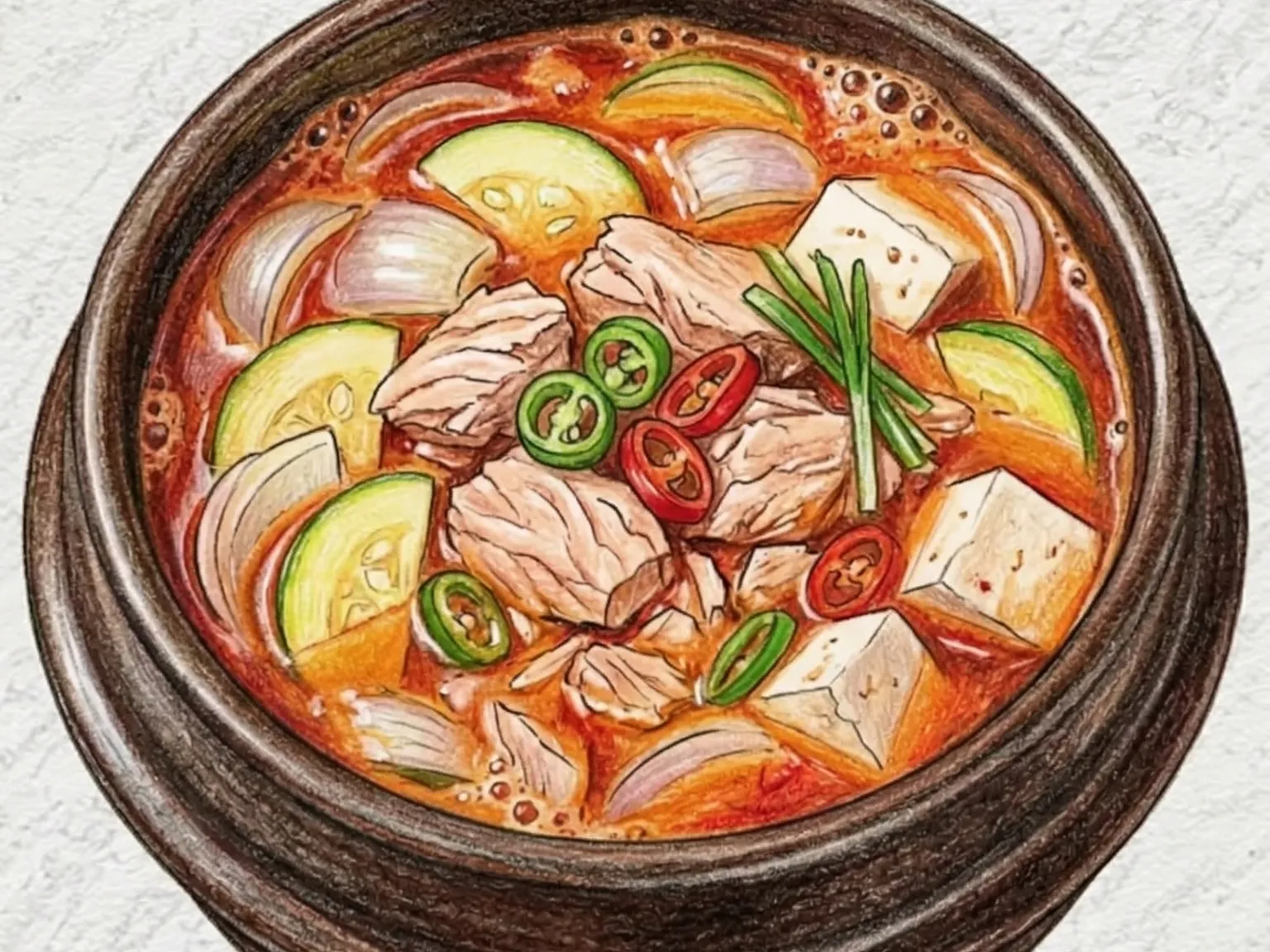
Doenjang-dubu-jorim is a braised tofu banchan in which tofu slices are simmered in a broth of fermented soybean paste, water, and aromatics until the liquid reduces and the seasoning permeates the tofu throughout. Doenjang is a Korean fermented soybean paste with a deeply savory, earthy character distinct from Japanese miso, and its slow penetration into the porous interior of the tofu produces a richness that simple soy-seasoned tofu does not achieve. Zucchini and onion are added to the same pot, and their natural sweetness tempers the salt of the paste, giving the final braise a more balanced flavor. The tofu is braised until its surface firms slightly, which helps it hold its shape while the interior stays soft and fully seasoned. Any remaining braising liquid is well-seasoned and pairs naturally with a bowl of rice. It is an economical banchan that requires minimal preparation and stores in the refrigerator for several days.
Korean Scallion Egg Soup (Quick Two-Ingredient Clear Broth)
Daepa gyeran-guk is a Korean scallion and egg soup that comes together in under ten minutes with just two main ingredients. Adding the green onion in two separate stages is what gives the broth complexity: the first portion simmers for three minutes, sweetening and deepening the stock, while the second goes in raw at the very end for a sharp, grassy bite. The egg must be drizzled in a thin, steady stream over reduced heat and left completely undisturbed for thirty seconds - this produces silky, delicate ribbons rather than broken scrambled pieces. Adding the egg over high heat or stirring immediately causes the broth to turn cloudy and the egg to clump. Soup soy sauce seasons the broth cleanly without darkening it, and a single drop of sesame oil finishes the bowl with a subtle, nutty fragrance that underscores the sweetness of the green onion.
Korean Mapo Tofu Rice Bowl
Soft tofu and ground pork are cooked in a Sichuan-inspired doubanjiang sauce, then ladled over steamed rice. Blanching the tofu in salted water firms it up so the cubes hold their shape through stir-frying. The fermented heat of doubanjiang builds layers of flavor alongside the pork, and a starch slurry thickens everything into a glossy sauce that clings to each grain of rice. A finishing drizzle of sesame oil rounds out the dish, and a pinch of Sichuan pepper adds authentic numbing heat.
Serve with this
Korean Young Napa Soft Tofu Stew
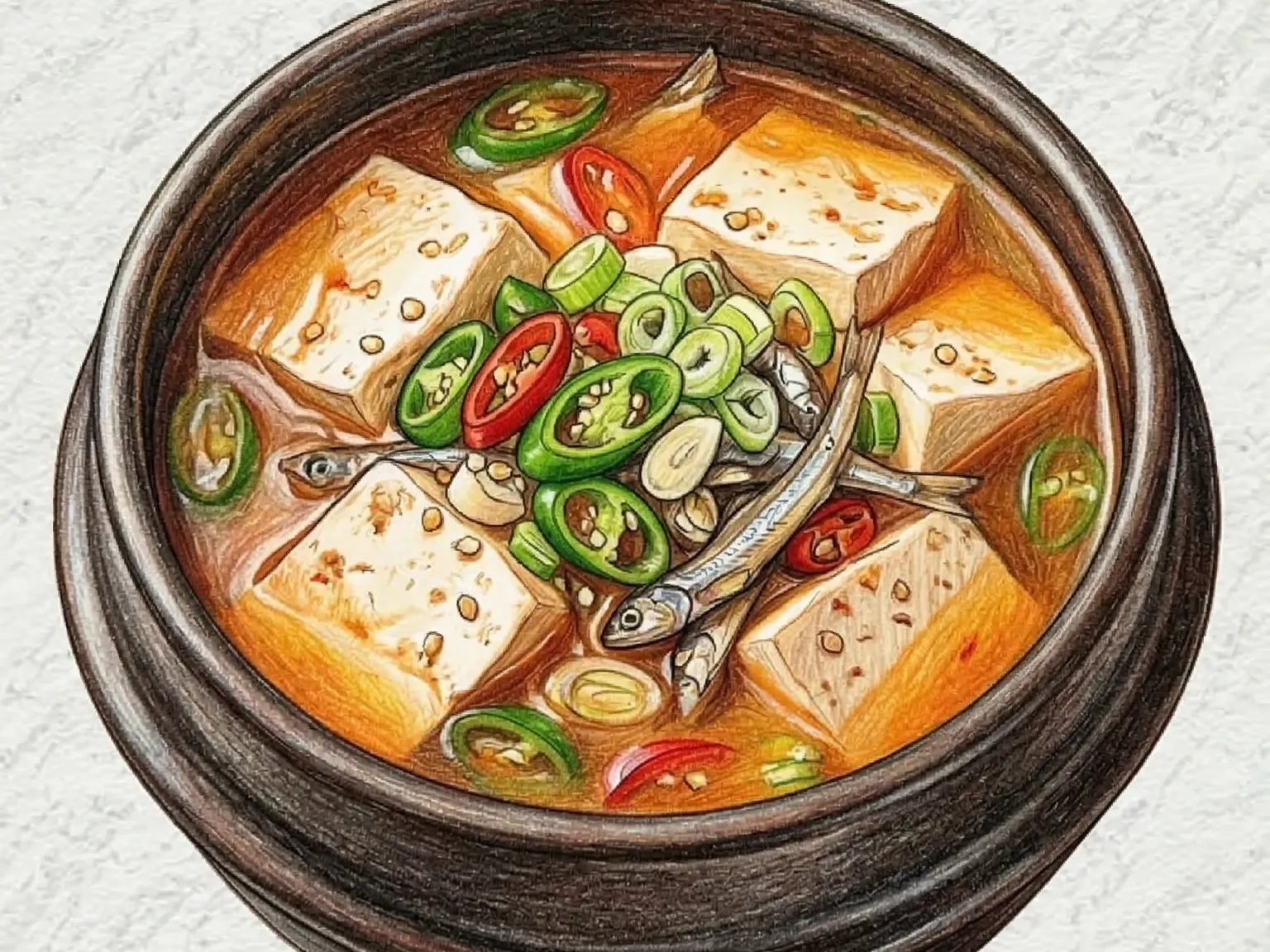
Eolgari-sundubu-doenjang-jjigae is a gentle Korean stew that pairs soft tofu with young napa cabbage (eolgari baechu) in a kelp stock base seasoned with doenjang and a small measure of gochujang. The doenjang brings fermented soybean depth to the broth, while the gochujang adds a measured spiciness that stays mild rather than sharp -- the two pastes work together to produce a broth that is simultaneously savory, slightly sweet, and lightly spiced. Potato and onion are added early to contribute their natural sugars, and the potato softens gradually into the liquid, lending slight body to the stock. Soft tofu should be spooned in gently rather than stirred, as it breaks apart easily -- rocking the pot from side to side distributes it without tearing the curds into pieces. Once in the stew, the soft tofu slowly releases some of its moisture and takes on the broth around it, spreading a silky, almost cream-like texture throughout the liquid. Young napa cabbage provides a light crunch that contrasts with the velvet texture of the tofu and the smoothness of the broth. A finishing addition of minced garlic and a drop of perilla oil deepens the savory fragrance just before serving. The stew is mild enough to work as a morning meal and substantial enough to stand as a light dinner.
Korean Seasoned Gamtae Seaweed
Gamtae is a green seaweed harvested only in winter from Korea's southern coast, particularly around Wando and Jangheung. It is thinner and more delicate than roasted gim, and its oceanic fragrance is sharper and more pronounced. For this banchan, dried gamtae sheets are torn by hand into large pieces and tossed with a dressing of soy sauce, vinegar, sesame oil, gochugaru, sugar, and minced garlic. Speed matters more than technique here. Once the dressing makes contact with the seaweed, it begins drawing out moisture immediately. Past twenty seconds of mixing, the fronds absorb liquid, lose their texture, and collapse into a sodden tangle. The dressing should be added and the whole thing tossed in one quick motion before serving. Vinegar does important work in this dish: its acidity counters the seaweed's natural brininess and leaves the palate clean between bites. Fresh gamtae is a strictly seasonal product, available only through winter markets in the Jeolla and Gyeongnam regions. Dried gamtae, however, keeps well and is available year-round, making this a quick, reliable side dish that pairs particularly well with plain steamed rice.
Korean Crown Daisy Soy Pickle
Ssukgat jangajji is a soy-brined pickle made with crown daisy greens, capturing the herb's distinctively bitter, aromatic character in a quick-cured form. A boiling mixture of soy sauce, vinegar, and sugar is poured directly over the trimmed greens, which wilts them just enough to expel raw grassiness while locking in the clean, herbal fragrance underneath. Thin slices of lemon layered between the greens as they steep introduce a citrus brightness that cuts through the saltiness of the soy and keeps the brine from tasting flat. Whole black peppercorns contribute a gentle background heat that tidies up the finish. The jar goes into the refrigerator once cooled, and the pickle is ready to eat after just twenty-four hours, making it one of the most practical options when a side dish is needed on short notice. The herbal fragrance is at its sharpest within the first week of refrigeration, after which the aroma gradually fades. It pairs well as a rice topping or served alongside grilled pork or beef.
Similar recipes
Korean Beef Brisket Rice Bowl
Chadol deopbap is a Korean rice bowl built on paper-thin beef brisket slices seared in a hot dry pan until the edges turn crisp and caramelized, then finished with a soy-based glaze and placed over steamed rice. The marbling in the brisket renders quickly under high heat, coating the pan in fat that then carries the flavors of soy sauce, sugar, garlic, and sesame oil into a concentrated glaze. A soft-cooked or raw egg yolk placed on top is a standard addition; stirring it in spreads a golden richness across the rice that thickens the sauce and rounds out the saltiness of the soy. Sliced scallions and toasted sesame seeds scattered over the finished bowl add textural contrast and a clean finish. The recipe relies on pantry staples, requires no marinating, and comes together in under ten minutes from start to plate, making it one of the most practical formats for a single-serve weeknight meal without sacrificing depth of flavor.
Korean Cream Chicken Rice Bowl
Cream chicken deopbap is a Korean fusion rice bowl where bite-sized chicken breast pieces are seared in butter to develop color and a light crust, then simmered in heavy cream and garlic until the sauce reduces into a glossy, velvety coating. Searing the chicken in butter first builds a Maillard layer that gives the final dish more depth than if the cream were added at the start. As the garlic cooks down in the cream, it loses its raw sharpness and releases a mild sweetness that permeates the entire sauce. A straightforward seasoning of salt and pepper is all the dish needs to come together. The concept takes the richness of a Western cream pasta sauce and serves it over steamed rice instead of noodles, letting the grains absorb the sauce and carry the flavor all the way through. A sprinkle of flat-leaf parsley or coarsely cracked black pepper over the top sharpens the finish.
Korean Soy-braised Beef (Tender Shredded Brisket in Soy Glaze)
Jangjorim is the soy-braised beef that lives semi-permanently in Korean refrigerators - a make-ahead banchan with a shelf life of roughly two weeks. Beef eye round (hongdukkasal) is the traditional cut because its uniform grain and low fat content allow clean shredding along the fibers, producing the signature stringy texture. The process is unhurried: thirty minutes of soaking to draw out blood, forty minutes of simmering with whole garlic and peppercorns, then shredding and returning to the pot with soy sauce and sugar for another twenty minutes. Hard-boiled eggs and shishito peppers added in the final stage absorb the dark soy broth - the eggs turn mahogany and the peppers contribute a gentle heat to the sauce. Swapping in quail eggs makes each piece lunchbox-sized. Flavor deepens noticeably after a day of refrigeration as the seasoning penetrates fully.