Korean Pork Ribs (Sweet Pear-Marinated BBQ Ribs)
Grilled Medium

Korean Pork Ribs (Sweet Pear-Marinated BBQ Ribs)

Quick answer

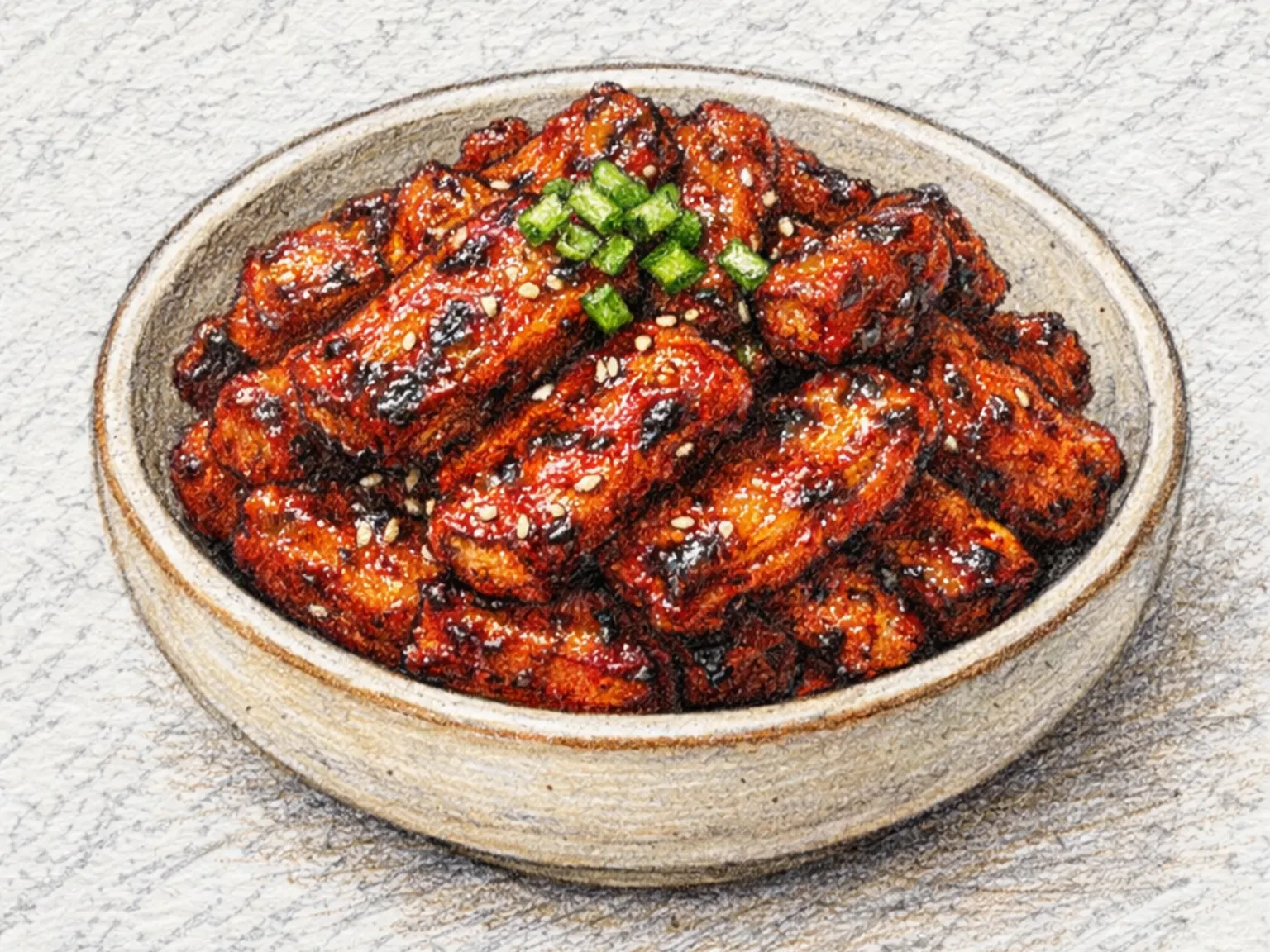
Dwaeji-galbi is one of the most recognized Korean barbecue dishes, made with LA-cut pork ribs marinated in a thick sauce of pureed pear, soy sauce, sugar, corn syrup, gar...

What makes this special

  • Pear puree tenderizes these LA-cut pork ribs for a caramelized Korean Pork Ribs finish.
  • Pear enzymes soften fiber; over one day the surface breaks down too far
  • LA cut exposes thin bone cross-sections so marinade contacts meat directly
Total time
55 min
Level
Medium
Servings
4 servings
Ingredients
11
Calories
480 kcal
Protein
32 g

Key ingredients

Pork ribs (LA-style)Soy sauceSugarCorn syrupPear

Core cooking flow

  1. 1 Soak 1kg pork ribs in cold water for 30 minutes to draw out all the blood, t...
  2. 2 Blend half a pear, 1 onion, and 5 garlic cloves into a smooth paste to form the marinade base.
  3. 3 Add 5 tbsp soy sauce, 3 tbsp sugar, 2 tbsp corn syrup, 1 tsp freshly grated...

Dwaeji-galbi is one of the most recognized Korean barbecue dishes, made with LA-cut pork ribs marinated in a thick sauce of pureed pear, soy sauce, sugar, corn syrup, garlic, and onion. The pear puree serves a dual purpose: it sweetens the marinade naturally while its proteolytic enzymes break down the muscle fibers, allowing the meat to pull away from the bone with minimal resistance. Marinating for four to six hours lets the seasoning penetrate deep into these thick cuts, but extending beyond a full day causes the enzymes to degrade the surface too aggressively, resulting in a mushy texture. Searing over high heat on a charcoal grill until the sugary glaze chars and caramelizes is essential to the dish. The blackened edges where the sugars meet open flame produce the defining sweet-smoky crust that separates galbi from ordinary grilled pork. Eaten wrapped in leafy greens with rice or as a standalone plate, it is a fixture at Korean outdoor grills and social gatherings.

Prep 30min Cook 25min 4 servings

Instructions

Read the steps as a cooking flow: prep, heat, seasoning, doneness control, and finish.

7 steps
  1. 1
    Step

    Soak 1kg pork ribs in cold water for 30 minutes to draw out all the blood, then remove and pat dry with paper towels.

  2. 2
    Step

    Blend half a pear, 1 onion, and 5 garlic cloves into a smooth paste to form the marinade base.

  3. 3
    Season

    Add 5 tbsp soy sauce, 3 tbsp sugar, 2 tbsp corn syrup, 1 tsp freshly grated ginger, 1 tsp sesame oil, and a dash of pepper to the blended base and stir until fully combined.

  4. 4
    Step

    Coat the ribs with the marinade by hand and refrigerate for at least 2 hours, or overnight if possible.

    The pear enzymes will tenderize the muscle fibers so the meat pulls cleanly from the bone.

  5. 5
    Heat

    Preheat a grill or pan to medium-high, place the ribs, and cook undisturbed for 5 to 6 minutes per side so a Maillard brown crust forms.

  6. 6
    Season

    Bring the remaining marinade to a boil in a small pot to sterilize it, then use as a basting sauce, brushing it over the grilled ribs for extra gloss.

  7. 7
    Finish

    Plate the ribs, scatter sliced green onion and sesame seeds evenly on top to finish, and serve immediately.

After the steps

Pick a recipe that fits this dish.

Continue with shared ingredients, meal pairings, or a similar method.

Recipes That Go Well With This

More Grilled →

Based on shared ingredients and meal pairing

Korean Braised Pork Ribs
Shared ingredient: pork ribs Steamed

Korean Braised Pork Ribs

Dwaeji galbi-jjim is a Korean braised pork rib dish simmered in a soy sauce base with Korean radish, carrots, and onion. The ribs cook low and slow until the meat practically falls off the bone, absorbing the ginger- and garlic-infused braising liquid along the way. Soy sauce, sugar, and fermented depth from the ganjang build a savory-sweet profile without tipping into sweetness. The radish chunks turn translucent and soak up the seasoning, becoming as flavorful as the meat itself. Served with steamed rice, this is a hearty main course suited to cooler weather.

Korean Braised Short Rib Rice Bowl
Shared ingredient: asian pear Rice

Korean Braised Short Rib Rice Bowl

Galbi deopbap is a Korean rice bowl topped with beef short ribs slow-braised in a soy, sugar, and grated Asian pear marinade until the connective tissue dissolves and the meat separates from the bone at the lightest touch. Grated pear serves a dual purpose in the braise: the enzymes break down tough muscle fibers while the juice introduces a gentle fruit sweetness that sets the dish apart from heavier, wine-based braises. Grated onion dissolves completely into the braising liquid over the long simmer, deepening the savory foundation without leaving visible pieces. As the liquid reduces over one hour or more, it transforms into a dark, glossy sauce that coats the ribs and drips down onto the rice below. Spooning the sauce generously over the steamed rice allows each grain to absorb the soy-sweet glaze from the bottom up, making the rice itself as flavorful as the meat. Despite the long cooking time, the dish demands minimal active attention because the braise works inside the pot without stirring. Scattered sliced green onion on top provides a crisp, fresh contrast against the richness of the braised ribs.

Korean Seafood Hot Pot Soup
Serve together Soups

Korean Seafood Hot Pot Soup

Haemul-tang is a Korean seafood hot pot that throws together crab, shrimp, clams, and squid in a fiery, brick-red broth. The liquid starts with gochugaru and plenty of garlic, building a spicy base that the seafood then amplifies with its own briny juices. Radish chunks soften as the pot bubbles, thickening the broth slightly and adding a cool sweetness behind the heat. Green onions and cheongyang peppers go in toward the end for a sharp, vegetal bite. The magic of haemul-tang lies in the convergence of flavors: crab shells release a sweet, crustacean stock; clams open to spill their liquor; shrimp and squid contribute distinct textures from snappy to chewy. The pot is brought to the table still at a rolling boil, and diners pick through the shells and tentacles while the broth continues to concentrate.

Korean Gochujang Grilled Pork Ribs
Similar recipe Grilled

Korean Gochujang Grilled Pork Ribs

Gochujang dwaeji-galbi-gui is a Korean grilled pork rib dish that starts by soaking the ribs in cold water for thirty minutes to remove blood, followed by at least one hour in a marinade of gochujang, soy sauce, sugar, Asian pear juice, garlic, sesame oil, cooking wine, and black pepper. The pear juice works on two levels: its natural enzymes break down the muscle fibers to tenderize the meat, and its fructose provides a clean sweetness that tempers the fermented heat of gochujang. Because the marinade carries a high concentration of sugar, it catches and burns quickly on a hot surface. Each side is grilled four to five minutes over medium heat before the flame is reduced to finish the interior without incinerating the glaze. After cooking, resting the ribs for three minutes off the heat allows the juices to redistribute inward, so that when the pieces are sliced, every cut reveals a moist, tender interior beneath the deeply caramelized, glossy crust that is the hallmark of the dish.

Serve with this

Korean Grilled Eel Rice Bowl
Rice Medium

Korean Grilled Eel Rice Bowl

Jangeeo deopbap is a bowl of grilled freshwater eel over steamed rice, where the key technique is building up a thick, lacquered glaze through multiple applications of a sweet-salty sauce reduced from soy sauce, mirin, sugar, and ginger juice. The eel starts skin-side down on the grill over medium heat for around five minutes to crisp the skin, then is flipped and basted repeatedly with the sauce as it finishes cooking. A single coat of sauce produces a pale, thin color, so at least two applications and ideally three or more are needed to build the characteristic glossy surface. With each additional coat, the sugars in the sauce react with heat through both Maillard browning and caramelization, layering flavor with every pass. Because freshwater eel is naturally fatty, fat drips during grilling can cause flare-ups, so heat control is important throughout the process. Sansho pepper dusted on at the end cuts through the eel's inherent richness with a sharp, numbing fragrance that balances the sweet glaze and keeps the dish from feeling heavy.

🎉 Special Occasion 🏠 Everyday
Prep 10min Cook 15min 1 servings
Korean Beef & Shiitake Japchae
Side dishes Medium

Korean Beef & Shiitake Japchae

Japchae originated as a Joseon royal court dish of stir-fried vegetables before sweet potato glass noodles were added to create the form recognized today. This version pairs glass noodles with soy-marinated beef and sliced shiitake mushrooms. Each component cooks separately: beef and mushrooms stir-fried with garlic, spinach blanched and squeezed dry, carrots and onions sauteed until just tender. A final toss with sesame oil brings everything together. The noodles should be translucent and springy, carrying a sweet-salty soy glaze into each forkful. A standard presence on every Korean holiday table at Chuseok, Seollal, and birthday celebrations alike.

🏠 Everyday 🎉 Special Occasion
Prep 20min Cook 18min 4 servings
Korean Stuffed Bossam Kimchi
Kimchi Hard

Korean Stuffed Bossam Kimchi

Bo-kimchi is a premium Korean stuffed kimchi where brined napa cabbage leaves are wrapped around a filling of julienned radish, water dropwort, chestnuts, jujubes, shrimp, and pine nuts, then tied into bundles and left to ferment. Each ingredient in the stuffing develops its own flavor during fermentation, building a complex, layered taste enclosed in a single neat package. Shrimp and pine nuts contribute richness and a roasted note, while chestnuts and jujubes add subtle sweetness that lifts this well above everyday kimchi. Originating in the Gaeseong region and tracing its lineage through Goryeo-era court cuisine, it is a kimchi reserved for holidays and formal occasions.

🎉 Special Occasion 🥗 Light & Healthy
Prep 70min Cook 15min 4 servings

Similar recipes

Korean Flanken Ribs (Pear-Soy Marinated LA-Cut Beef Short Ribs)
Grilled Medium

Korean Flanken Ribs (Pear-Soy Marinated LA-Cut Beef Short Ribs)

LA-galbi-gui is a Korean grilled short rib dish using flanken-cut beef ribs, where the bones are sliced laterally so several ribs run across each strip in a thin, even slab. This cross-cut format gives the meat a wide surface area and a uniform thickness that makes it both receptive to marinade and quick to cook through evenly. The marinade combines Asian pear juice, soy sauce, sugar, minced garlic, sesame oil, black pepper, and sliced green onion. Enzymes in the pear juice break down muscle fibers in the thin-sliced meat, while the combination of soy sauce and sugar triggers simultaneous Maillard browning and caramelization over high heat, forming a dark, lacquered crust on the surface. Because the marinade carries substantial sugar, cooking over medium heat and flipping frequently is essential; high heat without attention causes the exterior to char before the interior has cooked through. Each side needs three to four minutes to reach full doneness around the bone. Marinating overnight in the refrigerator allows the seasoning to penetrate fully between the bones, producing a noticeably deeper sweet-salty flavor once grilled. Resting the meat for two to three minutes after pulling it off the grill keeps the juices from running out immediately.

🍺 Bar Snacks 🎉 Special Occasion
Prep 35min Cook 20min 4 servings
Korean Marinated Beef Short Ribs
Grilled Hard

Korean Marinated Beef Short Ribs

One kilogram of beef short ribs is soaked in cold water for thirty minutes, then marinated for at least an hour in grated Korean pear, onion juice, soy sauce, sugar, honey, minced garlic, sesame oil, cooking wine, and black pepper. The enzymes in pear and onion tenderize the meat, while soy sauce and honey caramelize on the grill into a dark, lacquered glaze. The ribs are seared on a preheated grill, then cooked at medium heat for three to four minutes per side with a final thin brush of marinade. This is a centerpiece dish for Korean holidays and dinner parties, with portions generous enough for a family of four.

🎉 Special Occasion 🍺 Bar Snacks
Prep 40min Cook 20min 4 servings
Korean Marinated Beef Short Rib Grill
Grilled Medium

Korean Marinated Beef Short Rib Grill

Beef ribs or bulgogi-cut slices are marinated for at least an hour in a sauce of soy sauce, Korean pear juice, sugar, minced garlic, sesame oil, and black pepper. The pear's natural enzymes break down connective tissue while the soy-sugar combination penetrates deep into the meat. On a high-heat grill, the sugars in the marinade caramelize rapidly, forming a glossy, dark-brown glaze with visible char marks. Thin-cut pieces cook through in under four minutes total, and the interplay of charcoal smoke with the sweet-salty marinade defines the signature taste of Korean yangnyeom-gui.

🍺 Bar Snacks 🎉 Special Occasion
Prep 60min Cook 15min 2 servings

Tips

Pear juice tenderizes the meat, so do not skip it.
A splash of cola in the marinade adds gloss and tenderness.
Let ribs sit at room temperature 20 minutes before grilling for even cooking.

Nutrition (per serving)

Calories
480
kcal
Protein
32
g
Carbs
22
g
Fat
30
g