Korean Pork Soup with Rice
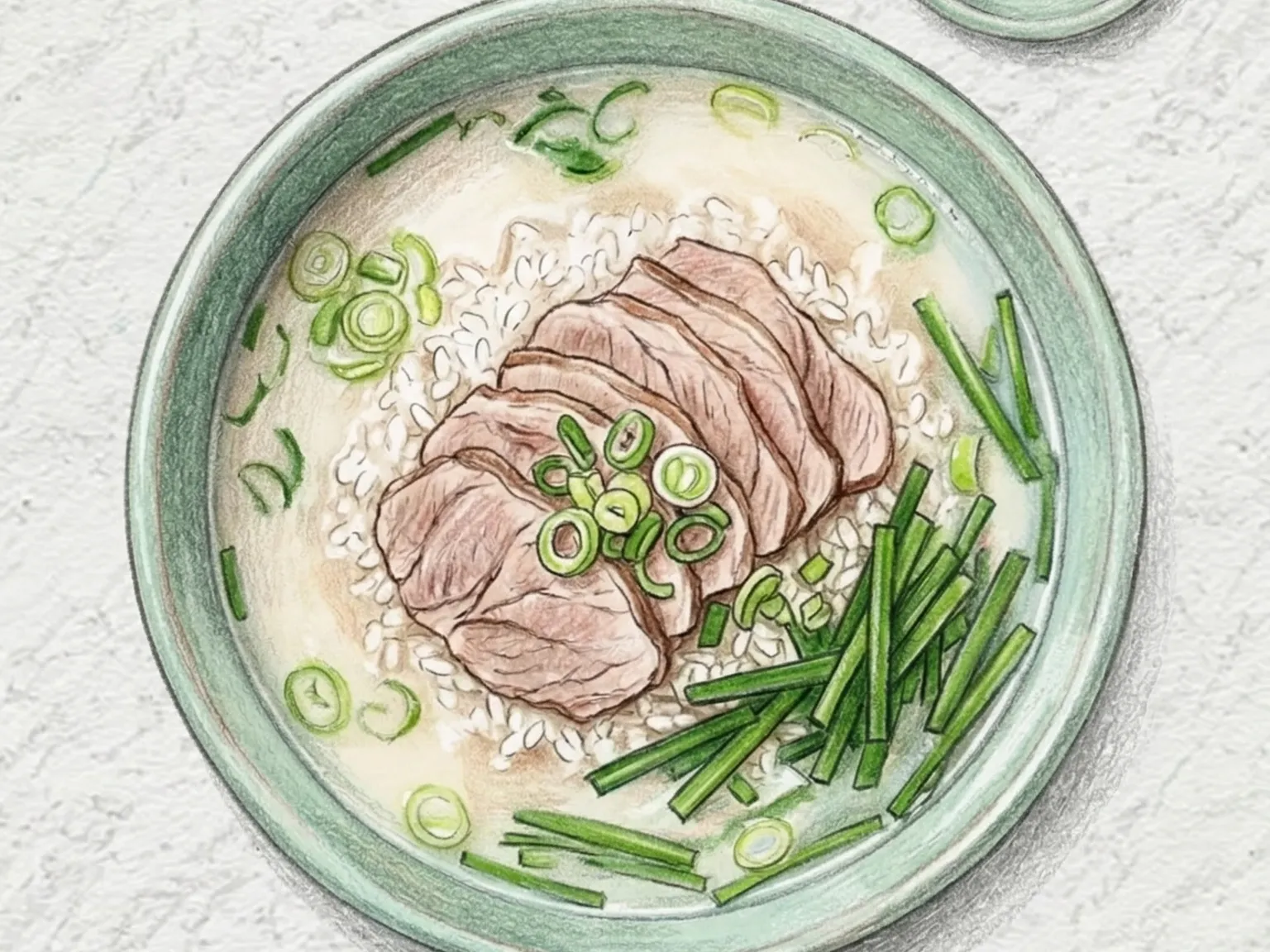
Dwaeji gukbap is Busan's signature pork soup with rice, built on a broth that simmers pork shoulder in bone stock for over an hour until the liquid turns milky-white and deeply flavored. The pork is blanched first to remove impurities, then transferred to the main pot where it cooks low and slow until fork-tender. Sliced thinly against the grain, the meat is arranged over a bowl of rice and doused with the steaming broth, which carries the richness of rendered collagen and the depth of long-simmered bones. Green onion and garlic chives added on top provide freshness, while diners season to taste at the table with fermented shrimp paste or minced chili. The broth is hearty enough to serve as a full meal at any hour - breakfast hangover cure, midday refuel, or late-night comfort. In Busan, gukbap restaurants that have been ladling from the same stockpot for decades are a point of neighborhood pride.
Adjust Servings
Instructions
- 1
Soak pork in cold water for 20 minutes to remove blood.
- 2
Parboil pork once, then discard the blanching water.
- 3
Simmer pork in bone broth over medium-low heat for 60 minutes.
- 4
Remove and slice pork, then season broth with garlic and soup soy sauce.
- 5
Place rice in bowls, top with pork, and ladle hot broth over.
- 6
Add green onion and chives, then adjust with salt.
As an Amazon Associate, we may earn from qualifying purchases.
Tips
Nutrition (per serving)
More Recipes

Korean Beef Head Soup with Rice
Somori-gukbap is a bowl of rice submerged in a milky, collagen-heavy broth extracted from a beef head that has been simmered for the better part of a day. The process begins by boiling the head in several changes of water to purge impurities, then committing it to a long, uninterrupted simmer until the connective tissue breaks down and enriches the liquid with natural gelatin. The finished broth is opaque white, clean-tasting despite its richness, and coats the mouth with a silky weight that plain beef stock cannot match. Sliced meat, pulled from the head after cooking, is lean yet intensely beefy, having surrendered its fat to the broth during the hours of simmering. Served in a stone pot with a mound of rice and a generous ladle of broth, the dish is typically accompanied by a saucer of seasoned soy sauce with chili flakes and a handful of chopped chives. Specialty restaurants start their pots before dawn and keep them rolling until the lunch rush, because in this dish, time is the irreplaceable ingredient.

Korean Bean Sprout Soup with Rice
Bean sprouts are simmered in anchovy broth with the lid off for just five to six minutes - long enough to infuse the stock but short enough to keep the sprouts crunchy. Soup soy sauce seasons the broth, green onion adds freshness, and a whole egg is poached directly in the pot until softly set. Hot broth is then ladled over a bowl of rice, and shredded seaweed and red pepper flakes finish the dish. The sprouts give the soup a clean, refreshing quality that pairs with the anchovy stock's savory backbone, and adding a bit of radish during simmering clarifies the broth further. This Jeonju-style soup rice is widely enjoyed as a hangover cure.

Korean Chicken Bone Broth Soup
Dak-gomtang is a Korean chicken bone broth soup made by simmering a whole chicken with onion, garlic, and ginger over medium-low heat for at least fifty minutes. After the meat is removed and shredded, the bones go back into the pot for another fifteen minutes, releasing gelatin that gives the broth a silky body - when chilled, the liquid sets into a soft gel, a sign of its collagen richness. Skimming the fat layer after refrigeration produces a noticeably cleaner taste on reheating. The broth is seasoned simply with soup soy sauce and salt, and sliced green onion added at the end brings a fresh, sharp contrast to the mellow chicken flavor.

Gomtang (Slow-Simmered Ox Bone Beef Soup)
Gomtang is a quintessential Korean bone soup made by simmering beef leg bones and brisket in water for five to six hours or longer until the broth turns opaque and milky white. The prolonged cooking extracts collagen, marrow, and fat from the bones, giving the liquid a luxuriously creamy texture and a deep beefy flavor that needs only salt and pepper to taste complete. The brisket is removed partway through, sliced thin against the grain, and placed back atop the steaming broth for serving. Green onion and a generous shake of black pepper cut through the richness. The most common way to eat gomtang is with a bowl of rice submerged directly into the soup, letting the grains soak up the milky broth. This is slow food in the truest sense - the hours of effort yield a pot that can feed a family for two days - and remains one of the dishes Koreans crave most when the temperature drops.

Korean Pyongyang Onban (Rice in Clear Chicken Broth)
Pyeongyang-onban is a North Korean-style warm rice soup in which steamed rice is submerged in clear chicken broth and topped with shredded chicken and sliced shiitake mushrooms. The chicken simmers with garlic and green onion for forty-five minutes, producing a clean, golden stock that is strained for clarity. The meat is pulled into strips and set aside, while shiitake slices steep in the broth for five minutes to add an earthy dimension. Rice goes into the bowl first, followed by the hot broth and the chicken garnish, with salt as the sole seasoning. The deliberate absence of strong spices or fermented pastes lets the pure poultry flavor stand alone - mild, warming, and gentle on the stomach. Onban was traditionally a breakfast dish in Pyongyang and remains a comforting choice for any meal where simplicity and nourishment are the priorities.

Korean Ox Bone Broth with Napa Outer Leaves
Sagol-ugeoji-guk is a hearty Korean soup that combines milky ox bone broth with seasoned napa cabbage outer leaves. The ugeoji is pre-mixed with doenjang, gochugaru, garlic, and perilla oil, then stir-fried briefly to develop its flavor before the ox bone broth is added. The soup simmers for thirty-five minutes, during which the rich, collagen-laden stock absorbs the earthy depth of the seasoned greens, and the greens in turn soften into the broth, releasing their own savory notes. The result is a thick, warming bowl where the milky heaviness of the bone broth meets the fermented, slightly spicy character of the dressed vegetables. Soup soy sauce adjusts the final seasoning, and sliced green onion provides a fresh finish. This soup occupies the overlap between comfort food and restorative cooking in the Korean kitchen.