Mexican Cactus Salad (Lime-Dressed Nopal Cactus Pad)
Quick answer
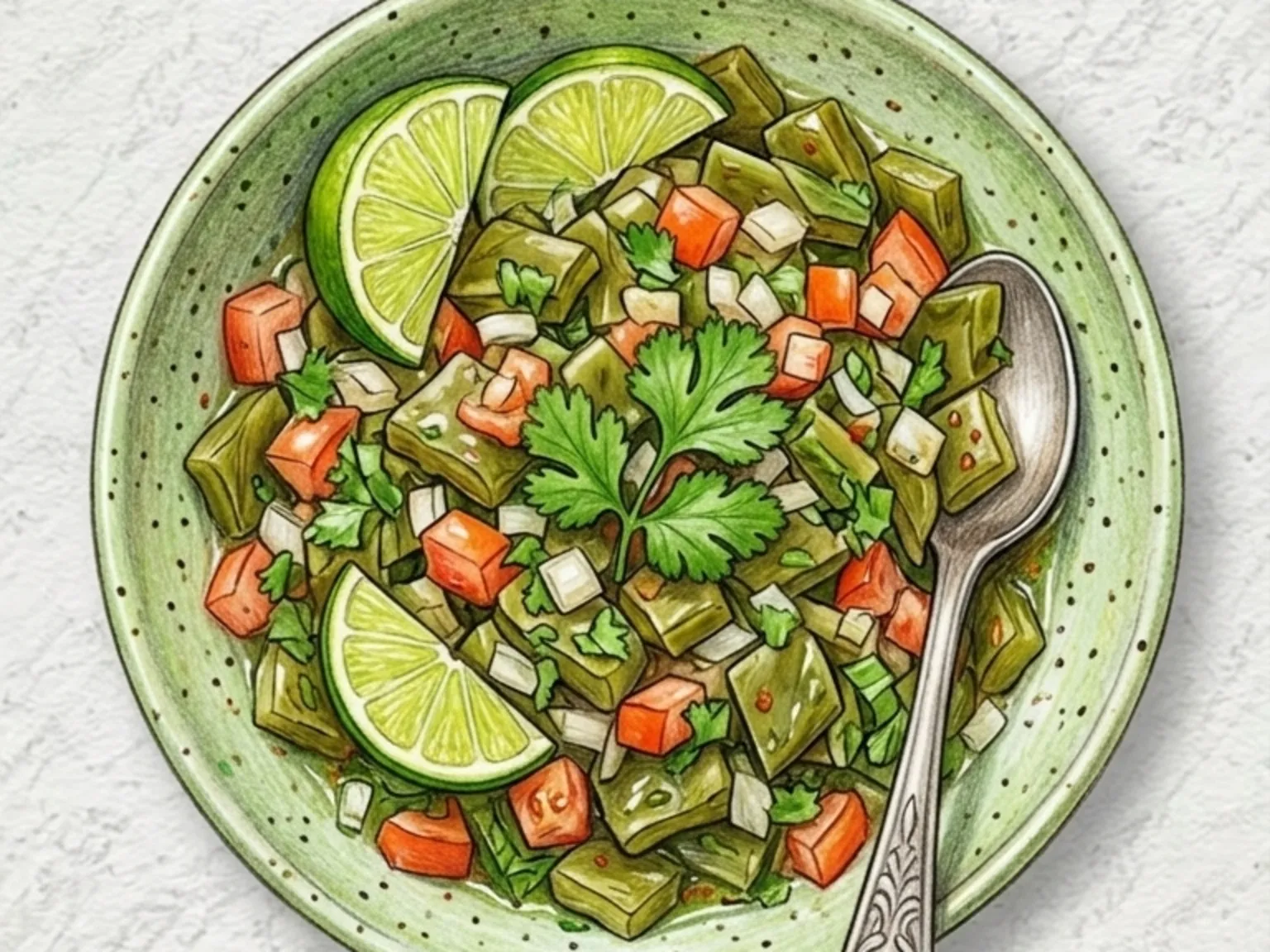
Ensalada de nopales is a traditional Mexican salad made from cleaned and boiled prickly pear cactus pads tossed with diced tomato, onion, fresh cilantro, and lime juice.
What makes this special
- Simmering nopal cactus pads releases a signature gel that defines the texture of this lime-dressed salad.
- Simmering cactus pads releases okra-like slippery gel that defines nopal's signature bite
- Even fully cooked, nopal retains a snap alongside a slight chew
Key ingredients
Core cooking flow
- 1 Wear gloves and scrape the surface and edges of 250 g nopales cactus pads with a knife or peeler.
- 2 Cut the cleaned cactus into 1 cm pieces.
- 3 When the mucilage has released into the water and the cactus is tender but s...
Ensalada de nopales is a traditional Mexican salad made from cleaned and boiled prickly pear cactus pads tossed with diced tomato, onion, fresh cilantro, and lime juice. Preparing the pads requires removing the fine spines and glochids that cover the surface; wearing gloves and scraping with a knife is the standard method. Once cleaned, the pads are diced and boiled until tender. Cooking releases a mucilaginous substance similar to okra, which is the source of nopales' distinctive texture. Draining the cooked cactus thoroughly and letting it cool before dressing prevents the lime juice from becoming diluted. Even after full cooking, nopales retain a slight resistance in the bite, producing a texture that is at once tender and firm. The strong acidity of lime and the herbal quality of cilantro create contrast against the cactus's mild, neutral flavor, giving the salad a clear flavor structure. In Mexico this is a common side dish alongside tacos, grilled meats, or beans, and its high fiber and water content make it a practical addition to a balanced meal.
Instructions
Read the steps as a cooking flow: prep, heat, seasoning, doneness control, and finish.
- 1Step
Wear gloves and scrape the surface and edges of 250 g nopales cactus pads with a knife or peeler.
Check closely for fine glochids, then rinse under running water so no small spines remain.
- 2Control
Cut the cleaned cactus into 1 cm pieces.
Bring a pot of water to a boil, add a little salt, lower to medium heat, and cook for 10 to 12 minutes until the pieces look darker and tender.
- 3Heat
When the mucilage has released into the water and the cactus is tender but still slightly firm, drain it in a sieve.
Rinse with cold water to stop cooking and shake off excess water well.
- 4Prep
If the texture still feels too slimy, rinse once more in ice water.
Let the nopales cool and drain for at least 10 minutes so the dressing will not become watery when mixed.
- 5Prep
Dice 120 g tomato and 70 g white onion into 1 cm pieces, keeping the tomato pieces intact rather than crushed.
Roughly chop 15 g cilantro, using the leaves and tender stems for a fresher texture.
- 6Season
Put the cooled nopales, tomato, onion, and cilantro in a large bowl.
Add 2 tbsp lime juice, 1 tbsp olive oil, and 0.5 tsp salt, then toss gently until evenly coated without breaking the tomato.
After the steps
Pick a recipe that fits this dish.
Continue with shared ingredients, meal pairings, or a similar method.
Recipes That Go Well With This
More Salads →Based on shared ingredients and meal pairing
Mexican Shredded Beef Salad
Salpicon de res simmers beef brisket for 50 to 60 minutes until the connective tissue breaks down, then shreds the cooled meat along the grain and tosses it with romaine lettuce, tomato, red onion, and jalapeno in a lime-and-apple-cider-vinegar dressing. The long braise converts collagen into gelatin, which makes the fibers pull apart cleanly and creates a rough surface that traps the dressing in every strand. The double acidity of lime and vinegar cuts through residual fat with precision, and jalapeno delivers a grassy heat that lingers without overwhelming. Shredding the beef only after it has cooled completely produces clean, distinct strands rather than a mushy pile.
Black Bean Corn Avocado Salad
Black bean corn avocado salad is a Mexican-style bowl that combines cooked black beans, charred sweet corn, and ripe avocado in a lime dressing. Black beans form the starchy, mildly nutty base, while corn charred in a dry pan brings a caramelized sweetness and a burst of texture against the softer ingredients. Ripe avocado contributes a dense creaminess that absorbs the lime's sharp acidity and rounds the dressing's edges. Fresh cilantro scatters a bright herbal note, and ground cumin or chili powder can deepen the spice dimension. The combination delivers plant protein, dietary fiber, and healthy fats in a single bowl substantial enough to serve as a light meal. Tortilla chips on the side turn it into a dip. Because none of the components require hot cooking, the salad can be assembled in minutes from pre-prepared ingredients and keeps well in the refrigerator for a day or two without the avocado browning significantly if dressed just before serving.
Burrito
A burrito layers seasoned ground beef, cooked rice, black beans, shredded cheese, and salsa inside a large flour tortilla that gets folded and rolled into a tight cylinder. Warming the tortilla briefly on a hot pan makes it pliable enough to wrap without tearing. The filling goes down the center in a long line, both ends fold inward first, then the whole thing rolls forward into a sealed package that holds together in the hand. Black beans add starchy substance and protein that make the burrito filling even without the meat at the center, and the tomato acidity in salsa cuts through the melted cheese and beef fat. A line of sour cream inside provides a cool, tangy buffer against the cumin-chili heat. For the cheese, Monterey Jack or cheddar melts evenly without clumping and binds the filling together well. Wrapping the finished burrito tightly in foil keeps the shape and makes it easier to eat on the go.
Taco Salad
Taco salad combines seasoned ground beef with crisp romaine, kidney beans, and corn in a single bowl, dressed with tomato salsa and brightened with a squeeze of lime just before serving. The beef is cooked over high heat and stirred until every trace of moisture has evaporated from the pan, which gives the surface a slightly caramelized edge and prevents the released liquid from making the salad soggy. Kidney beans serve a dual function: their starchy softness absorbs the Cajun seasoning heat clinging to the meat, moderating the intensity, while also providing a filling protein base alongside the beef. Corn kernels add bursts of sweetness and a clean pop of texture that cuts through the heavier elements. Shredded cheddar cheese is added at the end, and its fat content softens the sharp acidity of the salsa without dulling it. The final step, a squeeze of fresh lime, lifts the entire dish by adding brightness that cuts through the richness of both the meat and the melted cheese.
Serve with this
Korean Grilled Octopus
Nakji-gui is a traditional Korean preparation of grilled small octopus that requires specific cleaning techniques and precise timing. The preparation begins by cleaning the small octopus through a process of vigorous rubbing with salt to remove impurities from the skin. Once cleaned, the octopus is coated in a marinade that includes gochujang, soy sauce, sesame oil, minced garlic, and corn syrup. This small octopus possesses significantly finer muscle fibers compared to a full-sized octopus, a physical trait that results in a very narrow window between a desirable springy texture and an undesirable rubbery one. A cooking time of only two minutes is frequently sufficient to push the protein past the point of no return, so the person cooking must stay attentive and remove the tentacles from the heat as soon as they firm up and take on color. The gochujang and corn syrup within the marinade undergo rapid caramelization when they come into contact with the hot surface of the pan or grill. This reaction forms a red, lacquered shell around each tentacle that provides a combination of fermented heat and sweetness in every bite. Using a direct flame for cooking introduces smoky and charred notes that increase the complexity of the flavor profile. If the dish is prepared in a pan rather than on a grill, the octopus must be dried thoroughly first. Any moisture remaining on the surface will generate steam and cause the octopus to braise instead of grill, which prevents the formation of the caramelized exterior. After the cooking process is complete, the octopus is usually snipped into bite-sized pieces with kitchen scissors. It can be served as a wrap with perilla or lettuce leaves, or it can be laid over a bowl of steamed rice.
Kimchi Tofu Alfredo Farfalle (Creamy Kimchi Bow-Tie Pasta)
Kimchi tofu Alfredo farfalle is a fusion pasta that counters the richness of a cream-and-Parmesan Alfredo sauce with the lactic acidity of well-fermented kimchi. Garlic bloomed in butter forms the aromatic base, then cream, milk, and Parmigiano are combined into the classic Alfredo sauce, after which chopped kimchi is folded in to introduce fermented tang and a layer of umami that a standard Alfredo lacks. Firm tofu cut into cubes and pan-fried until each side is golden provides a mild, neutral protein element with direct textural contrast against the smooth sauce. Farfalle's pinched center holds pockets of sauce against each piece of pasta, delivering a consistent hit of creaminess in every bite, and freshly ground black pepper draws a sharp line through the richness at the finish. The entire dish moves from pan to plate in about 15 minutes.
Jianbing (Chinese Savory Breakfast Crepe)
Jianbing is a northern Chinese street breakfast crepe assembled on a flat griddle within minutes. A thin batter of mung bean flour and wheat flour is spread into a wide circle, then an egg is cracked directly on top and smeared across the surface while still liquid. Chopped scallion is scattered over the egg before the crepe is flipped briefly to set the other side. Sweet bean sauce and chili sauce are brushed on, followed by fresh cilantro and a crispy fried wonton sheet that provides the signature crunch. The mung bean flour gives the batter a distinctive nutty flavor and slightly crisp edge that plain wheat flour cannot replicate. The whole assembly is folded into a neat rectangle meant to be eaten by hand. Timing is critical for the wonton cracker, which should be added last to prevent sogginess, creating a layered contrast of soft crepe, runny egg, sharp sauce, and shattering crunch.
Similar recipes
Beef Enchiladas
Beef enchiladas are made by seasoning ground beef with chili powder, cumin, and oregano, wrapping it with shredded cheese inside corn tortillas, and arranging the rolls seam-side down in a baking dish before drowning them in red enchilada sauce and baking until bubbling. During baking, the dried-chili-based sauce penetrates the tortillas from the outside in: the interior absorbs moisture and turns soft, while the portions near the exposed edges dry into chewy, concentrated bites. Melted cheese inside binds the meat into a cohesive, creamy layer. The quality of the enchilada sauce is the defining variable - a sauce built on rehydrated dried chilies rather than canned tomato produces a smokier, more complex base that store-bought versions rarely match. Sour cream and coarsely chopped cilantro added at the table cut through the fat and reset the palate between bites. Three or four per plate make a substantial meal, and the dish reheats well the next day as the sauce continues to saturate the tortillas overnight.
Pan de Elote (Mexican Corn Cake)
Fresh corn kernels are blended into a smooth puree and folded into a buttery batter, producing a baked cake saturated with natural corn flavor. The crumb is dense yet tender, closer to custard than to sponge, with a faint golden hue from the corn itself. Heavy cream in the batter locks in moisture so the cake stays soft for several days without drying out. Because the corn provides substantial natural sweetness, refined sugar plays a supporting role rather than leading. If using frozen kernels, thorough thawing and draining are essential to prevent a watery batter. An overnight rest at room temperature allows the corn starch to redistribute, deepening the flavor and firming the texture to a satisfying slice.
Shrimp Mango Lime Salad
Shrimp mango lime salad is a Thai-style dish that combines briefly poached shrimp with ripe mango, cucumber, red onion, and roughly chopped cilantro, dressed with lime juice, fish sauce, and olive oil. The shrimp go into boiling water for exactly two minutes, which is just long enough to cook them through while keeping their natural snap; any longer causes the proteins to contract and the texture turns from tender to rubbery. Fish sauce contributes a fermented, savory depth that amplifies the shrimp's briny character, while lime's sharp acidity slices through the mango's sweetness and brings the dressing into balance. Thinly sliced red onion adds a raw, peppery heat that creates tension between the sweet fruit and the savory seafood, and cilantro releases a distinctive herbal fragrance with each bite. Cucumber stirred into the mix lightens the overall texture and keeps the salad from feeling too dense. Served cold immediately after dressing, every element stays distinct and the contrast between the yielding fruit, the crisp vegetables, and the firm shrimp comes through clearly.