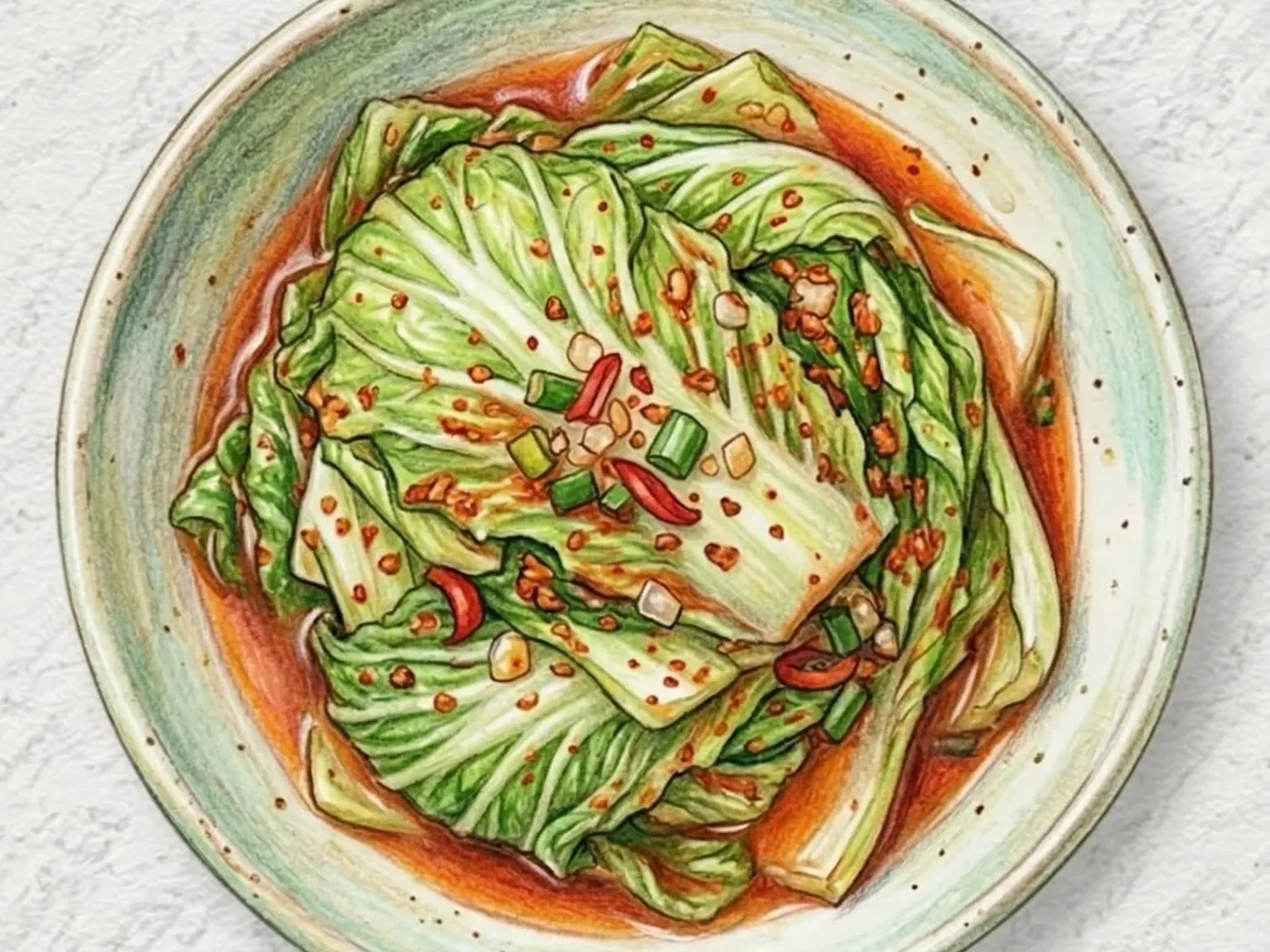
Korean Young Napa Kimchi (Spring Cabbage Quick Ferment)
Quick answer
Eolgari kimchi is a spring kimchi made with young napa cabbage, briefly salted for twenty to thirty minutes, then dressed in gochugaru, fish sauce, garlic, and glutinous...
What makes this special
- Eolgari young napa kimchi needs only 30 minutes in salt to maintain a refreshing spring crunch.
- Young napa needs only 20 to 30 minutes in salt to preserve crispness
- The cabbage's own fresh sweetness balances heat without added sugar
Key ingredients
Core cooking flow
- 1 Trim the base of 1500 g young napa cabbage and cut it into 5 cm pieces.
- 2 Sprinkle 120 g coarse salt over the cabbage, adding a little more around the stems than the leaves.
- 3 Rinse the salted cabbage twice in cold water to control the salinity.
Eolgari kimchi is a spring kimchi made with young napa cabbage, briefly salted for twenty to thirty minutes, then dressed in gochugaru, fish sauce, garlic, and glutinous rice paste before fermenting at room temperature for about a day. Limiting the salting time to no more than thirty minutes is important: the young cabbage's thin leaves and tender stems absorb salt quickly, and over-salting destroys the crisp texture before fermentation even begins. Because the leaves are thinner and more porous than those of mature napa, the seasoning penetrates quickly and fermentation produces a pleasant acidity within twenty-four hours. Salted shrimp compensates for the short fermentation period by adding immediate depth, and the young cabbage itself contributes a clean sweetness that balances the chili heat without any added sugar. Using a generous amount of glutinous rice paste helps the seasoning cling evenly to each leaf, which supports uniform fermentation throughout the batch. This is a seasonal kimchi meant as a lighter, fresher alternative to aged kimchi as temperatures begin to rise in spring.
Instructions
Read the steps as a cooking flow: prep, heat, seasoning, doneness control, and finish.
- 1Season
Trim the base of 1500 g young napa cabbage and cut it into 5 cm pieces.
Rinse in cold water while gently swishing the leaves, then shake off excess water so the salt can cling evenly.
- 2Season
Sprinkle 120 g coarse salt over the cabbage, adding a little more around the stems than the leaves.
Salt for 20 to 30 minutes, turn once halfway through, and stop when the stems bend slightly but still feel crisp.
- 3Season
Rinse the salted cabbage twice in cold water to control the salinity.
Taste a small stem piece, then drain in a colander for about 20 minutes so pooled water does not thin the seasoning.
- 4Control
Combine 20 g sweet rice flour with 200 ml water and cook over low heat, stirring constantly.
When it turns glossy and flows slowly from the spoon, remove it from heat and cool completely before mixing.
- 5Control
Mix 80 g gochugaru, 40 g minced garlic, 10 g minced ginger, 60 ml fish sauce, 30 g salted shrimp, 15 g sugar, and the cooled rice paste. If the salted shrimp tastes very salty, reduce the fish sauce slightly.
- 6Season
Add the seasoning to the drained cabbage and toss gently so it coats between the leaves without crushing them.
Pack into an airtight container, press lightly to remove gaps, ferment at room temperature half a day, then refrigerate for 1 to 2 days.
After the steps
Pick a recipe that fits this dish.
Continue with shared ingredients, meal pairings, or a similar method.
Recipes That Go Well With This
More Kimchi →Based on shared ingredients and meal pairing
Korean Kohlrabi Kimchi (Cubed Gochugaru Fermented Crisp)
Kolrabi kimchi is made by cutting kohlrabi into 2 cm cubes, brining them in coarse salt, then mixing with gochugaru, fish sauce, minced garlic, and plum syrup before fermentation. Kohlrabi has lower moisture content and a denser cellular structure than Korean radish, which means its crunch holds up through days of fermentation without softening into mush. The brining step draws internal moisture out of the kohlrabi while driving salt evenly into the tissue, and this stage must be completed thoroughly so that seasoning can penetrate all the way through during fermentation. Kohlrabi's natural sweetness creates a clear contrast against the heat of gochugaru, adding textural depth to the flavor profile. Fish sauce builds the savory fermented foundation, while plum syrup contributes both acidity and sweetness to keep the overall seasoning in balance. Eaten immediately after mixing, the kimchi tastes fresh and light, similar to a dressed salad. After one to two days at room temperature or three to four days in the refrigerator, the umami deepens noticeably and the characteristic tang of fermentation emerges. It works well as a substitute for kkakdugi alongside rice and grilled meats.
Korean Chamnamul Kimchi (Pimpinella Kimchi)
Chamnamul kimchi is a spring kimchi made by salting chamnamul greens for just ten minutes to wilt them slightly, then dressing with gochugaru, anchovy fish sauce, and salted shrimp without rinsing. Skipping the rinse allows the residual salt to convert into umami during fermentation rather than being washed away, deepening the overall flavor. Pureed Korean pear and onion blended with sweet rice paste form the seasoning base, contributing a natural sweetness that rounds off the sharp edges of the chili heat. After three hours of initial fermentation at room temperature followed by refrigeration, the kimchi reaches its best balance within one to two days, when the grassy herbal aroma of chamnamul aligns with the fermented depth of the fish sauce. Because chamnamul has a high moisture content, fermentation moves quickly, and the kimchi softens past its peak if left too long. Best consumed within three to four days for optimal texture and fragrance.
Korean Perilla-Grilled Mushrooms
Songhwa mushrooms have thick caps with high moisture content, so they stay succulent and chewy when grilled. Sliced into thick pieces and tossed with a simple mix of perilla oil, soy sauce, garlic, salt, and pepper, they cook for about three minutes per side on a hot pan. The perilla oil imparts a distinctly nutty, toasted aroma that differs from sesame. Ground perilla seed is sprinkled on just before the heat is turned off, releasing fragrance without scorching. Finished with chopped chives, this vegetarian dish works equally well as a rice side or a drinking snack.
Korean Young Napa Soybean Paste Stew
Young napa cabbage (eolgari) takes center stage in this doenjang jjigae, wilting into the broth and releasing a mild sweetness. The stock is built from dried anchovies and kelp, then seasoned with fermented soybean paste for a full-bodied base. Firm tofu and onion add substance, while a green chili provides a sharp finish. Eolgari is a tender spring-harvested young cabbage with soft fibers and a pronounced natural sweetness, so when combined with the savory doenjang broth it contributes a mellow, round flavor without any bitterness. Adding a generous amount of tofu helps the cubes absorb the saltiness of the paste and brings the entire soup into a well-balanced, smooth finish that pairs naturally with steamed rice.
Serve with this
Korean Steamed Soybean Sprouts
Kongnamul-jjim is a traditional Korean side dish centered on steamed soy bean sprouts. The preparation involves layering fresh bean sprouts with a mixture of red chili flakes, soy sauce, and finely minced garlic before placing them in a pot. A critical aspect of the cooking process is keeping the lid tightly closed from the beginning until the sprouts are fully cooked. This sealed environment creates a build-up of steam that is essential for maintaining the natural crispness of the sprouts while ensuring that the savory and spicy seasoning permeates each individual strand. The resulting flavor profile features a sharp heat from the red pepper that complements the clean and refreshing qualities of the bean sprouts, resulting in a light and clear finish. To finish the dish, a generous drizzle of sesame oil and a handful of sliced scallions are added to provide a fragrant, toasted aroma and a layer of savory depth. Because the primary ingredients are inexpensive and the entire process from preparation to plating takes less than fifteen minutes, this dish serves as a dependable addition to any meal when the table requires an extra side dish on short notice. For a different aromatic profile, perilla oil can be substituted for sesame oil to introduce an earthy and more herbaceous scent. Individuals seeking a more intense level of spice can add sliced Cheongyang chilies during the cooking stage to elevate the heat.
Korean Pollock Roe Butter Rice Bowl
Myeongran butter deopbap puts lightly seared pollock roe and a knob of butter on steaming white rice, then lets the diner mix everything together at the table. Each ingredient plays a clear role. The roe brings concentrated, briny umami. The butter melts into the hot rice and coats every grain with a rich, creamy backdrop. Soy sauce adds salty depth and deepens the color slightly. Cooking the roe in butter for only about a minute is critical: at that point the eggs still pop on the tongue as the roe breaks apart, but any longer and the texture turns dry and grainy. The moment the hot rice meets the butter and soy sauce and the whole thing is stirred together, the flavors merge into something more unified than the individual parts. Shredded dried seaweed, sliced chives, and sesame seeds scattered on top add fragrance, color, and a gentle crunch that keep the bowl from feeling too rich.
Korean Silken Tofu Seafood Stew
Sundubu haemul jjigae is a seafood soft tofu stew that combines silken tofu with shrimp and Manila clams in an anchovy stock seasoned with gochujang and Korean chili flakes. The aromatics are stir-fried in sesame oil first to build a deeper base before the stock is added. As the shrimp and clams cook through, they release their own briny juices into the spicy broth and push the umami noticeably higher. An egg cracked in at the end binds gently with the silken tofu, adding richness and a slight body to the broth. Deveining the shrimp and removing the back intestine keeps the flavor clean, and soaking the clams in lightly salted water beforehand purges any sand that would otherwise cloud the stock.
Similar recipes
Korean Wild Chive Kimchi (Spring Quick Gochugaru)
Dallae kimchi is a quick spring kimchi made by salting wild chives for just eight minutes to barely soften them, then dressing them in gochugaru, sand lance fish sauce, plum extract, and Korean pear juice. The bulb-end roots carry the most concentrated aroma, so they should not be trimmed too short, and the seasoning should be applied starting from the roots so the flavor penetrates evenly along the entire stalk. Pear juice adds natural sweetness and a little moisture that softens the heat from the chili, while sand lance fish sauce provides a lighter, more delicate umami than standard anchovy sauce. This kimchi smells fresh and bright immediately after preparation, but one day in the refrigerator allows a mild fermented depth to develop that rounds out the flavors considerably. Wild chives are best purchased between early March and mid-April, when the roots are fat and the aroma is fully developed. Salting beyond eight minutes causes the grassy fragrance to dissipate rapidly, so timing matters. The finished kimchi pairs naturally with namul side dishes and fresh vegetable salads at a spring table.
Korean Napa Cabbage Kimchi
Baechu kimchi is Korea's definitive fermented food - salted napa cabbage layered with a seasoning paste of gochugaru, anchovy fish sauce, garlic, ginger, and glutinous rice paste, then fermented at controlled temperatures until the correct balance of salt, heat, umami, and lactic acid develops. Kimchi is not a pickled vegetable in the Western sense; it is a living fermented food whose character changes continually from the moment it is made. The salting step is the technical foundation. Coarse sea salt draws moisture from the cabbage over six to eight hours, making the stems flexible while leaving the characteristic crunch intact. Under-salting results in kimchi that weeps too much liquid during fermentation and turns mushy; over-salting suppresses microbial activity and masks the seasoning. The glutinous rice paste in the seasoning serves two purposes simultaneously: it acts as an adhesive that keeps the seasoning paste clinging to each leaf rather than sliding off, and it provides fermentable sugars that give the lactobacillus bacteria an early food source, accelerating the initial fermentation. Julienned radish adds textural contrast, and scallions contribute a layer of savory depth. After one day at room temperature to establish the bacterial culture, the kimchi moves to cold storage where lactic acid accumulates slowly. At two to three weeks, the heat from gochugaru, the umami from fish sauce, and the acidity from fermentation reach their optimal equilibrium. Older kimchi - four weeks or more - develops a pronounced sourness and deeper, more fermented flavor that makes it better suited for cooking in kimchi-jjigae or kimchi-bokkeum than for eating raw.
Korean Young Napa Soybean Paste Soup
Eolgari-doenjang-guk is a traditional Korean soup made with young napa cabbage and fermented soybean paste. The recipe uses rice-rinse water as the soup base instead of plain water, which helps reduce the sharpness of the soybean paste and adds a mild, rounded starchiness. Straining the doenjang through a sieve before boiling is recommended to ensure a smooth, lump-free broth. Once the soup comes to a boil, anchovy powder and minced garlic are stirred in to establish a rich umami depth. The young napa cabbage is added next and cooked briefly so the leaves retain their fresh flavor and crisp bite. In the final stage, sliced green onions and cheongyang chilies are added, simmering for just two minutes to infuse the broth with a clean, spicy finish. This comforting soup pairs naturally with a hot bowl of steamed rice.