Farro Harvest Salad
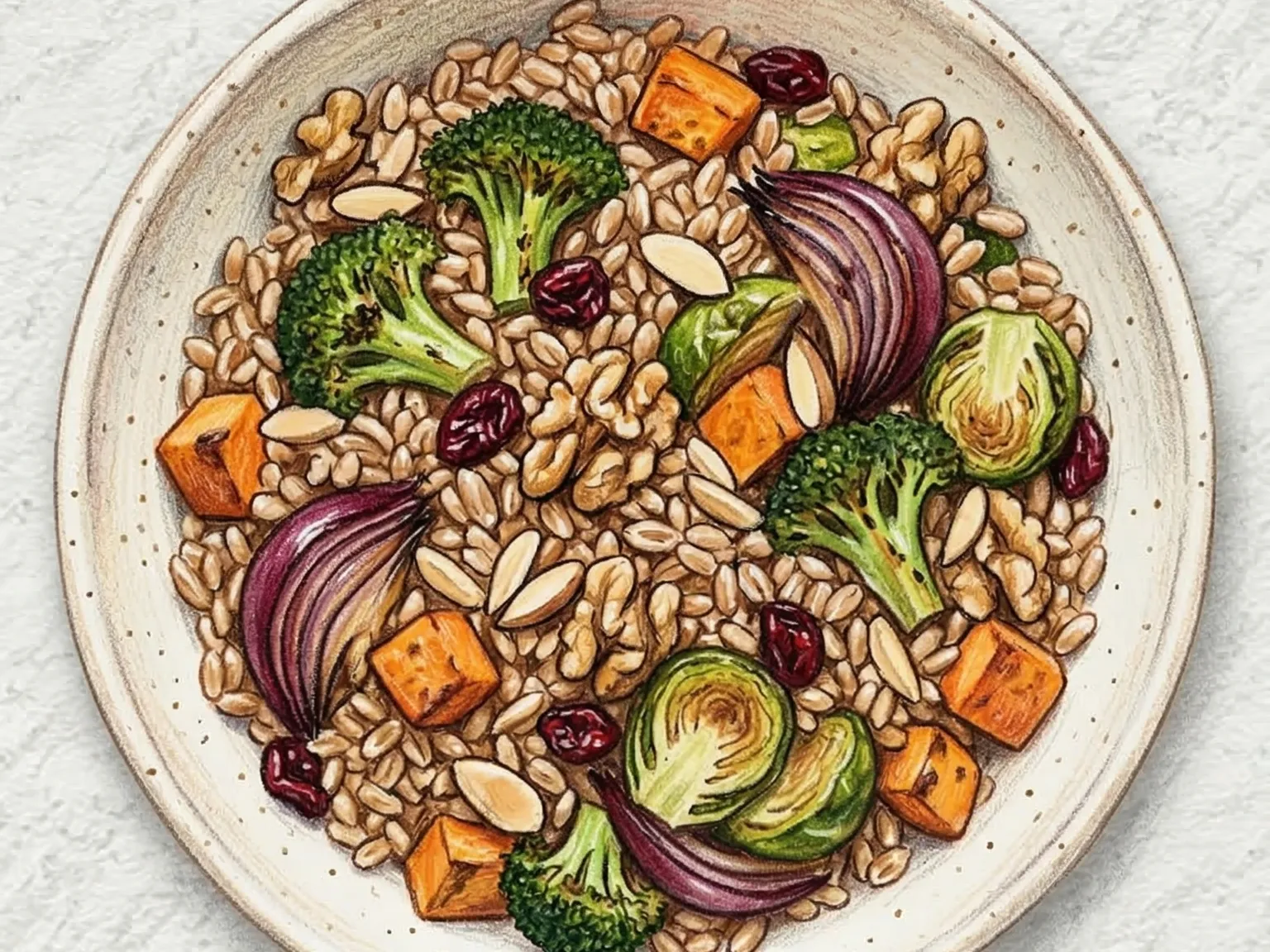
Farro is an ancient Italian grain that retains a pleasant chew even after boiling, making it an ideal base for grain salads. Roasted root vegetables - butternut squash, beets, or sweet potatoes - contribute natural sweetness and caramelized edges, while toasted walnuts or pecans add crunch and nutty depth. Bitter greens such as arugula or kale balance the sweetness and keep the salad from tasting one-dimensional. A simple dressing of apple cider vinegar, olive oil, and a touch of honey brings the components together without masking any individual flavor. The result is a salad substantial enough to serve as a main course, rich in fiber and protein. It holds well in the refrigerator for two days, with the farro absorbing dressing without turning soft.
Adjust Servings
Instructions
- 1
Rinse farro, boil for 18 minutes, and drain.
- 2
Slice pumpkin and onion, coat with oil, and roast at 200C for 20 minutes.
- 3
Wash and dry arugula and roughly chop almonds.
- 4
Combine farro, roasted vegetables, and arugula in a bowl.
- 5
Drizzle balsamic and oil, then finish with almonds.
As an Amazon Associate, we may earn from qualifying purchases.
Tips
Nutrition (per serving)
More Recipes

Barley Grain Salad
Barley grain salad builds on the chewy, nutty character of well-cooked pearl barley by tossing it with diced bell pepper, cucumber, and red onion in a lemon-herb dressing. Olive oil brings a rounded richness that pairs naturally with the grain's earthy flavor, while fresh lemon juice lifts the whole bowl with bright acidity. The raw vegetables contribute moisture and crunch that break up the density of the barley, keeping each forkful interesting. High in fiber and naturally filling, this Mediterranean-inspired salad works as a standalone light meal or as a substantial side next to grilled meat or fish.

Millet Herb Salad
Millet is simmered until fluffy, then fluffed with a fork and cooled before being mixed generously with chopped parsley and mint for a grain salad that leans heavily on herb fragrance. A simple dressing of lemon juice and olive oil adds bright acidity to the grain's neutral base. Diced cucumber and halved cherry tomatoes contribute moisture and color without competing with the herbs. Cooling the millet completely before assembly is essential - warm grain wilts the vegetables and turns the texture mushy. The salad holds up well at room temperature, making it practical for packed lunches and outdoor eating.

Buckwheat Avocado Salad
Buckwheat avocado salad cooks buckwheat groats until they reach a chewy, slightly sticky consistency, rinses them in cold water, and tosses them with ripe avocado, cherry tomatoes, cucumber, and fresh dill in a lemon-olive oil dressing. The buckwheat's earthy, faintly bitter grain character finds its complement in the avocado's smooth fat, and lemon juice brightens the entire bowl with sharp citrus acidity. Dill's cool, anise-like fragrance lifts the heaviness that grain salads can carry, while cucumber adds a crisp, watery crunch. High in fiber and naturally filling, this Eastern European-inspired salad serves comfortably as a standalone light meal.

Three Bean Salad
Three bean salad combines kidney beans, chickpeas, and blanched green beans in a dressing of apple cider vinegar, olive oil, and Dijon mustard. Only the green beans require cooking - a three-minute blanch that keeps them bright and snappy - while the canned beans are simply rinsed and drained to remove surface starch. Soaking the thinly sliced red onion in cold water draws out its raw bite, leaving behind a mild sweetness that blends smoothly into the dressing. The apple cider vinegar provides a gentle acidity, and the mustard adds a sharp, peppery note that gives direction to the otherwise neutral beans. Overnight refrigeration allows the dressing to penetrate the beans fully, making this a strong candidate for meal preparation.

Hearty Minestrone Soup
Hearty minestrone soup is an Italian vegetable soup that begins by patiently sauteing onion, carrot, celery, and zucchini in olive oil to draw out their natural sweetness before adding crushed tomatoes and vegetable broth. Taking time to cook the vegetables over medium heat allows caramelization to occur, building a clean yet deep flavor base for the broth. Kidney beans contribute plant-based protein and a starchy thickness, while small pasta cooked directly in the soup releases additional starch that enriches the overall texture. Adding a Parmesan rind during the simmer infuses the broth with a quiet umami depth. A final garnish of grated Parmesan and a drizzle of olive oil just before serving rounds out the bowl with richness and savory warmth.

Ciabatta Bread
Ciabatta is a flat Italian bread developed in Veneto in 1982, defined by its exceptionally high hydration dough. The flour-to-water ratio reaches 70 to 80 percent, making the dough sticky and difficult to handle but producing the bread's signature open crumb - large, irregular holes throughout the interior that trap olive oil when dipped. The crust is thin and crackly, shattering lightly when pressed, while inside the crumb is moist and elastic with a wheaty sweetness revealed through chewing. A long cold bulk fermentation in the refrigerator develops mild acidity and complex flavor. The bread stales faster than denser loaves, so it is best eaten the day it is baked. Its flat shape and crisp-soft contrast make it ideal for panini, dipping in olive oil, or serving alongside soup.