Freekeh Herb Salad (Smoky Roasted Wheat & Fresh Herbs)
Quick answer
Freekeh is an ancient Middle Eastern grain produced by harvesting wheat while the grain is still immature and green, then roasting the harvested stalks over an open fire.
What makes this special
- Freekeh Herb Salad features roasted immature wheat stalks with a signature smoky char aroma.
- Wheat smoked whole on the stalk gives freekeh its signature char aroma
- Grains stay firm and separate after boiling, holding shape in the salad
Key ingredients
Core cooking flow
- 1 Place 150 g freekeh in a sieve and rinse until the water runs mostly clear.
- 2 When the water begins to boil, reduce to medium low and cook for 18 to 20 minutes.
- 3 Spread the drained freekeh in a wide bowl or tray and let the steam escape until it is only lukewarm.
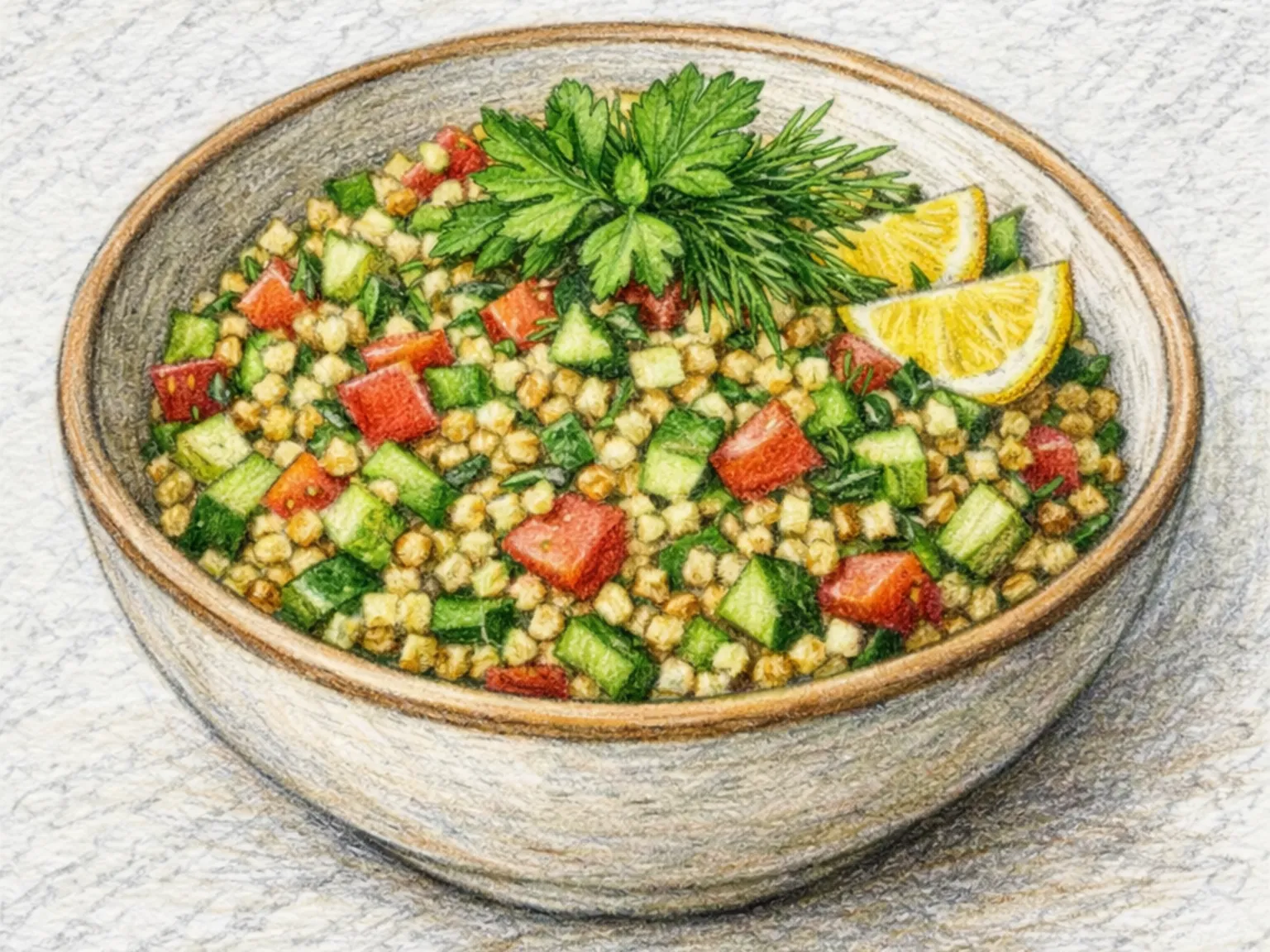
Freekeh is an ancient Middle Eastern grain produced by harvesting wheat while the grain is still immature and green, then roasting the harvested stalks over an open fire. The outer chaff burns away while the moist interior of each grain survives the flame, and it is this controlled scorching that gives freekeh its defining characteristic: a pronounced smoky aroma layered over the nutty, grassy quality of young wheat. When boiled, the grains hold their shape and retain a firm chew that standard wheat varieties lose after cooking, making freekeh particularly suited to salads that must hold up at room temperature. In this preparation, the cooked grain is combined with generous quantities of fresh parsley, mint, and dill, whose cool, bright flavors complement rather than compete with the smoke. A dressing of fresh lemon juice and extra-virgin olive oil is enough to bring the bowl together, as the grain itself provides sufficient depth without a complex sauce. Diced cucumber and halved cherry tomatoes add moisture and acidity, and crumbled feta cheese contributes salt and a creamy richness that ties the components into a coherent whole. The salad benefits from resting for at least an hour before serving, as the dressing absorbs into the grain and the herb and grain flavors gradually merge.
Instructions
Read the steps as a cooking flow: prep, heat, seasoning, doneness control, and finish.
- 1Control
Place 150 g freekeh in a sieve and rinse until the water runs mostly clear.
Put it in a saucepan with 400 ml water, then set it over medium heat so the grains hydrate evenly.
- 2Control
When the water begins to boil, reduce to medium low and cook for 18 to 20 minutes.
Drain as soon as the grains stay intact but feel chewy, before they soften into a heavy mass.
- 3Step
Spread the drained freekeh in a wide bowl or tray and let the steam escape until it is only lukewarm.
Do not add the herbs while it is hot, or their fresh aroma will fade.
- 4Season
Dice 120 g cucumber and 120 g tomato into even 0.8 cm pieces so each spoonful has the same texture.
If they release much liquid, rest them briefly in a sieve to keep the salad loose.
- 5Prep
Finely chop 20 g parsley and 15 g cilantro, including the tender stems because they carry useful flavor.
Add them to a large bowl with the cooled freekeh, cucumber, and tomato, then toss gently first.
- 6Season
Drizzle with 1 tbsp lemon juice and 2 tbsp olive oil, then season with salt and toss without crushing the grains.
Rest for 1 hour, mix again, and check the acidity and seasoning before serving.
After the steps
Pick a recipe that fits this dish.
Continue with shared ingredients, meal pairings, or a similar method.
Recipes That Go Well With This
More Salads →Based on shared ingredients and meal pairing
Israeli Salad
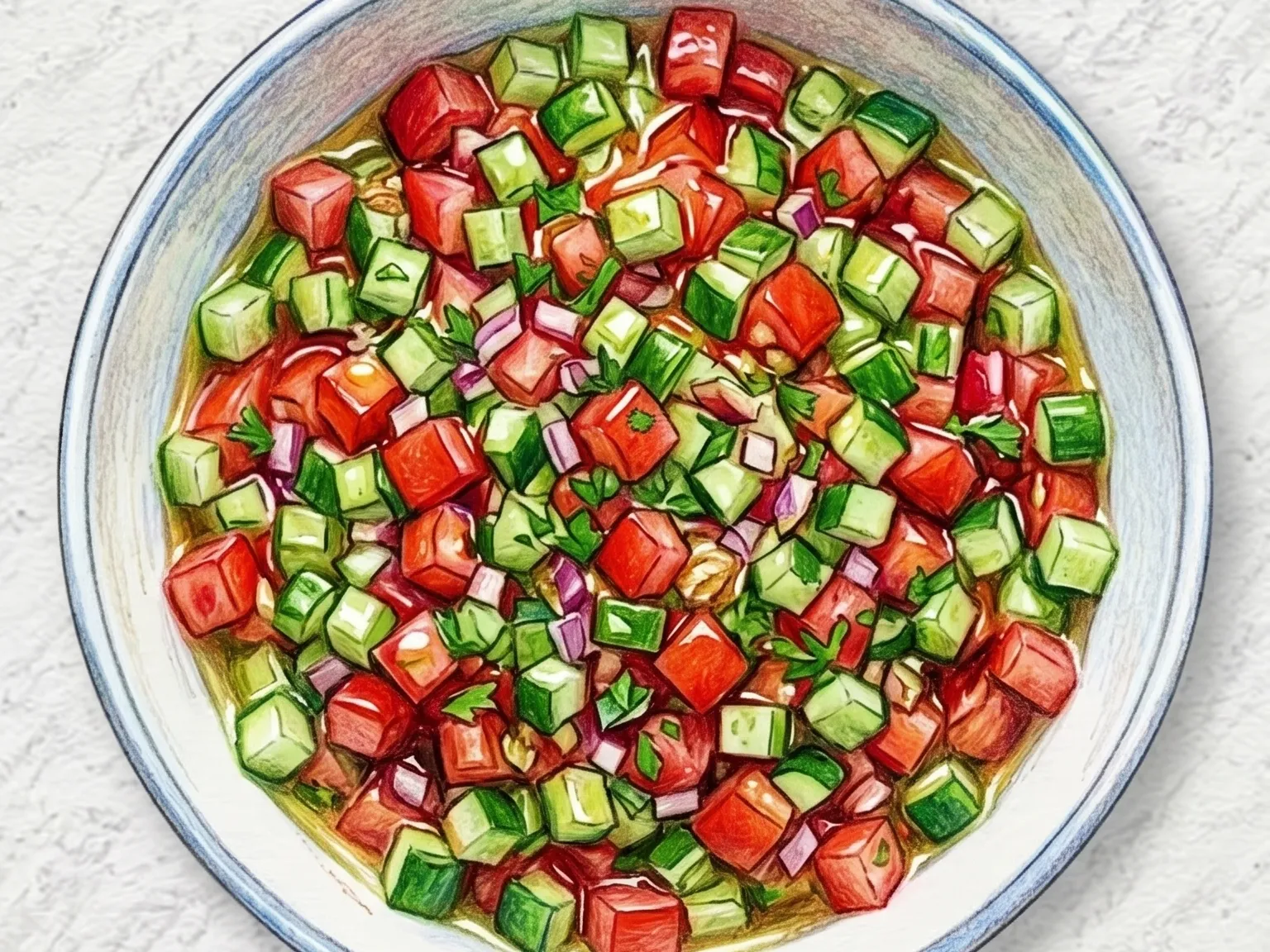
Israeli salad is the foundational everyday salad of the Middle East, built from tomato, cucumber, red onion, and parsley diced to pieces under 0.5 cm and dressed simply with lemon juice, olive oil, and salt. The uniformly small cut is the defining technique, and it is not merely aesthetic. When every component is the same tiny size, a single spoonful carries equal amounts of tomato juice, cucumber crunch, and the sharp bite of raw onion, so the balance does not shift from one mouthful to the next. The dressing is deliberately kept to two ingredients so that the natural acidity and sweetness of ripe tomatoes can dominate without interference from added vinegar or sweeteners. Resting the salad for about five minutes after tossing draws juice from the cut tomatoes, which merges with the lemon and oil to form a light, self-made brine that deepens the flavor of the entire bowl. Across Israel and throughout the broader Middle East, this salad appears at the breakfast table alongside eggs and bread as commonly as it does beside grilled meats at dinner. Its quality depends entirely on the freshness of the produce rather than any technique or seasoning.
Tabbouleh Salad (Middle Eastern herb salad)
Tabbouleh salad is a Middle Eastern herb salad where finely chopped parsley and mint are the main ingredients and bulgur plays a supporting textural role. The bulgur is soaked in boiling water until tender, then cooled to develop a nutty chew that anchors the bright greenery piled on top. Removing the seeds from the tomatoes before dicing prevents excess juice from diluting the lemon-olive oil dressing. The dressing itself is simple - lemon juice, olive oil, and salt - but its acidity lifts the grassy flavor of the herbs into something sharp and clean. Resting the assembled salad in the refrigerator for at least ten minutes allows the lemon to penetrate the bulgur, producing a consistent flavor in every bite.
Red Lentil Soup
Red lentil soup is a Middle Eastern and Mediterranean staple made by simmering red lentils with cumin, turmeric, and vegetable stock until the lentils dissolve into a silky, golden broth. Onion and garlic are sauteed in olive oil, then the ground spices are toasted briefly to bloom their earthy, warm aromatics into the fat, which flavors the entire pot. Red lentils require no soaking - they go straight into the stock and break down within twenty to twenty-five minutes, their skins splitting apart to create a naturally creamy texture without the need for blending. A generous squeeze of lemon juice at the end is essential, cutting through the heaviness of the spices with a bright, clean acidity. A final drizzle of olive oil over each bowl adds a layer of richness that deepens every spoonful.
Falafel Salad Bowl
A falafel salad bowl arranges crisp, herb-packed chickpea fritters over a bed of mixed greens or grains alongside chopped cucumber, tomato, red onion, and pickled vegetables. The falafel are made from soaked raw chickpeas blended with parsley, cilantro, cumin, and garlic, then fried or baked until the exterior turns deeply golden while the interior stays bright green and moist. A generous drizzle of tahini dressing ties the bowl together with its nutty, slightly bitter sesame character, and a squeeze of fresh lemon lifts the entire dish. Adding cooked quinoa, bulgur, or couscous underneath turns it into a filling one-bowl meal. Each bite moves between crispy falafel, crunchy raw vegetables, and creamy dressing, so no two forkfuls feel the same. Originating across the Middle East, falafel has become an internationally recognized symbol of plant-based cooking, and this bowl format balances protein and fiber in a well-rounded single serving.
Serve with this
Korean Gwangeo Yuja Ganjang Gui (Yuja Soy Grilled Flounder)
Gwangeo yuja-ganjang-gui is a Korean grilled flounder dish where fillets are brushed with a glaze of soy sauce, yuzu marmalade, minced garlic, and ginger juice, left to marinate for ten minutes, then cooked in olive oil over medium heat for three minutes per side. The yuzu marmalade introduces a bright citrus acidity that sits cleanly on top of the soy sauce depth, building a layered flavor profile over the neutral, clean-tasting flesh of the flounder. The two elements do not compete: the soy provides the savory foundation and the yuzu supplies the brightness that keeps the dish from feeling heavy or monotonous. Brushing the remaining glaze over the fish during a final two to three minutes on low heat is what creates the glossy, lacquered sheen on the surface, caramelizing slightly as the sugars in the yuzu marmalade concentrate and reduce against the hot pan. Lemon zest and thinly sliced green onion scattered over the finished fish add a final layer of fragrance that lifts the dish just before serving. Flounder is a delicate fish with thin fillets that break easily if handled carelessly, so flipping the fish only once with a wide spatula in a single, confident motion is the technique that keeps the flesh intact and the presentation clean. The combination of fermented soy and citrus suits the mild white fish without masking its natural flavor.
Kimchi Tofu Alfredo Farfalle (Creamy Kimchi Bow-Tie Pasta)
Kimchi tofu Alfredo farfalle is a fusion pasta that counters the richness of a cream-and-Parmesan Alfredo sauce with the lactic acidity of well-fermented kimchi. Garlic bloomed in butter forms the aromatic base, then cream, milk, and Parmigiano are combined into the classic Alfredo sauce, after which chopped kimchi is folded in to introduce fermented tang and a layer of umami that a standard Alfredo lacks. Firm tofu cut into cubes and pan-fried until each side is golden provides a mild, neutral protein element with direct textural contrast against the smooth sauce. Farfalle's pinched center holds pockets of sauce against each piece of pasta, delivering a consistent hit of creaminess in every bite, and freshly ground black pepper draws a sharp line through the richness at the finish. The entire dish moves from pan to plate in about 15 minutes.
Jianbing (Chinese Savory Breakfast Crepe)
Jianbing is a northern Chinese street breakfast crepe assembled on a flat griddle within minutes. A thin batter of mung bean flour and wheat flour is spread into a wide circle, then an egg is cracked directly on top and smeared across the surface while still liquid. Chopped scallion is scattered over the egg before the crepe is flipped briefly to set the other side. Sweet bean sauce and chili sauce are brushed on, followed by fresh cilantro and a crispy fried wonton sheet that provides the signature crunch. The mung bean flour gives the batter a distinctive nutty flavor and slightly crisp edge that plain wheat flour cannot replicate. The whole assembly is folded into a neat rectangle meant to be eaten by hand. Timing is critical for the wonton cracker, which should be added last to prevent sogginess, creating a layered contrast of soft crepe, runny egg, sharp sauce, and shattering crunch.
Similar recipes
Roasted Cauliflower Tahini Salad
Cauliflower florets reach a specific texture and flavor profile when roasted in a mixture of olive oil and salt. This process continues in the oven until the edges of the vegetable turn a deep golden brown. This dry heat method creates a transformation that is distinct from moist heat methods like steaming or boiling. High oven temperatures trigger caramelization and the Maillard reaction, which together extract a nutty and slightly sweet complexity from the cauliflower. This development is significant because the vegetable is otherwise quite mild and neutral in its raw or boiled state. The concentrated flavor resulting from roasting provides the necessary foundation for the tahini dressing. Because the dressing is thick and carries a heavy sesame richness, it requires the caramelized depth of the roasted cauliflower to act as a balance. Without this roasting process, the dressing might easily overpower a vegetable that has not developed its own strong character. The preparation of the sauce involves whisking tahini paste with fresh lemon juice and minced garlic. This mixture is stirred until it becomes smooth. The acidity from the lemon juice is essential here as it cuts through the density of the sesame paste. This ensures the final sauce remains bright on the palate instead of feeling heavy or overly thick. To complete the dish, large amounts of chopped flat-leaf parsley are scattered over the top. This addition introduces a vivid green color and a clean herbal quality that serves to offset the richness of both the tahini and the oil used during the roasting process. A light dusting of cumin or smoked paprika can be applied as a final step to sharpen the Middle Eastern characteristics of the salad. The final result presents a series of layered flavors including the toasted sesame from the tahini, the caramelized edges of the cauliflower, the sharp acid of the lemon, and the clean finish provided by the parsley. Each of these components acts as a distinct note within the overall composition. This combination is a common staple in Middle Eastern culinary traditions. It functions well when served alongside flatbread or as an accompaniment to grilled portions of meat or fish.
Shakshuka (Eggs Poached in Spiced Tomato Sauce)
Shakshuka starts with onion and bell pepper softened in olive oil, followed by cumin, smoked paprika, and chili flakes bloomed briefly in the hot fat to unlock their oil-soluble aromas. Crushed whole tomatoes are added and simmered until the sauce thickens enough to hold its shape when a spoon is dragged through it. Eggs are cracked directly into wells made in the sauce, then the pan is covered and cooked for six to eight minutes so the whites set while the yolks stay runny. The spice profile delivers warm earthiness from the cumin, gentle smokiness from the paprika, and a low heat from the chili that builds gradually. Tearing bread and dragging it through a broken yolk and the surrounding sauce is the traditional way to eat it.