Gado-Gado Salad (Indonesian Peanut Sauce Veggie Plate)
Salads Medium

Gado-Gado Salad (Indonesian Peanut Sauce Veggie Plate)

Quick answer

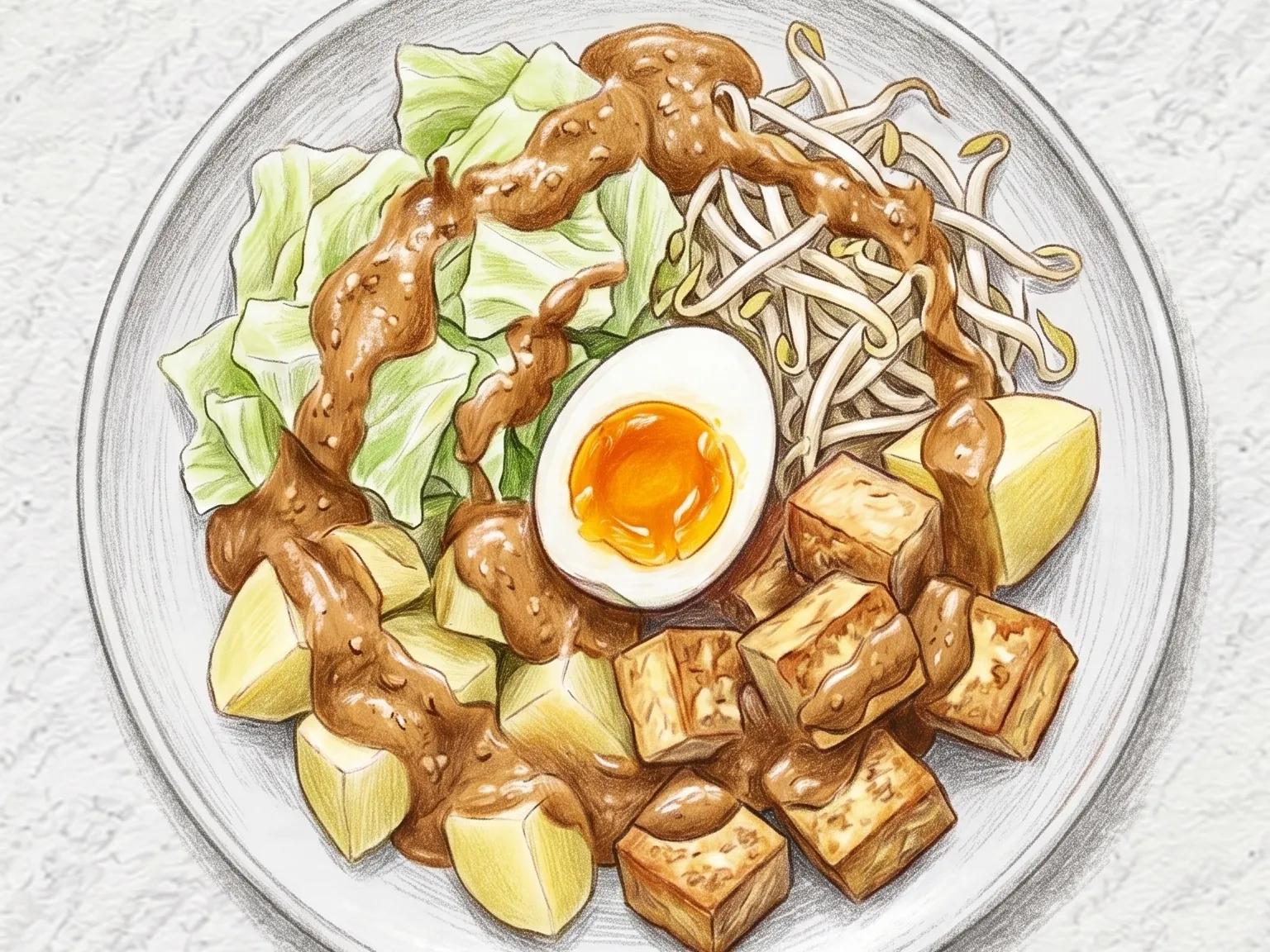
Gado-gado salad is an Indonesian composed dish that brings together blanched cabbage, bean sprouts, boiled potato wedges, pan-seared firm tofu, and halved soft-boiled egg...

What makes this special

  • Gado-Gado Salad combines blanched cabbage and tofu with a thick, glossy Indonesian peanut sauce.
  • Peanut butter, lime, and soy sauce form the single unifying sauce for all components
  • Cabbage and bean sprouts are blanched separately to preserve individual textures
Total time
32 min
Level
Medium
Servings
2 servings
Ingredients
8
Calories
420 kcal
Protein
21 g

Key ingredients

cabbagebean sproutspotatofirm tofuboiled egg

Core cooking flow

  1. 1 Wash 180 g potatoes with the skin on, then cut them into 2 cm cubes.
  2. 2 Cut 120 g cabbage into 3 cm pieces. Blanch in boiling water for 1 to 2 minut...
  3. 3 Blanch 100 g bean sprouts separately in boiling water, only until they softe...

Gado-gado salad is an Indonesian composed dish that brings together blanched cabbage, bean sprouts, boiled potato wedges, pan-seared firm tofu, and halved soft-boiled eggs on a single plate, then finishes them with a thick, glossy peanut sauce. The sauce combines peanut butter, lime juice, and soy sauce into a base that layers nuttiness over a sharp, salty-sour foundation, lifting the mild flavors of every vegetable and the tofu in a single pour. Each vegetable is blanched separately and pulled from the water at a different moment: cabbage stays crisp, while bean sprouts are allowed to soften just slightly, so the finished plate holds distinct textures rather than a uniform mush. The tofu must be pressed or patted completely dry before it goes into the pan; residual moisture prevents proper browning and causes the cubes to crumble when tossed with the sauce. If the peanut sauce thickens as it sits, a tablespoon of warm water at a time is all it takes to bring it back to a pourable, coating consistency that drapes over the vegetables rather than clumping on top.

Prep 20min Cook 12min 2 servings
Recipes by ingredient → cabbage potatoes soy sauce

Instructions

Read the steps as a cooking flow: prep, heat, seasoning, doneness control, and finish.

6 steps
  1. 1
    Control

    Wash 180 g potatoes with the skin on, then cut them into 2 cm cubes.

    Simmer in lightly salted water over medium heat for 10 to 12 minutes, until a toothpick slides in easily, then drain and let the steam escape.

  2. 2
    Heat

    Cut 120 g cabbage into 3 cm pieces.

    Blanch in boiling water for 1 to 2 minutes, just until the edges look slightly translucent, then rinse in cold water so the cabbage stays crisp instead of turning limp.

  3. 3
    Heat

    Blanch 100 g bean sprouts separately in boiling water, only until they soften slightly but still have bite.

    Cool them in cold water, then leave both sprouts and cabbage in a sieve until fully drained.

  4. 4
    Control

    Press 160 g firm tofu with paper towels to remove surface moisture, then cut it into 2 cm cubes.

    Heat a lightly oiled pan and sear over medium-high heat until each side is golden, so the cubes hold together with the sauce.

  5. 5
    Season

    In a bowl, stir together 2.5 tbsp peanut butter, 1 tbsp lime juice, and 1 tbsp soy sauce until smooth.

    If the sauce is stiff, add warm water little by little, up to 1 to 2 tbsp, until it pours slowly from a spoon.

  6. 6
    Finish

    Arrange the cabbage, bean sprouts, potatoes, and tofu in separate sections on a wide plate.

    Halve 2 boiled eggs and place them on top, then drizzle the peanut sauce just before serving so the vegetables stay distinct.

After the steps

Pick a recipe that fits this dish.

Continue with shared ingredients, meal pairings, or a similar method.

Recipes That Go Well With This

More Salads →

Based on shared ingredients and meal pairing

Gado-Gado (Indonesian Peanut Salad)
Shared ingredient: cabbage Asian

Gado-Gado (Indonesian Peanut Salad)

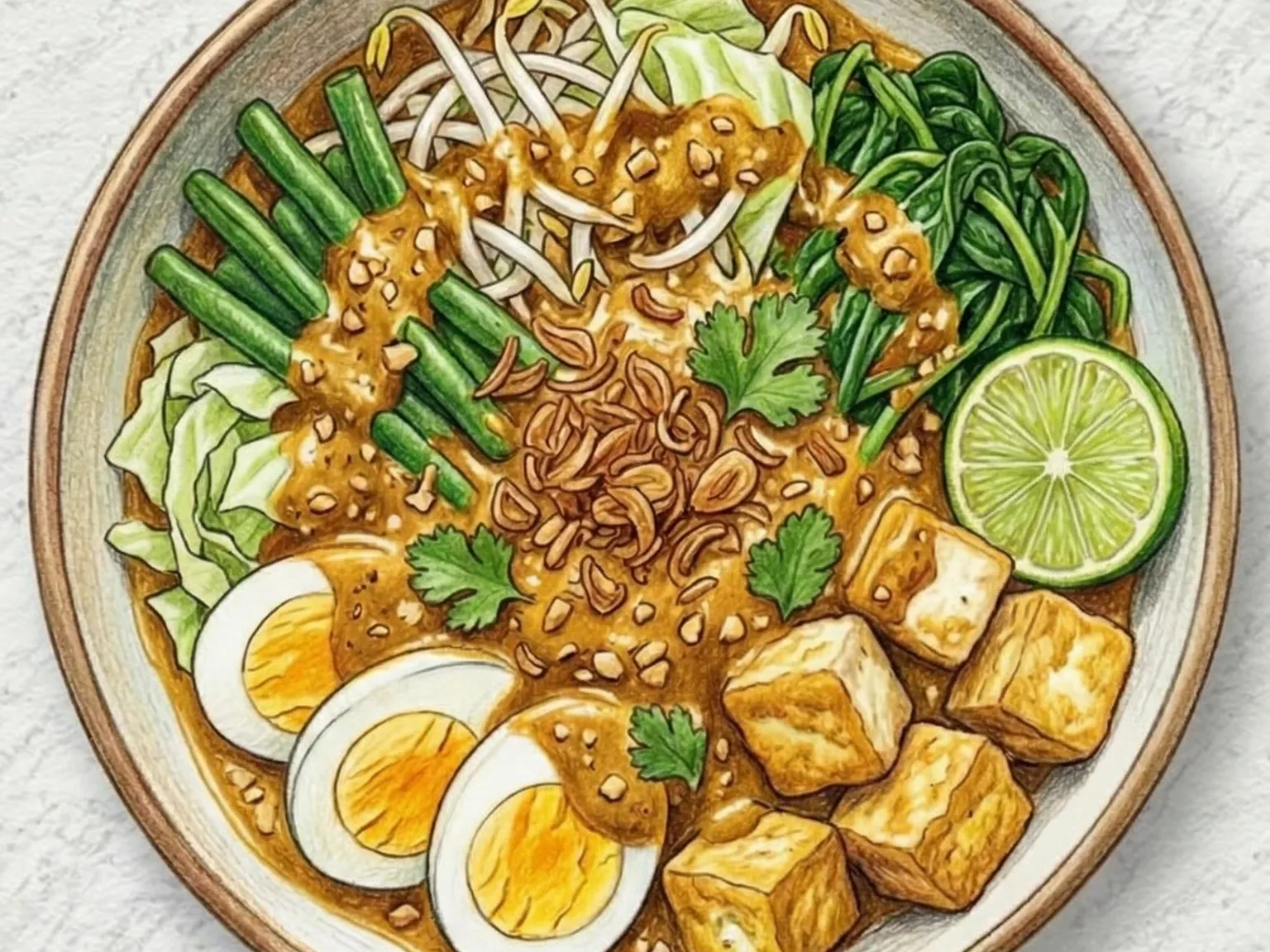
Gado-gado means mix-mix in Javanese, and the name describes exactly how the dish is assembled and eaten. Blanched spinach, bean sprouts, cabbage, and boiled potato are arranged on a plate alongside hard-boiled egg, fried tofu, and fried tempeh, then drenched generously with a thick peanut sauce before being mixed together at the table. The sauce is made by pounding freshly roasted peanuts in a mortar and mixing them with chili, garlic, tamarind, palm sugar, and kecap manis. The result is a complete flavor system in a single condiment -- nutty, spicy, sour, and sweet all at once -- so no additional seasoning is required. Street vendors pound the peanuts to order for each customer, and the smell of toasting nuts fills the air around their carts. Crushed kerupuk, the shrimp cracker common across Indonesian cooking, is scattered on top to add a shattering crunch that contrasts with the soft vegetables and protein. As the crackers absorb the sauce over the course of the meal they soften and swell, and that textural transition is considered part of the eating experience rather than a flaw. The dish adapts easily: built from vegetables alone it becomes a complete vegan meal, and loaded generously with egg and tofu it provides substantial protein. In Indonesia, gado-gado is eaten at any hour of the day with no particular seasonal or mealtime association, appearing at roadside carts and home tables with equal frequency.

Tofu Satay Salad Bowl
Shared ingredient: firm tofu Salads

Tofu Satay Salad Bowl

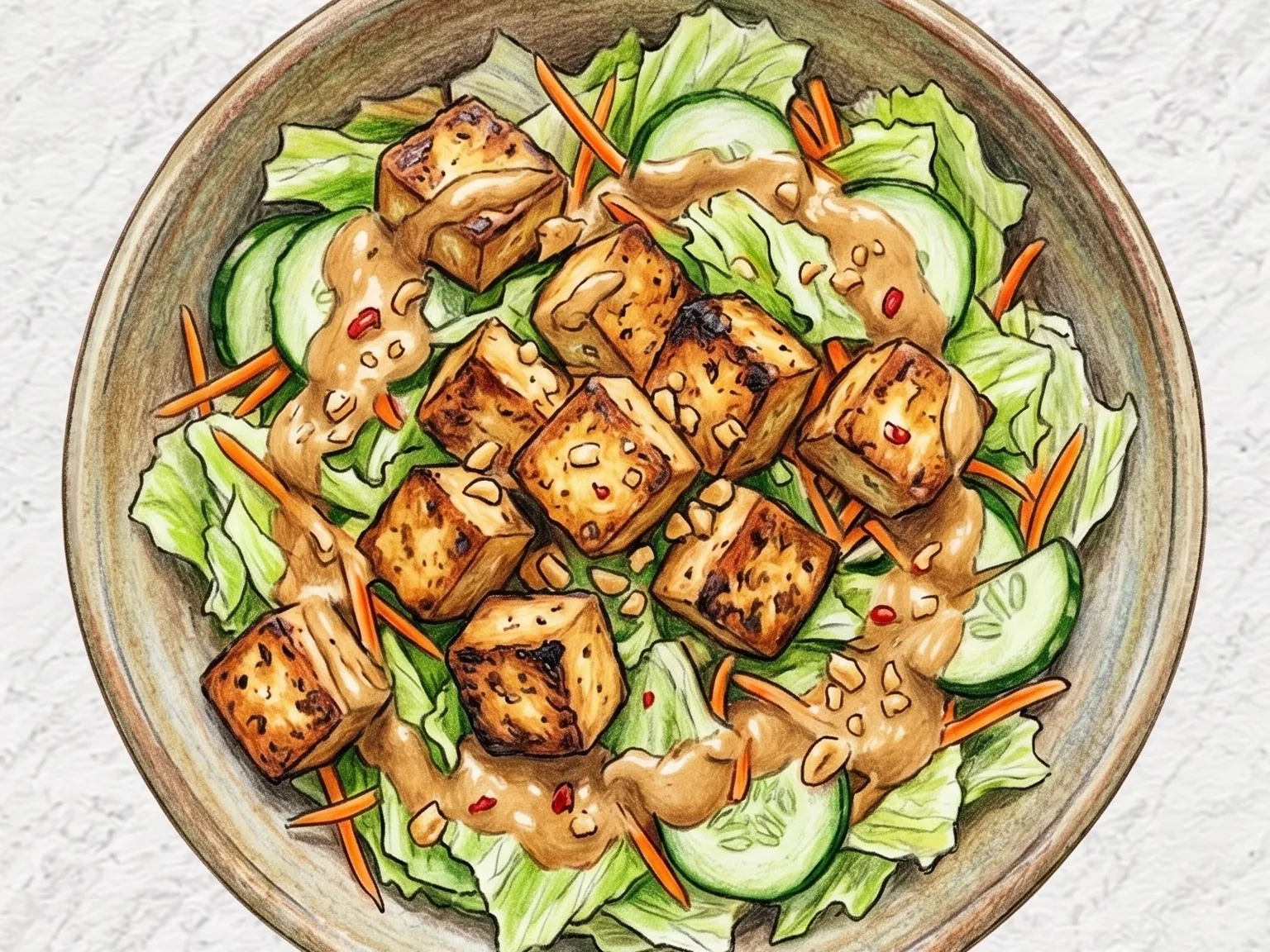
Tofu satay salad bowl combines pan-seared tofu with crisp lettuce, julienned carrot, and cucumber, all coated in a Thai-style peanut satay dressing. The dressing is built from peanut butter, soy sauce, lime juice, and chili sauce - the peanut fat provides body, while the lime and chili cut through it with bright acidity and heat. Pressing the tofu dry before searing ensures the surface browns rather than steams, producing a firm, golden exterior that holds up in the bowl. If the dressing is too thick to coat evenly, a tablespoon of water loosens it to the right consistency. The raw crunch and moisture from carrot and cucumber balance the dense richness of the peanut sauce.

Nasi Uduk (Jakartan Coconut Lemongrass Pandan Steamed Rice)
Serve together Asian

Nasi Uduk (Jakartan Coconut Lemongrass Pandan Steamed Rice)

Nasi uduk is a steamed rice dish from Jakarta, Indonesia, cooked with coconut milk, lemongrass, and pandan leaves. The preparation begins by rinsing and soaking the rice to remove excess starch. It is then simmered in a mixture of coconut milk, water, and salt. Bruised lemongrass and knotted pandan leaves are added to the pot, infusing the rice grains with a gentle herbal aroma and a light coconut richness. Compared to Malaysian nasi lemak, this dish has a milder coconut profile. After cooking on low heat, the rice is left to steam with the heat off before the aromatics are removed. The dish is finished with a topping of crispy fried shallots, which add a nutty flavor and a crunchy texture. It is served alongside Indonesian sides such as fried tempeh, seasoned chicken, and omelette strips.

Tofu Salad (Pan-Seared Tofu on Fresh Greens)
Similar recipe Salads

Tofu Salad (Pan-Seared Tofu on Fresh Greens)

Dubu salad is made by pressing firm tofu to remove excess moisture, then pan-searing it until the outside turns golden and crisp while the inside stays soft and tender. The seared tofu is placed over a bed of baby greens, sliced cucumber, and cherry tomatoes. Wrapping the tofu in two layers of paper towels and setting a weight on top for twenty to thirty minutes draws out enough water so the surface browns properly in the pan without steaming. A dressing of soy sauce, sesame oil, lemon juice, and olive oil moves easily between Korean and Western flavor profiles. The salad is high in plant protein and low in fat, making it a practical and satisfying option when a light, clean-tasting meal is the goal.

Serve with this

Korean Daegu Doenjang Gui (Doenjang-Grilled Cod)
Grilled Medium

Korean Daegu Doenjang Gui (Doenjang-Grilled Cod)

Daegu doenjang gui is a Korean grilled cod dish where fillets are coated with a paste of doenjang, minced garlic, and sesame oil, then cooked until the paste forms a thin, concentrated crust over the fish. Cod is mild-flavored white fish that accepts the deep, fermented soybean character of doenjang without conflict -- the seasoning defines the fish rather than overpowering it. As the paste dries slightly against the heat, a dark crust seals the surface while the flesh underneath stays moist and flakes cleanly. Controlling the amount of doenjang is critical because the paste can easily oversalt the delicate fish if applied too heavily. Serving with sliced green onion or perilla leaves provides a fresh, herbal counterpoint to the earthy, savory paste.

🍺 Bar Snacks 🥗 Light & Healthy
Prep 25min Cook 12min 4 servings
Socca Niçoise (French Chickpea Flour Flatbread)
Western Easy

Socca Niçoise (French Chickpea Flour Flatbread)

Socca nicoise is a chickpea-flour flatbread from Nice, France, made by whisking chickpea flour with water, olive oil, salt, pepper, and rosemary, then baking the thin batter in a preheated oven-safe pan at 220 degrees Celsius for twelve to fifteen minutes. Resting the batter for ten minutes allows the flour to hydrate fully, which produces the characteristic texture - crisp and almost shatteringly crunchy at the edges, soft and slightly custardy in the center. The pan must be fully preheated and generously oiled so the batter sizzles on contact and releases cleanly. Sliced red onion and halved cherry tomatoes placed on top before baking lose their moisture in the oven and concentrate into sweet, slightly charred toppings. A final grind of coarse black pepper emphasizes the nutty, earthy flavor of the chickpea base.

🍺 Bar Snacks 🥗 Light & Healthy
Prep 15min Cook 20min 4 servings
Kimchi Tofu Alfredo Farfalle (Creamy Kimchi Bow-Tie Pasta)
Pasta Easy

Kimchi Tofu Alfredo Farfalle (Creamy Kimchi Bow-Tie Pasta)

Kimchi tofu Alfredo farfalle is a fusion pasta that counters the richness of a cream-and-Parmesan Alfredo sauce with the lactic acidity of well-fermented kimchi. Garlic bloomed in butter forms the aromatic base, then cream, milk, and Parmigiano are combined into the classic Alfredo sauce, after which chopped kimchi is folded in to introduce fermented tang and a layer of umami that a standard Alfredo lacks. Firm tofu cut into cubes and pan-fried until each side is golden provides a mild, neutral protein element with direct textural contrast against the smooth sauce. Farfalle's pinched center holds pockets of sauce against each piece of pasta, delivering a consistent hit of creaminess in every bite, and freshly ground black pepper draws a sharp line through the richness at the finish. The entire dish moves from pan to plate in about 15 minutes.

🏠 Everyday ⚡ Quick
Prep 10min Cook 15min 2 servings

Similar recipes

Farro Harvest Salad
Salads Medium

Farro Harvest Salad

Farro is an ancient Italian wheat variety that retains a satisfying chew even after boiling, making it a reliable foundation for grain salads that need to hold their texture over time. Roasting root vegetables such as butternut squash, beets, or sweet potatoes at high heat caramelizes their natural sugars and creates slightly crisp edges that contrast with the soft grain below. Toasted walnuts or pecans layered in add crunch and nutty depth. Bitter greens like arugula or kale interrupt the sweetness of the vegetables and prevent the salad from becoming one-dimensional. A dressing of apple cider vinegar, olive oil, and a small amount of honey ties the components together while allowing each ingredient to remain distinct. The salad carries enough fiber and protein to serve as a complete meal rather than a side. Farro's dense structure absorbs dressing gradually without turning soft, so the salad holds well in the refrigerator for two days, making it a practical choice for meal preparation.

🥗 Light & Healthy 🏠 Everyday
Prep 15min Cook 25min 2 servings
Shrimp Mango Lime Salad
Salads Easy

Shrimp Mango Lime Salad

Shrimp mango lime salad is a Thai-style dish that combines briefly poached shrimp with ripe mango, cucumber, red onion, and roughly chopped cilantro, dressed with lime juice, fish sauce, and olive oil. The shrimp go into boiling water for exactly two minutes, which is just long enough to cook them through while keeping their natural snap; any longer causes the proteins to contract and the texture turns from tender to rubbery. Fish sauce contributes a fermented, savory depth that amplifies the shrimp's briny character, while lime's sharp acidity slices through the mango's sweetness and brings the dressing into balance. Thinly sliced red onion adds a raw, peppery heat that creates tension between the sweet fruit and the savory seafood, and cilantro releases a distinctive herbal fragrance with each bite. Cucumber stirred into the mix lightens the overall texture and keeps the salad from feeling too dense. Served cold immediately after dressing, every element stays distinct and the contrast between the yielding fruit, the crisp vegetables, and the firm shrimp comes through clearly.

🥗 Light & Healthy ⚡ Quick
Prep 15min Cook 5min 2 servings
Beef Rendang (Indonesian Dry Coconut Braised Beef Curry)
Asian Hard

Beef Rendang (Indonesian Dry Coconut Braised Beef Curry)

Rendang originated among the Minangkabau people of West Sumatra as a preservation method: cooking meat in coconut milk and spices until all moisture is driven out, allowing it to keep for days without refrigeration in tropical heat. The process begins with a rempah paste of shallots, garlic, ginger, galangal, turmeric, and lemongrass pounded in a mortar, then fried in coconut oil until the raw sharpness cooks off. Beef chunks go into coconut milk and braise for two to three hours as the liquid reduces in stages - first a loose curry, then a thick sauce, and finally a dry phase where the coconut oil separates and essentially fries the meat inside its own spice crust. The finished pieces are dark brown, nearly black at the edges, carrying concentrated layers of chili heat, galangal warmth, and deep sweetness from the caramelized coconut solids. UNESCO recognized rendang as part of Minangkabau intangible cultural heritage, and the dish ranks consistently among the world's most celebrated preparations.

🎉 Special Occasion
Prep 30min Cook 180min 4 servings

Tips

If the sauce is too thick, loosen it with 1-2 tbsp warm water.
Sear tofu first and cool slightly so it holds shape in the salad.

Nutrition (per serving)

Calories
420
kcal
Protein
21
g
Carbs
34
g
Fat
24
g