Korean Fermented Flounder Sikhae
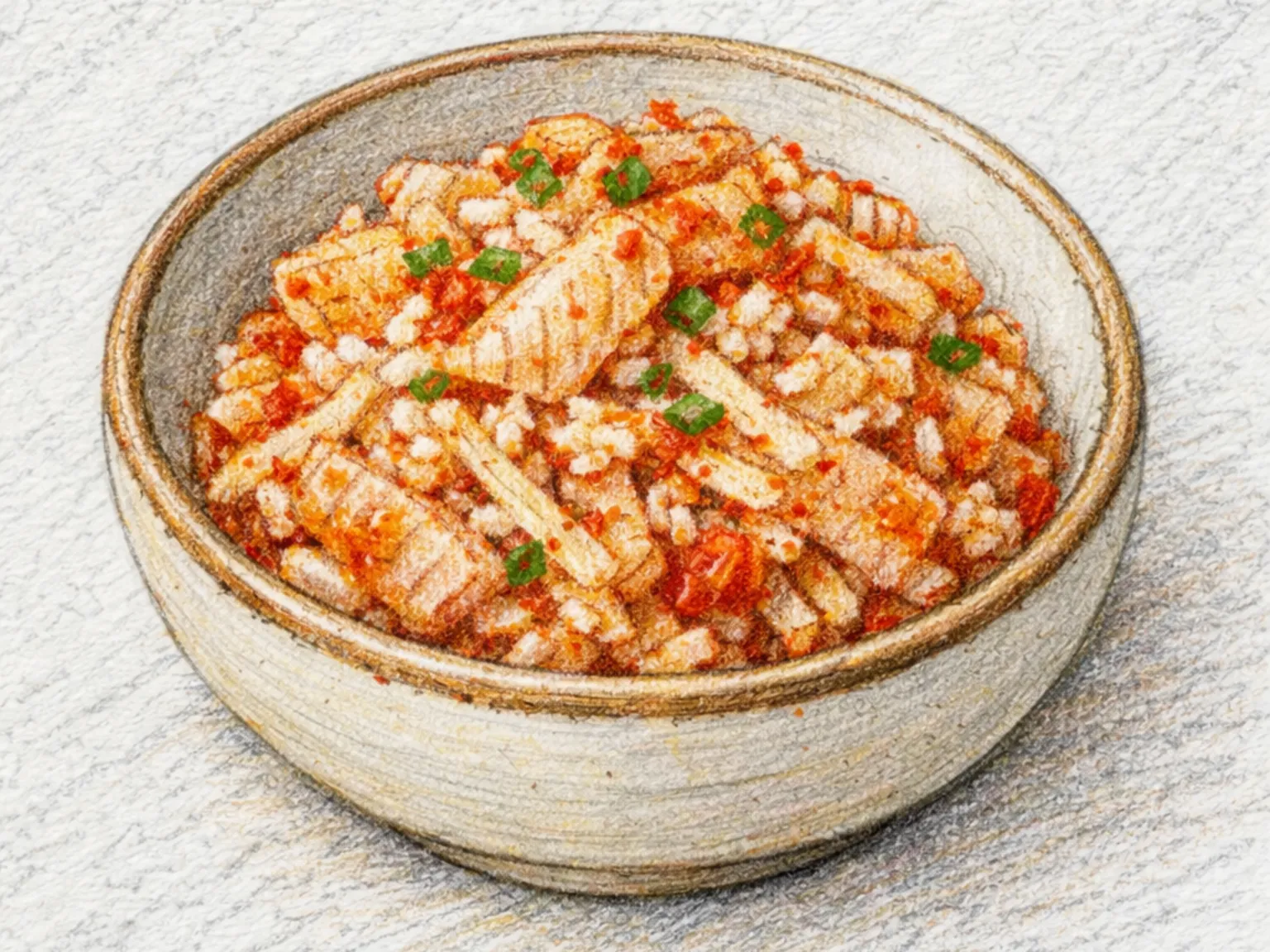
Gajami sikhae is a traditional fermented flounder dish from Korea's East Coast, made by mixing salt-cured flounder fillets with julienned radish, cooked glutinous rice, gochugaru, and fish sauce, then fermenting the mixture in a sealed vessel at low temperature for over a week. The starch from the glutinous rice serves as a substrate for lactic acid bacteria, producing a mild, rounded acidity distinct from the sharp saltiness of conventional jeotgal. Radish adds moisture and a crunchy contrast, and as fermentation progresses, the fish protein breaks down into concentrated umami compounds. Less salty than typical fermented seafood, sikhae can be eaten directly over rice as a regional winter banchan from the Gangwon and Hamgyeong provinces.
Adjust Servings
Instructions
- 1
Salt flounder for 2 hours, then wipe off excess moisture and salt.
- 2
Julienne radish, lightly salt for 20 minutes, then squeeze dry.
- 3
Mix sweet rice, chili flakes, fish sauce, garlic, and ginger into a fermentation paste.
- 4
Add radish and scallions, then combine evenly with flounder.
- 5
Pack tightly into a sealed container and ferment in the fridge for 5-7 days.
- 6
It is ready when fishiness mellows and pleasant acidity appears.
As an Amazon Associate, we may earn from qualifying purchases.
Tips
Nutrition (per serving)
More Recipes

Korean Cheonggak Kimchi (Seaweed Kimchi)
Cheonggak kimchi is made with cheonggak, a type of green seaweed, mixed with julienned radish and scallions in a seasoning of gochugaru, anchovy fish sauce, and sweet rice paste. The seaweed contributes a distinctive chewy, almost crunchy texture and a concentrated ocean aroma that sets this kimchi apart from plant-based varieties. Seasoning the radish first and then tossing the seaweed in quickly is important because overworking toughens the seaweed's delicate structure. After one day of refrigeration the brine from the seaweed mingles with the fermented seasoning, producing a kimchi with pronounced marine depth that pairs naturally with seafood dishes and mild rice soups.

Korean Spicy Salted Octopus Jeotgal
Nakji jeotgal is a Korean fermented octopus side dish made by salting cleaned octopus for forty-five minutes to draw out moisture and firm the flesh, then dressing it in a paste of gochugaru, minced garlic, ginger, anchovy fish sauce, and plum syrup. The initial salt cure tightens the octopus's naturally chewy texture, and the chili seasoning coats every surface in a spicy, crimson layer that penetrates deeper as it sits. Plum syrup counteracts any residual marine smell while adding a subtle fruit sweetness that balances the salt and heat. After two to three days of refrigeration, fermentation begins to develop, pushing the umami forward. Each piece has a springy, resistant chew that releases concentrated ocean flavor against the warmth of steamed rice.

Gomchi-guk (Eelpout Fish Radish Soup)
Gomchi-guk is an East Coast Korean fish soup made with eelpout, a soft-fleshed deep-sea fish rich in natural gelatin. The fish is cut into chunks and simmered with radish in plain water, producing a broth that is remarkably clean yet carries a gentle marine richness and a slightly viscous body from the dissolved collagen. Radish tames any fishiness and adds a refreshing sweetness, while a splash of cheongju rice wine helps eliminate residual off-notes. As the soup cooks, the eelpout flesh breaks apart and melds into the liquid, making the broth and the fish nearly inseparable. Garlic and green onion provide the finishing aromatics. This is a regional specialty of the Gangwon and North Gyeongsang coastal towns, where it is typically served bubbling in a stone pot during the winter months. For those who live far from the coast, frozen or dried eelpout can approximate the experience.

Korean Pepper Leaf Kimchi
Gochuip kimchi is a Korean pepper leaf kimchi where the leaves are briefly blanched to reduce volume and remove bitterness, then tossed with gochugaru, anchovy fish sauce, garlic, and glutinous rice paste for about a day of room-temperature fermentation. Blanching softens the leaves and allows the seasoning to cling evenly to their surfaces. The rice paste acts as both a binding agent and a fermentation accelerator, promoting lactic acid activity even in the short curing window. Beneath the spicy coating, the pepper leaves contribute a subtle green, herbaceous note that distinguishes this from standard napa kimchi, making it a distinctive summer preparation.

Korean Turnip Kimchi (Diced Gochugaru Water Fermented)
Sunmu kimchi is a brined kimchi made with diced turnips seasoned in chili flakes, fish sauce, garlic, and ginger juice, then submerged in water to ferment with its own liquid. Turnips have a naturally higher sweetness and denser flesh than Korean radish, so they stay firm and crunchy even after fermentation. Scallions woven through the batch add an aromatic layer that rounds out the spice. One day at room temperature followed by two days of refrigeration produces a cool, tangy brine that is refreshing to drink on its own. Adding turnip greens, if available, deepens both the color and the fragrance.

Korean Oyster Porridge (Savory Briny Rice Porridge)
Fresh oysters and soaked rice are first sauteed in sesame oil, then simmered with water and finely diced radish for twenty minutes before the oysters go in for a final seven minutes of gentle cooking. Adding the oysters late preserves their plump bite and prevents them from becoming chewy, while the radish dissolves slightly to lend a quiet sweetness to the broth. Soup soy sauce seasons the porridge without masking the natural brine of the shellfish, and a teaspoon of ginger juice can be added to temper any fishiness. The result is a warming, protein-rich bowl that soothes the stomach while delivering concentrated ocean flavor.