Charim

2686 Korean & World Recipes

2686+ Korean recipes, clean and organized. Ingredients to instructions, all at a glance.

Korean Grilled Eggplant (Soy Garlic Glazed Charred Eggplant)

Korean Grilled Eggplant (Soy Garlic Glazed Charred Eggplant)

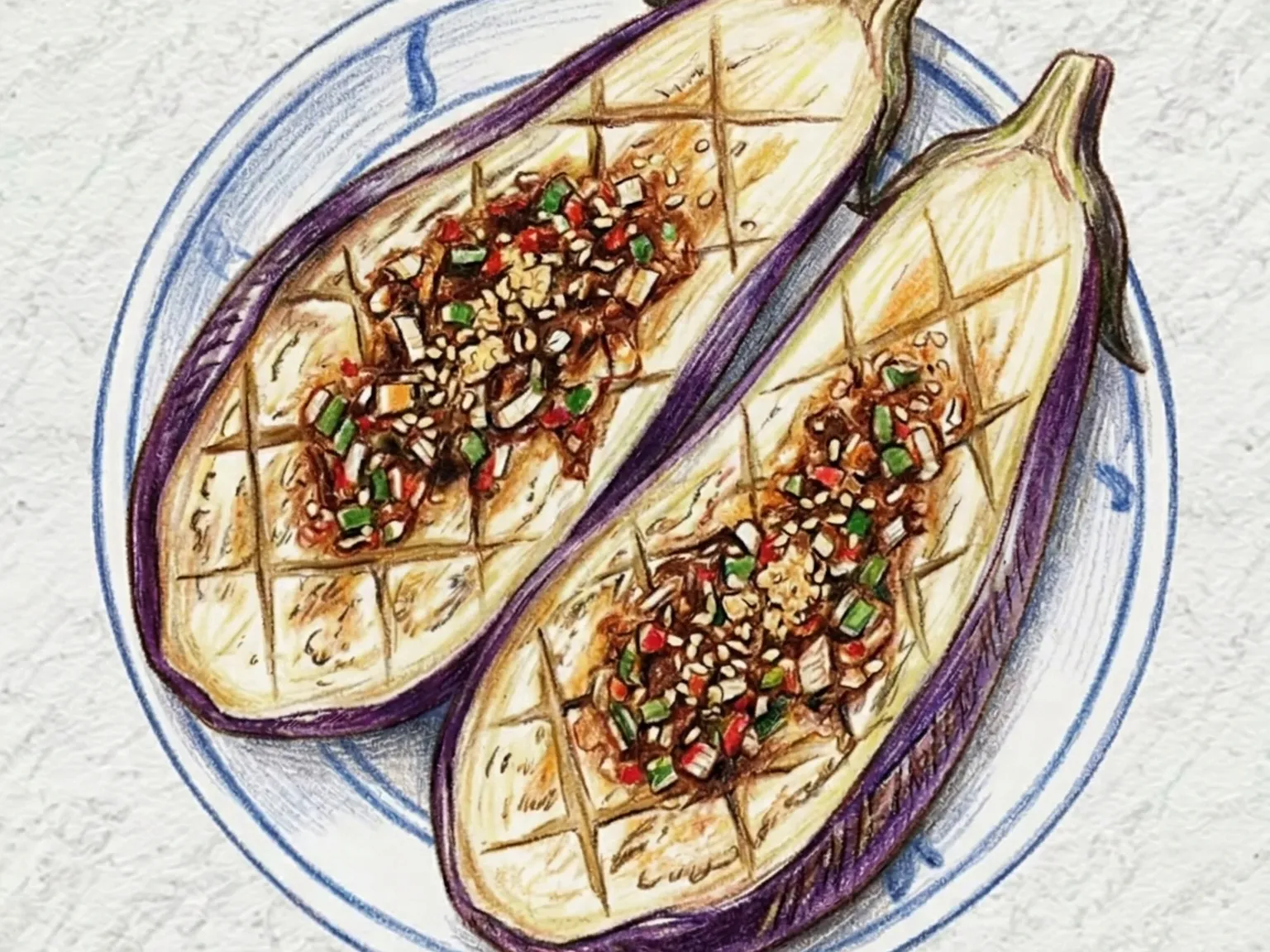
Gaji-gui is Korean grilled eggplant, halved lengthwise and scored before cooking over medium heat until the flesh turns creamy while the skin retains slight firmness. Salting the cut surface for ten minutes draws out bitter moisture through osmosis, which also reduces how much oil the eggplant absorbs during grilling, and the score marks let heat penetrate evenly so the interior softens uniformly. A sauce of soy sauce, sesame oil, Korean chili flakes, minced garlic, and sliced green onion is spooned over the hot grilled surface, where the residual heat releases the aroma of garlic and sesame while the liquid seeps into the scored channels. A final scatter of toasted sesame seeds adds a nutty layer that gives the otherwise mild eggplant enough complexity to stand as a proper banchan.

Prep 10min Cook 10min 2 servings

Adjust Servings

2servings
servings

Instructions

  1. 1

    Halve 2 eggplants lengthwise and score the flesh in a crosshatch pattern.

  2. 2

    Mix soy sauce, sesame oil, red pepper flakes, minced garlic, and sliced green onion.

  3. 3

    Oil the pan, place eggplant cut-side down, and cook on medium heat for 3 minutes.

  4. 4

    Flip and cook skin-side down 3 more minutes until tender throughout.

  5. 5

    Drizzle the soy dressing over grilled eggplant and top with sesame seeds.

🛒Shop Ingredients on Amazon

As an Amazon Associate, we may earn from qualifying purchases.

Tips

Scoring helps the seasoning absorb and cooks the eggplant faster.
Air fryer at 180C for 10 minutes uses less oil.

Nutrition (per serving)

Calories
120
kcal
Protein
3
g
Carbs
14
g
Fat
7
g

More Recipes

Korean Soy-Glazed Kabocha Grill
GrilledEasy

Korean Soy-Glazed Kabocha Grill

Danhobak-ganjang-gui is a Korean soy-glazed kabocha squash dish where thick half-moon slices are pre-steamed or microwaved until just softened, then pan-grilled with a glaze of soy sauce, corn syrup, minced garlic, and sesame oil. Pre-cooking the squash is essential-it eliminates the need for prolonged grilling, so the glaze can caramelize quickly without the interior remaining raw. The natural sugars in kabocha meet the salt of the soy sauce to create a pronounced sweet-salty contrast, and the corn syrup melts into a shiny, lacquer-like coating on the surface. Sesame oil should be added only after removing from heat to preserve its fragrance, and a scattering of toasted sesame seeds finishes the dish with a crunchy, nutty accent.

🍺 Bar Snacks🍱 Lunchbox
Prep 15minCook 20min4 servings
Korean Chili Soy Grilled Tofu
GrilledEasy

Korean Chili Soy Grilled Tofu

Chili-tofu-gui is a Korean pan-grilled tofu dish where firm tofu slices are browned on both sides, then glazed with a sauce of soy sauce, minced hot green chili, garlic, sesame oil, and sugar. Pressing moisture out of the tofu before cooking is essential for achieving a clean, golden-brown sear without oil spattering. Once the sauce is added, a brief simmer on low heat coats each slice in a glossy layer where the soy's saltiness, the sugar's sweetness, and the chili's sharp heat all converge against the tofu's neutral, creamy base. The dish works equally well as a weeknight side dish or as a quick drinking snack.

🍺 Bar Snacks🍱 Lunchbox
Prep 12minCook 12min2 servings
Korean Grilled Corn with Soy Butter
GrilledEasy

Korean Grilled Corn with Soy Butter

Corn-gui is Korean grilled corn on the cob brushed with a glaze of soy sauce, melted butter, sugar, and minced garlic, then turned slowly over medium heat until the kernels develop a caramelized, salty-sweet crust. The corn is pre-cooked by boiling or microwaving before grilling, so the time on the grill is dedicated entirely to building flavor through the Maillard reaction between the glaze and the heat. Grilling over too-high heat burns the sugar before the corn chars evenly, so patience and repeated thin coats of glaze are important. The result layers the corn's natural starch sweetness with the richness of butter and the savoriness of fermented soy sauce.

🍺 Bar Snacks
Prep 5minCook 20min2 servings
Korean Grilled Shishito with Doenjang
GrilledEasy

Korean Grilled Shishito with Doenjang

Kkwarigochu-doenjang-gui is a Korean grilled shishito pepper dish where the peppers are first dry-blistered in a hot pan until their skins wrinkle and char, then quickly tossed with a sauce of doenjang, gochujang, oligosaccharide syrup, and minced garlic. Blistering the peppers without oil first drives off moisture, removes the raw grassy taste, and concentrates their natural sweetness before any sauce is introduced. Pricking each pepper with a fork before cooking lets the seasoning penetrate the interior and prevents them from ballooning and bursting from steam. The sauce goes in only for the final two minutes so the fermented soybean paste keeps its full aroma, and a drizzle of sesame oil with toasted seeds at the end adds a roasted nuttiness.

🍺 Bar Snacks🏠 Everyday
Prep 10minCook 8min2 servings
Korean Braised Eggplant in Seasoned Soy Sauce
SteamedEasy

Korean Braised Eggplant in Seasoned Soy Sauce

Gaji yangnyeom jorim is a Korean soy-braised eggplant side dish seasoned with gochugaru, garlic, and sesame oil. The eggplant pieces are lightly cooked in oil first, then simmered in the seasoning sauce until they become glossy and deeply flavored throughout. Scallions added at the end provide a fresh contrast to the rich, salty-sweet glaze. This is a reliable everyday banchan that can be made ahead and kept in the refrigerator for several days.

🥗 Light & Healthy🏠 Everyday
Prep 10minCook 15min2 servings
Korean Soy-braised Beef (Tender Shredded Brisket in Soy Glaze)
Side dishesMedium

Korean Soy-braised Beef (Tender Shredded Brisket in Soy Glaze)

Jangjorim is the soy-braised beef that lives semi-permanently in Korean refrigerators - a make-ahead banchan with a shelf life of roughly two weeks. Beef eye round (hongdukkasal) is the traditional cut because its uniform grain and low fat content allow clean shredding along the fibers, producing the signature stringy texture. The process is unhurried: thirty minutes of soaking to draw out blood, forty minutes of simmering with whole garlic and peppercorns, then shredding and returning to the pot with soy sauce and sugar for another twenty minutes. Hard-boiled eggs and shishito peppers added in the final stage absorb the dark soy broth - the eggs turn mahogany and the peppers contribute a gentle heat to the sauce. Swapping in quail eggs makes each piece lunchbox-sized. Flavor deepens noticeably after a day of refrigeration as the seasoning penetrates fully.

🏠 Everyday🍱 Lunchbox
Prep 15minCook 60min4 servings
More Grilled →