Korean Braised Short Rib Rice Bowl
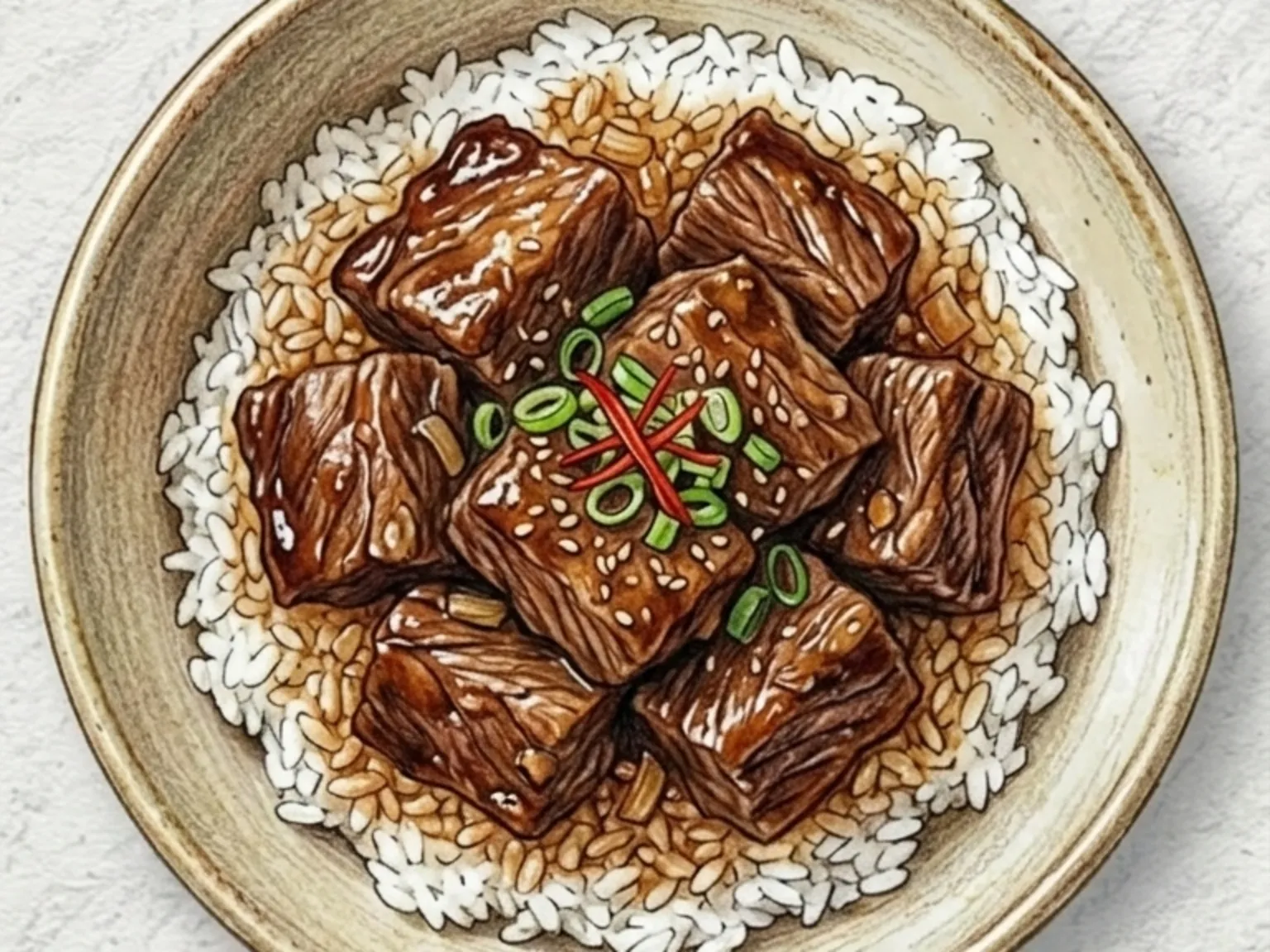
Galbi deopbap is a Korean rice bowl topped with beef short ribs slow-braised in a soy, sugar, and grated Asian pear marinade until the meat slides off the bone. The pear serves a dual purpose: its enzymes break down tough connective tissue while its juice contributes a subtle fruit sweetness that distinguishes galbi from heavier braises. Grated onion dissolves into the sauce during the hour-long simmer, deepening the flavor without leaving visible pieces. As the braising liquid reduces, it concentrates into a glossy, dark sauce that clings to the ribs and drips down onto the rice below. The ribs are placed over steamed rice with the sauce spooned generously on top, so the grains absorb the soy-sweet glaze from the bottom up. Despite the long cooking time, the dish requires minimal active attention - the braise does the work inside the pot. Sliced green onion scattered over the finished bowl adds a crisp, fresh note against the rich meat.
Adjust Servings
Instructions
- 1
Soak ribs in cold water 30 minutes to remove blood.
- 2
Mix soy sauce, sugar, garlic, grated pear, grated onion for marinade.
- 3
Marinate ribs in sauce for 1 hour.
- 4
Add ribs, marinade, and 1 cup water to pot; braise on low for 1 hour.
- 5
Place over rice and garnish with green onion.
As an Amazon Associate, we may earn from qualifying purchases.
Tips
Nutrition (per serving)
More Recipes

Korean Braised Tofu Rice Bowl
Dubu jorim deopbap places soy-braised tofu over a bowl of steamed rice, letting the glaze soak down into the grains. Firm tofu is sliced, patted dry, and pan-fried until a golden crust forms on both sides, then simmered in a sauce of soy sauce, sugar, minced garlic, and water until the liquid reduces to a sticky, mahogany-colored glaze. Sliced onion cooks alongside the tofu, softening into the sauce and contributing natural sweetness. A cheongyang chili cut on the bias adds a sharp kick, and green onion goes in at the end for fragrance. The braising sauce pools around the rice and seeps into each grain, ensuring that flavor carries through from the first bite to the last. Despite its simplicity, the dish provides a satisfying amount of plant protein and stands well on its own without additional side dishes.

Korean Beef Brisket Rice Bowl
Chadol deopbap is a Korean rice bowl featuring paper-thin beef brisket slices seared in a hot pan until the edges turn crisp, then drizzled with a soy-based sauce and served over steamed rice. The marbled fat in the brisket renders out during cooking, creating a rich, buttery flavor that pairs naturally with the salty-sweet soy glaze. Garlic and sesame oil add aromatic depth without overcomplicating the dish. A raw or soft-cooked egg yolk on top is a common addition, breaking into a golden sauce that coats the rice when mixed. Despite its simplicity - just a handful of pantry staples and a few minutes at the stove - it delivers a deeply satisfying meal that works well for both lunch and dinner.

Korean Eggplant Rice Bowl
Gaji deopbap is a Korean eggplant rice bowl where sliced eggplant is pan-fried quickly in generous oil and then braised briefly with ground pork in a soy-based sauce. Soaking the eggplant in salted water for five minutes before cooking draws out bitterness. High heat is essential - eggplant absorbs oil rapidly, and fast searing creates a lightly crisp exterior while the inside collapses into a silky, almost creamy texture. The soy, sugar, and garlic sauce reduces in two minutes into a dark glaze that coats each piece, while the ground pork adds a savory depth that makes the dish feel more substantial. The sauce pools around the base of the rice and soaks into the grains, ensuring consistent flavor throughout the bowl. Green onion and sesame oil finish the dish. Summer eggplant, when the flesh is at its softest and most yielding, produces the best results.

Korean Cream Chicken Rice Bowl
Cream chicken deopbap is a Korean fusion rice bowl where bite-sized chicken breast is pan-seared in butter, then simmered in a sauce of heavy cream and garlic until it thickens into a velvety coating. The butter brings richness, the cream brings body, and the garlic ties everything together with a gentle sharpness. It captures the soul of a cream pasta sauce but serves it over steamed rice, creating a comforting crossover between Western and Korean dining. Seasoned simply with salt and pepper, it needs little else - though a sprinkle of parsley or cracked black pepper gives it a polished finish.

Korean Braised Short Ribs
Galbi-jjim is one of Korea's most celebrated braised dishes, built on thick-cut beef short ribs that simmer for over an hour in a glaze of soy sauce, Asian pear juice, sugar, garlic, and sesame oil. The long cooking breaks down the collagen in the ribs until the meat practically slides off the bone, while the sauce reduces into a dark, glossy coating that is simultaneously sweet, salty, and deeply savory. Radish and carrot chunks absorb the braising liquid and soften into something almost buttery, while chestnuts and jujubes, often added for holidays, contribute subtle sweetness and a festive look. The finished dish glistens on the plate, and a single spoonful of sauce over steamed rice is enough to make the grain disappear. Galbi-jjim appears on Chuseok and Lunar New Year tables but is equally welcome on an ordinary weekend when the house deserves to smell extraordinary.

Korean Marinated Beef Short Rib Grill
Beef ribs or bulgogi-cut slices are marinated for at least an hour in a blend of soy sauce, Korean pear juice, sugar, minced garlic, sesame oil, and black pepper. The pear's natural enzymes break down connective tissue while the soy-sugar combination penetrates deep into the meat. On a high-heat grill, the sugars in the marinade caramelize rapidly, forming a glossy, dark-brown glaze with visible char marks. Thin-cut pieces cook through in under four minutes total, and the interplay of charcoal smoke with the sweet-salty marinade defines the signature taste of Korean yangnyeom-gui.