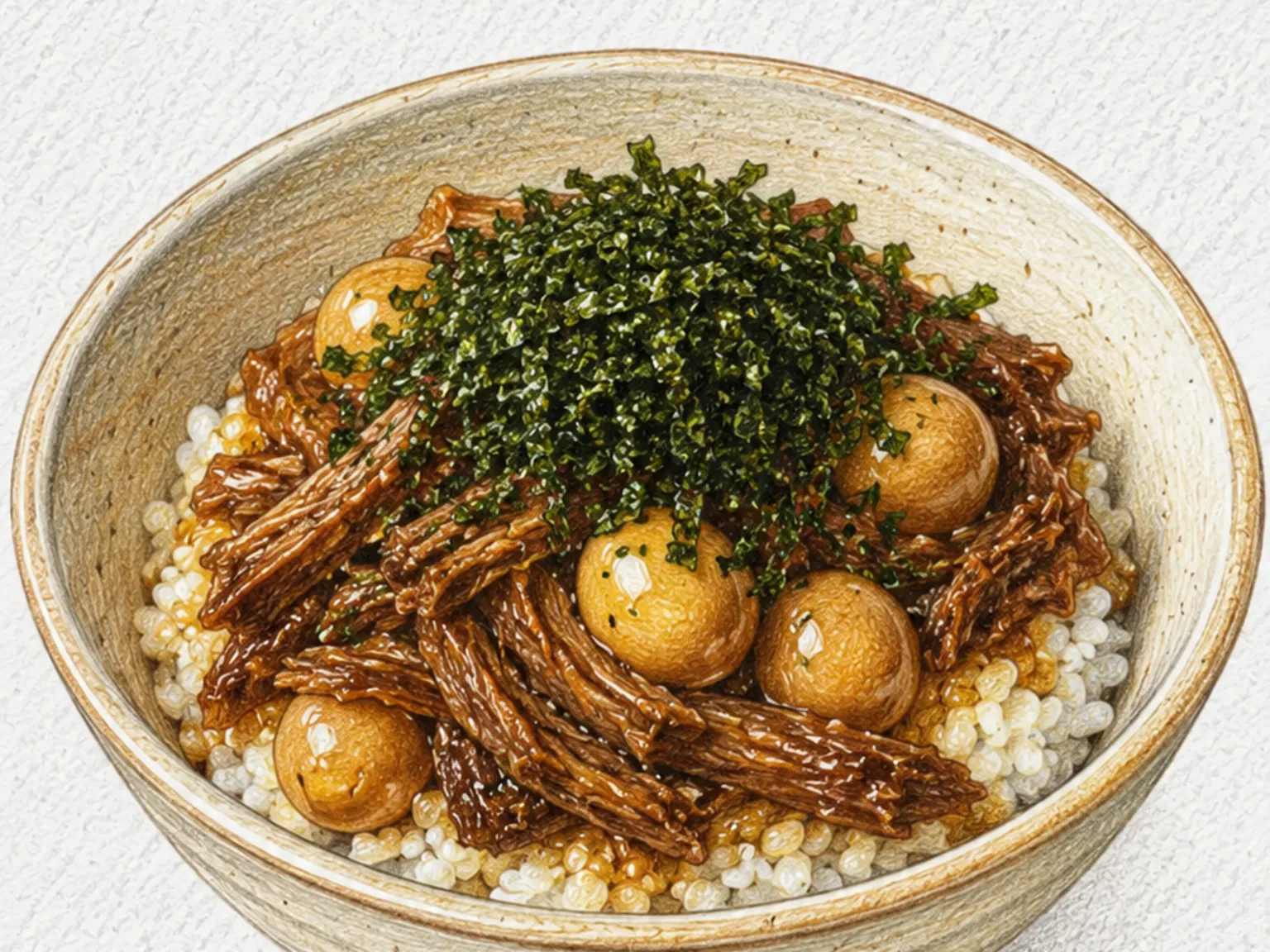
Korean Seaweed Jangjorim Rice Bowl
Beef eye of round is simmered in soy sauce, sugar, and garlic until deeply seasoned, then shredded along the grain and braised again with quail eggs to absorb the concentrated liquid. The jangjorim is spooned over warm rice and finished with a generous crumble of gamtae seaweed, whose crisp, oceanic fragrance contrasts with the salty-sweet meat. Leftover braising liquid can be repurposed as a mixing sauce for bibimbap or other rice dishes. Adding the gamtae right before eating preserves its delicate crunch and aroma.
Adjust Servings
Instructions
- 1
Soak beef in cold water for 10 minutes to remove blood, then cut into large chunks.
- 2
Boil water, soy sauce, cooking wine, sugar, and garlic, then add the beef.
- 3
Simmer over medium-low heat for 18 minutes, then remove and shred the beef.
- 4
Return shredded beef and quail eggs to the pot and simmer 5 more minutes to absorb flavor.
- 5
Turn off heat, add sesame oil, then top rice with the jangjorim.
- 6
Crumble gamtae by hand and generously sprinkle over the bowl.
As an Amazon Associate, we may earn from qualifying purchases.
Tips
Nutrition (per serving)
More Recipes

Korean Jangjorim Butter Rice
Unsalted butter is melted into hot rice so each grain is coated in a slick of fat, then topped with shredded soy-braised beef and its concentrated braising liquid. The beef's soy-based marinade carries enough salt and sweetness that no additional seasoning is needed, and breaking a raw egg yolk into the center and stirring transforms the texture into something creamy. Roasted seaweed flakes add a brittle crunch and oceanic note, while scallion and sesame seeds round out the finish. If the jangjorim is already prepared, the entire assembly takes less than fifteen minutes.

Korean Beef Brisket Rice Bowl
Chadol deopbap is a Korean rice bowl featuring paper-thin beef brisket slices seared in a hot pan until the edges turn crisp, then drizzled with a soy-based sauce and served over steamed rice. The marbled fat in the brisket renders out during cooking, creating a rich, buttery flavor that pairs naturally with the salty-sweet soy glaze. Garlic and sesame oil add aromatic depth without overcomplicating the dish. A raw or soft-cooked egg yolk on top is a common addition, breaking into a golden sauce that coats the rice when mixed. Despite its simplicity - just a handful of pantry staples and a few minutes at the stove - it delivers a deeply satisfying meal that works well for both lunch and dinner.

Korean Grilled Mackerel Rice Bowl
Mackerel fillet is pan-seared skin-side down until the skin turns crisp and golden, then served over rice with a quick sauce of soy sauce, cooking wine, oligosaccharide syrup, minced ginger, and softened onion. The oily flesh of the mackerel absorbs the soy-ginger glaze, producing a clean, salty-sweet finish without fishiness. Keeping the pan still for the first minute of searing is critical for achieving crisp skin, and brushing the fillet with a little cooking wine before cooking further neutralizes any unwanted odor. Chopped chives scattered on top complete the bowl with color and a mild onion bite.

Korean Bulgogi Mushroom Rice Bowl
Soy-and-pear-juice-marinated beef is stir-fried with torn oyster mushrooms and served over rice for an umami-loaded bowl. Pre-cooking the mushrooms drives off excess moisture, so the sauce stays concentrated and glossy when the marinated beef joins the pan. Pear juice tenderizes the beef naturally while contributing a subtle sweetness, and sesame oil ties the flavors together with its toasty fragrance. If pear juice is unavailable, a teaspoon of sugar with a tablespoon of water makes a workable substitute.

Korean Braised Beef and Radish
Sogogi mu jorim is a Korean braised beef and radish dish where brisket and thick-cut Korean radish are slowly simmered in soy sauce with garlic, ginger, and a touch of sugar. Boiling the beef first and skimming the foam produces a clean broth base for braising. The radish goes in later so it cooks until semi-translucent, absorbing the beef-enriched liquid and developing a natural sweetness that balances the soy. Green onion added at the end contributes a fresh note. Cutting the radish thick is important so it holds its shape through the braise, and resting the dish overnight before reheating deepens the flavor noticeably.

Korean Soy-braised Beef (Tender Shredded Brisket in Soy Glaze)
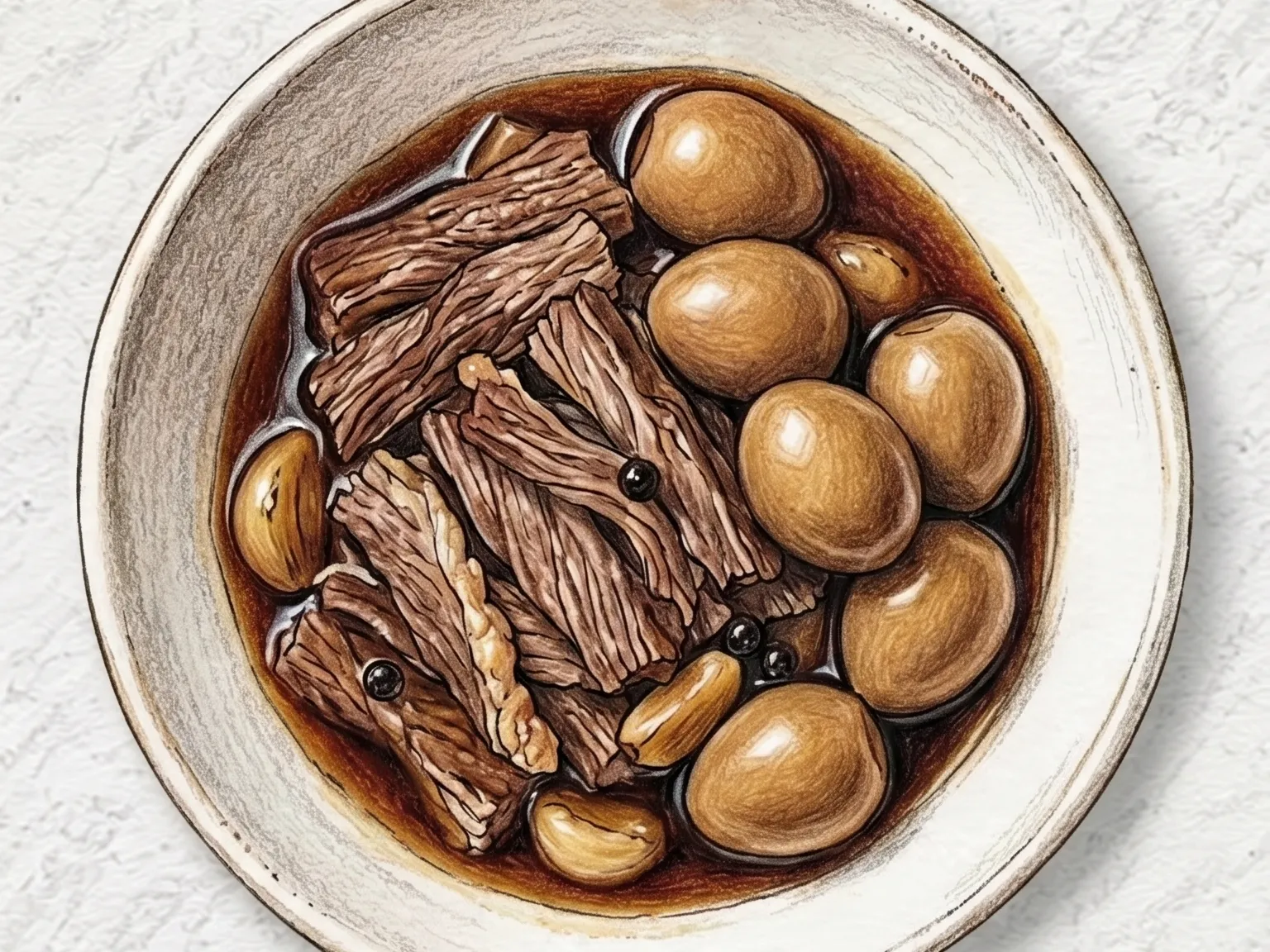
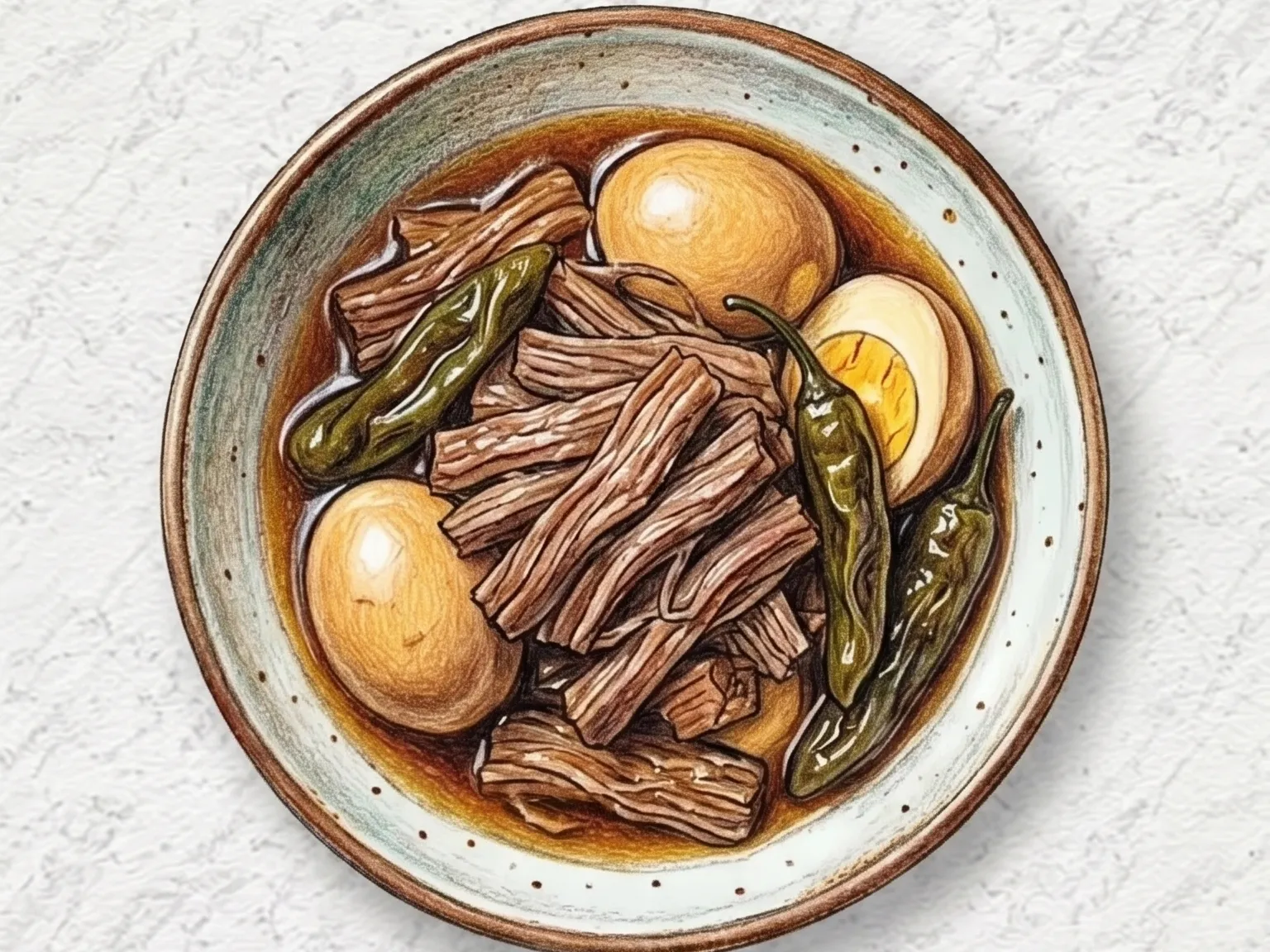
Jangjorim is the soy-braised beef that lives semi-permanently in Korean refrigerators - a make-ahead banchan with a shelf life of roughly two weeks. Beef eye round (hongdukkasal) is the traditional cut because its uniform grain and low fat content allow clean shredding along the fibers, producing the signature stringy texture. The process is unhurried: thirty minutes of soaking to draw out blood, forty minutes of simmering with whole garlic and peppercorns, then shredding and returning to the pot with soy sauce and sugar for another twenty minutes. Hard-boiled eggs and shishito peppers added in the final stage absorb the dark soy broth - the eggs turn mahogany and the peppers contribute a gentle heat to the sauce. Swapping in quail eggs makes each piece lunchbox-sized. Flavor deepens noticeably after a day of refrigeration as the seasoning penetrates fully.