Korean Thick Doenjang Bibimbap
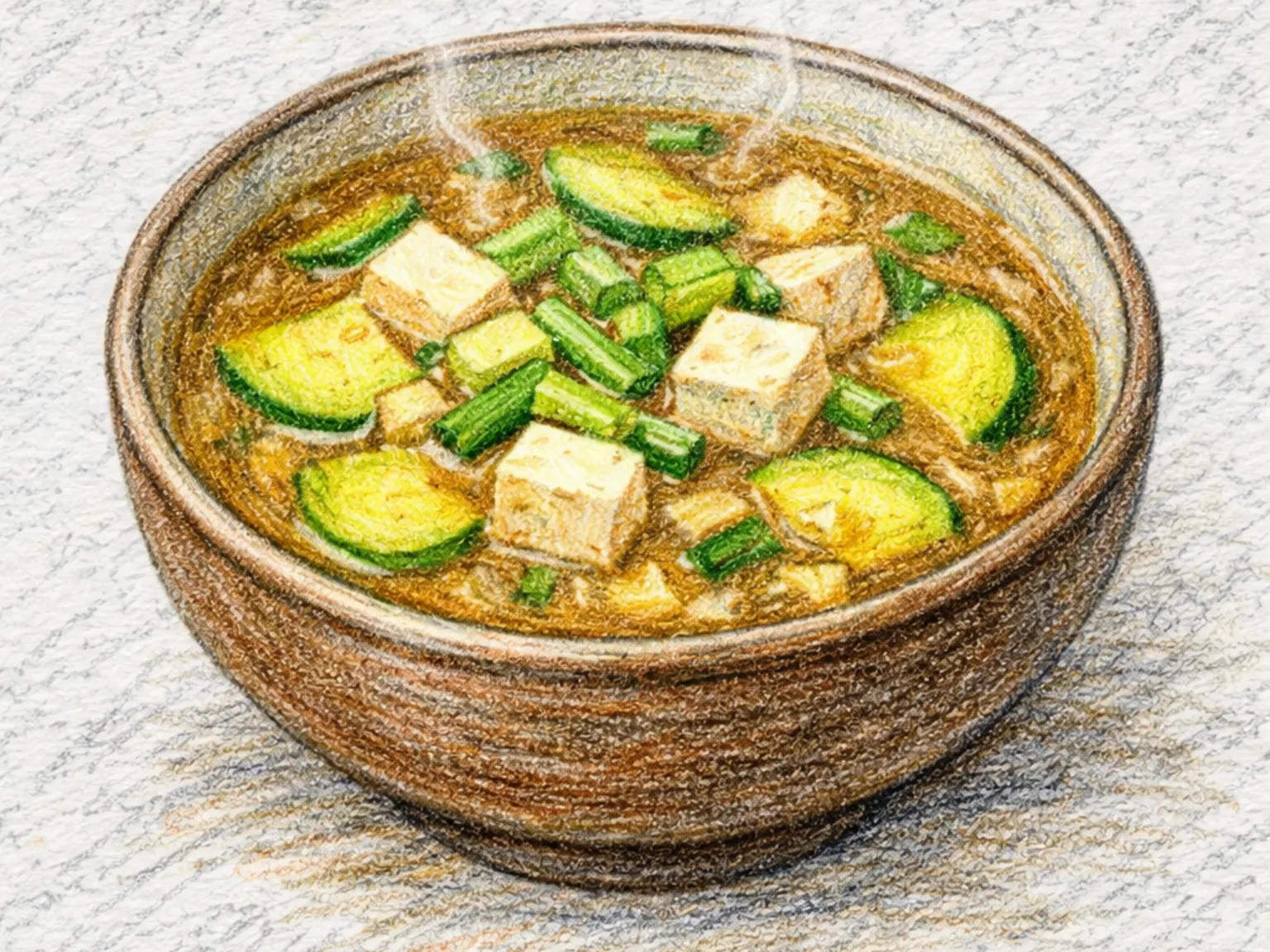
Gangdoenjang-bibimbap is a rice bowl built around gangdoenjang, a reduced and concentrated version of the fermented soybean paste cooked down with vegetables and tofu until most of the moisture has evaporated. Where ordinary doenjang jjigae centers on broth, gangdoenjang is intentionally reduced to intensify the fermented depth, allowing the paste to cling to rice like a thick sauce when spooned over and mixed in. Minced garlic is bloomed in sesame oil first, then diced onion and zucchini are added and cooked through before the dissolved doenjang and minced shiitake go into the pan to reduce over gentle heat. Firm tofu is crumbled in during the final stage, breaking apart as it cooks and giving the sauce a heavier, more substantial body. Water is added in 20 to 40 milliliter increments to adjust consistency depending on the saltiness of the paste. A chopped cheongyang chili raises the heat and sharpens the savory quality of the doenjang. An extra drizzle of sesame oil when mixing amplifies the nuttiness, and a fried egg or crumbled dried seaweed on top turns the bowl into a complete and filling meal.
Adjust Servings
Instructions
- 1
Dice zucchini, onion, shiitake, and tofu into small cubes.
- 2
Heat sesame oil, bloom garlic, then add vegetables.
- 3
When vegetables are half-cooked, add tofu and doenjang and stir well.
- 4
Pour in water and simmer 6-8 minutes until thick.
- 5
Spoon thick doenjang over warm rice and mix before eating.
As an Amazon Associate, we may earn from qualifying purchases.
Tips
Nutrition (per serving)
Goes Well With

Korean Octopus Clear Soup
Yeonpo-tang is a clear Korean octopus soup that keeps seasoning to a minimum and lets the seafood speak for itself. The octopus is cleaned by rubbing with coarse salt, then cut into manageable pieces. Radish simmers in anchovy stock for ten minutes to build a sweet, clean base before the octopus and garlic go in for only three minutes of cooking, which is enough to cook the tentacles through without making them rubbery. Water dropwort is added right before serving, contributing a bright, herbal fragrance that contrasts with the briny depth of the broth.

Korean Beef and Octopus Hot Pot
Bulnak jeongol is a hot pot made by simmering sliced beef chadolbaegi and fresh octopus together in an anchovy-kelp broth. The beef enriches the stock with a meaty depth while the fat renders out and emulsifies into the broth, and the octopus adds a firm, springy chew that holds up through the heat. Napa cabbage and water dropwort lighten the pot with fresh, slightly bitter vegetal notes, keeping the heavily flavored broth from becoming too rich. The seasoning stays restrained with soy sauce and garlic so the natural taste of each ingredient carries. Octopus should be added last so it does not toughen; the legs curling and turning a vivid red-orange is the sign that it is properly cooked. Cracking a raw egg into the simmering broth near the end adds a mild, creamy element that rounds out the intense savory notes.

Korean Crown Daisy Pancake
Fragrant crown daisy leaves are coated in a light pancake batter and pan-fried until the edges crisp and the herb's aroma intensifies. Heat amplifies the crown daisy's grassy, slightly bitter character, and the scent rises through the thin layer of batter as the jeon cooks. Egg in the batter provides structure, helping the exterior hold its crunch, while a small addition of potato starch keeps the texture light and prevents sogginess as the pancake cools. Sliced onion mixed into the batter introduces a gentle sweetness that offsets the herb's bitterness. Cooking over medium-low heat with ample oil ensures the interior sets evenly before the surface browns too deeply, and waiting until one side has fully firmed before flipping prevents the pancake from falling apart. The finished jeon is served with a dipping sauce of soy sauce and vinegar, whose acidity lifts the richness of the fried exterior and highlights the crown daisy's herbal notes.

Korean Amaranth Greens Pickles
Bireumnamul jangajji is a soy-vinegar pickle of amaranth greens made by submerging the tender leaves in a boiled brine of soy sauce, vinegar, and sugar with cheongyang chili and garlic. The soft leaves absorb the pickling liquid within a day, taking on a balanced sweet-salty flavor that makes them ready to eat as banchan. Vinegar neutralizes the grassy raw taste of the greens, and the chili and garlic deliver a sharp, spicy finish that builds at the back of the palate. The flavor deepens noticeably from the second day onward, so chilling the jar longer intensifies the pickle. Refrigerated, this keeps well for two to three weeks, making it a practical way to preserve in-season amaranth greens through the summer.
More Recipes

Korean Beef Doenjang Jjigae
Soegogi doenjang jjigae is a foundational Korean home-cooked stew, made with beef brisket and fermented soybean paste as the foundation, filled out with potato, zucchini, tofu, and onion, and simmered in the starchy water left from rinsing rice. The brisket rewards long cooking by releasing its fibers and pushing a rich, distinctly beefy flavor into the broth, and the mild starch from the rice water softens that richness so it blends smoothly with the fermented depth of the doenjang. As the stew simmers, potato breaks down partially at the edges, thickening the liquid and giving it body without the need for any additional starch. Green onion and minced garlic anchor the aroma and keep the flavor from going flat. Adding the doenjang in stages and tasting between additions rather than putting it all in at once is the reliable method for hitting the right depth without oversalting. Paired with freshly cooked rice, this is a stew that fits into the daily rotation without ever feeling repetitive.

Korean Tofu Seaweed Egg Rice Bowl
Dubu gim gyeran deopbap is a Korean rice bowl built from three pantry staples: pan-fried tofu, soft scrambled egg, and roasted seaweed flakes, all layered over a bowl of steamed rice. The tofu is pressed dry, cut into cubes, and seared until the edges turn golden before being tossed with soy sauce and syrup to form a salty-sweet glaze that coats each piece. Eggs are scrambled to a barely-set, custard-like consistency rather than cooked through, creating a deliberate contrast with the firm, glazed tofu beneath them. Crumbled seaweed scattered over the top introduces a brittle crunch and a faintly briny, toasty aroma that lingers with each bite. A final drizzle of sesame oil draws all three components together into a coherent flavor. Because tofu, eggs, and dried seaweed are refrigerator and pantry staples in most Korean households, the dish can be assembled in roughly ten minutes without a special shopping trip, making it one of the most dependable meals for busy mornings or quick lunches.

Korean Turnip Soybean Paste Soup
Sunmu doenjang-guk is a homestyle soybean paste soup that uses turnip as its starring vegetable and rice-rinsing water as its liquid base. The starchy water softens the doenjang's salinity, giving the broth a rounded, almost creamy quality that straight water cannot achieve. Turnips cook faster than daikon and yield a more delicate sweetness, along with a faint peppery edge that adds quiet complexity. As the turnip pieces simmer, a subtle purple blush from the skin tints the broth, making it a shade more elegant than an ordinary doenjang-guk. Cubed tofu is a natural companion, its neutral creaminess absorbing the fermented broth, while sliced scallion adds a final aromatic layer. The soup is at its best between autumn and early winter when turnips are in season, their sugars concentrated by cooler soil temperatures. Because the ingredient list is short, the quality of the doenjang matters more here than in busier soups - a well-aged paste with deep fermentation will carry the bowl, while a mediocre one will leave it flat.

Korean Spinach Soybean Paste Porridge
Sigeumchi doenjang-juk is a Korean porridge built on the deep, fermented savoriness of doenjang and the clean, mild green flavor of finely chopped spinach. Soaked rice is toasted in sesame oil first, which coats each grain with a nutty warmth before anchovy stock is poured in. Doenjang and minced garlic are stirred in early in the cooking process, giving the porridge time to develop a rich, rounded base flavor as the grains slowly break down into a thick, spoonable consistency. Spinach goes in at the very end and stays in the heat for no longer than thirty seconds, which is exactly enough time for the leaves to wilt while keeping their bright color and delicate grassy aroma intact. The fermented paste wraps around the slight bitterness naturally present in raw spinach, smoothing it out so the finished bowl tastes clean rather than sharp. This is a porridge that works as a restorative meal when the body needs something gentle, and it doubles just as well as a light, warming breakfast that does not demand much from the stomach in the morning.

Korean Soy Glazed Beef Rice Bowl
Sogogi deopbap tops steamed rice with thin-sliced beef and onions cooked in a sweet-soy glaze, served with just enough sauce to soak into the grains. The beef is marinated briefly in a mixture of dark soy sauce, sugar, and minced garlic, which caramelizes quickly in a hot pan. Onion slices cook alongside the beef, their natural sweetness balancing the salty-sweet sauce as they soften. Sesame oil added toward the end leaves a nutty aftertaste that lingers. The key is keeping a small pool of sauce in the pan rather than reducing it completely - that glossy liquid seeps into the rice and makes each spoonful flavorful without needing additional seasoning. A generous crack of black pepper at the end adds a sharp finish.

Korean Braised Tofu Rice Bowl
Dubu jorim deopbap places soy-braised tofu over a bowl of hot steamed rice, using the reduced braising glaze as the primary seasoning for the entire dish. Firm tofu is sliced into rectangles, patted dry to remove surface moisture, and pan-fried over high heat until a dense golden crust forms on both sides. This crust is essential - without it, the tofu absorbs the braising sauce too quickly and falls apart. With it, the exterior holds its structure while the interior slowly soaks up the seasoning from the inside out. The braising sauce is built from soy sauce, sugar, minced garlic, and a small amount of water. Sliced onion cooks alongside the tofu in the sauce, softening and dissolving into the liquid to contribute sweetness as the sauce reduces to a sticky, mahogany-colored glaze. Cheongyang chili, sliced on the bias, introduces a sharp clean heat that cuts through the sweetness of the sauce. Green onion goes in last, just before plating, to keep its fragrance intact. The finished sauce is spooned over the rice along with the tofu, where it seeps into each grain and ensures that flavor remains consistent from the first bite to the last. The dish stands on its own without additional side dishes and provides a practical source of plant protein for vegetarian meals.