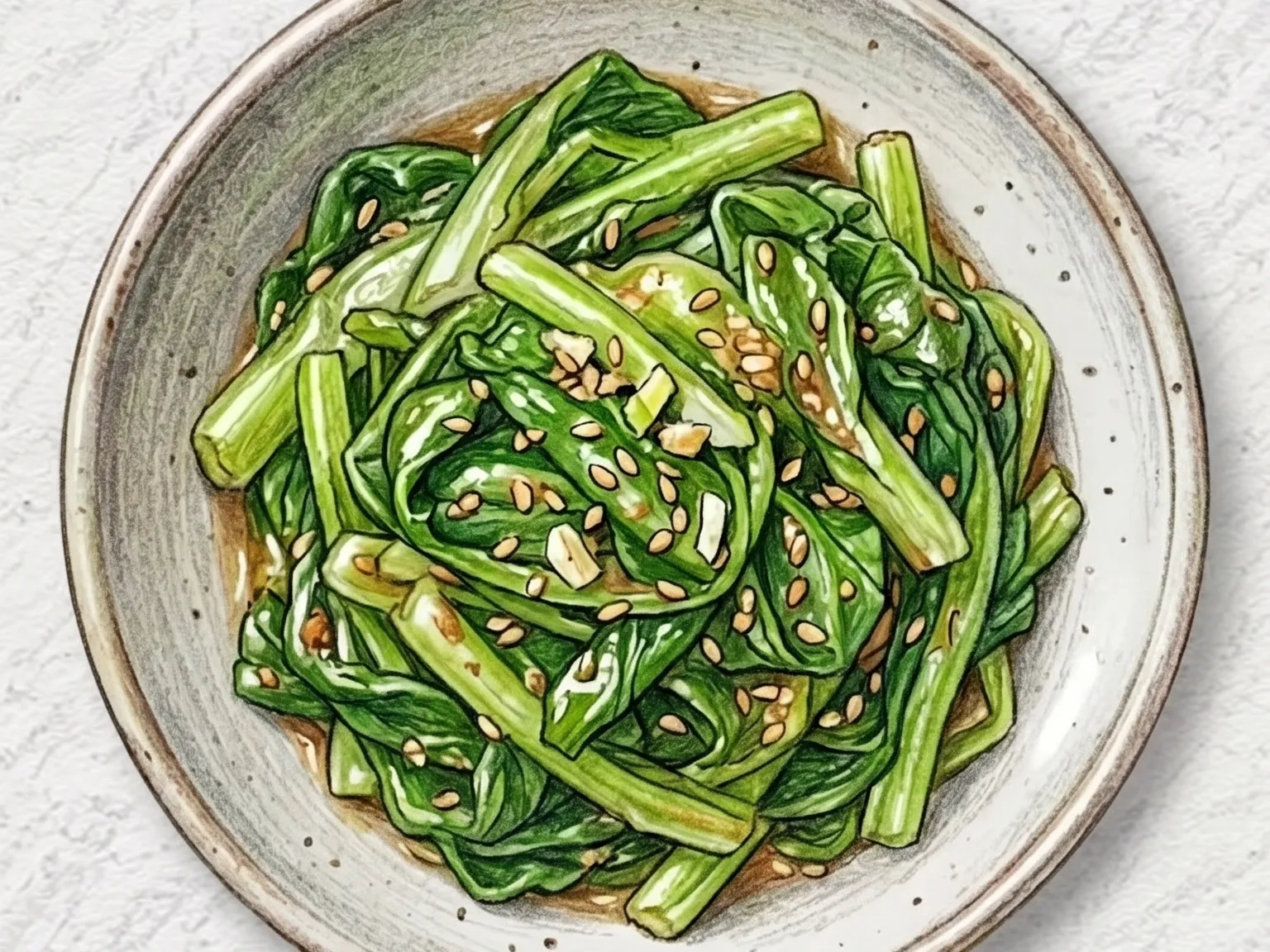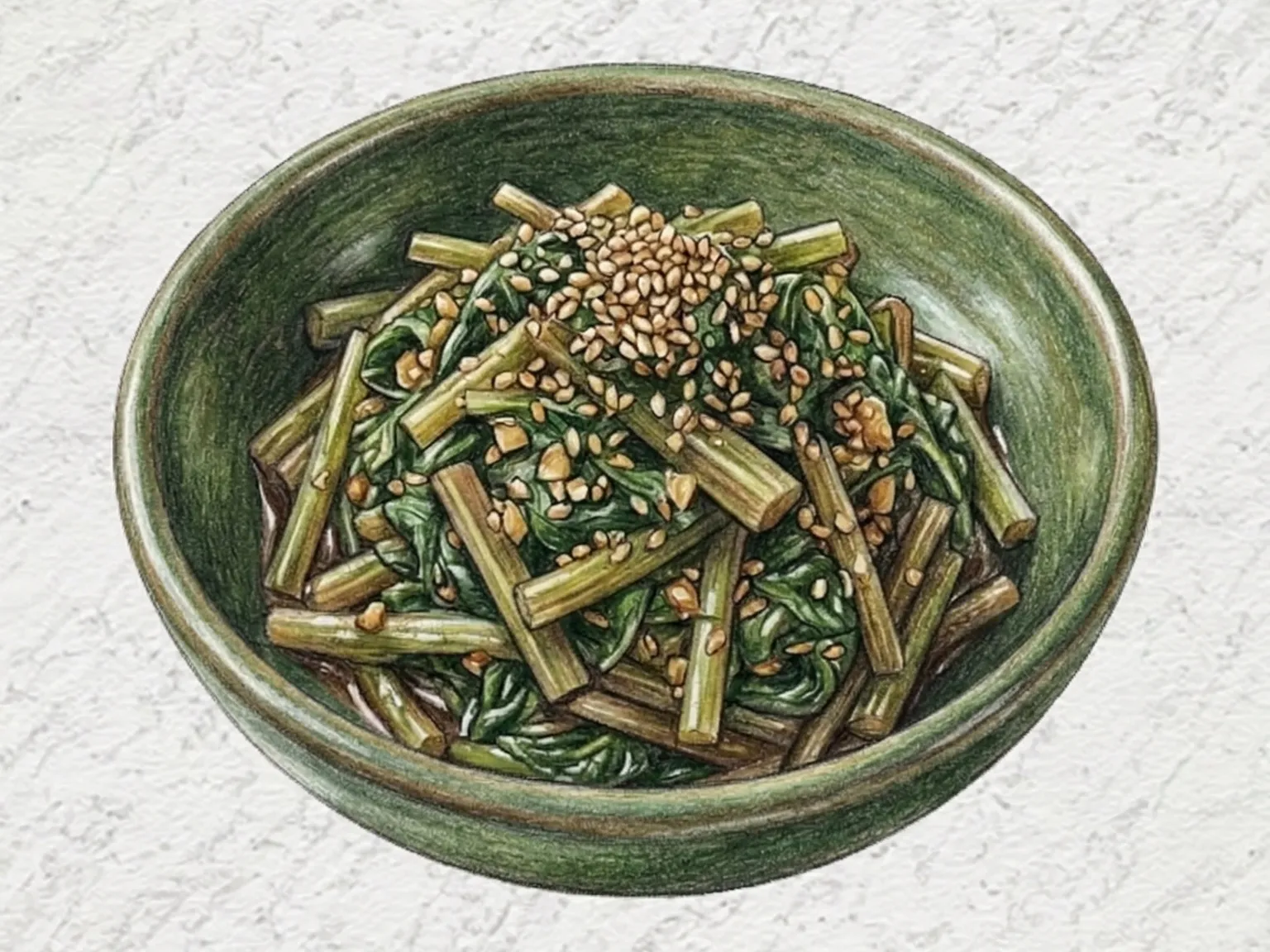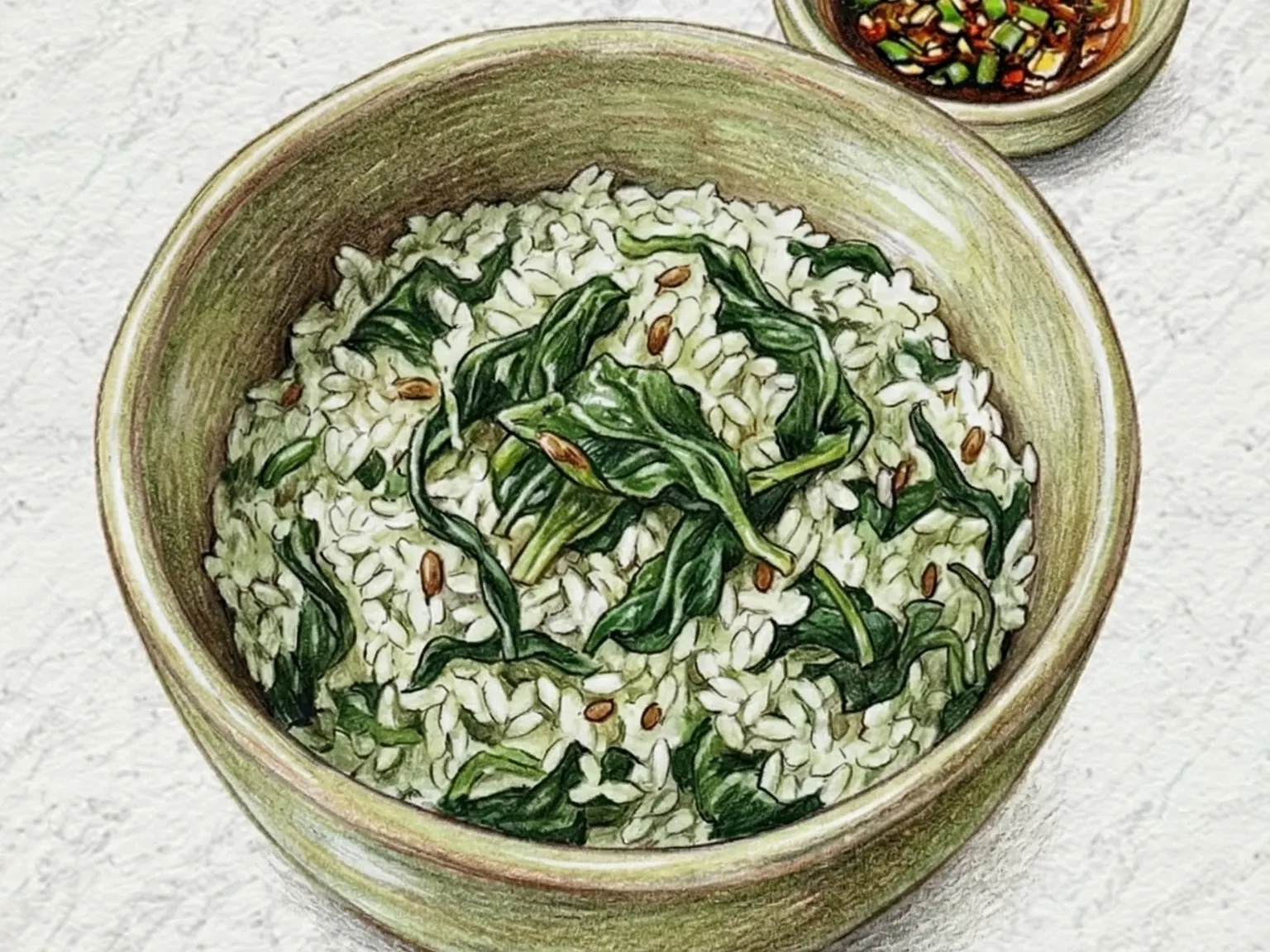
Korean Gangwon Gondre Rice
Quick answer
Gondre, a wild thistle green long foraged in the mountains of Gangwon province, is soaked, squeezed thoroughly dry, and spread in an even layer over uncooked rice before...
What makes this special
- Gangwon gondre bap brings the herbal scent of mountain thistle greens into every grain of steamed rice.
- Gondre thistle from Gangwon highlands; fresh spring harvest has the deepest herbal scent
- Three-stage heat: high 5 min, medium-low 10 min, low 10 min for even cooking
Key ingredients
Core cooking flow
- 1 Wash 2 cups of rice and soak in cold water for 20 minutes.
- 2 Place the soaked rice in the pot and pour in 2 cups of water.
- 3 Heat on high for 5 minutes to bring the water to a full boil.
Gondre, a wild thistle green long foraged in the mountains of Gangwon province, is soaked, squeezed thoroughly dry, and spread in an even layer over uncooked rice before the pot goes on the heat. The three-stage cooking method, starting at high heat for five minutes, then dropping to medium-low for ten and finishing at low for ten more, followed by a ten-minute covered rest off the heat, produces evenly cooked grains infused with the greens' earthy, grassy scent. Squeezing out the soaking water is not optional; any excess moisture left in the gondre will make the rice mushy. The rice itself is deliberately plain, designed to carry a soy-based dressing of garlic, green onion, chili flakes, and sesame oil that is mixed in at the table. That dressing provides a sharp, savory contrast to the mild, herbaceous notes of the gondre. Fresh spring gondre harvested at peak season delivers the most intense fragrance, though well-soaked dried gondre comes close and extends the dish to all four seasons. Making a larger batch of the dressing allows the same pot of rice to be eaten over several days.
Instructions
Read the steps as a cooking flow: prep, heat, seasoning, doneness control, and finish.
- 1Heat
Wash 2 cups of rice and soak in cold water for 20 minutes.
Blanch 30g of dried gondre greens in boiling water for 5 minutes, rinse in cold water, squeeze firmly to remove moisture, and cut into 3cm lengths.
- 2Step
Place the soaked rice in the pot and pour in 2 cups of water.
Spread the squeezed gondre greens evenly over the top of the rice. Clumps of undrained greens will make localized patches of soggy rice.
- 3Control
Heat on high for 5 minutes to bring the water to a full boil.
Reduce to medium-low for 10 minutes, then to the lowest setting for another 10 minutes. This staged heat reduction determines the rice's final sticky texture.
- 4Step
Turn off the heat and keep the lid on for 10 minutes to steam.
Open and fold the gondre and rice together thoroughly with a rice paddle so the greens are evenly distributed throughout.
- 5Season
In a small bowl, combine 3 tablespoons soy sauce, 2 tablespoons sliced green onion, 1 teaspoon minced garlic, 1 teaspoon chili flakes, and 1 tablespoon sesame oil to make the seasoning sauce.
- 6Finish
Serve the gondre rice in a bowl alongside the seasoning sauce.
Spoon the sauce over the rice and mix before eating to bring out the distinctive soft, herbal fragrance of the greens.
After the steps
Pick a recipe that fits this dish.
Continue with shared ingredients, meal pairings, or a similar method.
Recipes That Go Well With This
More Rice →Based on shared ingredients and meal pairing
Korean Thistle and Mackerel Pot Rice
Gondre mackerel sotbap begins by stir-frying thinly sliced radish in sesame oil to build a savory base, then soaked rice and squeezed gondre thistle greens are added before a mackerel fillet marinated in cooking wine and ginger juice is placed skin-side up on top. The pot is covered and cooked over low heat for fourteen minutes, followed by five minutes of resting off the heat. During that resting period, the earthy, slightly smoky aroma of gondre and the concentrated umami of the mackerel seep into each grain of rice without further stirring. Keeping the fish skin-side up protects the flesh from breaking apart during cooking and prevents the pot from becoming cloudy with loose pieces. The radish layer at the bottom absorbs moisture and guards against sticking while contributing its own mild sweetness to the rice underneath. Before eating, a drizzle of soy sauce is poured over the opened pot and the contents are tossed together lightly, bringing the mountain-foraged greens and the sea fish into a unified, quietly complex bowl. The scorched rice crust that forms on the bottom of the pot is steeped in hot water to make nurungji tea.
Korean Herb Mushroom Pot Rice
Chamnamul beoseot sotbap is a Korean pot rice cooked with fragrant chamnamul herbs, oyster mushrooms, and shiitake mushrooms in kelp stock. The chamnamul infuses the rice with a fresh, slightly herbaceous scent, while the two types of mushroom contribute contrasting textures and layers of umami. Oyster mushrooms are soft and springy, while shiitake mushrooms are firmer with a deeper, woodsy character. Served with a soy-sesame dipping sauce drizzled over the top and mixed in, every spoonful carries a balanced salty, nutty finish. Even without any meat, the mushroom depth and herbal brightness make each bowl feel substantial. The nurungji crust that forms at the bottom of the pot adds a toasty crunch that is one of the small rewards of cooking rice this way, and scraping it into hot water makes a simple, satisfying nurungji tea to close the meal.
Korean Mushroom Seaweed Soup
Rehydrated seaweed and two kinds of mushrooms - oyster and shiitake - are stir-fried in sesame oil first, before any water is added, so their flavors concentrate in the fat rather than leaching out into the broth. Water is added after that initial fry and the soup simmers for twenty minutes until the seaweed softens completely and releases a gentle oceanic character into the liquid. Without any meat-based stock, the umami comes entirely from the mushrooms and the natural glutamates in the seaweed, which is enough to give the broth genuine depth. The sesame oil blooms through the whole pot. Seasoned with soup soy sauce and salt at the end, the finished soup has a calm, layered flavor with soft seaweed and slightly chewy mushrooms providing contrasting textures in each bowl.
Korean Bean Sprout Rice (Pot-Steamed Rice with Soy Sprouts)
Kongnamul-bap is a simple Korean home dish of soaked rice cooked together with a generous pile of bean sprouts in a covered pot. Timing and the closed lid are the two things that define the result. The pot starts on high heat until the water boils, then drops to low for fifteen minutes of steady cooking followed by five minutes of resting. Opening the lid at any point during this process releases steam and allows a raw, beany smell to develop in the finished rice. Once the resting period is complete, the sprouts have steamed through and their moisture has been absorbed into the rice grains. The seasoning sauce is mixed directly into the bowl at the table: soy sauce, sesame oil, gochugaru, finely sliced green onion, and a scatter of sesame seeds. Each spoonful combines the soft, starchy rice with the firm snap of the sprout stems, and the soy dressing pulls everything into a coherent flavor. The dish asks very little from the cook and costs almost nothing to make, yet it produces the kind of deeply satisfying meal that is difficult to improve upon. Some versions add daikon cut into thick batons, which contribute a cool, clean sweetness to the broth that forms at the bottom of the pot.
Serve with this
Korean Seoul-Style Army Stew
Seoul-style budae jjigae is a Korean army stew that uses a rich anchovy stock as its cooking liquid rather than plain water. The assembly starts by layering sliced kimchi at the bottom of the pot, then arranging Spam slices, scored mini sausages, and onions around the edges. Baked beans are placed in the center, which helps thicken the soup and contributes a mild sweetness to the broth. A seasoning paste made of gochujang, chili flakes, and minced garlic is added directly over the beans. The ingredients simmer together for ten minutes to merge the savory flavors of the meats with the anchovy stock. Finally, green onions and a block of instant ramen noodles are added to cook. The noodles absorb the spicy and savory broth, completing a filling dish that is best served hot straight from the stove.
Korean Soybean Sprout Cold Salad
Kongnamul-naengchae is a chilled Korean salad of boiled soybean sprouts and vegetables tossed in mustard dressing - conceptually distinct from regular kongnamul-muchim because it is designed to be served cold. The mustard sauce defines the dish: mustard powder (or tube mustard) mixed with vinegar, sugar, and salt creates a sharp, nose-tingling heat alongside a sweet-sour brightness. Prepared mustard needs five to ten minutes of resting after hydration for the allyl isothiocyanate compound to fully develop its pungency. Julienned cucumber and carrot release moisture, so they should be briefly salted or patted dry to prevent diluting the sauce. Chilling for at least ten minutes before serving maximizes the refreshing effect, and cold temperatures actually sharpen the mustard's bite. This banchan excels as a palate cleanser alongside fatty main dishes like samgyeopsal or bulgogi.
Korean Red Cabbage Kimchi
Jeokchae kimchi is made by salting red cabbage leaves, then tossing them in a seasoning of gochugaru, sand lance fish sauce, minced garlic, and Korean pear juice before a short fermentation. Red cabbage has thicker, denser leaves than napa cabbage, so it holds its crunch well after brining rather than going soft. The anthocyanin pigment in the red cabbage reacts with the chili seasoning to produce a vivid purple color rather than the typical red associated with kimchi, making it visually striking on the table. Pear juice provides a gentle fruit sweetness underneath the heat and spice, while sand lance fish sauce builds enough savory depth that even a brief fermentation yields full flavor. Scallions add a fresh, aromatic finish that ties the seasoning together. The result is a kimchi that is crunchy, spicy, and umami-rich simultaneously, with a distinctive character that sets it apart from traditional napa kimchi.
Similar recipes
Korean Chwinamul Pot Rice
Chwinamul sotbap is a Korean pot rice made by layering lightly seasoned wild chwinamul greens over soaked rice and cooking everything together in kelp stock until done. The greens release their distinctively herbal, faintly bitter fragrance directly into the rice as it steams, filling the room with an earthy mountain scent when the lid is lifted. Mixed at the table with a soy-sesame sauce, the initial bitterness softens into a pleasant background that makes each spoonful layered and grounding. It is best prepared in spring when chwinamul is freshly picked, offering the sharpest aroma and the most tender stems. Dried chwinamul, soaked and squeezed before use, extends the recipe across all four seasons, though the fresh version carries a vitality and brightness that dried leaves cannot fully replicate.
Korean Buckwheat Noodle Salad
Buckwheat noodles boiled and rinsed in cold water retain both their earthy, slightly nutty flavor and a satisfying springy bite, then get tossed with julienned cucumber, red cabbage, and carrot for color and crunch. A dressing of gochujang and vinegar provides a spicy-sour backbone, while soy sauce and sesame oil layer in savory depth and aromatic nuttiness underneath. Thorough rinsing to remove surface starch is critical - it keeps the noodles from clumping and ensures the dressing coats each strand evenly rather than pooling at the bottom of the bowl. Served chilled in warm weather, the salad functions well as a standalone light meal, refreshing enough to restore appetite without leaving you heavy. Toss the dressing in just before eating to prevent the noodles from softening.
Korean Thistle Greens Pickles
Gondre-jangajji is a pickled banchan made from gondre, a Korean mountain thistle foraged in Gangwon Province each spring. The greens are blanched briefly to soften the fibrous stems before being submerged in a curing liquid of dark soy sauce, brown rice vinegar, rice syrup, minced garlic, and ginger. The blanching step is essential: raw gondre has a toughness that pickling liquid alone cannot fully penetrate, and a short time in boiling water opens the cell structure just enough to allow the marinade to work through without turning the greens limp. Rice syrup wraps the combined salt and acid in a mild sweetness that prevents the sharpness of either from dominating. A cheongyang chili adds a gentle heat at the finish that keeps the overall flavor from reading as one-dimensional. Because the fibrous texture holds the liquid within the grain of the vegetable, the jangajji stays moist and pliable throughout a week or more of refrigerated storage.