Korean Mustard Leaf Kimchi
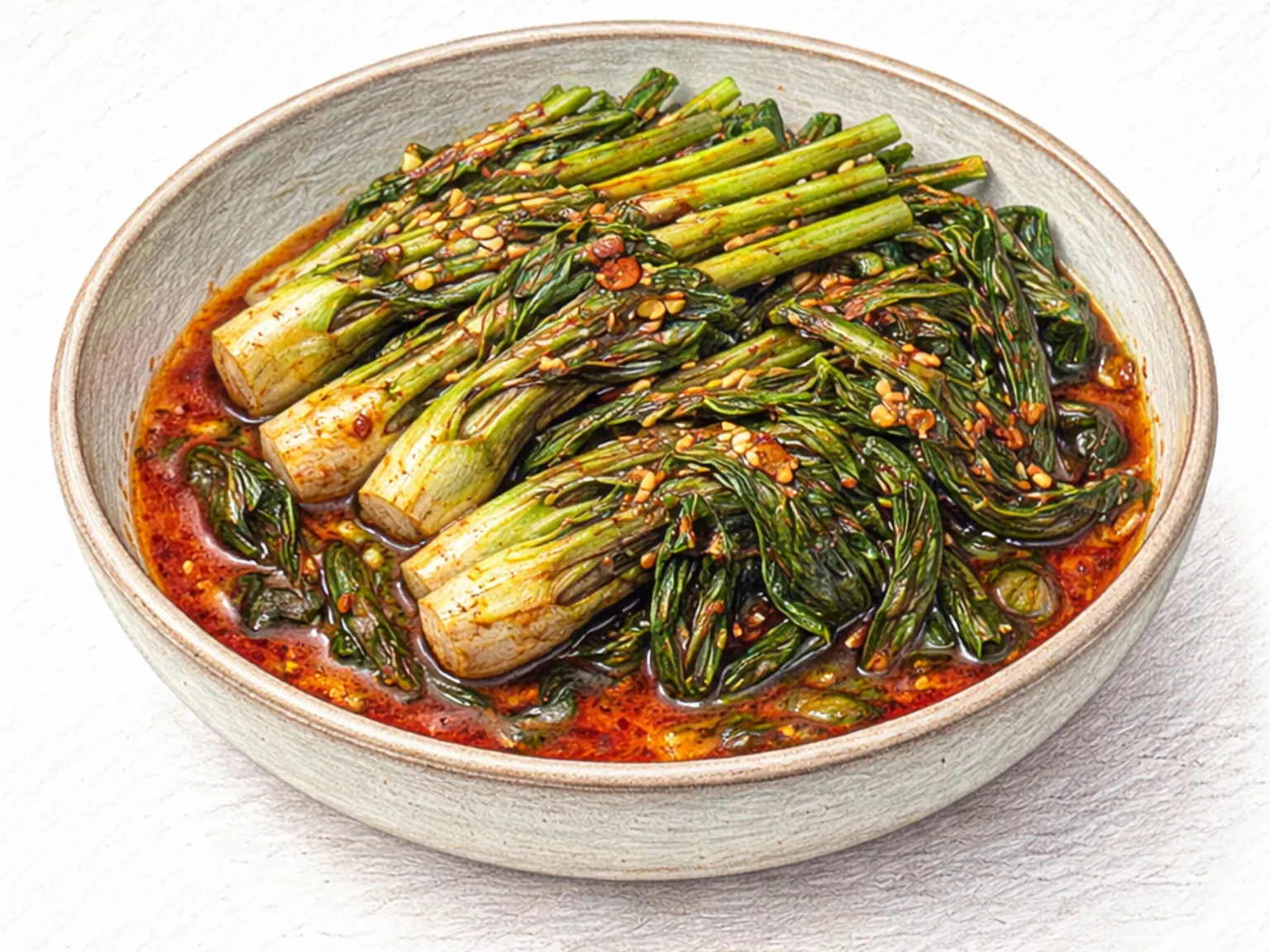
A fiery, wasabi-like kimchi with a punch far bolder than regular napa cabbage kimchi - mustard greens fermented with gochugaru and anchovy fish sauce. The brassica oils in the leaves transform during fermentation into a sharp pungency that cuts through rich pork and soup-rice bowls. Plum extract tempers the acidity, balancing the aggressive aroma and deep saltiness. A signature preparation of Korea's Jeolla province, gat kimchi is for anyone who finds standard kimchi too mild.
Adjust Servings
Instructions
- 1
Wash mustard leaves, shake dry, and salt for 1 hour.
- 2
Blend onion and combine with chili flakes, fish sauce, garlic, and plum syrup.
- 3
Rinse lightly and squeeze out excess moisture from salted leaves.
- 4
Coat leaves and stems evenly with seasoning.
- 5
Press into a container, ferment half a day at room temp, then refrigerate 2 days.
As an Amazon Associate, we may earn from qualifying purchases.
Tips
Nutrition (per serving)
More Recipes

Korean Green Onion Kimchi
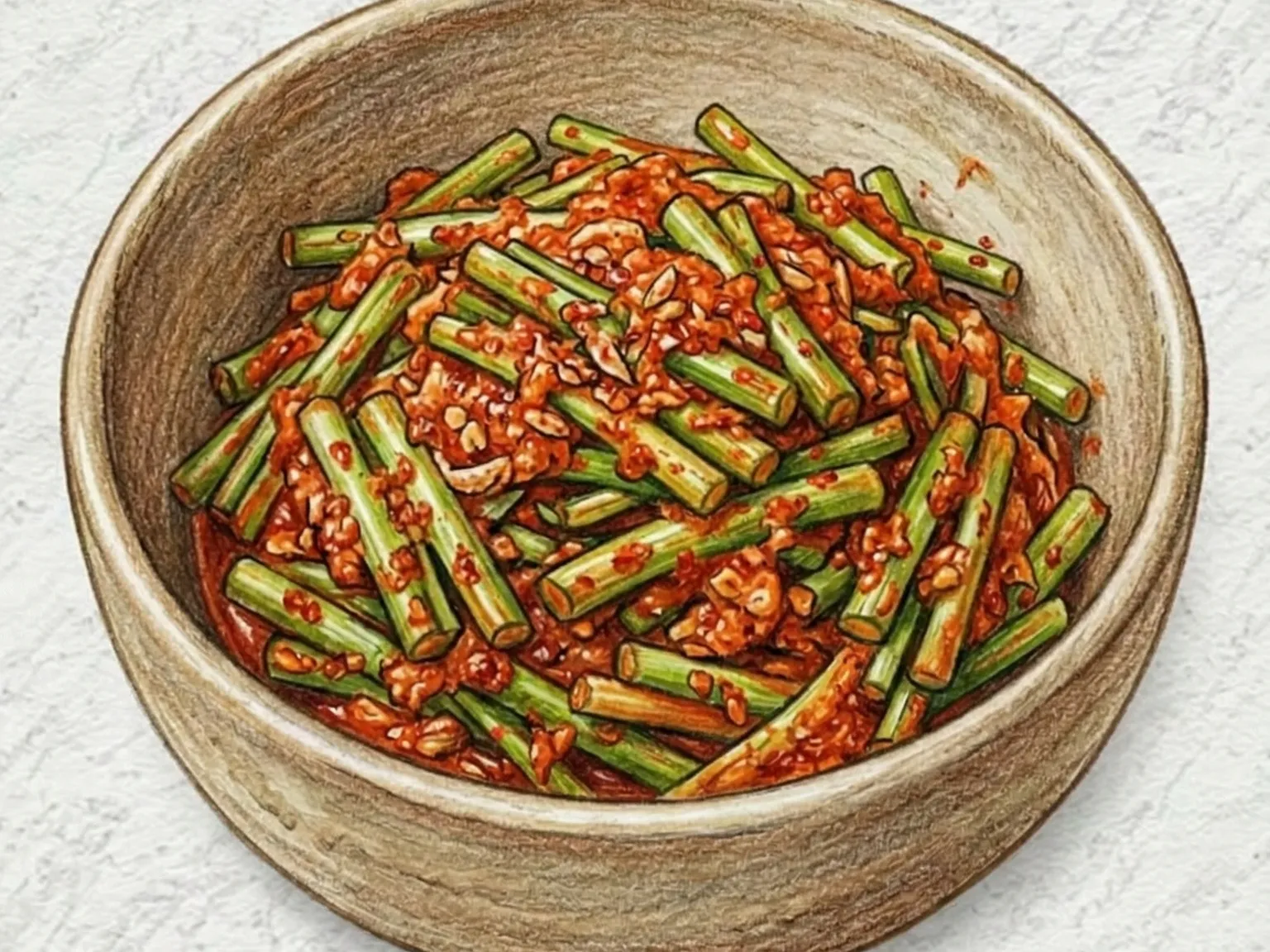
Daepa kimchi is made by cutting large green onions into six- to seven-centimeter lengths and gently coating them in a paste of gochugaru, anchovy fish sauce, soy sauce, plum extract, and glutinous rice paste. The rice paste acts as a binder that keeps the seasoning clinging to the onion surfaces throughout fermentation instead of sliding off. Handling the stalks carefully so they stay intact is important for presentation, and splitting thicker white portions lengthwise gives the paste more surface area to penetrate. Eight hours of room-temperature fermentation followed by two days of refrigeration brings the kimchi to its peak, where the sharp allium bite of the green onion meets the deep fermented umami of the fish sauce.

Korean Pepper Leaf Kimchi
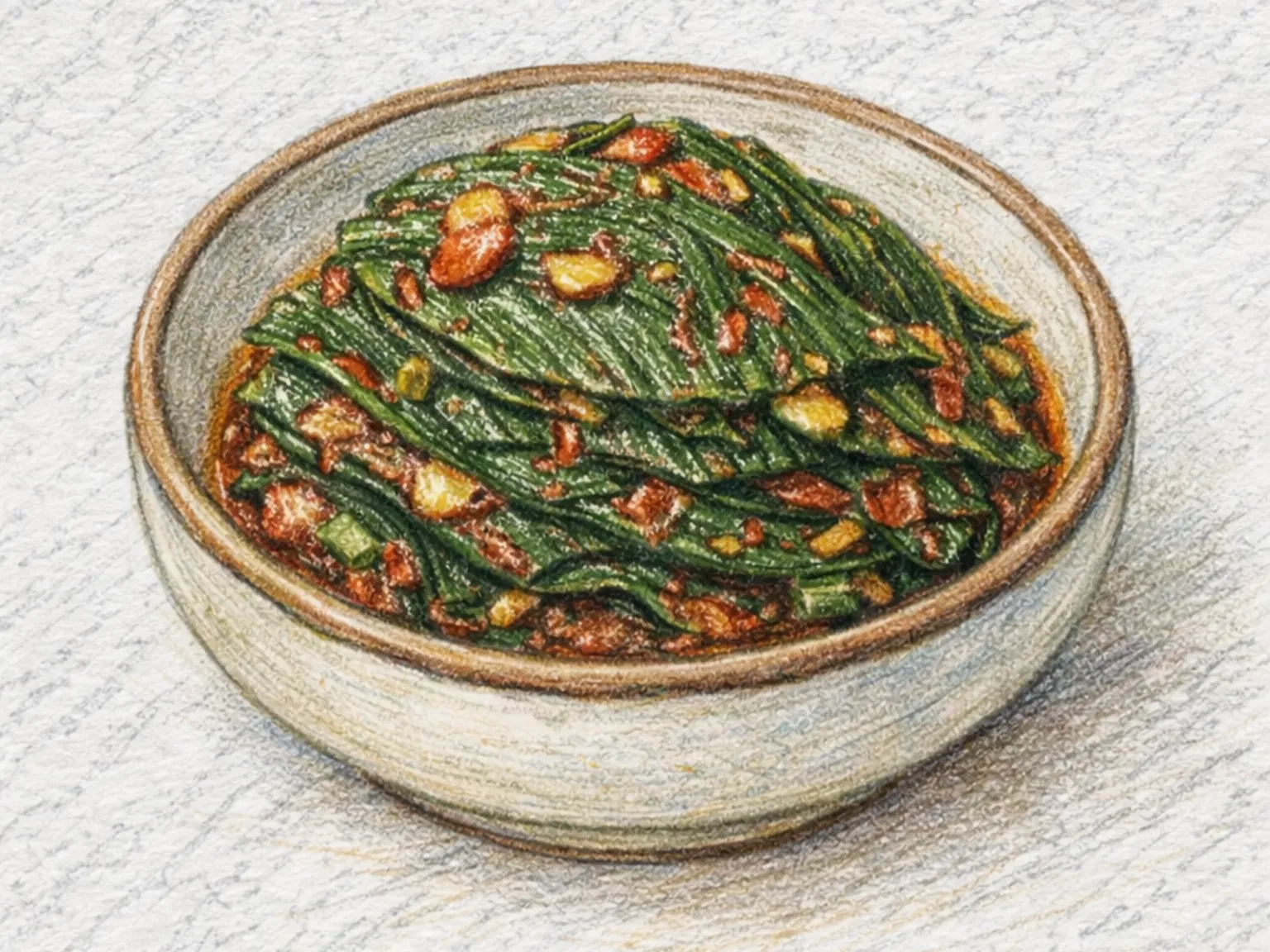
Gochuip kimchi is a Korean pepper leaf kimchi where the leaves are briefly blanched to reduce volume and remove bitterness, then tossed with gochugaru, anchovy fish sauce, garlic, and glutinous rice paste for about a day of room-temperature fermentation. Blanching softens the leaves and allows the seasoning to cling evenly to their surfaces. The rice paste acts as both a binding agent and a fermentation accelerator, promoting lactic acid activity even in the short curing window. Beneath the spicy coating, the pepper leaves contribute a subtle green, herbaceous note that distinguishes this from standard napa kimchi, making it a distinctive summer preparation.

Korean Scallion Kimchi (Whole Stalk Anchovy Shrimp Paste)
Jjokpa kimchi is a traditional Korean scallion kimchi made by lightly brining whole scallions in coarse salt, then coating them from root to tip with a seasoning paste of anchovy fish sauce, salted shrimp, gochugaru, and sweet rice paste. The dual seafood condiments build a layered umami that the rice paste locks onto the scallion surface, preventing the flavor from diluting as moisture releases during fermentation. The white bulb sections stay crisp and absorb the chili heat, while the green tops wilt into a soft, pungent layer with a sharp allium bite. After six hours at room temperature followed by a day in the refrigerator, the seasoning stabilizes into a balanced, punchy side dish that works alongside steamed rice or grilled pork belly.

Korean Cabbage Kimchi (Crunchy Green Cabbage Kimchi)
Yangbaechu kimchi is a Korean cabbage kimchi made by salting green cabbage and tossing it with chili flakes, fish sauce, and minced garlic. The thicker leaves and lower moisture content of green cabbage compared to napa cabbage result in a noticeably crunchier texture that persists through fermentation. The natural sweetness of cabbage softens the heat from the chili seasoning, while carrot and scallion pieces add color and freshness. Six hours of fermentation at room temperature followed by refrigeration lets the tanginess develop gradually. It serves as a lighter alternative when traditional napa kimchi feels too heavy.

Kimchi Dwaejigogi-guk (Kimchi Pork Tofu Soup)
Kimchi-dwaejigogi-guk begins by stir-frying pork shoulder in perilla oil until the fat renders, then well-fermented kimchi and chili flakes join the pot for three more minutes of cooking. This initial step melds the tangy acidity of the kimchi with the pork drippings, creating a base that carries the entire soup. Water and sliced onion simmer for fifteen minutes, and blocks of firm tofu go in near the end, absorbing the ruddy, peppery broth. The result has more liquid than a typical jjigae, making it well suited for spooning over a bowl of rice.

Korean Spicy Squid Salad (Gochujang Blanched Squid)
Ojingeo-muchim tosses blanched squid in a gochujang-vinegar dressing for a tangy, spicy seafood banchan that works equally well as a rice side dish or as anju with drinks. Squid, unlike vegetables, has an extremely narrow blanching window that determines the entire outcome: one minute to ninety seconds in boiling water is the limit. Beyond that, the proteins contract and the texture turns rubbery; under that, the interior stays translucent and fishy. Plunging into ice water immediately after blanching halts carryover cooking and locks in the ideal springy-bouncy texture. The dressing combines gochujang, gochugaru, vinegar, sugar, garlic, sesame oil, and sesame seeds, with vinegar playing the pivotal role - it introduces a sharp acidity over the squid's marine umami, forming a triangular balance with the chili heat. Julienned onion and cucumber mixed in add textural variety and stretch the portion. A popular variation stirs in one tablespoon of mayonnaise, whose emulsified fat wraps around the heat and produces a milder, creamier version.