Korean Geomeun Kong Juk (Black Bean Porridge)
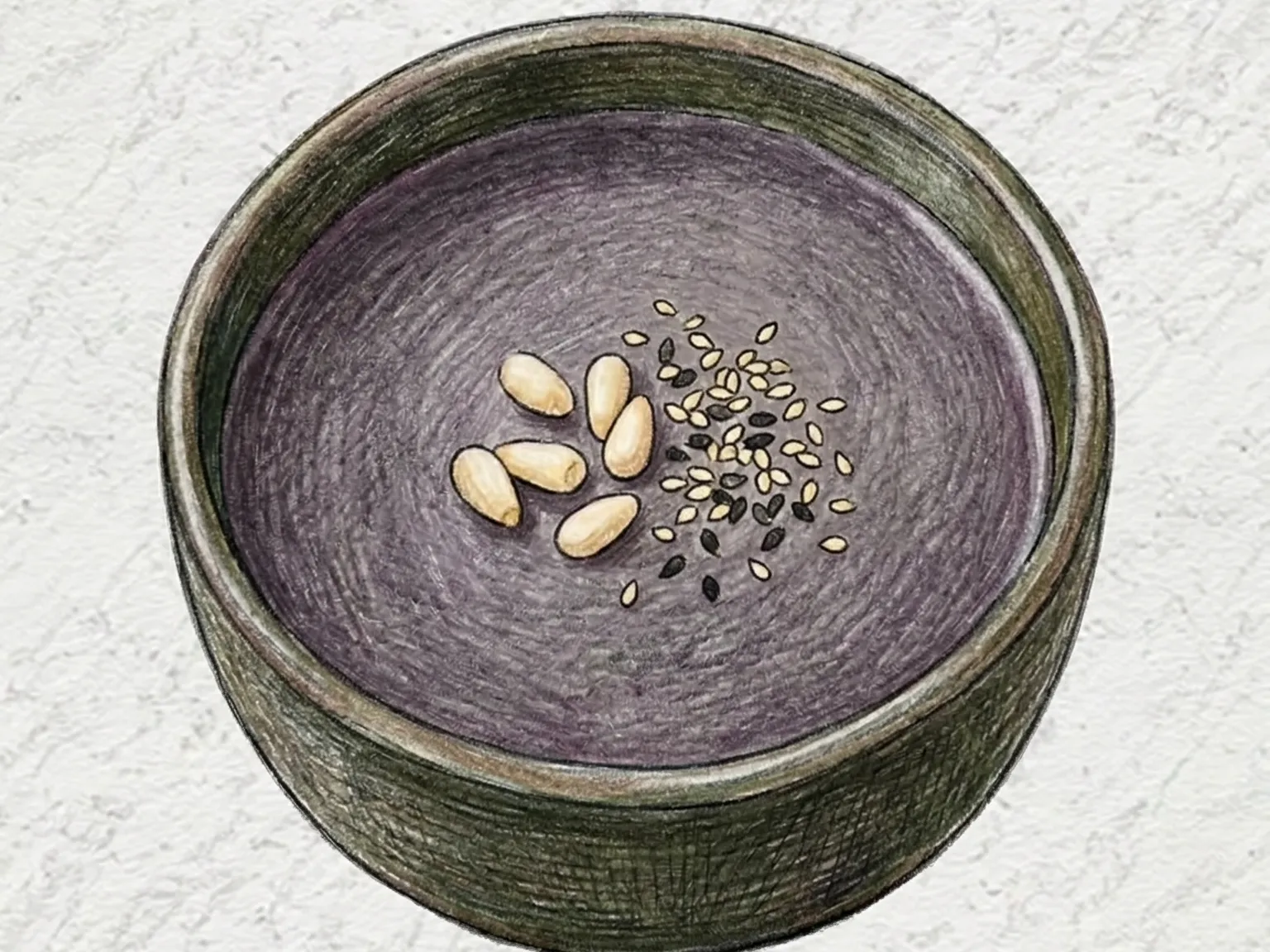
Black beans are soaked for at least four hours, boiled until soft, then blended with their cooking liquid into a smooth slurry. This bean puree is combined with separately soaked rice and simmered on low heat, stirring frequently to prevent sticking, until everything merges into a thick, velvety porridge. The beans' deep, almost nutty flavor dominates each spoonful, and the dish can be finished with salt alone for a savory version or with a tablespoon of sugar for a subtly sweet one. Pine nuts and sesame seeds on top add a contrasting crunch and reinforce the overall nuttiness.
Adjust Servings
Instructions
- 1
Rinse black beans and rice separately, then soak both for at least 4 hours.
- 2
Boil black beans with 900 ml water for 20 minutes, then cool slightly.
- 3
Blend cooked beans with some cooking liquid until smooth.
- 4
Cook soaked rice with remaining 400 ml water for 10 minutes, stirring.
- 5
Add blended bean liquid and simmer 10 more minutes, stirring to prevent sticking.
- 6
Season with salt and sugar, then garnish with pine nuts and sesame seeds.
As an Amazon Associate, we may earn from qualifying purchases.
Tips
Nutrition (per serving)
More Recipes

Korean Seaweed Rice Porridge
Miyeok-juk is a classic Korean porridge made by sauteing rehydrated seaweed in sesame oil, then simmering it with rice until velvety smooth. Stir-frying the seaweed first tames any brininess and lets the nutty sesame flavor infuse the entire pot. Seasoned lightly with soup soy sauce, the porridge lets the natural depth of the seaweed come through. Its gentle flavor and soft texture have made it a staple for breakfast, recovery meals, and postpartum nourishment across Korea.

Korean Vegetable Porridge (Yachae Juk)
Finely diced carrots, zucchini, potato, and onion are simmered with soaked rice over low heat until the porridge turns creamy and the vegetables soften completely. The long, gentle cooking draws out the natural sweetness of each vegetable, so the porridge tastes mild and comforting without heavy seasoning. A thin drizzle of sesame oil stirred in at the end adds a quiet nuttiness that deepens the otherwise plain flavor. Easy to digest and gentle on the stomach, it works well as a morning meal or a restorative bowl when energy is low.

Korean Sesame Oil Abalone Porridge
Both abalone flesh and innards are used together with a generous two tablespoons of sesame oil to maximize nuttiness in this porridge. Sauteing the minced innards with garlic in the sesame oil infuses the fat with both marine and roasted flavors, forming the aromatic foundation for the entire pot. Soaked rice is stirred in the same oil until translucent, then water is added and the mixture simmers for 25 minutes as the grains release starch into a naturally thick consistency. Soup soy sauce and salt sharpen the finish, and chopped chives provide both color and a light onion fragrance.

Korean Abalone Mung Bean Porridge
Mung beans are soaked and simmered alongside rice, then combined with abalone for a porridge that blends nutty creaminess with ocean flavor. The mung beans break down during cooking and thicken the porridge noticeably, giving it a denser, more velvety body than standard abalone porridge. Abalone innards are sauteed with garlic in sesame oil first to develop their aroma, and kelp stock replaces plain water to deepen the umami foundation. The abalone flesh goes in during the last five minutes to keep its springy texture, and chopped scallion garnish adds both color and a fresh bite.

Korean Black Rice Latte (Purple Grain Milk Drink)
Heukmi latte is a grain-based latte made from black rice soaked for at least two hours, then boiled until fully soft and blended with milk. Glutinous rice flour is added to the blend, raising the viscosity so the drink glides smoothly across the palate. Maple syrup layers a caramel-like sweetness over the rice's toasty base flavor, and vanilla extract broadens the aromatic range. A pinch of salt balances the overall taste, and the drink's deep purple color - a natural result of the black rice's pigments - gives it a striking visual character.

Korean Jjajang Tteokbokki
Jjajang tteokbokki cooks chewy rice cake sticks in a sauce of black bean paste (chunjang) stir-fried with ground pork, onion, and cabbage. Pre-frying the chunjang in oil removes its raw bitterness and leaves a balanced sweet-salty umami that clings thickly to the rice cakes. Unlike standard gochujang-based tteokbokki, there is no chili heat - the dominant flavor is the deep, roasted black bean paste enriched by rendered pork fat. Julienned cucumber on top adds a fresh, crunchy counterpoint.