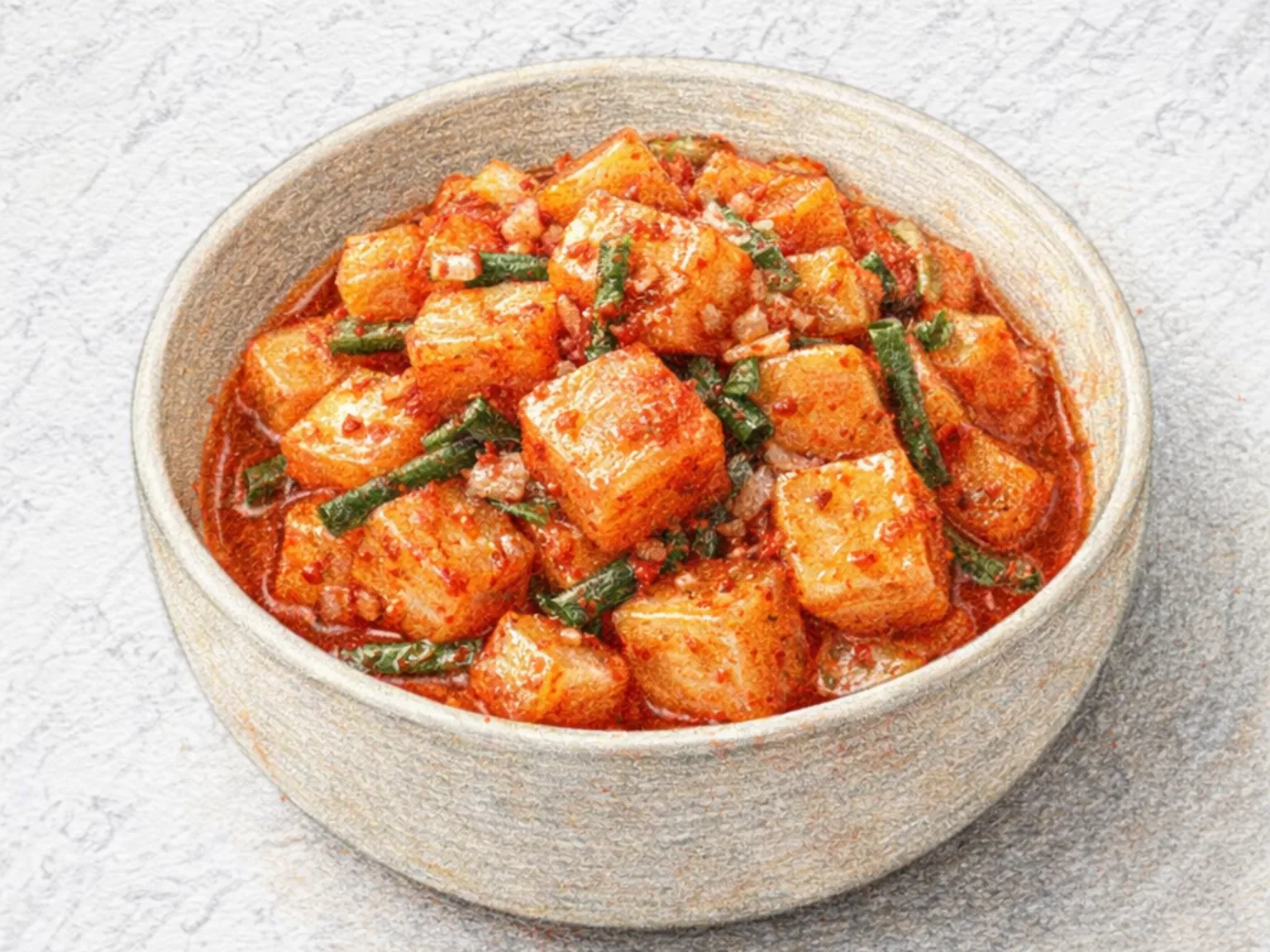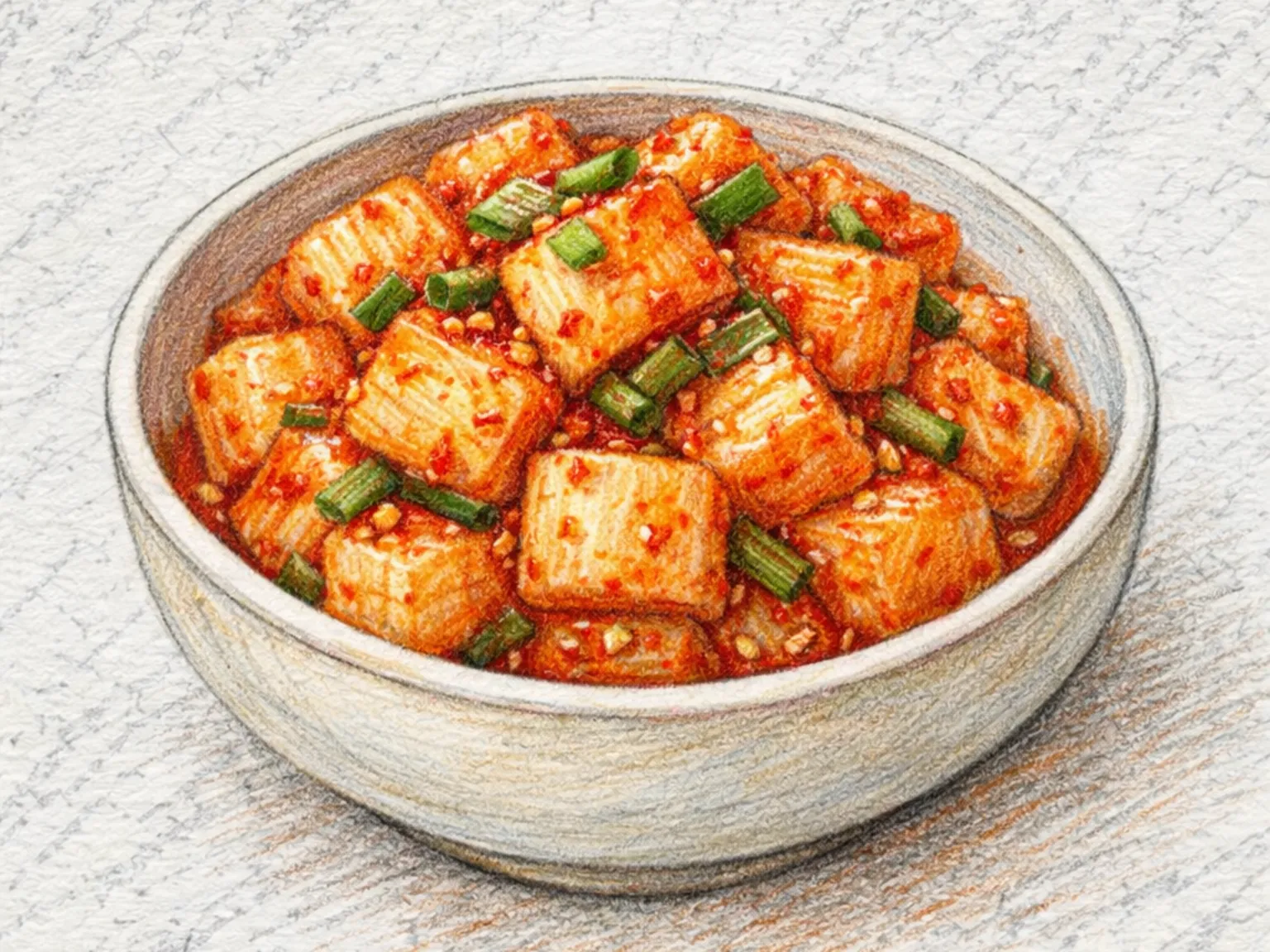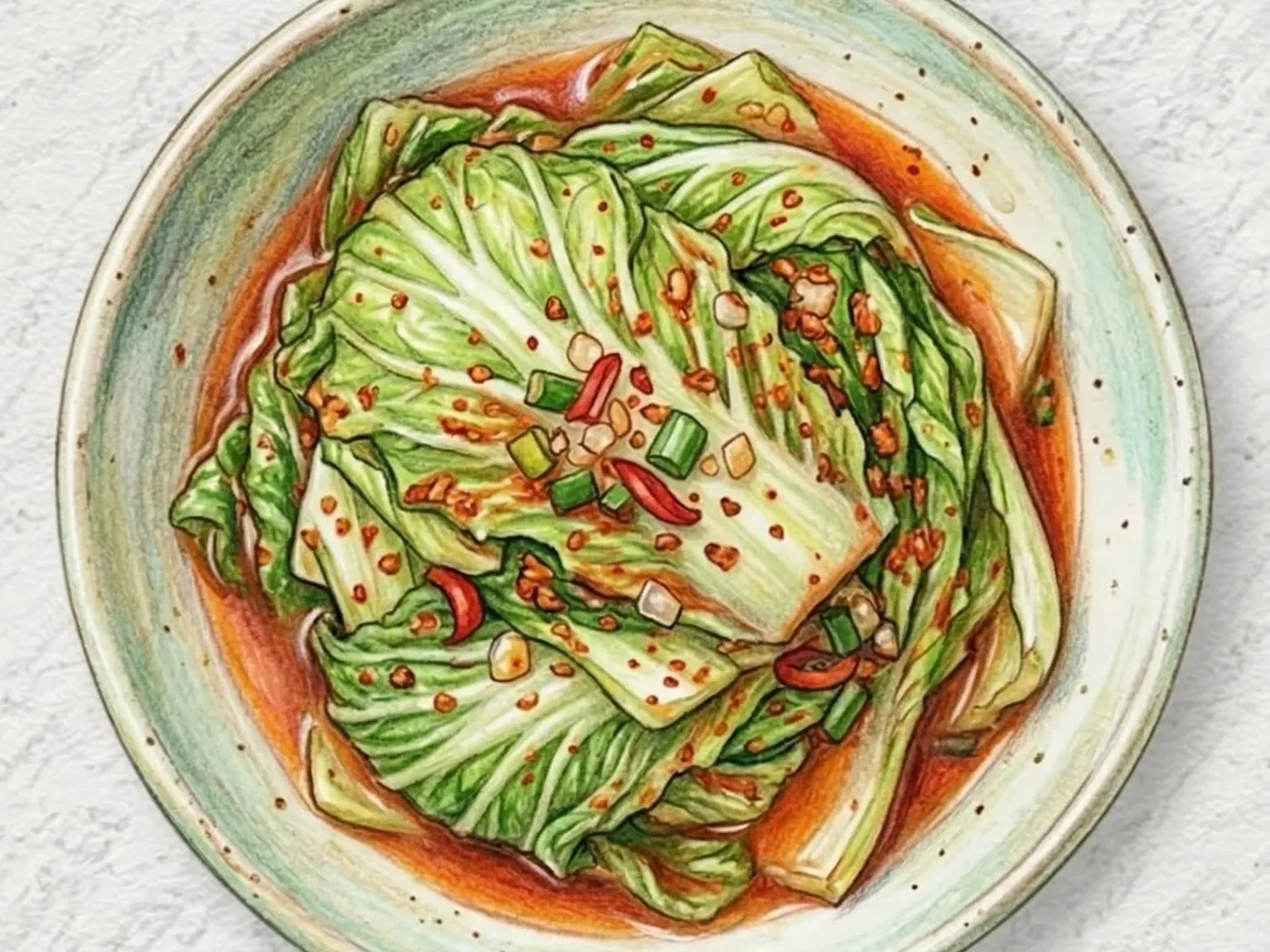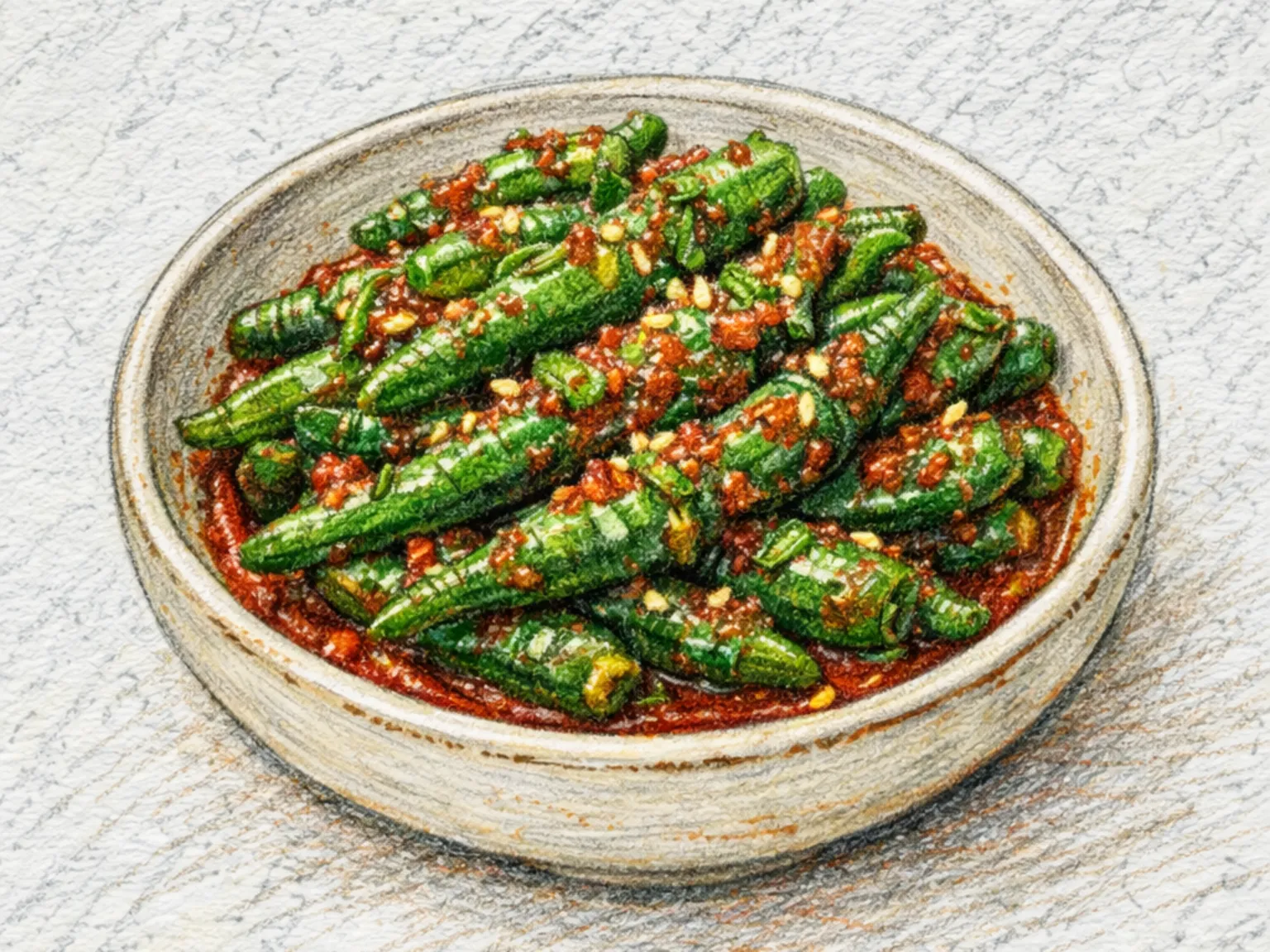
Korean Green Chili Kimchi
Gochu kimchi is a spicy Korean kimchi made with whole or halved green chili peppers that are salted, then dressed in gochugaru, salted shrimp, anchovy fish sauce, and garlic for a short fermentation. The thick pepper walls retain a firm crunch through salting and fermentation, and the seeds clustered inside deliver a concentrated burst of heat when bitten into. Salted shrimp brings immediate umami even without extended aging, and the pepper's own grassy sweetness supports the seasoning in place of added sugar. Served alongside grilled pork belly or bossam, this kimchi works as a sharp counterpoint that cuts through the richness of fatty meats.
Adjust Servings
Instructions
- 1
Trim stems, split chilies lengthwise, and remove some seeds.
- 2
Salt and rest for 20 minutes, then drain.
- 3
Mix chili flakes, garlic, ginger, salted shrimp, fish sauce, and sugar.
- 4
Coat chilies gently with seasoning without crushing them.
- 5
Pack in an airtight container, ferment 8–12 hours at room temp, then refrigerate.
As an Amazon Associate, we may earn from qualifying purchases.
Tips
Nutrition (per serving)
More Recipes

Korean Soy-Pickled Green Chili Peppers
Gochu soy jangajji is a classic Korean pickle made by packing whole green chili peppers into a glass jar and pouring over a boiling brine of soy sauce, vinegar, sugar, and water. The hot brine partially cooks the pepper surface, taming the raw heat by a degree while the interior stays crisp, so each bite delivers soy saltiness and chili spiciness simultaneously. Onion adds natural sweetness to the brine, and garlic contributes an additional aromatic layer. Reboiling and repouring the brine after two days extends the shelf life, allowing this jangajji to keep refrigerated for up to a month as a pantry-staple banchan.

Korean Fresh Eggplant Kimchi
Gaji kimchi is a fresh, no-fermentation eggplant kimchi made by steaming eggplant until soft, tearing it along the grain, and tossing it with gochugaru, fish sauce, garlic, and sesame oil. Tearing rather than cutting exposes the fibrous interior so the seasoning reaches deep into every strand. Scallions add a fresh, sharp lift, and sesame seeds provide a nutty finish. Since no fermentation is required, this kimchi can be eaten immediately after preparation, making it especially useful in summer when a quick banchan is needed. Mixed into a bowl of cold leftover rice, the seasoning soaks into the grains for a satisfying one-bowl meal.

Korean Water Parsley Kimchi
Minari kimchi is a quick Korean water parsley kimchi made by wilting the stems in salt for just ten minutes, then tossing them in a seasoning of gochugaru, anchovy fish sauce, and plum syrup with blended onion. The brief brining preserves the stem's crisp texture and cool herbal aroma, while the fish sauce grounds the light vegetable with a seafood umami foundation. Plum syrup's fruit acidity softens the chili heat, leaving a bright, clean finish. Paired with samgyeopsal or boiled pork, the water parsley's fresh fragrance cuts through the fat and resets the palate between bites.

Korean Lettuce Kimchi (Quick Leaf Gochugaru Dressed)
Sangchu kimchi is a quick Korean lettuce kimchi made by tearing leaf lettuce into bite-sized pieces, lightly salting for ten minutes to wilt the leaves just enough, then tossing them in a dressing of gochugaru, sand lance fish sauce, minced garlic, vinegar, and sugar. The lettuce absorbs the seasoning and softens, but eating it before it fully collapses preserves a slight crispness at the leaf edges. Fish sauce's fermented depth adds weight to the lettuce's otherwise mild green flavor, and vinegar leaves a clean, tangy finish. Sesame seeds contribute a toasted accent with each chew. Thorough drying after salting is essential - residual water dilutes the seasoning rapidly, turning the kimchi bland within hours.

Korean Fresh Lettuce Geotjeori
Sangchu-geotjeori is a last-minute lettuce salad where 120 grams of lettuce, torn into bite-size pieces, is tossed for no more than 20 seconds in a dressing of red pepper flakes, soy sauce, vinegar, plum syrup, minced garlic, and sesame oil. The lettuce must be thoroughly dried after washing so the dressing adheres to the leaves rather than pooling at the bottom. Thinly sliced onion adds crunch and a sharp edge that complements the mild bitterness of the lettuce. Plum syrup provides a fruity sweetness that is more subtle than granulated sugar, while the vinegar tempers the chili heat. Serving immediately is critical - within minutes the leaves begin to wilt, losing the crisp texture that defines this dish.

Korean Kohlrabi Fresh Salad (Saengchae)
Kolabi-saengchae is a fresh Korean salad of julienned kohlrabi dressed in gochugaru, vinegar, and fish sauce. Though it resembles mu-saengchae (radish salad), the two differ significantly in texture and flavor. Kohlrabi is a brassica vegetable eaten for its swollen stem base - firm on the outside but juicy and almost pear-like within. The thick outer rind must be peeled away generously to remove the fibrous layer, and cutting matchstick-sized strips around 4 to 5 cm long produces the signature crunch with every bite. Slicing too thin causes rapid wilting as the strands absorb the dressing. Fish sauce adds marine umami to kohlrabi's mild sweetness, while vinegar slows moisture release to preserve crispness. This banchan is commonly served alongside grilled meat as a palate cleanser. Peak kohlrabi seasons in spring and fall produce the sweetest, crunchiest results.