Korean Soy-Pickled Green Chili Peppers
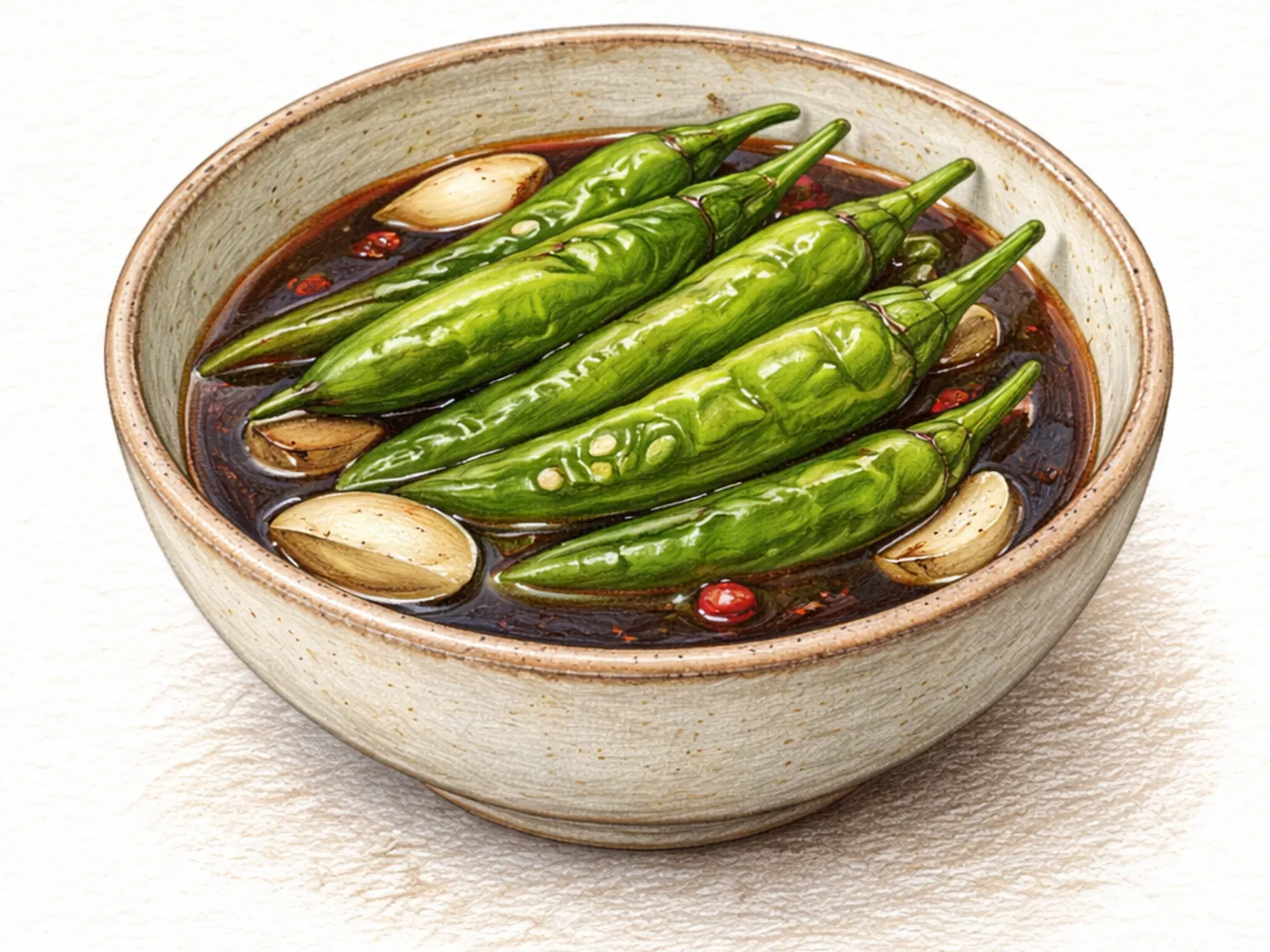
Gochu soy jangajji is a classic Korean pickle made by packing whole green chili peppers into a glass jar and pouring over a boiling brine of soy sauce, vinegar, sugar, and water. The hot brine partially cooks the pepper surface, taming the raw heat by a degree while the interior stays crisp, so each bite delivers soy saltiness and chili spiciness simultaneously. Onion adds natural sweetness to the brine, and garlic contributes an additional aromatic layer. Reboiling and repouring the brine after two days extends the shelf life, allowing this jangajji to keep refrigerated for up to a month as a pantry-staple banchan.
Adjust Servings
Instructions
- 1
Wash peppers, trim stems, and prick holes with a toothpick.
- 2
Place peppers, garlic, and onion in a jar.
- 3
Boil soy sauce, water, vinegar, and sugar for brine.
- 4
Cool brine and pour over ingredients until submerged.
- 5
Refrigerate for 3 days before eating.
As an Amazon Associate, we may earn from qualifying purchases.
Tips
Nutrition (per serving)
More Recipes

Korean Pickled Shishito Peppers
Kkwarigochu jangajji is a Korean pickled shishito pepper side dish made by pricking each pepper with a toothpick, blanching briefly, and submerging them with sliced garlic in a brine of boiled soy sauce, vinegar, and sugar. The punctures allow the brine to penetrate evenly into the hollow interior, eliminating any gap in seasoning between the skin and the inside. The quick blanch wilts the peppers just enough to make them pliable while preserving their mild natural heat and slight springiness. Vinegar brightens the soy sauce's salinity and sugar rounds the edges, resulting in a well-balanced pickle that can be pulled from the refrigerator to fill out a weeknight dinner spread.

Korean Cheongyang Gochu Doenjang Jangajji (Doenjang Pickled Cheongyang Peppers)
Cheongyanggochu doenjang jangajji is a Korean pickle where Cheongyang chili peppers are pierced with a fork so a brine of doenjang, soy sauce, rice syrup, and vinegar can penetrate to the core. Soy sauce is boiled with kelp to build an umami-rich base, then the heat is turned off and doenjang is dissolved in, layering the nutty, fermented depth of soybean paste over the salty soy foundation. Rice syrup softens the raw edge of the chili heat, and vinegar sharpens the finish. Edible after one day of refrigeration, the pickle reaches its full expression at around day three when the doenjang flavor has saturated each pepper completely. A single pepper on a spoonful of rice delivers a concentrated burst of savory, funky heat.

Korean Green Chili Kimchi
Gochu kimchi is a spicy Korean kimchi made with whole or halved green chili peppers that are salted, then dressed in gochugaru, salted shrimp, anchovy fish sauce, and garlic for a short fermentation. The thick pepper walls retain a firm crunch through salting and fermentation, and the seeds clustered inside deliver a concentrated burst of heat when bitten into. Salted shrimp brings immediate umami even without extended aging, and the pepper's own grassy sweetness supports the seasoning in place of added sugar. Served alongside grilled pork belly or bossam, this kimchi works as a sharp counterpoint that cuts through the richness of fatty meats.

Korean Pickled Green Peppers
Gochu jangajji - soy-pickled green peppers - is a traditional Korean preservation technique dating to a time before refrigeration, when summer's abundant green peppers needed to last through leaner months. Each pepper is stemmed and pierced with a toothpick so the brine penetrates to the core. A boiling brine of soy sauce, vinegar, sugar, and water is poured directly over the peppers, partially cooking the exterior while the inside stays crisp. Repeating this step the next day - draining the brine, reboiling, and pouring again - strengthens the preservative effect and deepens the flavor, allowing the pickles to keep refrigerated for over a month. On rice, the salty-sour brine meets the pepper's lingering heat.

Korean Soy Pickled Burdock
Ueong jangajji is a soy-pickled burdock root prepared by soaking cut burdock in vinegar water to prevent browning, blanching to remove any earthiness, then submerging in a brine of soy sauce, vinegar, and sugar. Kelp, dried red chili, and whole peppercorns boiled into the brine contribute umami depth and a subtle warmth. The root's natural nuttiness and earthy aroma meld with the sweet-salty-tangy brine into a complex, lingering flavor. Its firm, crunchy texture holds up well over days of storage, and reboiling the brine on the third day extends the pickle's shelf life further.

Korean Pickled Garlic Scapes
Maneuljjong-jangajji pickles garlic scapes in a boiled soy-vinegar-sugar brine, sharing the same preservation principle as garlic clove jangajji but using the stalks instead of the bulbs. The scapes are cut to 4 cm lengths, packed tightly in a jar, and doused with the brine while still hot - the heat partially cooks the outer surface, giving each piece a clean snap when bitten, unlike the cold-pour method used for whole garlic jangajji. Whole black peppercorns added to the jar release their spicy aroma into the liquid during aging, adding depth beyond the basic salt-acid profile. Though edible after one day, day three is the sweet spot where the seasoning has penetrated enough while the scapes still retain crunch. Reboiling and repouring the brine once extends the preservation window significantly. These pickled scapes serve as a sharp, vinegary counterpoint to rich meat dishes on the Korean table.