Korean Pepper Leaf Soy Pickle
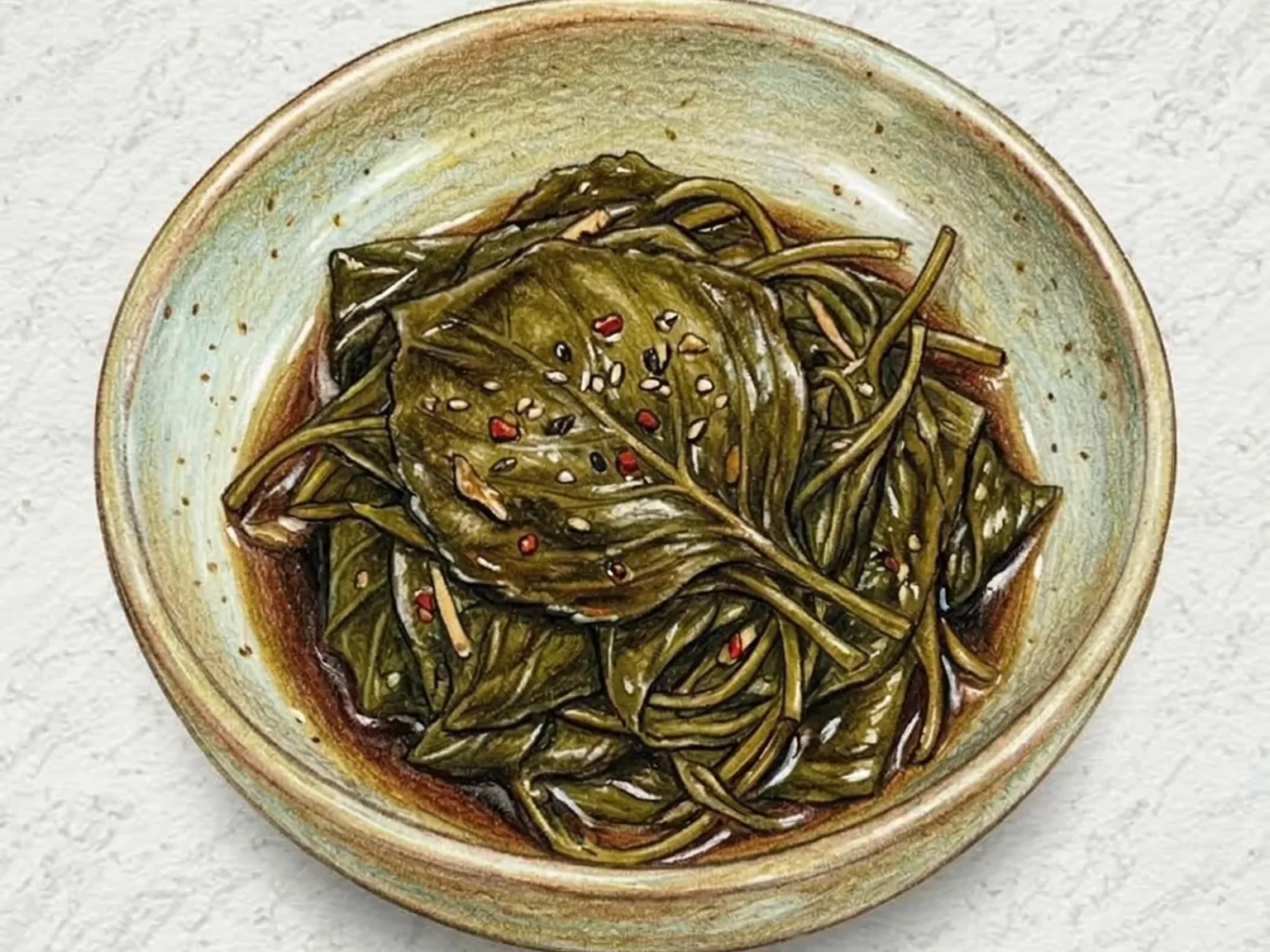
Gochuip jangajji is a Korean soy pickle of pepper leaves, a summer byproduct of chili cultivation that is washed and submerged in a boiled brine of soy sauce, vinegar, and sugar. Unlike the chili fruit itself, pepper leaves carry almost no heat, offering instead a grassy, mildly bitter aroma that blends with the savory-sour brine. Garlic and cheongyang chili contribute a sharp fragrance to the pickling liquid, and the thin leaves absorb the seasoning fully within a single day. Laid over a spoonful of rice and eaten as a wrap, these pickled leaves double as both banchan and ssam in one bite.
Adjust Servings
Instructions
- 1
Wash pepper leaves and dry off excess moisture.
- 2
Slice garlic and chili thinly.
- 3
Layer leaves, garlic, and chili in a jar.
- 4
Boil soy sauce, water, vinegar, and sugar.
- 5
Cool slightly, pour brine into jar, and seal.
- 6
Refrigerate for 3 days before serving.
As an Amazon Associate, we may earn from qualifying purchases.
Tips
Nutrition (per serving)
More Recipes

Korean Soy Pickled Perilla Leaves
Kkaennip jangajji is a Korean soy-pickled perilla leaf side dish prepared by submerging thoroughly dried leaves in a brine of boiled soy sauce, vinegar, and sugar with sliced garlic and cheongyang chili. The perilla's distinctive herbal fragrance deepens when met with the soy's salty umami, and the vinegar sharpens the finish into something clean and bright. Cheongyang chili contributes a lingering warmth at the back of each bite, and garlic adds a pungent undercurrent. Wrapped around a bite of rice, the leaf delivers its full aromatic, savory character in one mouthful - and it keeps refrigerated for over a month, making it one of the most practical banchan to have on hand.

Korean Lotus Root Jangajji
Yeongeun jangajji is a soy-pickled lotus root made by blanching sliced root in vinegar water to prevent discoloration, then soaking it in a hot brine of soy sauce, sugar, peppercorns, and bay leaf. The brine seeps through the root's characteristic holes, distributing a balanced salty-sweet flavor evenly in every bite. Bay leaf tempers the heaviness of the soy base while whole peppercorns add a mild spice undertone. The result is a pickle with a dual texture - simultaneously chewy and crisp - that keeps well for days and works as a lunchbox side or everyday banchan.

Korean Soy-Marinated Soybean Leaves
Kongnip-jangajji is soybean leaves preserved in a seasoned soy brine - one of the two major leaf jangajji traditions alongside perilla leaf (kkaennip) jangajji. Soybean leaves are larger and thicker than perilla leaves, taking longer to absorb the pickling liquid but offering a more substantial chew, with each leaf large enough to wrap around a spoonful of rice. The brine - soy sauce, water, vinegar, and sugar boiled together - must cool completely before pouring over the leaves; hot liquid softens them into a limp state, destroying the desired texture. Garlic cloves, cheongyang chili, and onion slices added to the jar infuse the brine with aromatic complexity during the curing process, producing a more layered flavor than plain soy. A minimum of two days of refrigerated aging is needed for the seasoning to reach the leaf interior, and flipping the layers once daily ensures even penetration. The most common way to eat it is draped over hot steamed rice, ssam-style.

Korean Gomchwi Leaf Jangajji
Gomchwi jangajji is a Korean mountain herb pickle made by submerging gomchwi (ligularia) leaves in a boiled brine of soy sauce, vinegar, and sugar. The broad, thick leaves carry a potent wild-green fragrance that deepens when paired with soy umami, while vinegar keeps the finish clean. Their generous surface area absorbs the brine well, and when draped over rice and eaten as a wrap, the leaf's aroma and salty seasoning soak directly into the grains, creating a self-contained bite that needs no other accompaniment. Garlic and cheongyang chili in the brine add a warm pungency that prevents the mountain herb flavor from becoming one-dimensional.

Korean Soy Pickled Cucumber
Oi jangajji is a Korean soy-pickled cucumber made by slicing cucumbers into one-centimeter rounds, lightly salting them, then packing them into a sterilized jar with garlic cloves and green chilies before pouring over a boiling brine of soy sauce, water, vinegar, and sugar. The hot liquid partially cooks the cucumber surface while the center stays crisp, and two days of cold fermentation lets the sweet-salty-sour brine soak through to the core. The green chilies leave a faint heat at the back of each bite, and whole garlic cloves release their aroma into the brine as they soften. Reboiling and re-pouring the brine once extends the pickle's crunch, making this a practical side dish that keeps well over a week in the refrigerator.

Korean Pickled Garlic Scapes
Maneuljjong-jangajji pickles garlic scapes in a boiled soy-vinegar-sugar brine, sharing the same preservation principle as garlic clove jangajji but using the stalks instead of the bulbs. The scapes are cut to 4 cm lengths, packed tightly in a jar, and doused with the brine while still hot - the heat partially cooks the outer surface, giving each piece a clean snap when bitten, unlike the cold-pour method used for whole garlic jangajji. Whole black peppercorns added to the jar release their spicy aroma into the liquid during aging, adding depth beyond the basic salt-acid profile. Though edible after one day, day three is the sweet spot where the seasoning has penetrated enough while the scapes still retain crunch. Reboiling and repouring the brine once extends the preservation window significantly. These pickled scapes serve as a sharp, vinegary counterpoint to rich meat dishes on the Korean table.