Korean Gochujang Chicken Mayo Rice Bowl
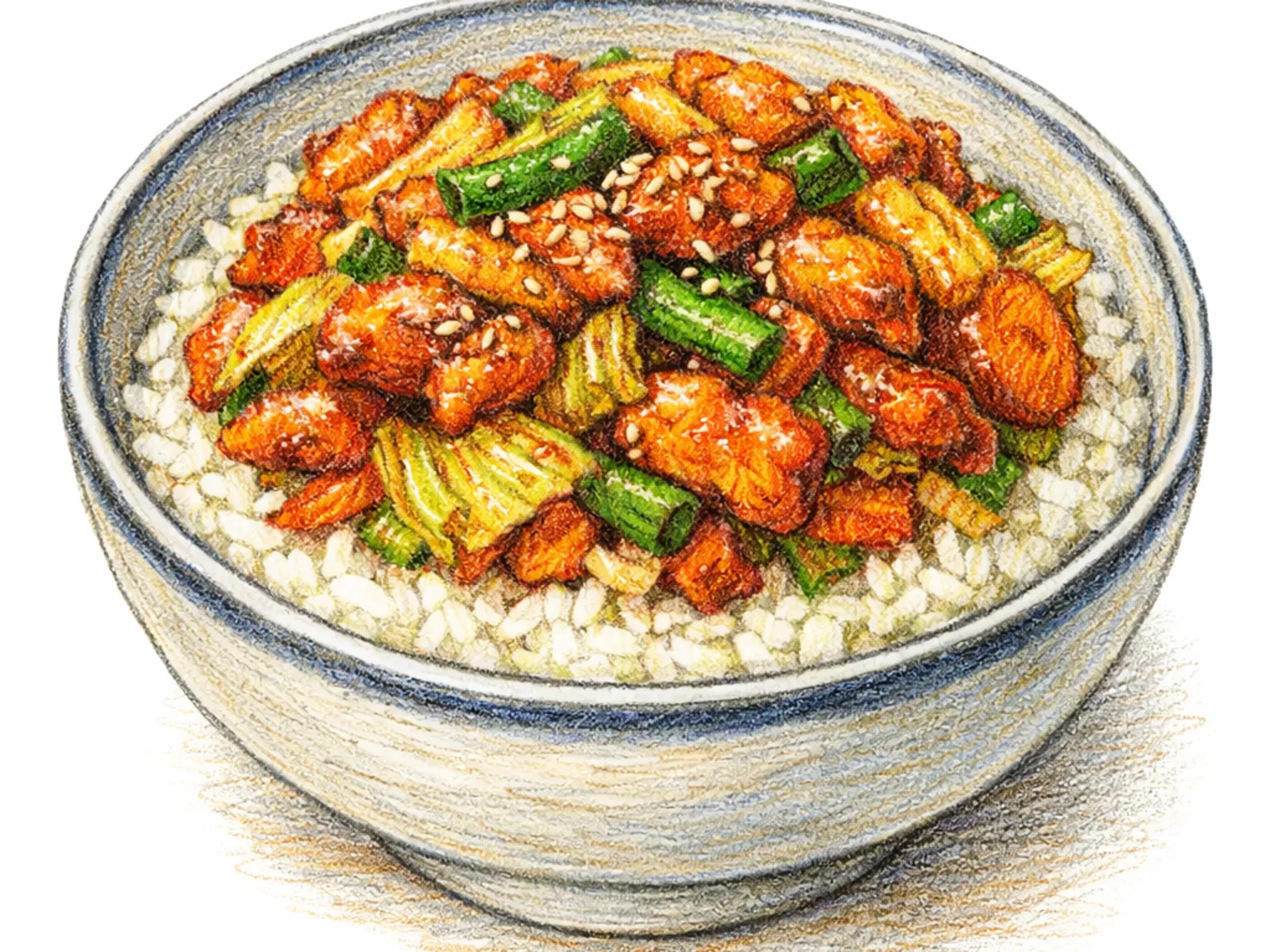
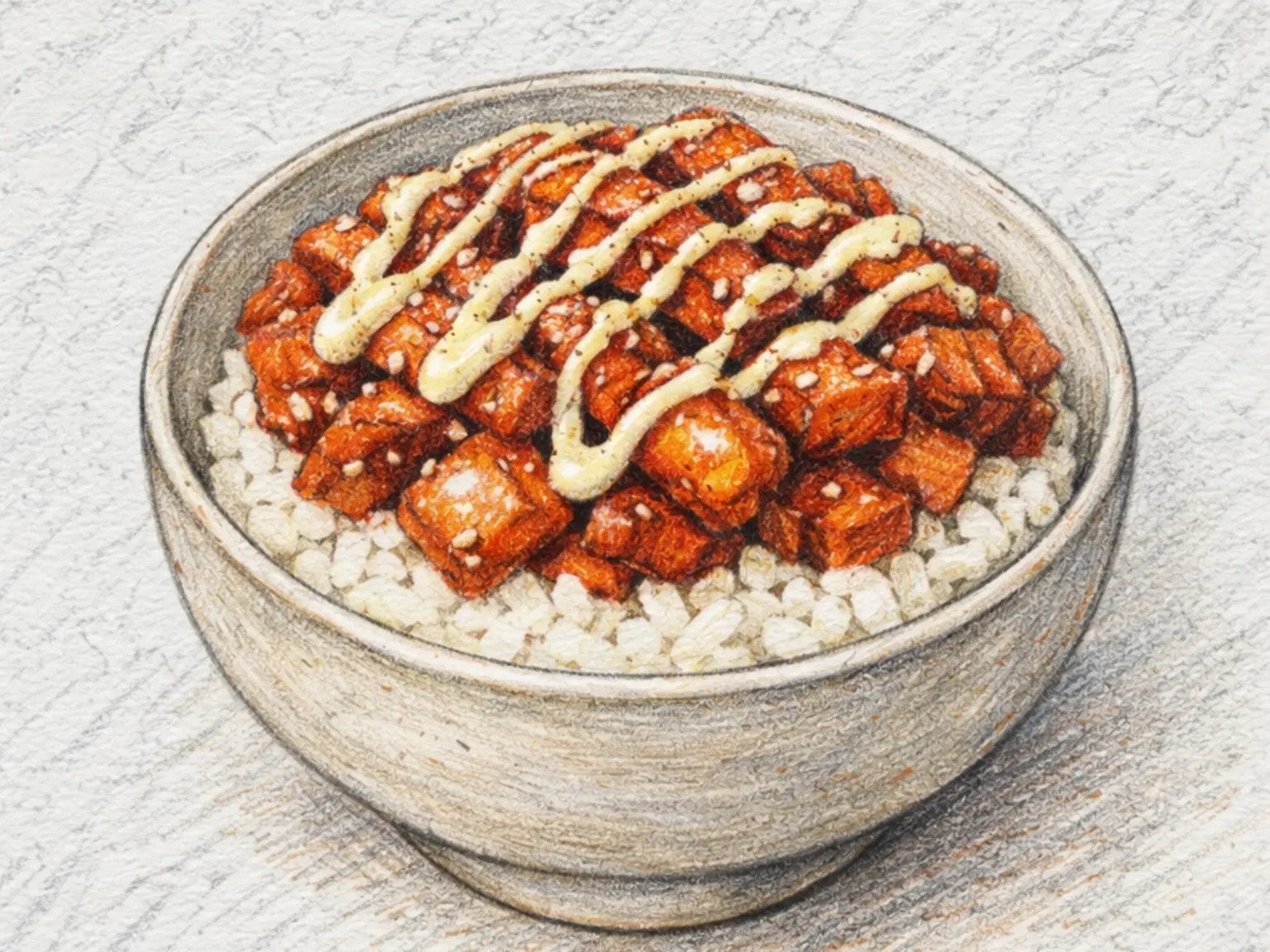
Crispy chicken thigh glazed in gochujang and drizzled with creamy mayo over rice - the ultimate Korean comfort bowl. Bite-sized chicken thigh pieces are stir-fried in a sauce of gochujang, soy sauce, sugar, and garlic until a glossy, spicy-sweet glaze coats every piece. The sauced chicken is piled over warm rice and finished with a zigzag drizzle of mayonnaise, creating a three-way interplay of fermented chili heat, caramelized sweetness, and cool creaminess. Onion cooked alongside the chicken adds a natural sweetness to the sauce, and chopped green onion on top provides a fresh finishing note. Thigh meat holds its moisture better than breast through the high-heat stir-fry, keeping the bowl from drying out.
Adjust Servings
Instructions
- 1
Cut chicken thighs into bite-size pieces, slice the onion, and finely chop the green onion.
- 2
In a bowl, mix gochujang, soy sauce, sugar, and minced garlic to make the sauce.
- 3
Heat oil in a pan over medium heat and stir-fry the chicken for 3–4 minutes until lightly browned.
- 4
Add onion and cook for 2 minutes, then add the sauce and simmer for 4–5 minutes until glazed.
- 5
Place warm rice in bowls, top with the sauced chicken, and drizzle mayonnaise in zigzags.
- 6
Finish with chopped green onion and serve immediately.
As an Amazon Associate, we may earn from qualifying purchases.
Tips
Nutrition (per serving)
More Recipes

Korean Bulgogi Deopbap (Pork Rice Bowl)
Spicy-sweet pork bulgogi piled over rice with aromatic crown daisy greens - a one-bowl Korean dinner ready in 30 minutes. Gochujang-marinated pork shoulder is stir-fried with onion over high heat and finished with a handful of crown daisy greens. The marinade layers gochujang, chili flakes, soy sauce, sugar, and garlic into a sauce that is simultaneously spicy, sweet, and deeply savory. Pork shoulder renders enough fat during cooking to carry the sauce into the rice below, creating a rich base. Crown daisy goes in during the final thirty seconds - just long enough to wilt slightly and release its herbal, almost chrysanthemum-like fragrance, which cuts through the heaviness of the pork and sauce with a green, aromatic brightness. The timing of the ssukgat addition is critical: too early and it turns limp and bitter, too late and the aroma stays locked inside the leaves. The finished bowl needs no accompaniment to feel complete.

Korean Spicy Pork Rice Bowl
Pork shoulder is sliced into strips, marinated in gochujang, chili flakes, soy sauce, garlic, and sugar for ten minutes, then stir-fried over high heat until the edges caramelize. Onion goes in first to build sweetness, and green onion added at the end brings a sharp, fresh bite that cuts through the spicy-sweet glaze. A final drizzle of sesame oil rounds out the aroma. Served over steamed rice, the bold sauce coats every grain, making this a satisfying single-bowl meal that comes together in under thirty minutes.

Korean Soy Glazed Beef Rice Bowl
Sogogi deopbap tops steamed rice with thin-sliced beef and onions cooked in a sweet-soy glaze, served with just enough sauce to soak into the grains. The beef is marinated briefly in a mixture of dark soy sauce, sugar, and minced garlic, which caramelizes quickly in a hot pan. Onion slices cook alongside the beef, their natural sweetness balancing the salty-sweet sauce as they soften. Sesame oil added toward the end leaves a nutty aftertaste that lingers. The key is keeping a small pool of sauce in the pan rather than reducing it completely - that glossy liquid seeps into the rice and makes each spoonful flavorful without needing additional seasoning. A generous crack of black pepper at the end adds a sharp finish.

Korean Cheesy Dakgalbi Rice Bowl
Cheese dakgalbi deopbap takes the beloved Chuncheon-style spicy chicken stir-fry and transforms it into a rice bowl crowned with melted mozzarella. Chicken thigh, marinated in gochujang, chili flakes, soy sauce, and sugar, is stir-fried with rough-cut cabbage and onion until the sauce caramelizes and clings to each piece. The cheese goes on while the pan is still hot, stretching into long, gooey strands that temper the chili heat with each pull. Cabbage retains enough crunch to offset the richness of the cheese and sauce, while the chicken thigh stays moist throughout cooking. The entire dish comes together in about fifteen minutes with ingredients found in most Korean kitchens, making it a reliable option for a solo dinner or late-night meal.

Korean Gochujang Grilled Chicken Legs
Gochujang dak-dari-gui is a Korean gochujang-glazed chicken leg dish where bone-in thighs are marinated in a blend of gochujang, soy sauce, oligosaccharide syrup, minced garlic, cooking wine, and sesame oil, then pan-grilled. Starting skin-side down over medium heat for six minutes renders the fat and builds a crisp base, and covering the pan after flipping steams the meat through before the lid comes off to reduce the sauce into a sticky glaze. The final two minutes on high heat are what transform the dish-the sugars in the marinade caramelize rapidly, concentrating the spicy, salty, and sweet notes into a lacquered coating. Marinating in the refrigerator rather than at room temperature tames any gamey odors and allows the seasoning to penetrate more evenly.

Korean Spicy Pork Stir-fry
Jeyuk-bokkeum is a Korean spicy pork stir-fry where sliced pork is marinated in a blend of gochujang, soy sauce, sugar, and garlic, then wok-tossed with vegetables over high heat. The marinade sinks into the meat, combining chili heat with caramelized sweetness, while onions and scallions release moisture that balances the bold seasoning. Quick cooking at high temperature lets the pork develop a lightly charred exterior that adds another layer of flavor. It is commonly served over rice as a donbap or wrapped in lettuce leaves.