Charim

2686 Korean & World Recipes

2686+ Korean recipes, clean and organized. Ingredients to instructions, all at a glance.

Korean Lettuce Root Kimchi
KimchiHard

Korean Lettuce Root Kimchi

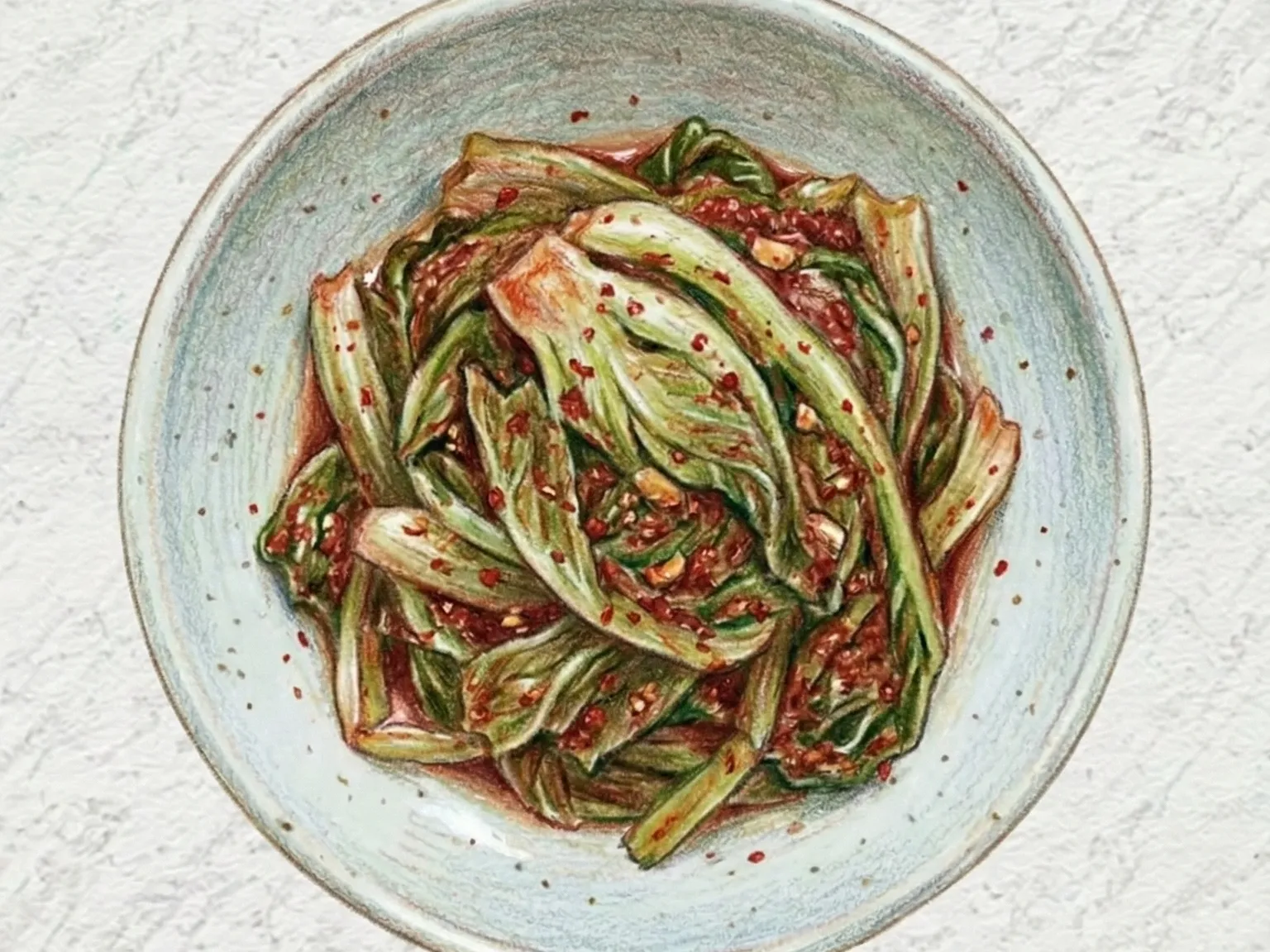
Godeulppaegi kimchi is a seasonal Korean kimchi made from the bitter wild herb godeulppaegi (Korean lettuce root), which is soaked in salted water for about a week to extract most of its sharp bitterness before being dressed in gochugaru, anchovy fish sauce, and glutinous rice paste for fermentation. The extended soak rounds off the bitter edge so that only a pleasant, lingering bitterness remains after fermentation, creating a complex interplay with the lactic acidity. The roots have a chewy, fibrous bite while the leaves turn soft, giving each stalk a dual texture. This is a regional autumn kimchi from the Jeolla and parts of Gyeongsang provinces, traditionally prepared to last through winter.

Prep 60minCook 10min4 servings

Adjust Servings

2servings
servings

Instructions

  1. 1

    Trim herb and soak in salted water for 2 hours to reduce bitterness.

  2. 2

    Rinse under running water and drain.

  3. 3

    Make seasoning with chili flakes, fish sauce, rice paste, and garlic.

  4. 4

    Add scallions and gently toss with the herb.

  5. 5

    Pack and ferment half a day at room temp, then refrigerate.

🛒Shop Ingredients on Amazon

As an Amazon Associate, we may earn from qualifying purchases.

Tips

Control bitterness by adjusting soak time.

Nutrition (per serving)

Calories
52
kcal
Protein
2
g
Carbs
9
g
Fat
1
g

More Recipes

Korean Bitter Herb Kimchi
KimchiHard

Korean Bitter Herb Kimchi

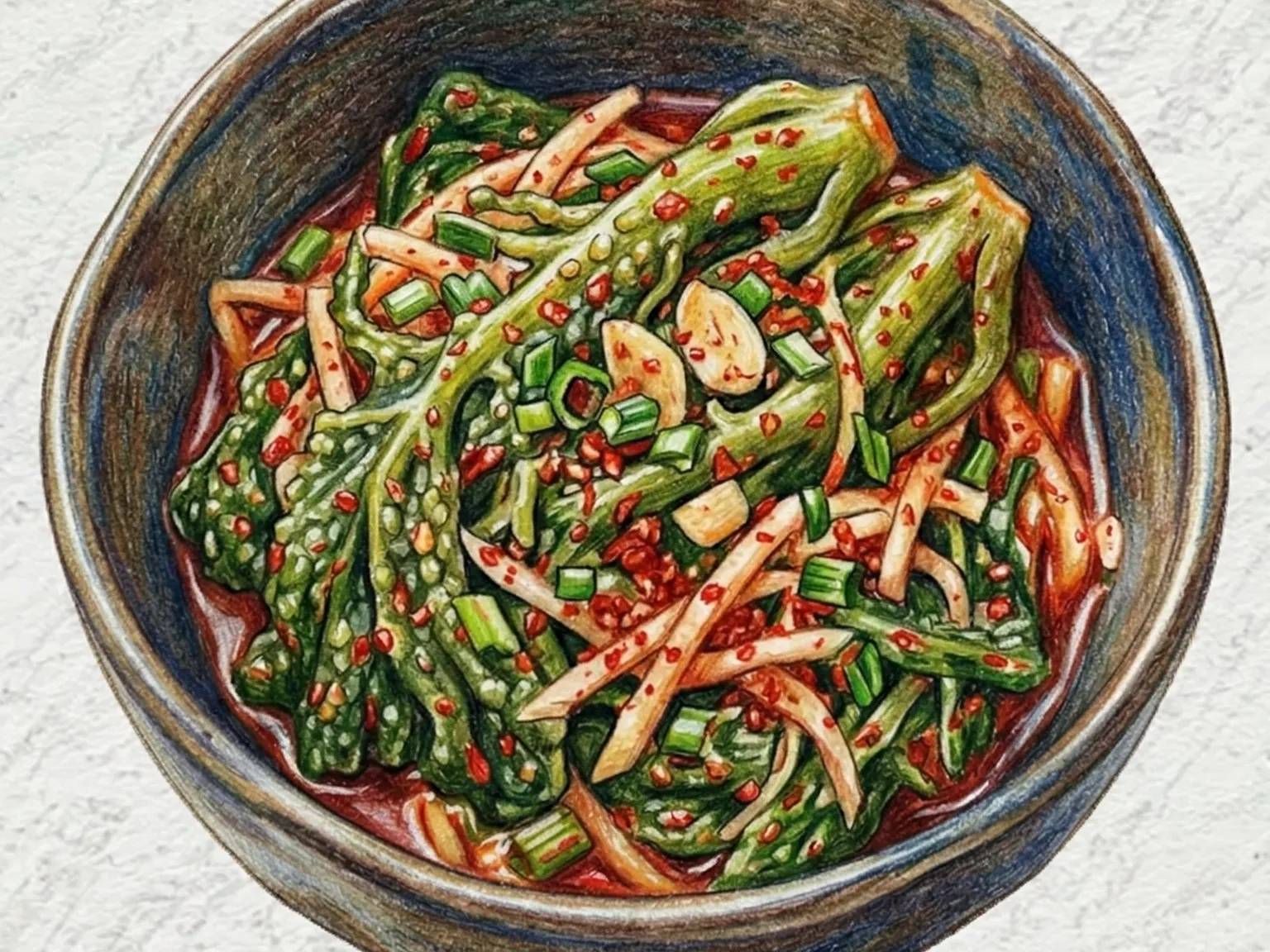
Sseumbagwi kimchi is a traditional Korean fermented side dish made from sseumbagwi, a wild bitter herb harvested in spring. The herb is soaked in cold water for twenty minutes to temper its pronounced bitterness, salted for fifteen minutes, then dressed in a thick paste of gochugaru, sand lance fish sauce, minced garlic, ginger, sweet rice paste, and plum syrup alongside scallion pieces. The rice paste gives the seasoning enough body to cling to the thin stems and leaves, and the plum syrup smooths out both the bitterness and the salt's sharpness. Five hours of room-temperature fermentation followed by refrigeration allows lactic acid to develop gradually, layering a tangy depth over the herb's inherent bitter-green character. The flavor is most complex around day three. If the bitterness is too strong, an additional change of soaking water before seasoning brings it under control.

🎉 Special Occasion🍱 Lunchbox
Prep 45minCook 5min4 servings
Korean Turnip Kimchi (Diced Gochugaru Water Fermented)
KimchiEasy

Korean Turnip Kimchi (Diced Gochugaru Water Fermented)

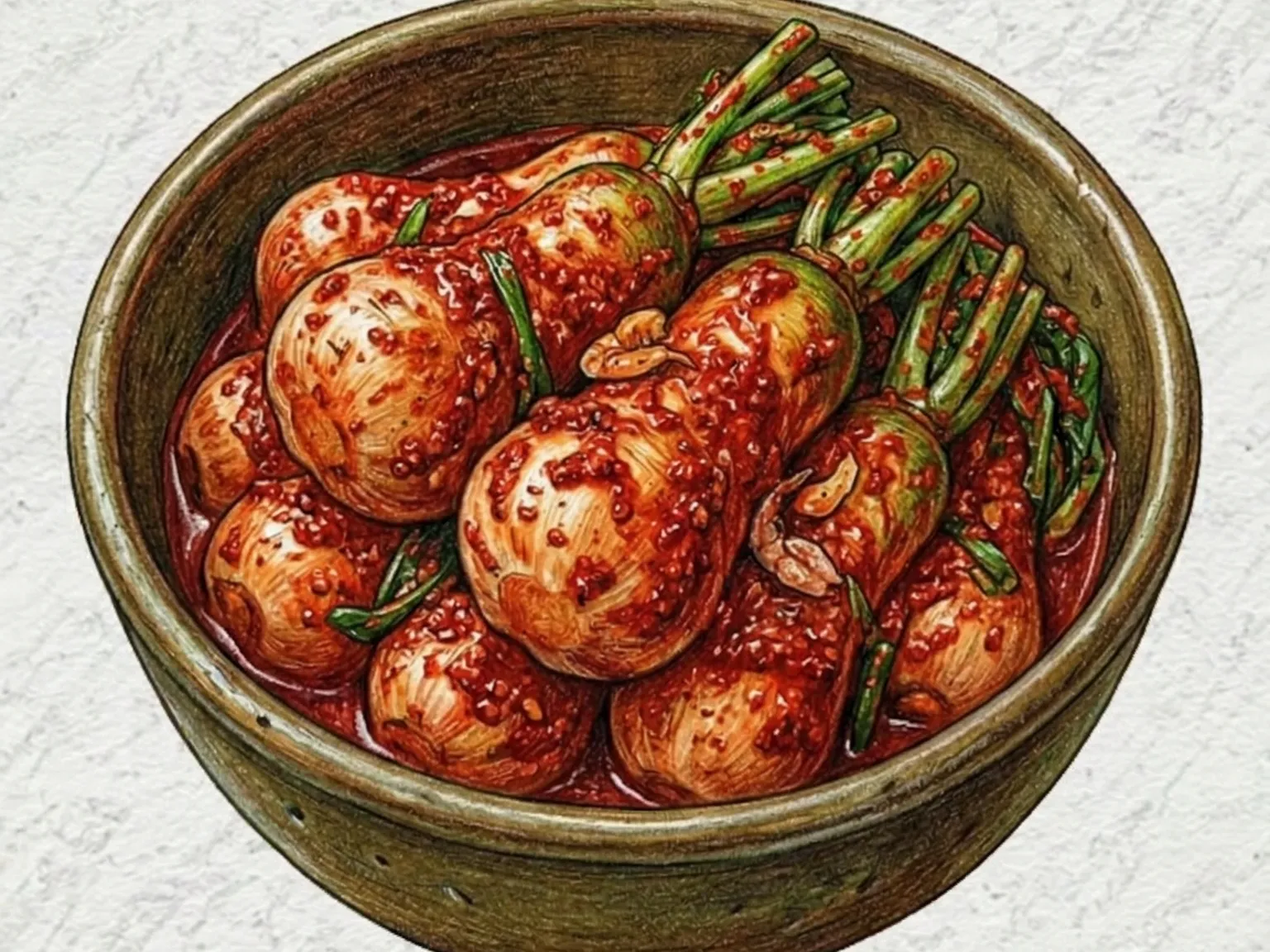
Sunmu kimchi is a brined kimchi made with diced turnips seasoned in chili flakes, fish sauce, garlic, and ginger juice, then submerged in water to ferment with its own liquid. Turnips have a naturally higher sweetness and denser flesh than Korean radish, so they stay firm and crunchy even after fermentation. Scallions woven through the batch add an aromatic layer that rounds out the spice. One day at room temperature followed by two days of refrigeration produces a cool, tangy brine that is refreshing to drink on its own. Adding turnip greens, if available, deepens both the color and the fragrance.

🏠 Everyday🍱 Lunchbox
Prep 30minCook 10min4 servings
Korean Radish Greens Kimchi
KimchiEasy

Korean Radish Greens Kimchi

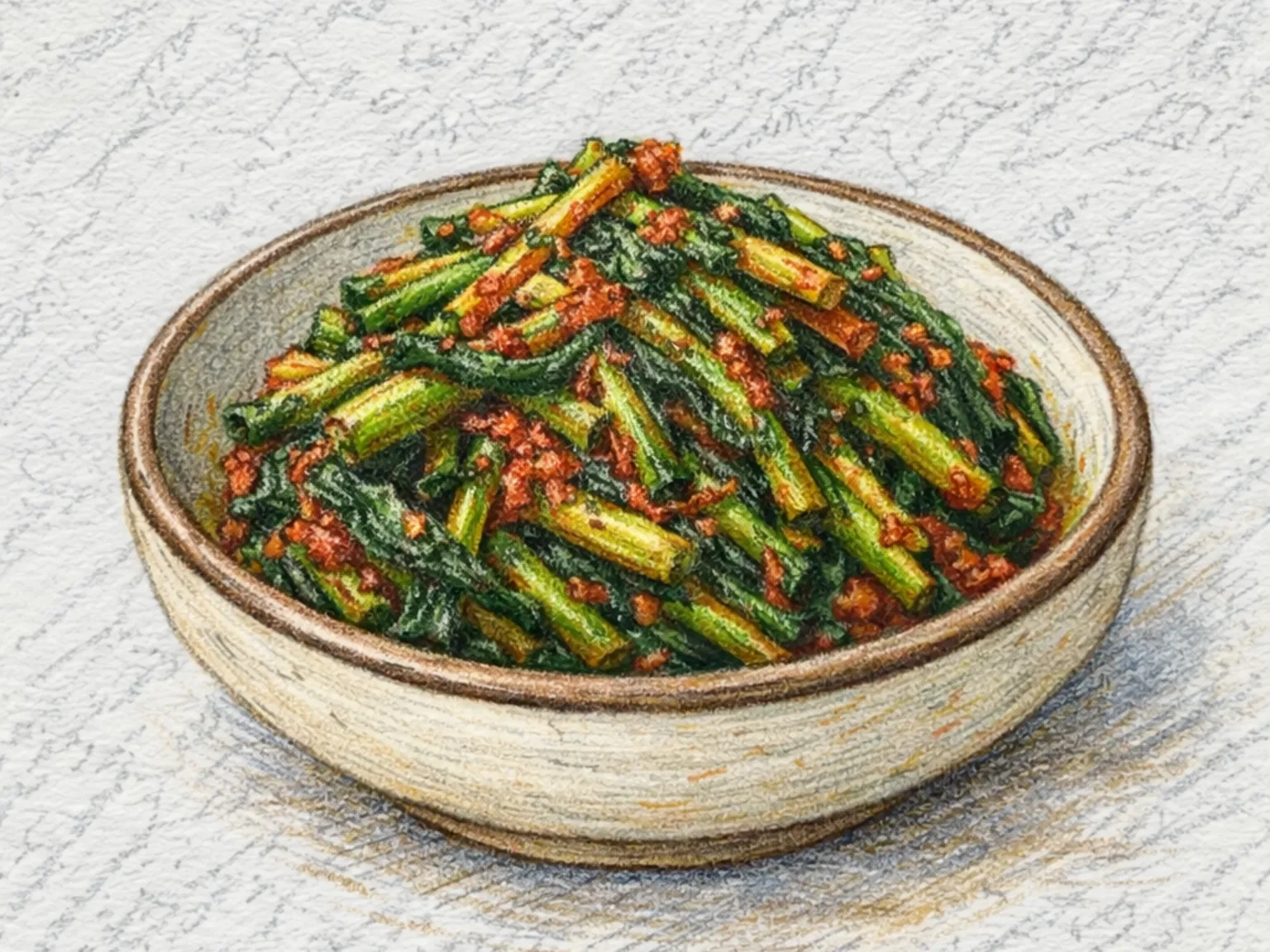
Mucheong kimchi is a Korean radish greens kimchi made by trimming tough parts, cutting greens into 5 cm pieces, brining in coarse salt, then dressing them in a paste of sweet rice flour, gochugaru, anchovy fish sauce, garlic, ginger, and onion. The fibrous stems absorb the seasoning deeply while retaining a substantial chew, and the rice paste acts as a binding agent that keeps the coating even throughout fermentation. Anchovy fish sauce contributes a deep seafood umami, and onion buffers the chili heat with natural sweetness. Beyond serving as a standalone side dish, this kimchi adds concentrated flavor when torn and stirred into siraegi soup or doenjang jjigae.

🍱 Lunchbox
Prep 35minCook 5min4 servings
Korean Pepper Leaf Kimchi
KimchiMedium

Korean Pepper Leaf Kimchi

Gochuip kimchi is a Korean pepper leaf kimchi where the leaves are briefly blanched to reduce volume and remove bitterness, then tossed with gochugaru, anchovy fish sauce, garlic, and glutinous rice paste for about a day of room-temperature fermentation. Blanching softens the leaves and allows the seasoning to cling evenly to their surfaces. The rice paste acts as both a binding agent and a fermentation accelerator, promoting lactic acid activity even in the short curing window. Beneath the spicy coating, the pepper leaves contribute a subtle green, herbaceous note that distinguishes this from standard napa kimchi, making it a distinctive summer preparation.

🍱 Lunchbox
Prep 25minCook 8min4 servings
Korean Seasoned Bitter Lettuce
Side dishesMedium

Korean Seasoned Bitter Lettuce

Wild sseumbagui, a bitter green foraged in Korean spring fields, is dressed in a gochujang vinaigrette that transforms its sharp bitterness into a layered, complex side dish. The intrinsic bitterness of the leaves works as a palate cleanser, and the gochujang's heat and vinegar's acidity wrap around it to build depth rather than mask it. Sugar smooths the rough edges of the combined flavors, while a drizzle of sesame oil closes each bite with a warm, nutty finish. Soaking the greens in salt water draws out enough bitterness to make them approachable without erasing the vegetal character that defines this namul. Over-soaking strips the personality entirely, leaving a flat, unremarkable green. Garlic folded into the dressing adds a pungent undercurrent, and a gentle tossing motion keeps the fragile leaves intact. The flavor progresses from bitter opening to spicy-sour middle to a sesame-scented close, a sequence that captures the taste of Korean spring.

🏠 Everyday
Prep 30min4 servings
Seasoned Korean Wild Lettuce
Side dishesEasy

Seasoned Korean Wild Lettuce

A bold, bitter-meets-spicy Korean side dish that wakes up the entire meal - foraged wild lettuce tossed in a fiery gochujang-vinegar dressing. Godeulppaegi (Ixeris dentata) is blanched briefly, then soaked in cold water for at least thirty minutes to tame its sharp bitterness. Dressed in gochujang, gochugaru, vinegar, sugar, garlic, and sesame oil, the remaining edge transforms into a complex, layered flavor. In season from spring through early summer, this is a prized banchan at rural markets across southern Korea.

🏠 Everyday🍱 Lunchbox
Prep 20minCook 7min4 servings
More Kimchi