Vietnamese Lotus Stem Shrimp Salad
Salads Medium

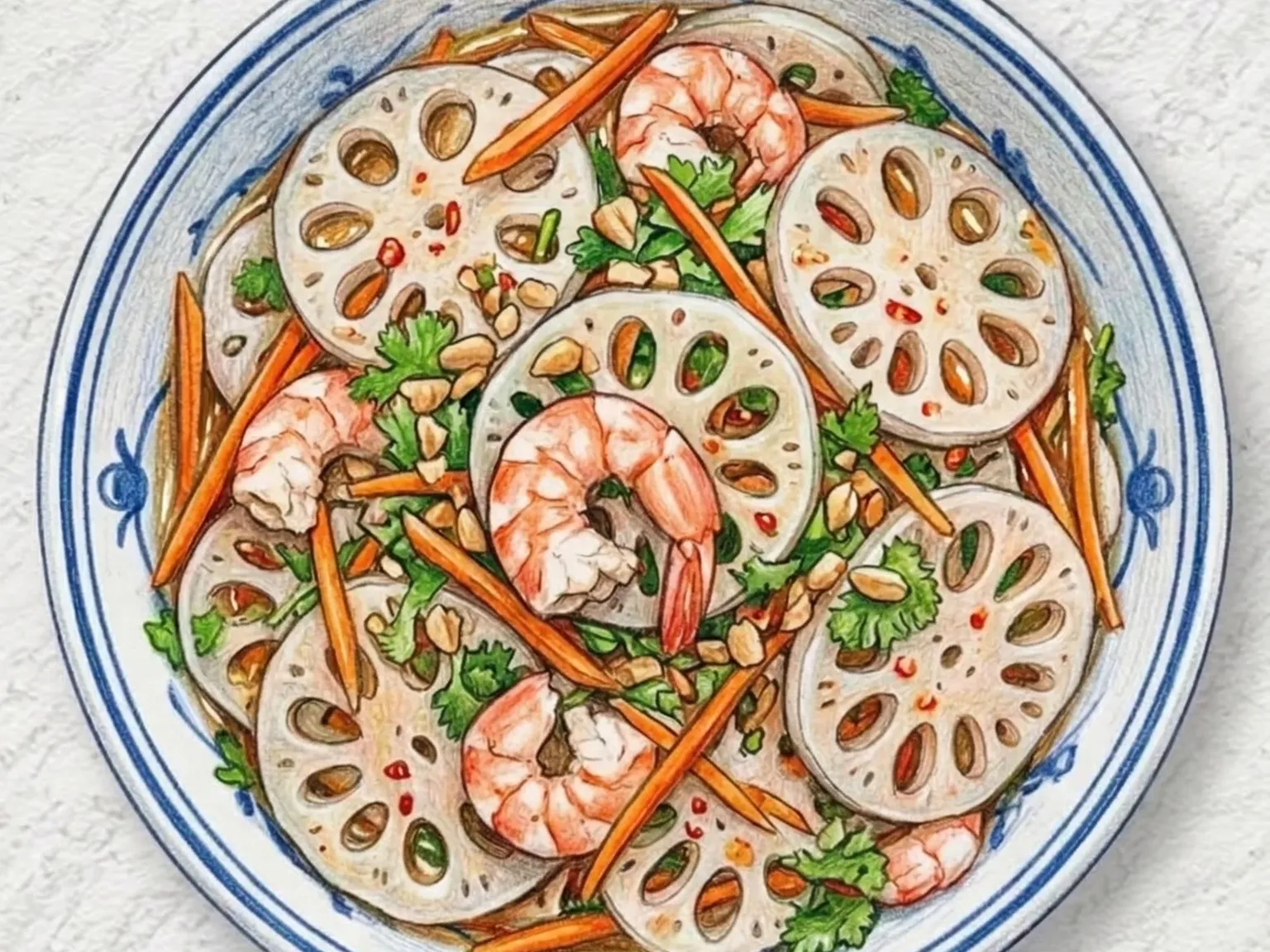
Vietnamese Lotus Stem Shrimp Salad

Quick answer

Goi ngo sen is a traditional Vietnamese salad of thinly sliced lotus stem, blanched shrimp halved lengthwise, julienned carrot, and cilantro dressed in a fish sauce and l...

What makes this special

  • Vietnamese Lotus Stem Shrimp Salad offers a characteristic crisp snap and a classic fish sauce.
  • Lotus stem soaked in vinegar water for 10 minutes removes astringency; skipping leaves a rough finish
  • Shrimp split lengthwise exposes the flesh so fish sauce dressing penetrates deeply
Total time
25 min
Level
Medium
Servings
2 servings
Ingredients
7
Calories
220 kcal
Protein
22 g

Key ingredients

lotus stemshrimpcarrotcilantrofish sauce

Core cooking flow

  1. 1 Slice 180 g lotus stem about 3 mm thick, then soak it in 500 ml water mixed...
  2. 2 Bring a pot of water to a full boil, add 180 g shrimp, and blanch for 2 to 3 minutes.
  3. 3 Cut the cooled shrimp in half lengthwise to expose more surface for the dressing.

Goi ngo sen is a traditional Vietnamese salad of thinly sliced lotus stem, blanched shrimp halved lengthwise, julienned carrot, and cilantro dressed in a fish sauce and lime vinaigrette. Soaking the lotus stem in diluted vinegar water for ten minutes is not optional: it removes the astringent edge while keeping the crisp, snapping texture that defines the dish, and skipping this step leaves a rough, bitter aftertaste no amount of good dressing can fix. Blanching the shrimp for two to three minutes and splitting them open lengthwise exposes more cut surface for the dressing to penetrate. The dressing combines fish sauce, lime juice, and sugar in a ratio that hits salty, sour, and sweet simultaneously, making the natural umami of the seafood stand out rather than recede. Letting the salad rest for at least five minutes after tossing gives the dressing time to soak into each ingredient and allows the flavors to settle into one another.

Prep 20min Cook 5min 2 servings
Recipes by ingredient → shrimp carrot fish sauce

Instructions

Read the steps as a cooking flow: prep, heat, seasoning, doneness control, and finish.

6 steps
  1. 1
    Prep

    Slice 180 g lotus stem about 3 mm thick, then soak it in 500 ml water mixed with 1 tablespoon vinegar for 10 minutes.

    Do not soak longer, then rinse well and drain so it stays crisp.

  2. 2
    Heat

    Bring a pot of water to a full boil, add 180 g shrimp, and blanch for 2 to 3 minutes.

    When the shrimp turn pink and firm, lift them out immediately and cool them in cold water.

  3. 3
    Prep

    Cut the cooled shrimp in half lengthwise to expose more surface for the dressing.

    Julienne 60 g carrot into fine 1 mm strips, and cut 15 g cilantro, stems included, into 2 cm pieces.

  4. 4
    Season

    In a small bowl, combine 1.5 tablespoons fish sauce, 2 tablespoons lime juice, and 1 tablespoon sugar.

    Stir until no sugar grains remain, so the dressing coats evenly instead of pooling at the bottom.

  5. 5
    Step

    Place the lotus stem, shrimp, and carrot in a large bowl, then pour in only half of the dressing first.

    Toss gently from the bottom upward so the lotus stem stays crisp and the shrimp pieces do not tear.

  6. 6
    Finish

    Add the remaining dressing and cilantro, then toss once more and let the salad stand for 5 minutes.

    Serve when the lotus stem is still snappy and the cut sides of the shrimp taste lightly seasoned.

After the steps

Pick a recipe that fits this dish.

Continue with shared ingredients, meal pairings, or a similar method.

Recipes That Go Well With This

More Salads →

Based on shared ingredients and meal pairing

Vietnamese Chicken Salad
Shared ingredient: carrot Asian

Vietnamese Chicken Salad

Goi ga is a Vietnamese chicken salad served throughout the country as a beer snack and appetizer, one of the most practical dishes the cuisine has for hot weather when something cool, sharp, and light is what the body wants. A whole chicken is poached in water until just cooked through, then cooled completely before being shredded by hand along the grain. Hand-shredding rather than knife-cutting matters here: the torn fibers create irregular surfaces with greater surface area, so the dressing clings to the meat rather than pooling at the bottom of the bowl, and the textured chew is noticeably different from cleanly sliced chicken. Shredded cabbage, onion, and carrot form the vegetable base, combined with Vietnamese coriander known as rau ram, cilantro, and fresh mint. The dressing is fish sauce, fresh lime juice, sugar, sliced fresh chili, and minced garlic, whisked together until the sugar dissolves. The dressing acidity pulls the chicken out of its mildness, and the fish sauce depth meets the watery crunch of the vegetables to produce a balance that reads as light but not bland. Fried shallots and crushed roasted peanuts scattered over the top add a crunchy layer that makes the salad feel complete rather than spare. At bia hoi, the informal fresh-beer street bars found across Vietnam, goi ga is among the first dishes ordered and typically arrives at the table before the first cold glass is poured.

Vietnamese Grilled Pork Vermicelli
Shared ingredient: carrot Noodles

Vietnamese Grilled Pork Vermicelli

Charcoal-grilled pork is placed over cold rice vermicelli and eaten mixed with nuoc cham in this southern Vietnamese noodle bowl. The pork marinates in fish sauce, sugar, and garlic before grilling, so direct heat caramelizes the surface sugars into a deep brown crust while the interior holds its moisture. Fresh mint, cilantro, and coarsely crushed roasted peanuts are scattered on top, layering herbal fragrance with crunch. Nuoc cham, built from lime juice, sugar, fish sauce, and chili, is the sweet-sour-salty binding agent that pulls together the warm meat, cool noodles, and raw herbs into a single coherent bowl. The temperature contrast between hot pork and chilled vermicelli is central to the eating experience. Pickled daikon and carrot add a final note of acidity that keeps each bite clean. No broth is needed; the bowl is filling and bright.

Vietnamese Beef Pho
Serve together Western

Vietnamese Beef Pho

Vietnamese beef pho begins with a broth made by simmering beef bones for eight hours or more to extract a clear yet deeply flavored stock. The defining step is dry-toasting whole spices - star anise, cinnamon sticks, and cloves - in a pan until fragrant, then charring halved onion and ginger over open flame to develop smoky sweetness before adding them to the pot. Skimming impurities from the surface throughout the cooking process is essential for maintaining the broth's signature clarity and golden transparency. Blanched rice noodles are placed in a bowl with paper-thin slices of raw beef on top, and the boiling broth is poured over to partially cook the meat, leaving it tender and faintly pink. Fish sauce adjusts the salinity, and a plate of fresh bean sprouts, lime wedges, Thai basil, and sliced chili allows each diner to customize their bowl.

Vietnamese Fresh Spring Rolls
Similar recipe Asian

Vietnamese Fresh Spring Rolls

Goi cuon, Vietnamese fresh spring rolls, are an uncooked hand-assembled dish from southern Vietnam. A sheet of rice paper softened in water serves as the wrapper for poached shrimp, sliced pork, rice vermicelli, lettuce, mint, cilantro, and garlic chives, all rolled tightly into a compact cylinder. Because the wrapper is translucent, the pink shrimp and bright herbs are visible through the exterior before the first bite, and that visual layer is part of the appeal. Two dipping sauces are standard: a thick peanut-hoisin blend whose richness suits the fatty pork, and nuoc cham, a light bright mixture of fish sauce, lime juice, sugar, and chili that works against the springy shrimp. Inside each roll, four distinct textures come together - the chewy rice paper, slippery vermicelli, firm shrimp, and leafy herbs - and none of them would work the same way if cooked. The dish requires no heat source to prepare, yet the balance of protein, starch, and fresh aromatics makes it nutritionally complete as a light meal. In Ho Chi Minh City, fresh spring rolls are sold from street carts alongside more elaborate restaurant preparations, and serving them at home means assembling at the table together, a format that brings a communal rhythm to the meal that plated dishes do not.

Serve with this

Korean Grilled Deodeok Root
Grilled Medium

Korean Grilled Deodeok Root

Deodeok-gui is a traditional Korean mountain vegetable dish where peeled deodeok roots are pounded flat with a mallet, coated in a paste of gochujang, gochugaru, honey, sesame oil, and garlic, then grilled over high heat. The pounding step is critical: it breaks down the tough fibers so the seasoning absorbs evenly and the root develops a pleasant chewiness instead of remaining stringy. Soaking the peeled deodeok in lightly salted water for about thirty minutes before pounding draws out the sharpest bitterness, leaving only the characteristic mellow, slightly medicinal aroma the root is known for. That bittersweet quality sits in balance between the fermented spice of gochujang and the sweetness of honey. Quick grilling at high temperature chars the glaze just enough to add smokiness while keeping the interior moist; applying the seasoning paste in two stages during grilling builds a thicker, glossier layer on the surface. Toasted sesame seeds scattered on top contribute nuttiness that complements the wild herb's earthy, resinous character.

🍺 Bar Snacks 🏠 Everyday
Prep 20min Cook 10min 2 servings
Doenjang Clam Spinach Orzo
Pasta Medium

Doenjang Clam Spinach Orzo

Doenjang clam spinach orzo is a one-bowl pasta built by cooking orzo in doenjang-seasoned vegetable stock alongside clams in a method borrowed directly from risotto technique. The clams are first purged in salt water to remove sand, then steamed open in white wine so they release their briny cooking liquid into the pan. That liquid merges with the already-present fermented depth of doenjang to form a layered savory base that carries the pasta from the very first minute of cooking. Toasting the orzo in butter or oil before adding any liquid coats the starch on each grain, a step that slows its release and produces a consistently creamy sauce by the end rather than a gluey mass or a watery broth. The stock goes in two or three additions rather than all at once, each addition added only once the previous one has been absorbed, and the pasta is stirred throughout so the released starch works into the liquid rather than sinking to the bottom. Spinach added in the final thirty to sixty seconds of cooking wilts just enough to turn tender without losing its bright green color or dissolving into the sauce. A knob of cold butter stirred in off heat as the finishing touch emulsifies into the sauce, adding a glossy sheen and a rounded, buttery richness that ties all the flavors together.

🥗 Light & Healthy 🏠 Everyday
Prep 12min Cook 18min 2 servings

Similar recipes

Banh Xeo (Vietnamese Sizzling Turmeric Rice Crepe with Shrimp)
Asian Medium

Banh Xeo (Vietnamese Sizzling Turmeric Rice Crepe with Shrimp)

Banh xeo takes its name from the sizzling sound the batter makes when it hits a hot, oiled pan. A thin pour of rice flour, coconut milk, and turmeric crisps into a lacy, golden shell with a shatteringly crisp edge. Shrimp, sliced pork, and bean sprouts fill one half before the crepe folds over. In southern Vietnam, banh xeo are plate-sized and served with a tall pile of lettuce, fresh herbs, and pickled carrots. How you eat matters as much as how it is cooked: tear off a piece, wrap it in a lettuce leaf with mint and perilla, dip in nuoc cham, and eat in one bite. The contrast between the hot, oily crunch of the crepe and the cool, raw freshness of the herbs is what makes this dish worth eating. Northern versions are smaller and more compact, but the principle remains the same.

🎉 Special Occasion
Prep 20min Cook 18min 2 servings
Banh Beo (Hue Steamed Rice Cakes with Shrimp and Scallion Oil)
Asian Medium

Banh Beo (Hue Steamed Rice Cakes with Shrimp and Scallion Oil)

Banh beo comes from Hue, the old imperial capital of central Vietnam, and it is served as a snack on tiny saucer-shaped plates, each holding a single steamed rice cake. A thin rice flour batter is poured into each dish and steamed until it sets into a soft, slightly sticky disc - translucent and thin at the edges, opaque and a little thicker at the center. The topping formula is minimal and exact: dried shrimp ground to a coarse, fragrant powder, crispy deep-fried shallots, and scallion oil drizzled into the concave surface of the rice cake so it pools rather than runs off. The dipping sauce is nuoc cham - fish sauce, lime, sugar, and chili balanced into a sweet-sour-salty liquid that pulls everything together. Eating banh beo requires scraping each small cake off its plate with a flat spoon, one at a time, in a slow and deliberate rhythm that has become part of the experience. The dish traces back to Hue's imperial court cuisine, and the restrained, precise presentation reflects that origin.

🎉 Special Occasion 🥗 Light & Healthy
Prep 25min Cook 20min 4 servings
Bun Rieu (Vietnamese Crab and Pork Tomato Noodle Soup)
Asian Hard

Bun Rieu (Vietnamese Crab and Pork Tomato Noodle Soup)

Bun rieu is a Vietnamese noodle soup from the north built on two unconventional foundations: freshwater paddy crabs and fermented shrimp paste. Together they produce a broth of unusual complexity that is simultaneously sweet, savory, and funky in ways that fish-sauce-based soups are not. Small river crabs are pounded whole, shell and all, in a mortar, then mixed with water and strained through a sieve to extract a turbid, intensely crab-scented liquid. This liquid is heated gently over low flame until the crab proteins coagulate into a soft, custard-like mass that floats to the surface, forming the crab cake that defines the dish. Tomatoes are added to the simmering broth and break down over time, tinting it red and contributing a fruity acidity that balances the crab richness. Mam tom, the fermented shrimp paste, is kept tableside and stirred in individually according to each diner's tolerance for pungency. A single spoonful transforms the broth into something considerably more intense and complex. Rice vermicelli provides a neutral base, while fried tofu puffs absorb broth during cooking and release it in each bite. Morning glory greens add a vegetable counterpoint. In Hanoi, bun rieu vendors typically specialize in this one soup, ladling hundreds of bowls from a single pot each morning before selling out by noon.

🎉 Special Occasion 🌙 Late Night
Prep 25min Cook 40min 4 servings

Tips

Do not over-soak lotus stem; around 10 minutes is ideal.
Chicken breast works well as a substitute for shrimp.

Nutrition (per serving)

Calories
220
kcal
Protein
22
g
Carbs
18
g
Fat
5
g