Korean Thistle and Mackerel Pot Rice
Quick answer
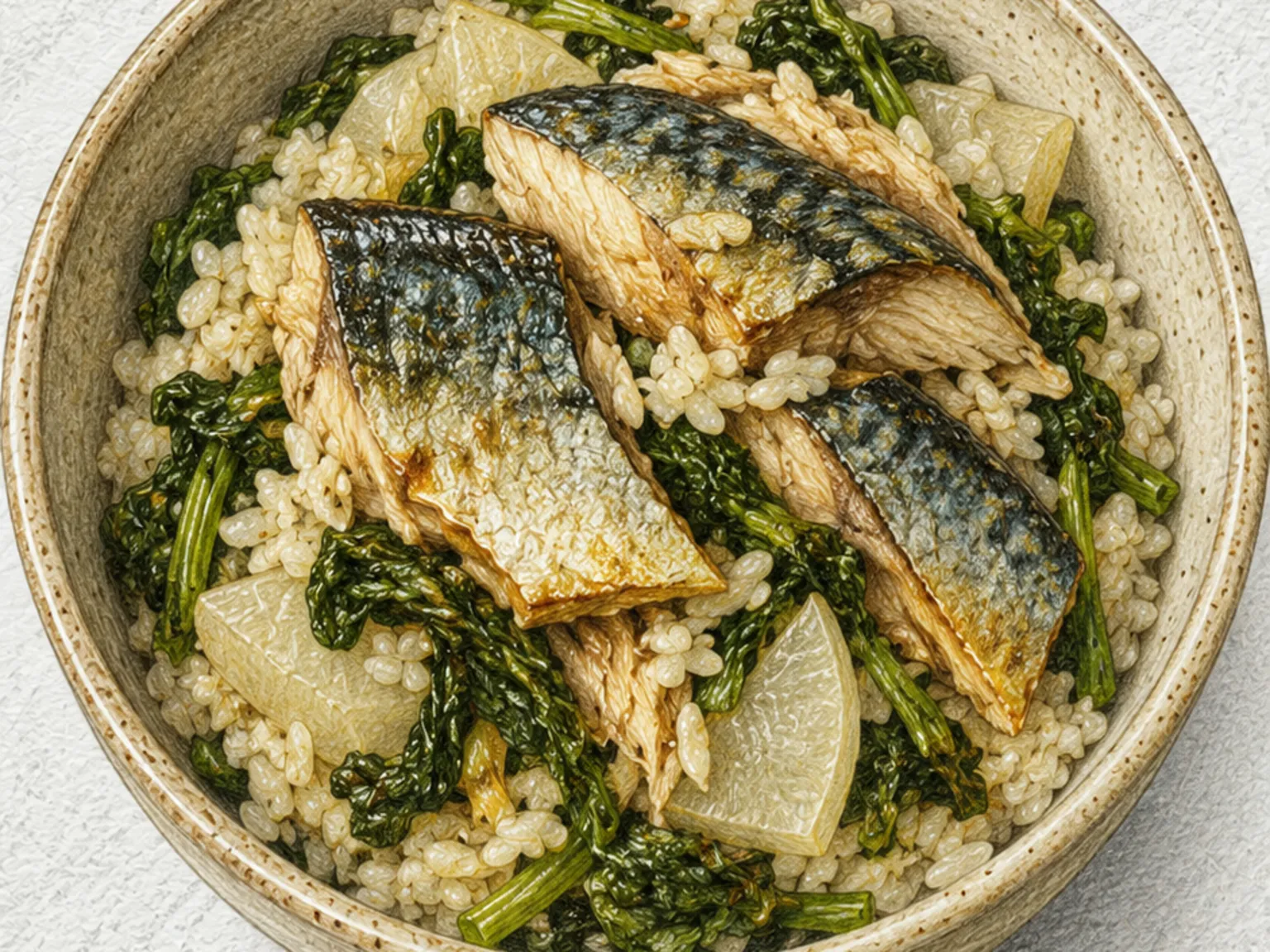
Gondre mackerel sotbap begins by stir-frying thinly sliced radish in sesame oil to build a savory base, then soaked rice and squeezed gondre thistle greens are added befo...
What makes this special
- Gondre godeungeo sotbap steams ginger-mackerel and thistle greens for a savory pot-cooked meal.
- Gondre herbal scent and mackerel umami steep into every grain together during resting
- Mackerel placed skin-side up keeps the flesh from breaking apart
Key ingredients
Core cooking flow
- 1 Wash 2 cups of rice and soak in cold water for 30 minutes.
- 2 Cut 150g of mackerel fillet into bite-sized pieces, sprinkle with 1 tablespo...
- 3 Heat 1 teaspoon of sesame oil in the pot and stir-fry 50g of thinly sliced r...
Gondre mackerel sotbap begins by stir-frying thinly sliced radish in sesame oil to build a savory base, then soaked rice and squeezed gondre thistle greens are added before a mackerel fillet marinated in cooking wine and ginger juice is placed skin-side up on top. The pot is covered and cooked over low heat for fourteen minutes, followed by five minutes of resting off the heat. During that resting period, the earthy, slightly smoky aroma of gondre and the concentrated umami of the mackerel seep into each grain of rice without further stirring. Keeping the fish skin-side up protects the flesh from breaking apart during cooking and prevents the pot from becoming cloudy with loose pieces. The radish layer at the bottom absorbs moisture and guards against sticking while contributing its own mild sweetness to the rice underneath. Before eating, a drizzle of soy sauce is poured over the opened pot and the contents are tossed together lightly, bringing the mountain-foraged greens and the sea fish into a unified, quietly complex bowl. The scorched rice crust that forms on the bottom of the pot is steeped in hot water to make nurungji tea.
Instructions
Read the steps as a cooking flow: prep, heat, seasoning, doneness control, and finish.
- 1Heat
Wash 2 cups of rice and soak in cold water for 30 minutes.
Blanch 25g of dried gondre greens in boiling water for 5 minutes, rinse in cold water, squeeze firmly to remove all moisture, and chop finely.
- 2Control
Cut 150g of mackerel fillet into bite-sized pieces, sprinkle with 1 tablespoon cooking wine and 1/2 teaspoon ginger juice, and marinate for 10 minutes to reduce the fishy smell.
- 3Heat
Heat 1 teaspoon of sesame oil in the pot and stir-fry 50g of thinly sliced radish for 1 minute until fragrant.
When the radish turns translucent, add the soaked rice and fry for 1 more minute to coat with oil.
- 4Control
Add the gondre and 2 cups of water, mix well, then place the marinated mackerel pieces on the very top.
Bring to a boil over medium heat, then reduce to low once it starts to bubble.
- 5Finish
Cover and cook over low heat for 14 minutes.
Turn off the heat and keep the lid on for 5 minutes so the steam finishes cooking the center of the mackerel pieces.
- 6Finish
Open the lid and drizzle 1 teaspoon of soy sauce for color.
Gently fold the rice and gondre together with a paddle, taking care not to break apart the mackerel pieces. Serve.
After the steps
Pick a recipe that fits this dish.
Continue with shared ingredients, meal pairings, or a similar method.
Recipes That Go Well With This
More Rice →Based on shared ingredients and meal pairing
Korean Thistle Greens & Mackerel Stir-fry
Gondre godeungeo bokkeum pairs pan-seared mackerel with blanched gondre thistle greens in a gochujang-soy stir-fry. The mackerel is first marinated briefly in ginger juice to reduce any sharpness, then seared on both sides until a firm, golden crust forms. That outer layer keeps the fish intact during the final toss with the greens. Gondre is pre-seasoned in perilla oil and garlic to draw out its earthy, herbal fragrance before hitting the pan, and squeezing out the excess moisture is essential so the sauce stays concentrated rather than watery. The gochujang-soy combination brings heat, depth, and a subtle sweetness that bridges the rich umami of the fatty fish and the grassy character of the greens. Gondre from the Gangwon-do highlands has a mild, nutty quality once blanched that holds its own alongside oily blue-backed fish. The dish works equally well as a rice accompaniment or a drinking snack.
Korean Dureup Pot Rice (Spring Angelica Shoot Pot Rice)
Durup sotbap is a Korean spring pot rice centered on dureup, the young shoots of the Aralia elata tree that appear for only a few weeks between late March and late April. During this narrow season, the shoots carry a pleasantly bitter, faintly woodsy flavor that is unlike any other vegetable used in Korean cooking, and sotbap is one of the most direct ways to taste that character. The rice cooks in kelp stock rather than plain water, giving every grain a subtle umami base, with soup soy sauce and garlic seasoning from within the pot. Blanching the dureup requires restraint: twenty to thirty seconds in boiling water is enough to soften the fibrous ends and mellow the sharpness slightly, while keeping the bright green color intact and the slender stems with just enough resistance. Blanching longer dulls both the color and the flavor. The shoots are placed over the nearly finished rice just before the pot rests with its lid sealed for ten minutes. During that resting period the steam carries the herbal fragrance of the dureup into every grain of rice. The lid must not be opened during this time, as releasing the steam interrupts even cooking. Served with a soy-sesame dipping sauce mixed through the rice, the nuttiness of the oil wraps around the bitterness of the shoots, and the combination captures something specifically tied to early spring in the Korean mountains.
Korean Beef and Taro Stem Soup
Torandae soegogi-guk pairs rehydrated taro stems with beef brisket in a clear, soy-seasoned broth. The brisket is simmered until it yields a clean yet deeply flavored stock, with surface fat skimmed periodically to keep the liquid transparent. Taro stems, soaked until pliable, are added to the broth and cooked until they drink in the beefy liquid - each bite releases a rush of savory juice, while the stems' stubborn fibers maintain a chewy resistance that contrasts with the fork-tender meat. Soup soy sauce tints the broth a light amber and adds umami without heaviness, and minced garlic provides a quiet warmth in the background. Sliced scallion goes in at the end for freshness. The shredded brisket is typically arranged on top as a garnish, so each bowl delivers a balanced combination of tender meat, textured stems, and aromatic broth. It is a homestyle soup that benefits from simplicity, letting the interplay between the two main ingredients speak for itself.
Korean Beef and Water Parsley Pot Rice
Soy-marinated beef is layered with rice in a heavy pot and cooked until the meat juices soak into every grain. Onion and beef are first seared on high heat for depth, then soaked rice and water go in for a slow, covered cook. Water parsley added just before resting contributes a fresh, aromatic lift that cuts through the richness of the beef. The heavy-bottomed pot also creates an even layer of crispy scorched rice at the bottom, adding a satisfying crunch to every serving. Controlling resting time and grain texture helps the ingredients cook evenly while keeping the final seasoning balanced.
Serve with this
Korean Tomato Beef Rib Stew
Tomato galbi jjigae is a fusion Korean stew that combines beef short ribs with ripe tomatoes in a spicy broth seasoned with gochujang and gochugaru. The preparation requires soaking the ribs to remove blood, followed by a ten-minute blanching step to eliminate impurities. The ribs are then simmered with onions and minced garlic for twenty-five minutes to extract a golden beef stock. Ripe tomatoes and large potato chunks are added to the pot along with soy sauce, chili paste, and chili powder. As the mixture simmers for twelve minutes, the natural acidity of the tomatoes balances the rich fat from the ribs, creating a thick, savory broth. The potatoes cook until soft and floury, adding substance to the stew. The dish is finished by letting it rest off the heat for three minutes, ensuring the beef ribs become tender throughout.
Korean Pickled Celtuce Stems
Gungchae is the dried stem of celtuce (Lactuca sativa var. asparagina), known in Chinese as wosun, and in Korea it carries the name meaning palace vegetable, reflecting its historical association with royal court cuisine. When rehydrated from its dried state, the stems regain a firm, almost cartilaginous crunch that is the defining quality of the ingredient and the entire reason to use it. Packed into sterilized glass jars, the stems are covered with a boiling brine of soy sauce, vinegar, sugar, and water poured in while still hot, which drives the seasoning into the outer layers while preserving the interior snap. The pickle is edible after a single day, but three days is when the balance of tangy, salty, and sweet flavors reaches its peak. Served alongside grilled meats or rich main dishes, the crisp texture and bright acidity cut through heaviness and refresh the palate between bites, making it a natural companion to oily or heavily seasoned Korean mains.
Korean Bellflower Root Pickles
Doraji jangajji is a traditional Korean pickle made from bellflower root - the roots are peeled, salted and massaged by hand to draw out bitterness, then submerged in a boiled brine of soy sauce, rice vinegar, and sugar. Bellflower root has a pronounced bitter-herbal character that is both its defining quality and its challenge; salt-kneading before pickling pulls out the harsh edge while leaving the fragrant, almost floral undertone intact. As the brine meets the acidity of vinegar, the remaining bitterness softens further, and a chewiness that builds with each bite reveals a clean, aromatic depth. Ginger included in the brine counteracts the earthy, soil-forward quality that root vegetables often carry, and as the hot liquid cools it draws seasoning slowly and evenly through the root's fibrous tissue. Two days of curing is the minimum to achieve a balanced sweet-sour-salty profile; longer curing deepens the flavor further. Kept refrigerated, the pickle holds well for weeks and makes a reliable side dish to pull from the refrigerator at any meal.
Similar recipes
Korean Blue Crab Doenjang Pot Rice
Cleaned blue crab sits atop soaked rice in a heavy pot, cooked in anchovy-kelp stock that has been infused with dissolved doenjang. Garlic and vegetables are sauteed first in perilla oil to build an aromatic base before the stock-doenjang mixture is poured in and brought to a boil. The crab goes on top and the pot is covered for five minutes on high heat, fifteen minutes on low, then ten minutes off the heat to rest and steam through. The crab's briny sweetness and the doenjang's fermented, earthy depth soak into every grain of rice during the long, slow cook. Zucchini and shiitake mushrooms add a mild sweetness that tempers the saltiness and rounds out the bowl. One additional minute on low heat after resting creates a golden, nutty nurungji crust at the bottom, a prized texture in Korean pot rice. Doenjang saltiness varies by brand, so tasting the diluted stock before adding rice lets you calibrate without oversalting. A few slices of cheongyang chili on top cut through the fermented richness and add a sharp finishing heat.
Korean Herb Mushroom Pot Rice
Chamnamul beoseot sotbap is a Korean pot rice cooked with fragrant chamnamul herbs, oyster mushrooms, and shiitake mushrooms in kelp stock. The chamnamul infuses the rice with a fresh, slightly herbaceous scent, while the two types of mushroom contribute contrasting textures and layers of umami. Oyster mushrooms are soft and springy, while shiitake mushrooms are firmer with a deeper, woodsy character. Served with a soy-sesame dipping sauce drizzled over the top and mixed in, every spoonful carries a balanced salty, nutty finish. Even without any meat, the mushroom depth and herbal brightness make each bowl feel substantial. The nurungji crust that forms at the bottom of the pot adds a toasty crunch that is one of the small rewards of cooking rice this way, and scraping it into hot water makes a simple, satisfying nurungji tea to close the meal.
Korean Dried Greens Mackerel Stew
Siraegi-godeungeo-jjigae is a spicy Korean stew that combines mackerel and boiled dried radish greens in a gochugaru-seasoned broth. The oily, pronounced umami of the mackerel and the earthy, slightly musty depth of the dried greens amplify each other in the pot, while Korean radish maintains a clean, refreshing base that prevents the combination from becoming too heavy. Using rice-rinse water as the broth foundation is a traditional technique that neutralizes the mackerel's fishiness while simultaneously giving the liquid a mild, rounded body that plain water cannot provide. The radish greens must be well squeezed after boiling to remove any grassy, off-putting odor; briefly sauteing them in perilla oil before adding them to the stew deepens their nutty character further. Seasoning with gochugaru alone, without gochujang, preserves the clarity and clean red color of the broth and keeps its defining quality: a penetrating spiciness that is simultaneously bracing and warming rather than paste-thick and murky. Onion, green onion, and minced garlic round out the aromatics and complete the flavor profile of a classic everyday Korean jjigae. Mackerel is typically added bone-in, and eating it by working the flesh off the bones with chopsticks as you go is part of the simple, unhurried character of the dish.