Charim

2686 Korean & World Recipes

2686+ Korean recipes, clean and organized. Ingredients to instructions, all at a glance.

Korean Bracken Fern Pickles

Korean Bracken Fern Pickles

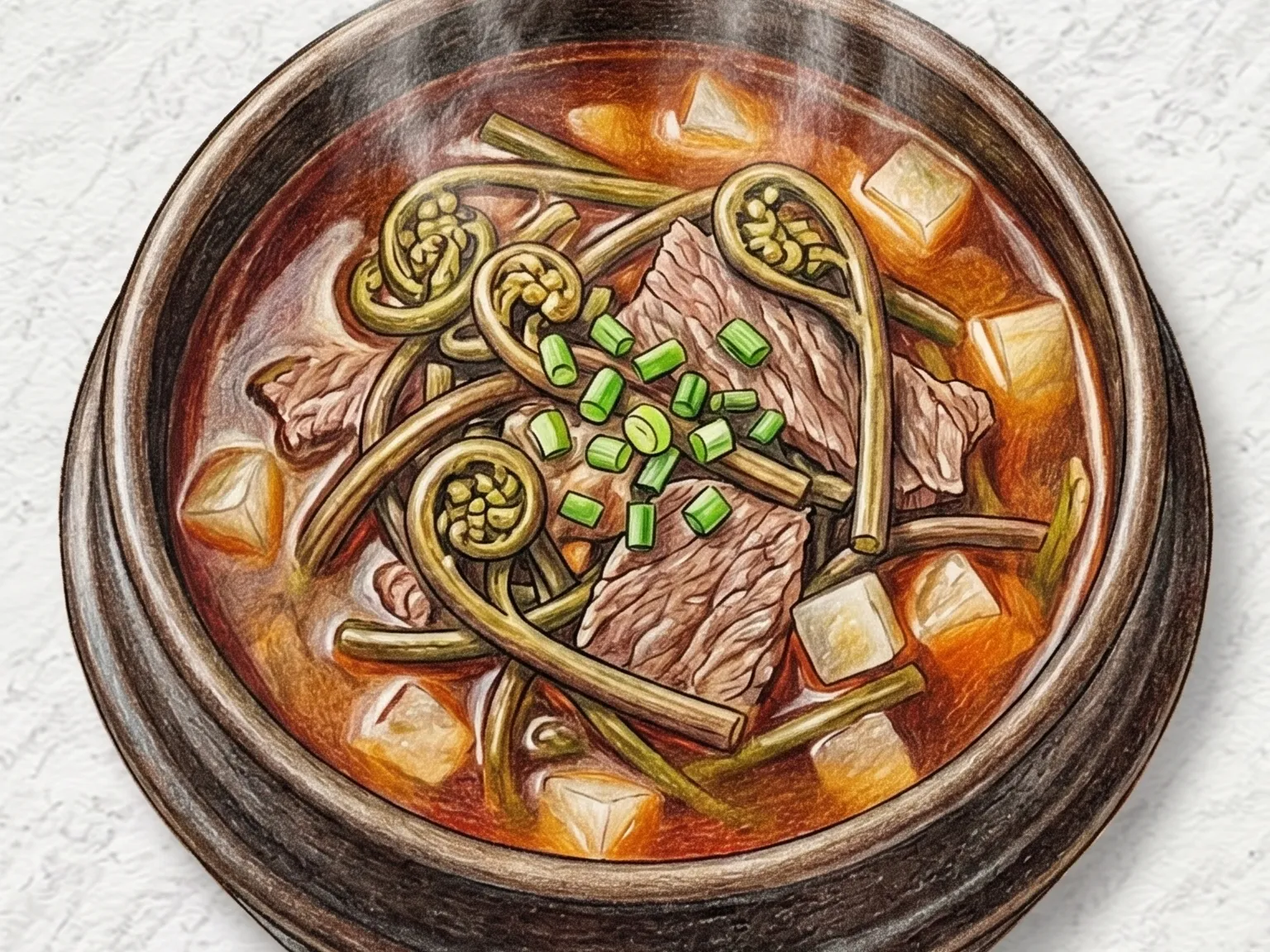
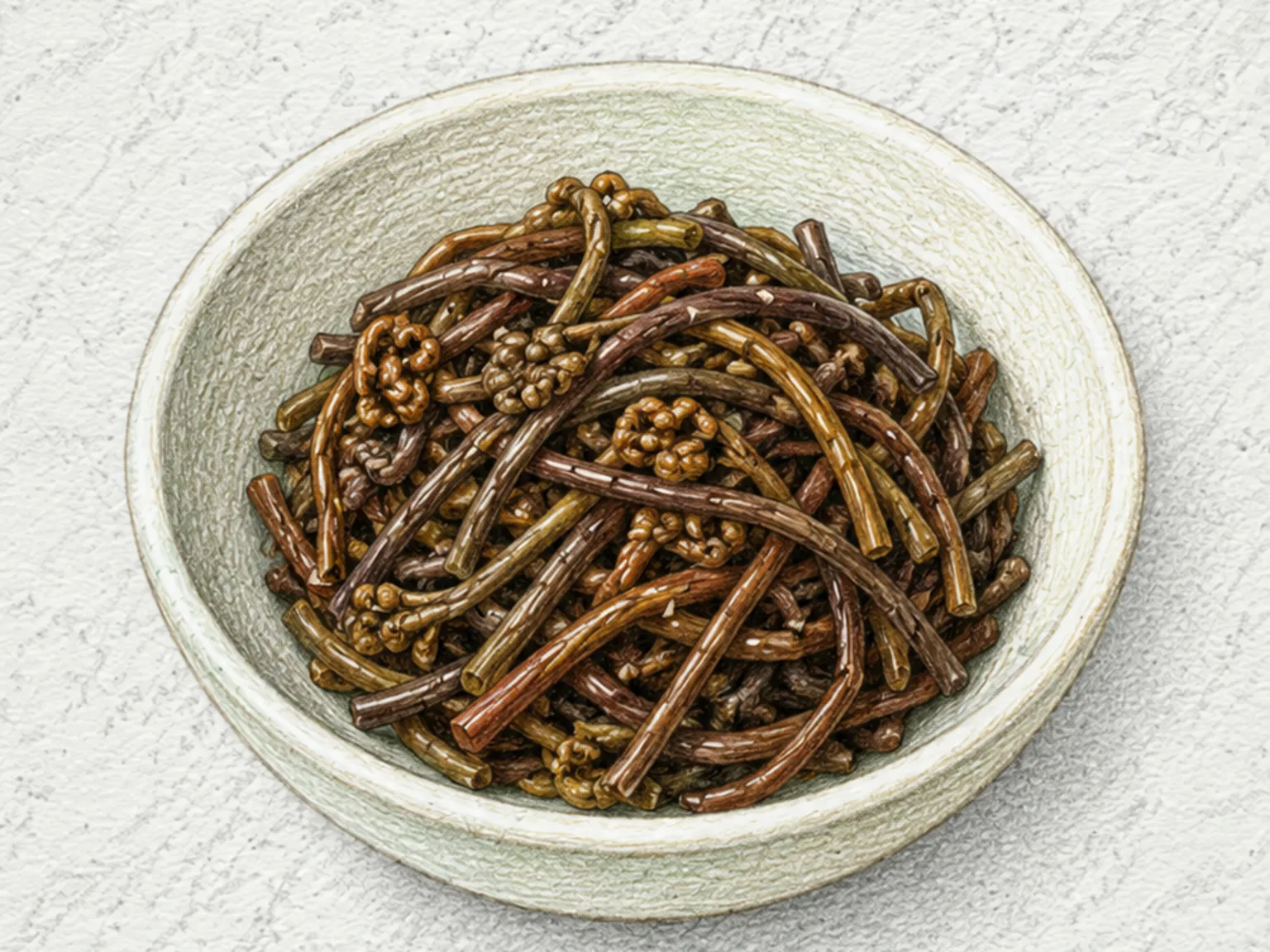
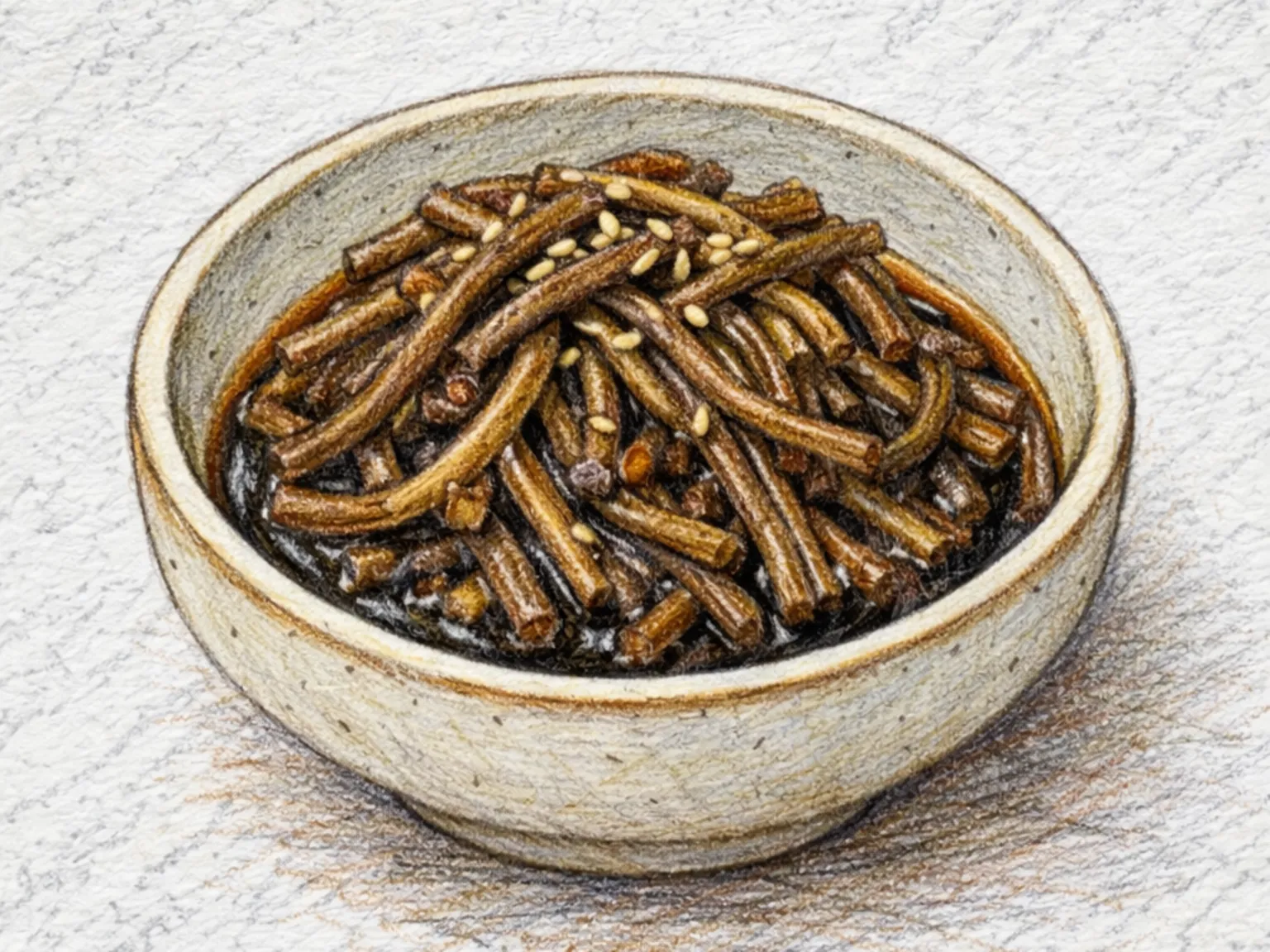
Gosari jangajji is a Korean pickle of boiled bracken fern submerged in a brine made from dark soy sauce, vinegar, sugar, and rice wine. The bracken's earthy, nutty aroma layers with the soy umami to create a flavor that deepens with every chew. Though softened by prolonged boiling, the fern stems retain enough fiber to give a pleasantly chewy, springy bite. Dried chili and garlic add quiet warmth to the brine, and the vinegar cuts through bracken's heavier earthy notes to leave a clean finish. Refrigerated, this jangajji keeps for over a week, making it a practical banchan to have ready in the kitchen.

Prep 20min Cook 12min 4 servings

Adjust Servings

2servings
servings

Instructions

  1. 1

    Trim parboiled bracken to 6 cm lengths and squeeze out moisture.

  2. 2

    Place bracken, garlic, and dried chili in a sterilized jar.

  3. 3

    Bring soy sauce, water, vinegar, sugar, and rice wine to a boil.

  4. 4

    After sugar dissolves, simmer 1 more minute, then cool for 3 minutes.

  5. 5

    Pour warm brine into the jar, fully submerging ingredients.

  6. 6

    Cool at room temperature, then refrigerate and cure for 2 days.

🛒Shop Ingredients on Amazon

As an Amazon Associate, we may earn from qualifying purchases.

Tips

Excess water in bracken dilutes brine, so squeeze thoroughly.
Reboiling and repouring brine on day 3 improves shelf life.

Nutrition (per serving)

Calories
82
kcal
Protein
3
g
Carbs
14
g
Fat
1
g

More Recipes

Korean Soy Pickled Asparagus
KimchiEasy

Korean Soy Pickled Asparagus

This pickle applies the Korean jangajji tradition - soy-brine preservation - to asparagus, a vegetable that Koreans adopted relatively recently but now use freely across banchan. The asparagus is blanched for just 20 seconds to set its color and soften the fibrous outer layer, then immediately shocked in ice water to lock in a vivid green and a firm, snapping texture. Packed upright in a sterilized jar, the spears are covered with a boiling brine of soy sauce, rice vinegar, sugar, and water that partially cooks the surface while the core stays crisp. Within 24 hours the brine penetrates enough for the pickle to be edible, but the flavor peaks at three days when the sweet-sour-salty balance has fully developed. Unlike most jangajji that use root vegetables or dense greens, asparagus brings a distinctive grassy, almost herbal note to the preserved format. Keeps refrigerated for two weeks.

🍱 Lunchbox
Prep 20minCook 12min4 servings
Korean Pickled Deodeok Root
KimchiMedium

Korean Pickled Deodeok Root

Deodeok jangajji is a traditional Korean pickle where peeled bellflower roots are briefly soaked in salted water to remove their sharp edge, split lengthwise, and submerged in a hot brine of soy sauce, vinegar, water, sugar, garlic, and ginger. Pouring the brine while still hot quickly firms the root's outer surface while keeping the interior chewy. Garlic and ginger develop layered aromatic depth alongside the root's intense earthy fragrance during the pickling period, and soy sauce anchors the umami. After at least three days of refrigeration the brine has penetrated fully, producing a mountain-vegetable preserve with a bold, concentrated flavor that pairs well with plain steamed rice.

🍱 Lunchbox
Prep 35minCook 12min4 servings
Korean Celery Jangajji (Blanched Soy Lemon Pickle)
KimchiEasy

Korean Celery Jangajji (Blanched Soy Lemon Pickle)

Celery jangajji is a Korean soy pickle made by briefly blanching celery stalks to soften their fibrous exterior, then submerging them in a boiled brine of soy sauce, vinegar, and sugar. Peeling the tough outer strings and cutting into five-centimeter pieces before a thirty-second blanch removes the raw grassy edge while preserving the celery's distinctive cool, herbal fragrance. Lemon slices and whole garlic cloves added to the jar contribute a gentle citrus brightness and mild pungency that develop as the pickle rests. After two days in the refrigerator, the brine penetrates fully, producing a crisp, tangy side dish that pairs especially well with rich or oily main courses.

🍱 Lunchbox
Prep 15minCook 8min4 servings
Korean Pepper Leaf Soy Pickle
KimchiEasy

Korean Pepper Leaf Soy Pickle

Gochuip jangajji is a Korean soy pickle of pepper leaves, a summer byproduct of chili cultivation that is washed and submerged in a boiled brine of soy sauce, vinegar, and sugar. Unlike the chili fruit itself, pepper leaves carry almost no heat, offering instead a grassy, mildly bitter aroma that blends with the savory-sour brine. Garlic and cheongyang chili contribute a sharp fragrance to the pickling liquid, and the thin leaves absorb the seasoning fully within a single day. Laid over a spoonful of rice and eaten as a wrap, these pickled leaves double as both banchan and ssam in one bite.

🍱 Lunchbox
Prep 15minCook 12min4 servings
Korean Soy-Marinated Soybean Leaves
Side dishesMedium

Korean Soy-Marinated Soybean Leaves

Kongnip-jangajji is soybean leaves preserved in a seasoned soy brine - one of the two major leaf jangajji traditions alongside perilla leaf (kkaennip) jangajji. Soybean leaves are larger and thicker than perilla leaves, taking longer to absorb the pickling liquid but offering a more substantial chew, with each leaf large enough to wrap around a spoonful of rice. The brine - soy sauce, water, vinegar, and sugar boiled together - must cool completely before pouring over the leaves; hot liquid softens them into a limp state, destroying the desired texture. Garlic cloves, cheongyang chili, and onion slices added to the jar infuse the brine with aromatic complexity during the curing process, producing a more layered flavor than plain soy. A minimum of two days of refrigerated aging is needed for the seasoning to reach the leaf interior, and flipping the layers once daily ensures even penetration. The most common way to eat it is draped over hot steamed rice, ssam-style.

🏠 Everyday🍱 Lunchbox
Prep 15minCook 10min4 servings
Korean Bracken Fern Namul with Perilla
Side dishesMedium

Korean Bracken Fern Namul with Perilla

This perilla-scented bracken fern namul begins by pre-seasoning 250 grams of boiled bracken with soup soy sauce, minced garlic, and half the perilla oil for five minutes so the flavor seeps into the chewy fibers. Green onion is sauteed briefly in the remaining perilla oil to build an aromatic base before the seasoned bracken joins the pan for a two-minute stir-fry that drives off excess moisture. Adding water and ground perilla seeds, then simmering gently for five minutes, transforms the dish into a lightly sauced namul where every strand carries a nutty, earthy depth. Sesame seeds scattered at the end add a visual accent and a faint crunch that complements the bracken's dense chew.

🏠 Everyday🎉 Special Occasion
Prep 15minCook 12min2 servings
More Kimchi →