Gosari Smoked Duck Salad (Smoked Duck & Bracken Fern Salad)
Quick answer
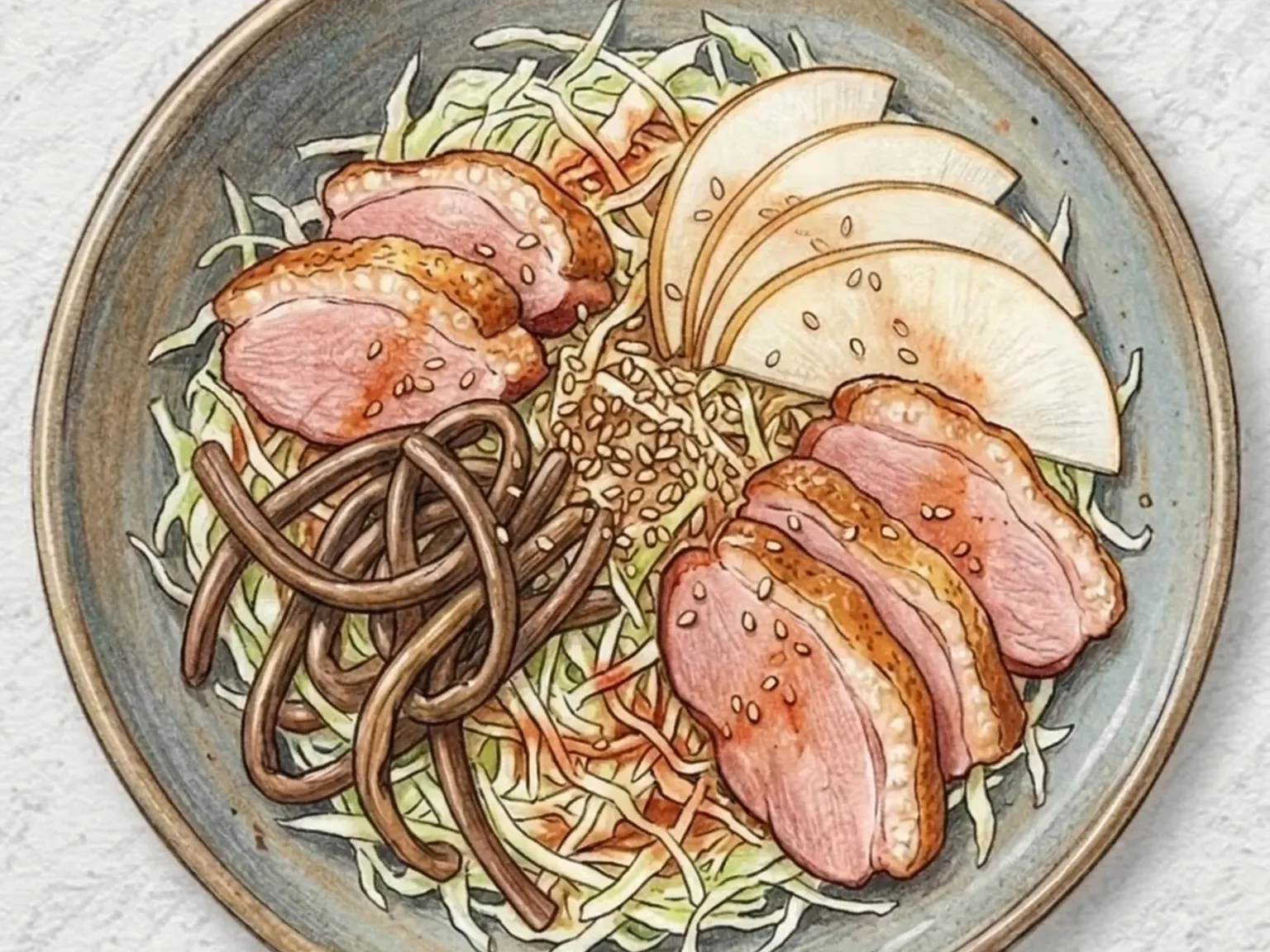
Gosari smoked duck salad is a Korean-style salad that pairs briefly seared smoked duck, blanched bracken fern, shredded cabbage, and thinly sliced Korean pear in a spicy...
What makes this special
- Gosari Smoked Duck Salad layers pan-seared duck and bracken fern in a spicy soy dressing.
- Smoked duck pan-seared just 3 minutes deepens smokiness while keeping juices intact
- Bracken fern blanched 1 minute and rinsed loses its astringency but retains chewy spring
Key ingredients
Core cooking flow
- 1 Cut boiled gosari fern into 5 cm pieces, blanch in boiling water for 1 minut...
- 2 Pan-cook 200 g smoked duck over medium heat for 3 minutes to render the surf...
- 3 Shred 100 g cabbage into strips under 3 mm thick, and slice 1/4 Korean pear...
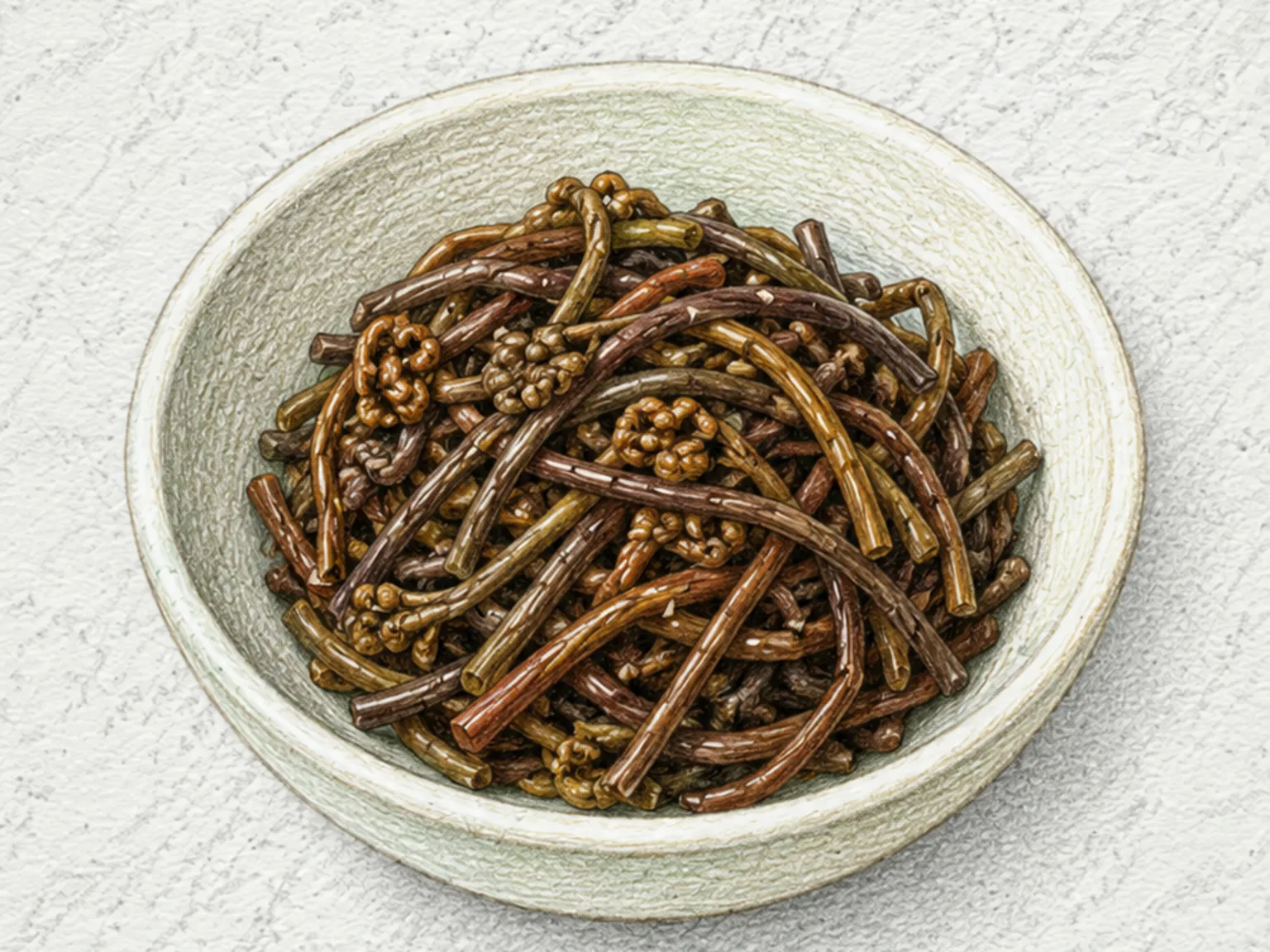
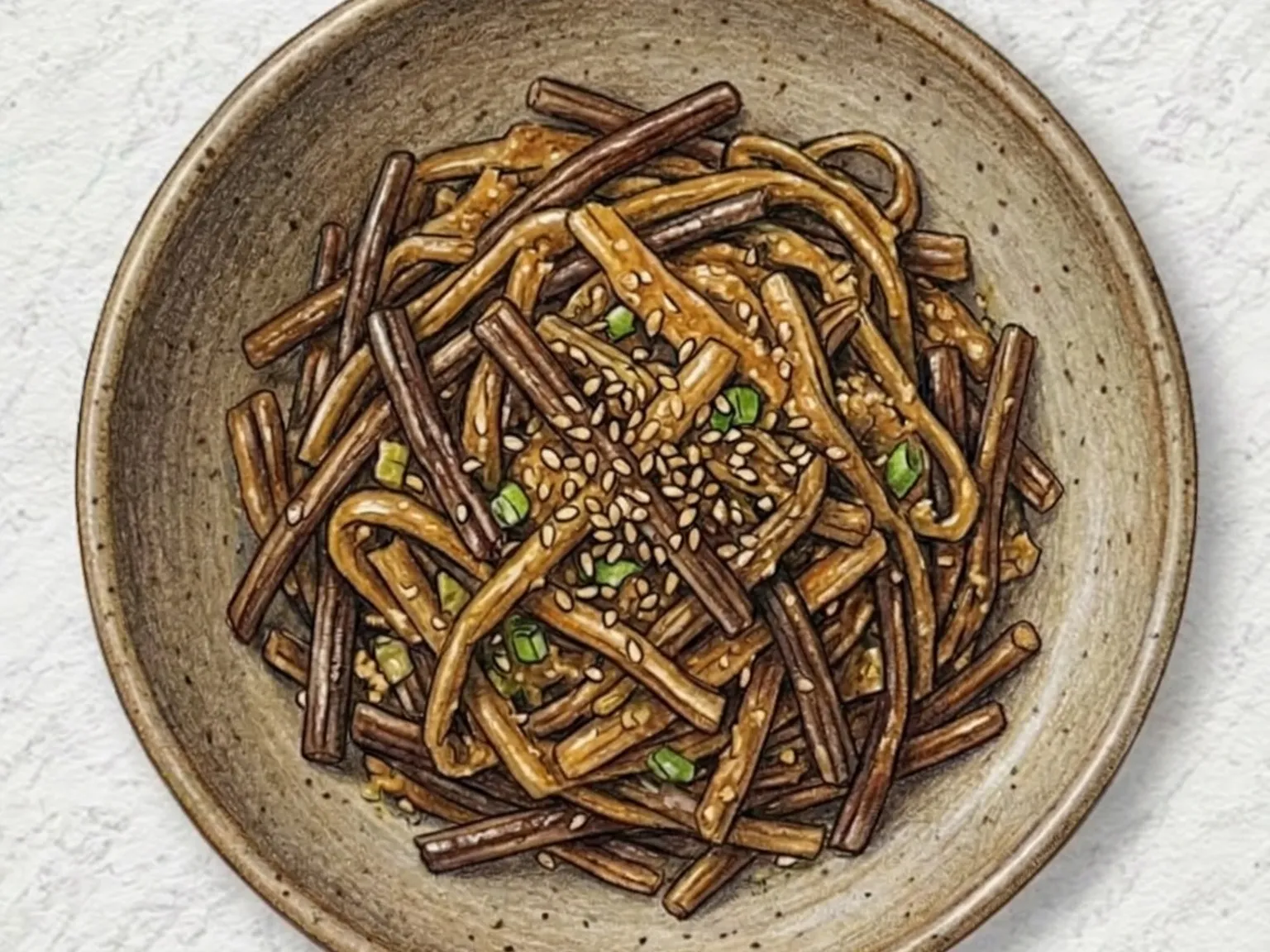
Gosari smoked duck salad is a Korean-style salad that pairs briefly seared smoked duck, blanched bracken fern, shredded cabbage, and thinly sliced Korean pear in a spicy soy-vinegar dressing. The smoked duck is placed skin-side down in a dry pan and cooked over medium heat for about three minutes, just enough time for the surface fat to render and the smoky aroma to intensify without drying out the interior. Going past that point causes the lean meat underneath to tighten and lose its moisture, which flattens the flavor. Bracken fern is blanched in boiling water for one minute and immediately rinsed under cold water to eliminate the slightly bitter, astringent quality it has when raw while preserving the chewy, springy resistance that makes it worth using instead of a softer green. Korean pear slices are added for both texture and function, since the clean, high-water-content fruit releases juice on each bite that washes through the fat left by the duck and refreshes the palate. The dressing combines soy sauce, vinegar, chili oil, and minced garlic into a sharply acidic and mildly spicy mixture that pushes against the deep, sweet smokiness of the duck rather than simply complementing it. Scattered toasted sesame seeds at the end add a final layer of warm, nutty fragrance.
Instructions
Read the steps as a cooking flow: prep, heat, seasoning, doneness control, and finish.
- 1Heat
Cut boiled gosari fern into 5 cm pieces, blanch in boiling water for 1 minute to remove any off-smell, then rinse in cold water and squeeze out all excess moisture.
- 2Control
Pan-cook 200 g smoked duck over medium heat for 3 minutes to render the surface fat, let cool briefly, then slice into 3 to 4 cm bite-sized pieces.
- 3Prep
Shred 100 g cabbage into strips under 3 mm thick, and slice 1/4 Korean pear into thin 3 mm pieces, placing them immediately in the dressing bowl to prevent browning.
- 4Season
Mix 2 tbsp soy sauce, 1.5 tbsp vinegar, 1 tbsp chili oil, and 1 tsp minced garlic to make the spicy dressing, adjusting heat level by varying the chili oil amount.
- 5Step
Place red chard, cabbage, gosari, and pear in a large bowl, add half the dressing, and toss gently to maintain the crisp texture of the vegetables.
- 6Finish
Spread the vegetables on a plate, arrange the smoked duck slices evenly on top, drizzle the remaining dressing, and finish with 1 tsp sesame seeds.
After the steps
Pick a recipe that fits this dish.
Continue with shared ingredients, meal pairings, or a similar method.
Recipes That Go Well With This
More Salads →Based on shared ingredients and meal pairing
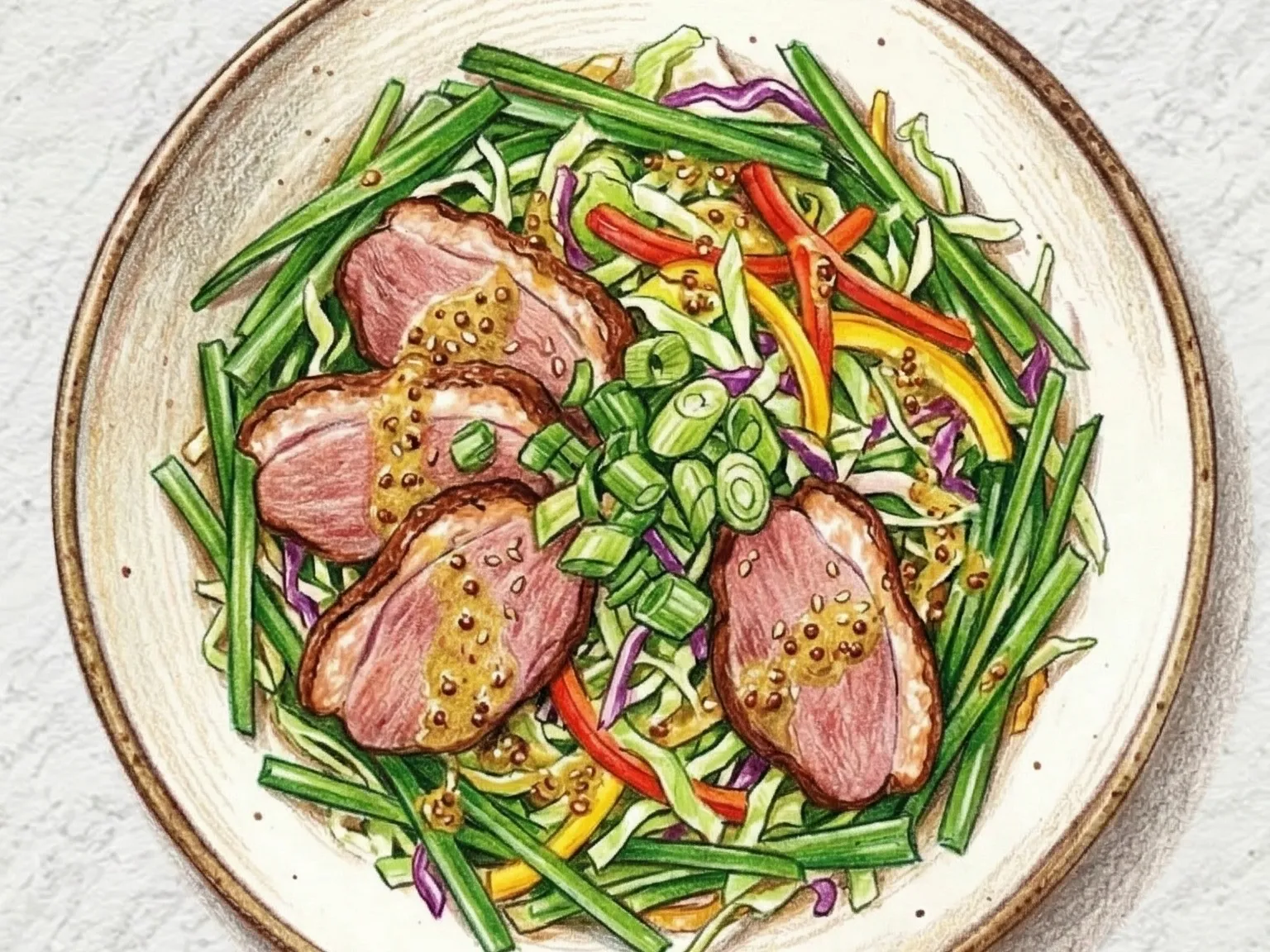
Smoked Duck Chive Salad (Korean Chive Salad)
Smoked duck chive salad brings together pan-seared smoked duck and fresh Korean chives in a soy-mustard dressing that cuts through the meat's richness with precision. The duck is seared in a dry or lightly oiled pan for two to three minutes to render off the surface fat before it meets the other ingredients. Korean chives are cut to four-centimeter lengths and combined with shredded cabbage and sliced bell pepper, each element adding its own texture to the finished dish. A dressing of soy sauce, mustard, vinegar, honey, and sesame oil delivers a multi-layered hit of nose-clearing heat, sweet-sour acidity, and roasted depth that cleanses the palate after every fatty bite of duck. The cabbage provides firm, watery crunch against the chewy, smoke-infused meat, while toasted sesame seeds scatter a nutty fragrance across the top. Adding the chives at the very end keeps their herbal aroma vivid rather than grassy, and limiting the searing time prevents the duck from turning tough. The interplay between the dense smokiness of the duck and the sharp freshness of the chives is what gives this salad its character beyond a simple protein-and-greens combination.
Water Parsley & Beef Salad
Beef marinated in soy sauce and pear juice is seared over high heat just long enough to develop a caramelized, deeply savory crust on the outside while the interior stays moist and tender. The cooked bulgogi is laid over a bed of fragrant minari and crisp lettuce, so each forkful carries both the warm, rich meat and the cool, crunchy vegetables. Thinly sliced red onion soaked in cold water to tame its bite then scattered through the bowl melds smoothly with the sweet-savory marinade coating the beef. A light toss of the remaining sesame oil from the pan coats the greens with a round, nutty aroma, and toasted sesame seeds sprinkled generously over the top complete the plate. Minari wilts quickly and loses its herbal fragrance once it is dressed, so it should only be combined with the other ingredients moments before the dish reaches the table. The warm meat against the cold greens creates a temperature contrast that makes each bite more dynamic. A spoonful of ssamjang dressing or a splash of yuzu vinegar can shift the flavor profile when variety is wanted.
Korean Grilled Hard Clams with Doenjang Sauce
Baekhap doenjang gui is a Korean grilled clam dish where hard clams are topped with a doenjang sauce and cooked over direct flame or in an oven. The clams must be purged in salt water for at least three hours before cooking, then shucked so that only the half shell carrying the meat remains. The sauce -- doenjang, minced garlic, cheongyang chili, and sesame oil -- is spread in a thin layer over each clam; too thick a coating and the fermented salt of the doenjang drowns out the natural brininess of the shellfish itself. Over high direct heat for three to four minutes, the doenjang surface scorches lightly, developing a caramelized, roasted aroma while the clam meat contracts and concentrates its juices within the shell. Finely sliced scallion scattered on top adds a green visual accent against the brown doenjang glaze. Timing is critical: the moment the liquid pooled in the concave shell begins to bubble, the clams should be lifted off the heat immediately, because even one additional minute toughens the meat to the point of unpleasantness. The dish depends on the interplay between two distinct kinds of salt -- the oceanic brine of the clam and the fermented depth of the doenjang -- which converge into a single concentrated bite that rewards restraint in the sauce application.
Tofu Avocado Salad (Silken Tofu and Avocado Sesame Bowl)
Tofu avocado salad pairs pan-seared firm tofu with ripe avocado over a bed of mixed greens, dressed in soy sauce, sesame oil, and lemon juice. Pressing the tofu thoroughly before searing allows the surface to develop a golden Maillard crust that holds its shape even after tossing with the dressing. The avocado's creamy fat contrasts with the burst of juice from halved cherry tomatoes, creating textural variety in every bite. The dressing layers three dimensions - soy sauce for salinity, sesame oil for nuttiness, and lemon juice for acidity - giving depth to otherwise mild ingredients. Cutting the avocado just before serving prevents oxidation and keeps the color clean.
Serve with this
Kimchi Tofu Alfredo Farfalle (Creamy Kimchi Bow-Tie Pasta)
Kimchi tofu Alfredo farfalle is a fusion pasta that counters the richness of a cream-and-Parmesan Alfredo sauce with the lactic acidity of well-fermented kimchi. Garlic bloomed in butter forms the aromatic base, then cream, milk, and Parmigiano are combined into the classic Alfredo sauce, after which chopped kimchi is folded in to introduce fermented tang and a layer of umami that a standard Alfredo lacks. Firm tofu cut into cubes and pan-fried until each side is golden provides a mild, neutral protein element with direct textural contrast against the smooth sauce. Farfalle's pinched center holds pockets of sauce against each piece of pasta, delivering a consistent hit of creaminess in every bite, and freshly ground black pepper draws a sharp line through the richness at the finish. The entire dish moves from pan to plate in about 15 minutes.
Soybean Paste Stew with Clams
Doenjang jjigae with clams is one of the most frequently made stews in Korean households, built on the combination of fermented soybean paste's deep, earthy flavor and the clean briny umami of manila clams. The clams are purged of sand before being added to a pot of doenjang-laced broth, where they open and release their salty, seawater-flavored liquor directly into the soup. The result transforms the base from something merely savory into something distinctly oceanic and complex. Zucchini softens in the bubbling broth and contributes a natural sweetness as it breaks down, while blocks of soft tofu act as sponges, soaking up the seasoned liquid and releasing it in a burst of hot, flavorful broth when bitten into. Sliced cheongyang chili peppers are added to interrupt the heaviness of the fermented paste and sharpen the overall flavor. The stew is typically served in an earthenware pot while still bubbling, alongside rice. Many Koreans ladle the broth directly over their bowl of rice. The recipe adapts to any season: assembled with leftover summer vegetables from the refrigerator for a lighter version, or cooked piping hot in a stone pot through winter.
Socca Niçoise (French Chickpea Flour Flatbread)
Socca nicoise is a chickpea-flour flatbread from Nice, France, made by whisking chickpea flour with water, olive oil, salt, pepper, and rosemary, then baking the thin batter in a preheated oven-safe pan at 220 degrees Celsius for twelve to fifteen minutes. Resting the batter for ten minutes allows the flour to hydrate fully, which produces the characteristic texture - crisp and almost shatteringly crunchy at the edges, soft and slightly custardy in the center. The pan must be fully preheated and generously oiled so the batter sizzles on contact and releases cleanly. Sliced red onion and halved cherry tomatoes placed on top before baking lose their moisture in the oven and concentrate into sweet, slightly charred toppings. A final grind of coarse black pepper emphasizes the nutty, earthy flavor of the chickpea base.
Similar recipes
Gamtae Avocado Shrimp Salad
Gamtae avocado shrimp salad pairs blanched shrimp with sliced avocado, romaine, and cherry tomatoes in a lime-soy dressing, finished with crumbled gamtae seaweed. Blanching the shrimp for exactly two minutes and plunging them immediately into cold water keeps the exterior springy while preserving a moist, tender interior - longer cooking makes them rubbery and dry. The dressing of lime juice, soy sauce, olive oil, and honey layers sharp citrus acidity against soy umami, cutting neatly through the richness of the avocado rather than letting it weigh down the bowl. Gamtae seaweed absorbs moisture rapidly and turns limp within minutes, so it must be crumbled over the salad only at the very moment of serving to retain its crunch and oceanic fragrance. Thinly sliced red onion should be rinsed briefly in cold water to remove the raw, sharp edge, letting it blend more quietly with the other ingredients. Domestic gamtae has a finer, more delicate structure than regular dried laver, so it crumbles cleanly by hand without any tool.
Oriental Soy Protein Noodle Salad
A light and healthy meal featuring low-calorie soy protein noodles with fresh vegetables and oriental dressing.
Korean Spicy Cucumber Salad
Oi-muchim - Korean spicy cucumber salad - is one of the most frequently served vegetable banchan on summer Korean tables, tossing thinly sliced cucumber in gochugaru, garlic, vinegar, and sesame oil. Slicing the cucumber as thin as possible with a mandoline or knife is important - thin slices absorb the dressing rapidly and deliver a texture that is simultaneously crunchy and yielding. Salting for ten minutes and squeezing out the released water is the pivotal step; undrained cucumber turns the dressing into a diluted puddle. The seasoning mixes gochugaru, minced garlic, vinegar, sugar, sesame oil, and sesame seeds - vinegar amplifies the cucumber's natural freshness while gochugaru provides a gentle trailing heat. Assembling immediately before serving is essential, as osmotic action wilts the cucumber within thirty minutes. This banchan tops naengmyeon and bibimbap or stands alone alongside rice. When summer heat suppresses appetite, oi-muchim is often the first dish Korean diners reach for - its cool, sharp bite cuts through the lethargy.