Dried Persimmon Ricotta Nut Salad
Quick answer
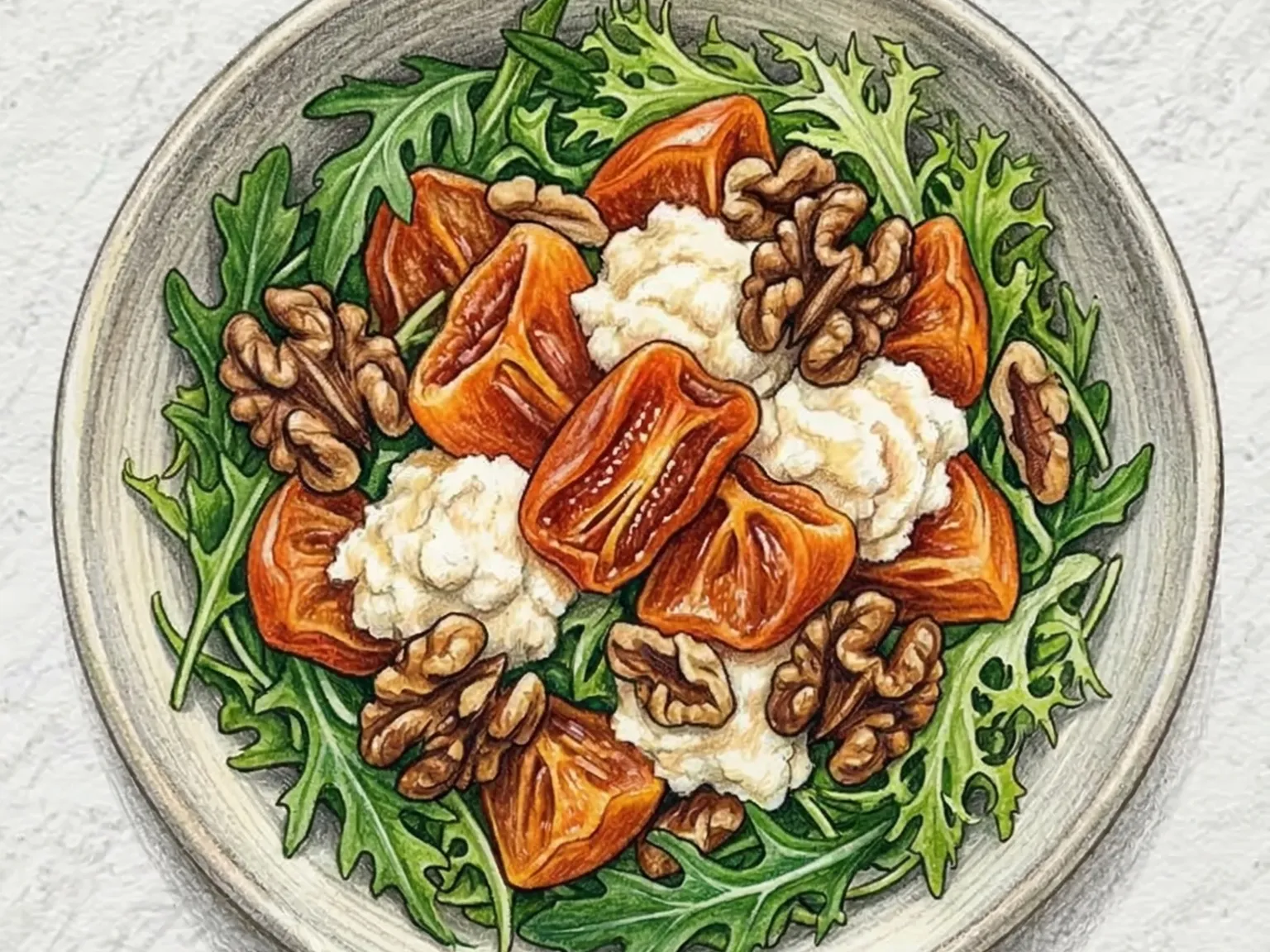
Dried persimmon ricotta nut salad arranges chewy sliced gotgam and soft ricotta cheese over arugula and chicory greens, topped with toasted walnuts and pine nuts and dres...
What makes this special
- Dried Persimmon Ricotta Nut Salad pairs chewy gotgam discs with soft cheese and toasted walnuts.
- Cutting gotgam to 0.7 cm discs reveals chewy cross-sections that contrast ricotta's creaminess
- Dry-toasting walnuts and pine nuts on low heat for 2 to 3 minutes draws out surface oils
Key ingredients
Core cooking flow
- 1 Remove the stems from 100 g dried persimmon and slice it into 0.7 cm rounds.
- 2 Soak 60 g arugula and 50 g chicory in cold water for 5 minutes to refresh the leaves.
- 3 Put 25 g walnuts and 15 g pine nuts in a dry pan and toast over low heat for 2 to 3 minutes.
Dried persimmon ricotta nut salad arranges chewy sliced gotgam and soft ricotta cheese over arugula and chicory greens, topped with toasted walnuts and pine nuts and dressed with balsamic vinegar and olive oil. Slicing the persimmon into 0.7 cm rounds exposes the dense, sticky interior, creating a textural contrast against the creamy, mild ricotta. Toasting the nuts in a dry pan over low heat for two to three minutes draws their oils to the surface and deepens the nutty fragrance noticeably. When the persimmon is especially sweet, an extra half-teaspoon of balsamic vinegar brings the acid needed to restore balance. Ricotta releases moisture quickly on contact with dressed greens, so it should be added only at the moment of serving. The bitter edge of chicory cuts through the persimmon's concentrated sweetness, providing the structural contrast that keeps each bite from feeling one-dimensional.
Instructions
Read the steps as a cooking flow: prep, heat, seasoning, doneness control, and finish.
- 1Prep
Remove the stems from 100 g dried persimmon and slice it into 0.7 cm rounds.
If the blade gets sticky, wipe it lightly between cuts so the chewy centers stay neat and easy to arrange.
- 2Step
Soak 60 g arugula and 50 g chicory in cold water for 5 minutes to refresh the leaves.
Drain well, then shake off or pat away excess water so the dressing does not become thin.
- 3Control
Put 25 g walnuts and 15 g pine nuts in a dry pan and toast over low heat for 2 to 3 minutes.
Remove them as soon as they look slightly glossy and smell nutty, before the pine nuts brown too much.
- 4Step
Whisk together 1 tablespoon olive oil, 2 teaspoons balsamic vinegar, and 0.25 teaspoon black pepper.
Taste against a piece of persimmon, and add 0.5 teaspoon more balsamic if the fruit is very sweet.
- 5Finish
Spread the drained arugula and chicory loosely over the serving plate, then arrange the persimmon slices evenly on top.
Use your fingertips to lift and separate the leaves so they do not collapse under the toppings.
- 6Finish
Just before serving, spoon 120 g ricotta cheese over the salad.
Scatter the cooled nuts, drizzle the dressing lightly across the surface, and serve at once before the ricotta releases moisture onto the greens.
After the steps
Pick a recipe that fits this dish.
Continue with shared ingredients, meal pairings, or a similar method.
Recipes That Go Well With This
More Salads →Based on shared ingredients and meal pairing
Charred Daepa Gamja Doenjang Salad (Charred Leek Potato Salad)
Charred daepa gamja doenjang salad combines boiled potatoes with large green onion segments that have been seared until deeply caramelized and smoky. The high heat strips away the raw onion bite and replaces it with a concentrated sweetness and char aroma. A dressing made from doenjang, lemon juice, honey, and olive oil layers fermented depth with bright acidity and a touch of sweetness, drawing out the mild flavor of the potato. Tossing the potatoes while still warm allows the dressing to absorb into the starchy flesh rather than sitting on the surface. Red chard adds color and a faint bitterness that gives the bowl a sense of direction, while black sesame seeds contribute a final nutty accent.
Seaweed Chip Avocado Corn Salad
Gimbugak - deep-fried seaweed chips coated in glutinous rice paste - is crushed over the finished salad to deliver a savory crunch distinct from ordinary croutons. Ripe avocado provides a creamy fat base, while blanched sweet corn adds a gentle grain sweetness that balances the richness. Cherry tomatoes and shredded red cabbage bring color and bright acidity, and a light dressing of lime juice with fine chili powder leaves a gentle heat on the finish. The chips soften quickly once they touch moisture, so they must be added at the very last moment.
Kimchi Tofu Alfredo Farfalle (Creamy Kimchi Bow-Tie Pasta)
Kimchi tofu Alfredo farfalle is a fusion pasta that counters the richness of a cream-and-Parmesan Alfredo sauce with the lactic acidity of well-fermented kimchi. Garlic bloomed in butter forms the aromatic base, then cream, milk, and Parmigiano are combined into the classic Alfredo sauce, after which chopped kimchi is folded in to introduce fermented tang and a layer of umami that a standard Alfredo lacks. Firm tofu cut into cubes and pan-fried until each side is golden provides a mild, neutral protein element with direct textural contrast against the smooth sauce. Farfalle's pinched center holds pockets of sauce against each piece of pasta, delivering a consistent hit of creaminess in every bite, and freshly ground black pepper draws a sharp line through the richness at the finish. The entire dish moves from pan to plate in about 15 minutes.
Pollock Roe Potato Crisp Salad
Potato slices are baked or pan-fried until golden and crisp, then topped with briny salted pollock roe for salt and umami in each bite. Greek yogurt mixed with mayonnaise creates a creamy base that softens the roe's intense seasoning. Romaine and cucumber provide fresh crunch contrasting with the crispy potato and popping roe granules. Lemon juice cuts through the richness, and shredded roasted seaweed deepens the seafood aroma - making this as enjoyable as a drinking snack as it is a side dish.
Serve with this
Korean Kimchi Pancake
Kimchi-jeon is a Korean savory pancake made by chopping well-fermented kimchi into small pieces, mixing it into a batter of pancake flour, kimchi brine, and chili flakes, then frying the batter in oil until both sides turn golden and crisp. Using kimchi brine instead of plain water is the central technique: the lactic acid from fermentation adds a tangy depth to the flour base that water simply cannot provide. The batter consistency varies with how wet the kimchi is, so the target is a texture that runs slowly rather than puddles, which usually requires less liquid than might seem necessary. Neutral cooking oil or perilla oil suits the flavor profile better than olive oil, preserving the characteristic savory aroma of Korean pan-fried foods. Four minutes on the first side over medium-high heat followed by three minutes after flipping produces a crust that is genuinely crisp at the surface while the inside stays moist from the kimchi's own liquid. Pressing lightly with a spatula before flipping helps confirm that the underside has set firmly enough to hold its shape. A pancake that is too thin burns before it develops flavor, and one that is too thick leaves the interior underdone. Kimchi-jeon is at its best immediately off the pan, but a brief return to a dry skillet restores most of the crispness when reheating leftovers.
Soybean Paste Stew with Clams
Doenjang jjigae with clams is one of the most frequently made stews in Korean households, built on the combination of fermented soybean paste's deep, earthy flavor and the clean briny umami of manila clams. The clams are purged of sand before being added to a pot of doenjang-laced broth, where they open and release their salty, seawater-flavored liquor directly into the soup. The result transforms the base from something merely savory into something distinctly oceanic and complex. Zucchini softens in the bubbling broth and contributes a natural sweetness as it breaks down, while blocks of soft tofu act as sponges, soaking up the seasoned liquid and releasing it in a burst of hot, flavorful broth when bitten into. Sliced cheongyang chili peppers are added to interrupt the heaviness of the fermented paste and sharpen the overall flavor. The stew is typically served in an earthenware pot while still bubbling, alongside rice. Many Koreans ladle the broth directly over their bowl of rice. The recipe adapts to any season: assembled with leftover summer vegetables from the refrigerator for a lighter version, or cooked piping hot in a stone pot through winter.
Blackened Chicken Caesar Salad
Blackened chicken Caesar salad starts with chicken breast coated thickly in paprika, cayenne, garlic powder, onion powder, and dried herbs before hitting a very hot, dry pan. The spice coating undergoes rapid charring at high temperature, forming a dark, smoky crust that seals in moisture and concentrates the spice aromatics on the surface of the meat. The interior of the chicken stays juicy because the charred crust acts as an insulating barrier, provided the pan is hot enough from the start. Creamy Caesar dressing, made with anchovy paste, egg yolk, lemon, and Parmesan, wraps around the cold, crisp romaine and the sliced hot chicken alike, moderating the cayenne heat without erasing the spice character entirely. Shaved Parmesan adds sharp, salty depth throughout, while croutons introduce a crunchy textural break against the tender chicken and limp lettuce. Because blackening generates substantial smoke, proper ventilation or an outdoor cooking setup is strongly recommended. The dish functions as a full main course rather than a starter salad.
Similar recipes
Ssamjang Tofu Kale Crunch Salad
Ssamjang tofu kale crunch salad sears firm tofu in olive oil for six to seven minutes until golden and crisp on the outside while staying tender within, then combines it with kale massaged with salt, shredded red cabbage, cucumber, and sliced almonds, all dressed in a ssamjang-based vinaigrette. The dressing blends ssamjang's fermented depth, a mixture of doenjang and gochujang, with lemon juice, honey, and olive oil, layering umami with citrus acidity and a restrained sweetness that tempers kale's natural bitterness. Massaging the kale with salt before adding the dressing breaks down its tough cell walls, making the leaves pliable and far more absorbent. Pressing moisture from the tofu thoroughly before pan-frying is what produces the crisp, golden crust; tofu that still holds water will steam rather than sear and come out pale and soft. Sliced almonds add a light, nutty crunch with every bite, giving the salad a clear contrast in texture throughout.
Korean Potato Salad (Creamy Mashed Potato Ham Cucumber)
Korean potato salad arrived through Japan's yoshoku tradition but developed its own distinct identity in Korean home kitchens. Potatoes are boiled until tender and mashed while still hot, but not to a perfectly smooth consistency - leaving some lumps gives the salad a dual texture of creamy mashed potato and soft, intact chunks that hold together when eaten. Diced ham is pan-seared briefly to render out excess fat before being incorporated, preventing the finished salad from becoming greasy. Cucumber is salted and squeezed to remove water, which keeps the salad from turning watery as it sits. Boiled carrot is mixed in for color and a mild sweetness. The dressing is mayonnaise adjusted with sugar and salt, resulting in a distinctly sweet-creamy profile that is noticeably different from Western versions of the dish. Chilling the assembled salad for at least one hour before serving allows the seasoning to equalize throughout the mixture, improving the flavor considerably compared to eating it straight away. The salad is served as a banchan alongside rice, and it is also commonly spread inside sandwiches.
Yuja Cheesecake Bars (Citron Cheesecake)
Yuja cheesecake bars are a baked dessert that begins with a pressed crust of cracker crumbs and melted butter, pre-baked for eight minutes to set a firm base before the filling goes in. The filling combines softened cream cheese, eggs, sugar, and yuja citron marmalade, poured over the crust and baked at 170 degrees Celsius until just set. Pre-baking the crust is essential for keeping the layers distinct, and room-temperature cream cheese is non-negotiable for a batter free of lumps. Seventy grams of yuja marmalade introduces the fruit's sharp, floral citrus fragrance alongside clean acidity that cuts through the dense richness of the cheese layer, preventing the aftertaste from feeling heavy or cloying. Chilling for two full hours in the refrigerator before slicing produces straight, clean edges on each bar, and the texture sits between dense and silky, dissolving slowly once it hits the palate.