Grilled Octopus & Water Parsley Salad
Quick answer
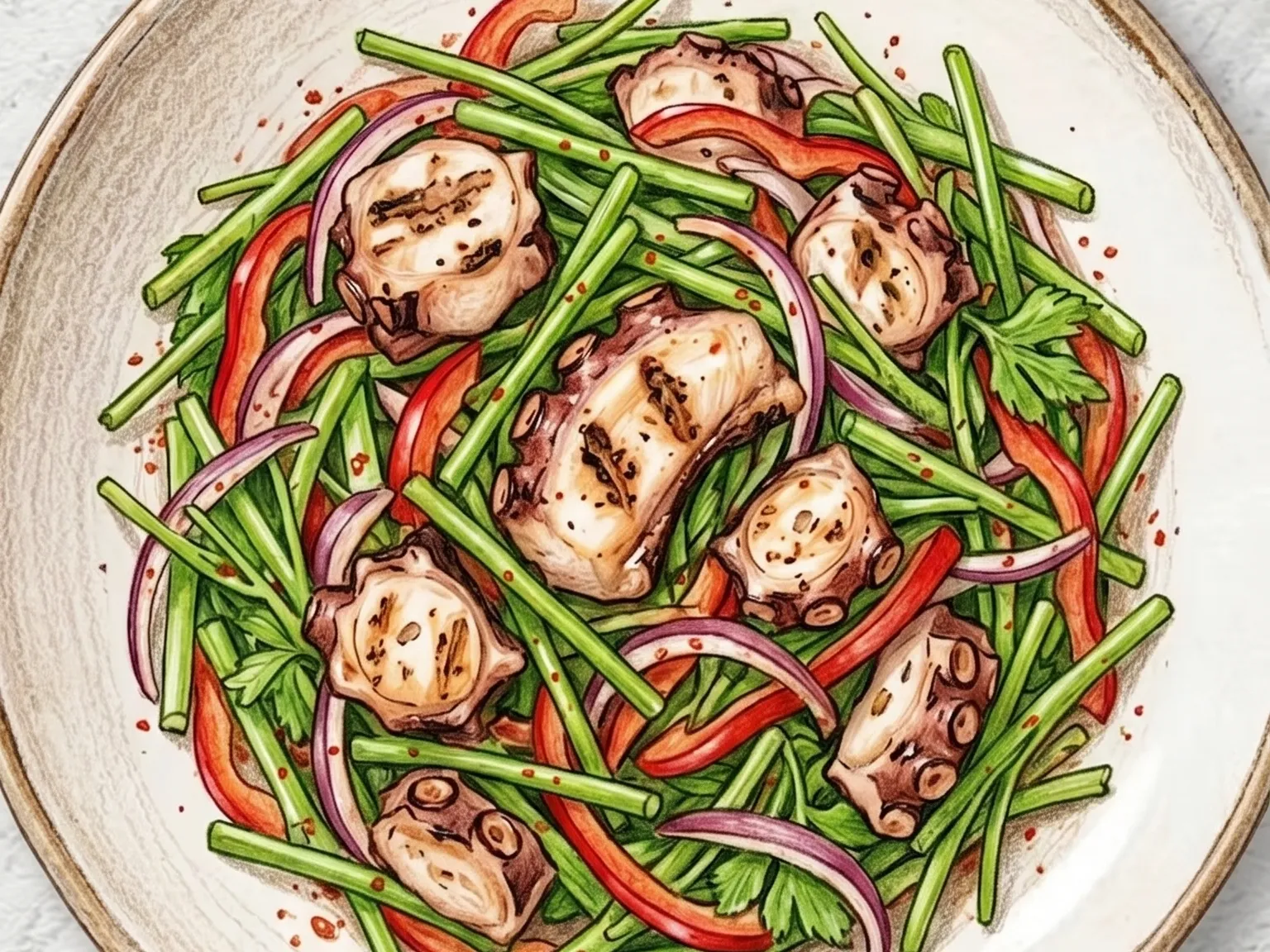
Grilled octopus and minari salad is a Korean seafood salad made by searing pre-cooked octopus over high heat for two to three minutes to pick up char and smoke, then toss...
What makes this special
- Grilled Octopus and Water Parsley Salad delivers high-heat char and fresh herbal fragrance.
- Patted-dry octopus seared on high heat for 2 to 3 minutes achieves char aroma while staying chewy
- Water parsley added last keeps its clean herbal fragrance from dissipating
Key ingredients
Core cooking flow
- 1 Cut 300 g cooked octopus into 4 cm pieces and pat the surface thoroughly dry...
- 2 Heat a pan over high heat for 5 minutes, add 1 tbsp olive oil, place the oct...
- 3 Cut 100 g water parsley into 4 to 5 cm lengths, shred 1/2 red bell pepper in...
Grilled octopus and minari salad is a Korean seafood salad made by searing pre-cooked octopus over high heat for two to three minutes to pick up char and smoke, then tossing it with water parsley cut into 4 to 5 cm lengths, shredded red bell pepper, and sliced onion in a gochugaru-vinegar dressing. Patting the octopus completely dry before searing is essential to get a proper char rather than steaming, and keeping the cooking time short over high heat leaves the interior chewy while the exterior picks up color; prolonged heat makes the flesh rubbery. The dressing of vinegar, olive oil, gochugaru, and minced garlic leads with bright acidity and builds into a gentle, lingering heat that gives the octopus's mild savoriness a clearer direction. Minari should be added at the end so its clean, grassy fragrance does not dissipate, and letting the dressed salad rest for three minutes allows the dressing to absorb evenly into each component. The contrast between the red bell pepper and the bright green minari makes this salad a visually striking addition to a spread, and the whole dish comes together in about ten minutes, making it practical when adding a quick side.
Instructions
Read the steps as a cooking flow: prep, heat, seasoning, doneness control, and finish.
- 1Heat
Cut 300 g cooked octopus into 4 cm pieces and pat the surface thoroughly dry with paper towels so the octopus sears properly in the pan.
- 2Control
Heat a pan over high heat for 5 minutes, add 1 tbsp olive oil, place the octopus in the pan, and sear without moving for 2 to 3 minutes to develop a deep charred flavor.
- 3Prep
Cut 100 g water parsley into 4 to 5 cm lengths, shred 1/2 red bell pepper into 3 mm strips, and thinly slice 1/4 onion to 2 mm thickness.
- 4Season
In a bowl, combine 2 tbsp vinegar, 2 tbsp olive oil, 1 tsp gochugaru, 1 tsp minced garlic, 1/2 tsp salt, and a pinch of pepper, then mix well to make the dressing.
- 5Heat
Combine water parsley, bell pepper, and onion in a large bowl, add the grilled octopus, pour the dressing over, and toss quickly to coat everything evenly.
- 6Finish
Let marinate for 3 minutes so the dressing absorbs, then transfer to a chilled plate and serve immediately.
Do not exceed the 3-minute marinating time or the water parsley will wilt.
After the steps
Pick a recipe that fits this dish.
Continue with shared ingredients, meal pairings, or a similar method.
Recipes That Go Well With This
More Salads →Based on shared ingredients and meal pairing
Korean Garlic-Grilled Octopus
Muneo-garlic-gui is a Korean seafood drinking snack made by slicing pre-boiled octopus into bite-size pieces, seasoning them with salt, pepper, and red chili flakes, then searing them hard in olive oil with minced garlic over high heat. The garlic goes in first at low heat to bloom slowly in the oil, then the flame is raised and the octopus is added so the exterior chars rapidly while the interior stays springy and resilient. The olive oil coats the surface at high temperature and locks in moisture, producing a scorched crust outside and a genuinely tender bite within. A squeeze of fresh lemon juice at the finish cuts through the oil and brings the natural brininess of the octopus into sharp relief. The octopus should go straight to the table after cooking, as the texture toughens quickly, and thorough pan preheating is essential to getting the sear right.
Korean Water Parsley Salad
Minari-muchim is blanched water parsley seasoned with gochugaru, soy sauce, and vinegar, one of the most distinctly seasonal banchan on the Korean table. Minari is a semi-aquatic herb that grows along paddies, wetlands, and clean waterways throughout Korea. Its aroma belongs to a different family from Western parsley or celery: fresher, more herbal, with a green brightness that is difficult to compare to any common Western herb. That aroma is the entire reason to use minari in this dish, which makes the blanching time critical. Beyond twenty seconds in boiling water, the volatile aromatic compounds escape with the steam and what remains is texture without character. Trimming the toughest lower stems and cutting stalks to roughly five centimeters makes each piece easy to eat in a single bite. Transferring the blanched herb immediately to ice water or very cold water fixes the chlorophyll and holds the vivid green color. The vinegar in the dressing does two things simultaneously: it amplifies the herbal brightness of the minari and suppresses the faintly aquatic mustiness that water-grown plants sometimes carry. Gochugaru provides heat, soy sauce adds salted depth, and together they season the herb without masking it. International awareness of minari as an ingredient grew substantially after the 2020 film of the same name. Serving raw minari alongside cho-gochujang as a dipping green is another common spring preparation.
Korean Grilled Deodeok Root
Deodeok-gui is a traditional Korean mountain vegetable dish where peeled deodeok roots are pounded flat with a mallet, coated in a paste of gochujang, gochugaru, honey, sesame oil, and garlic, then grilled over high heat. The pounding step is critical: it breaks down the tough fibers so the seasoning absorbs evenly and the root develops a pleasant chewiness instead of remaining stringy. Soaking the peeled deodeok in lightly salted water for about thirty minutes before pounding draws out the sharpest bitterness, leaving only the characteristic mellow, slightly medicinal aroma the root is known for. That bittersweet quality sits in balance between the fermented spice of gochujang and the sweetness of honey. Quick grilling at high temperature chars the glaze just enough to add smokiness while keeping the interior moist; applying the seasoning paste in two stages during grilling builds a thicker, glossier layer on the surface. Toasted sesame seeds scattered on top contribute nuttiness that complements the wild herb's earthy, resinous character.
Korean Grilled Webfoot Octopus
Cleaned webfoot octopus is tossed in a marinade of gochujang, chili flakes, soy sauce, and sugar for ten minutes, then seared on high heat for just three to four minutes. Webfoot octopus has thicker tentacles than nakji and a more resilient chew, which makes it particularly well suited to this type of spicy, high-heat preparation. The short cooking time is not a shortcut -- it is the point. Overcooking webfoot octopus makes it rubbery and dry, and the difference between three minutes and five minutes is the difference between tender-chewy and tough. High heat is equally important: the goal is to sear, not steam, so the pan must be very hot and the pieces should not be crowded. Where the glaze catches on the pan surface and scorches slightly, it leaves behind charred bits that coat the octopus with a smoky depth the marinade alone cannot provide. Green onion added in the final seconds cuts through the heat with a sharp, fresh note. Just before the main harvest season in spring, webfoot octopus carries roe that adds a rich, creamy nuttiness to each bite, and this is when Korean cooks consider the ingredient at its peak. The cooked pieces wrap well in perilla leaves and are also popular as a fried rice finisher.
Serve with this
Doenjang Clam Spinach Orzo
Doenjang clam spinach orzo is a one-bowl pasta built by cooking orzo in doenjang-seasoned vegetable stock alongside clams in a method borrowed directly from risotto technique. The clams are first purged in salt water to remove sand, then steamed open in white wine so they release their briny cooking liquid into the pan. That liquid merges with the already-present fermented depth of doenjang to form a layered savory base that carries the pasta from the very first minute of cooking. Toasting the orzo in butter or oil before adding any liquid coats the starch on each grain, a step that slows its release and produces a consistently creamy sauce by the end rather than a gluey mass or a watery broth. The stock goes in two or three additions rather than all at once, each addition added only once the previous one has been absorbed, and the pasta is stirred throughout so the released starch works into the liquid rather than sinking to the bottom. Spinach added in the final thirty to sixty seconds of cooking wilts just enough to turn tender without losing its bright green color or dissolving into the sauce. A knob of cold butter stirred in off heat as the finishing touch emulsifies into the sauce, adding a glossy sheen and a rounded, buttery richness that ties all the flavors together.
Soybean Paste Stew with Clams
Doenjang jjigae with clams is one of the most frequently made stews in Korean households, built on the combination of fermented soybean paste's deep, earthy flavor and the clean briny umami of manila clams. The clams are purged of sand before being added to a pot of doenjang-laced broth, where they open and release their salty, seawater-flavored liquor directly into the soup. The result transforms the base from something merely savory into something distinctly oceanic and complex. Zucchini softens in the bubbling broth and contributes a natural sweetness as it breaks down, while blocks of soft tofu act as sponges, soaking up the seasoned liquid and releasing it in a burst of hot, flavorful broth when bitten into. Sliced cheongyang chili peppers are added to interrupt the heaviness of the fermented paste and sharpen the overall flavor. The stew is typically served in an earthenware pot while still bubbling, alongside rice. Many Koreans ladle the broth directly over their bowl of rice. The recipe adapts to any season: assembled with leftover summer vegetables from the refrigerator for a lighter version, or cooked piping hot in a stone pot through winter.
Grilled Chicken Caesar Salad
Grilled chicken Caesar salad is a classic constructed salad built on pan-seared chicken breast, crisp romaine lettuce, house-made Caesar dressing, croutons, and shaved Parmesan. The chicken breast is seasoned simply with salt and pepper and cooked over medium-high heat until golden on both sides, then left to rest for five minutes before slicing. Resting allows the muscle fibers to relax and the internal juices to redistribute, so each slice stays moist at the center rather than releasing liquid when cut. Slicing too thinly also causes rapid heat loss and results in a dry, mealy texture, so cutting into thicker pieces is preferable. The dressing is made by whisking together mayonnaise, fresh lemon juice, minced garlic, and a small amount of Worcestershire sauce. That combination produces a coating that is creamy and rich but balanced by the sharpness of citrus and the depth of the fermented condiment. Romaine is torn into bite-sized pieces and tossed lightly with dressing before the chicken and croutons are added on top, which prevents the weight of the toppings from bruising the leaves and accelerating wilting. Croutons go on last and should not be tossed through the greens, as contact with dressing causes them to absorb moisture and lose crunch quickly. Parmesan provides the concentrated salty umami of aged hard cheese that ties the neutral lettuce, mild chicken, and tangy dressing into a unified plate. The salad must be assembled immediately before serving to preserve the distinct textures that make it satisfying.
Similar recipes
Korean Steamed Octopus (Whole Salted Radish Broth)
Muneo-jjim is a Korean steamed whole octopus dish prepared by scrubbing the octopus vigorously with coarse salt to remove slime and any off-odor, then cooking it in a pot layered with radish and green onion. Submerging the head end first and lifting it in and out of the boiling water two or three times causes the tentacles to curl inward naturally, resulting in an attractive presentation before the full cook begins. Simmering for about fifteen minutes and then resting off the heat with the lid on produces a texture that is springy and chewy without turning tough. The radish adds mild sweetness to the water while green onion draws out any fishiness, so the resulting broth carries a clean, subtle depth of its own. Once cooked, the octopus is sliced on the diagonal into manageable pieces and served with a simple dipping sauce of sesame oil mixed with salt. That combination lets the octopus's natural ocean flavor and nuttiness come through without interference. The dish works equally well as a drinking accompaniment or an everyday banchan, and the technique scales from a small arm to a full-sized octopus without adjustment.
Korean Spicy Grilled Octopus
Muneo-yangnyeom-gui is a Korean spicy grilled octopus dish where pre-boiled octopus is cut into bite-sized pieces, marinated for ten minutes in gochujang, gochugaru, soy sauce, oligosaccharide syrup, and minced garlic, then seared quickly in a smoking-hot pan. Since the octopus is already cooked, extended heat exposure only toughens it-the entire grilling step should finish within three to four minutes. Blotting the octopus completely dry before cooking prevents the sauce from becoming watery and ensures rapid caramelization at high temperature. Sesame oil, sliced green onion, and sesame seeds are tossed in after the heat is off, adding a toasted, aromatic layer over the spicy-sweet glaze.
Korean Kkotge Gochujang Gui (Spicy Grilled Crab)
Kkotge-gochujang-gui is a Korean spicy grilled crab where halved blue crabs are thoroughly coated in a thick paste of gochujang, gochugaru, soy sauce, oligosaccharide syrup, and garlic, then marinated for fifteen minutes before going onto a medium-heat grill. The sugar in the syrup and the fermented compounds in the gochujang caramelize over direct flame, forming a glossy, dark-red lacquer on the shell while the crab meat underneath is steam-cooked by the insulating shell, keeping it moist and sweet. Controlled medium heat is essential because the sauce scorches quickly: four minutes shell-side down first, then a flip for five to six more minutes ensures even cooking without burning. When the crab is turned, the sauce drips into the interior cavity and coats the exposed meat directly, intensifying the spice penetration on the flesh side. A final drizzle of sesame oil and a scatter of toasted sesame seeds layer a nutty, smoky fragrance over the lacquered coating.