Grilled Peach Burrata Basil Salad
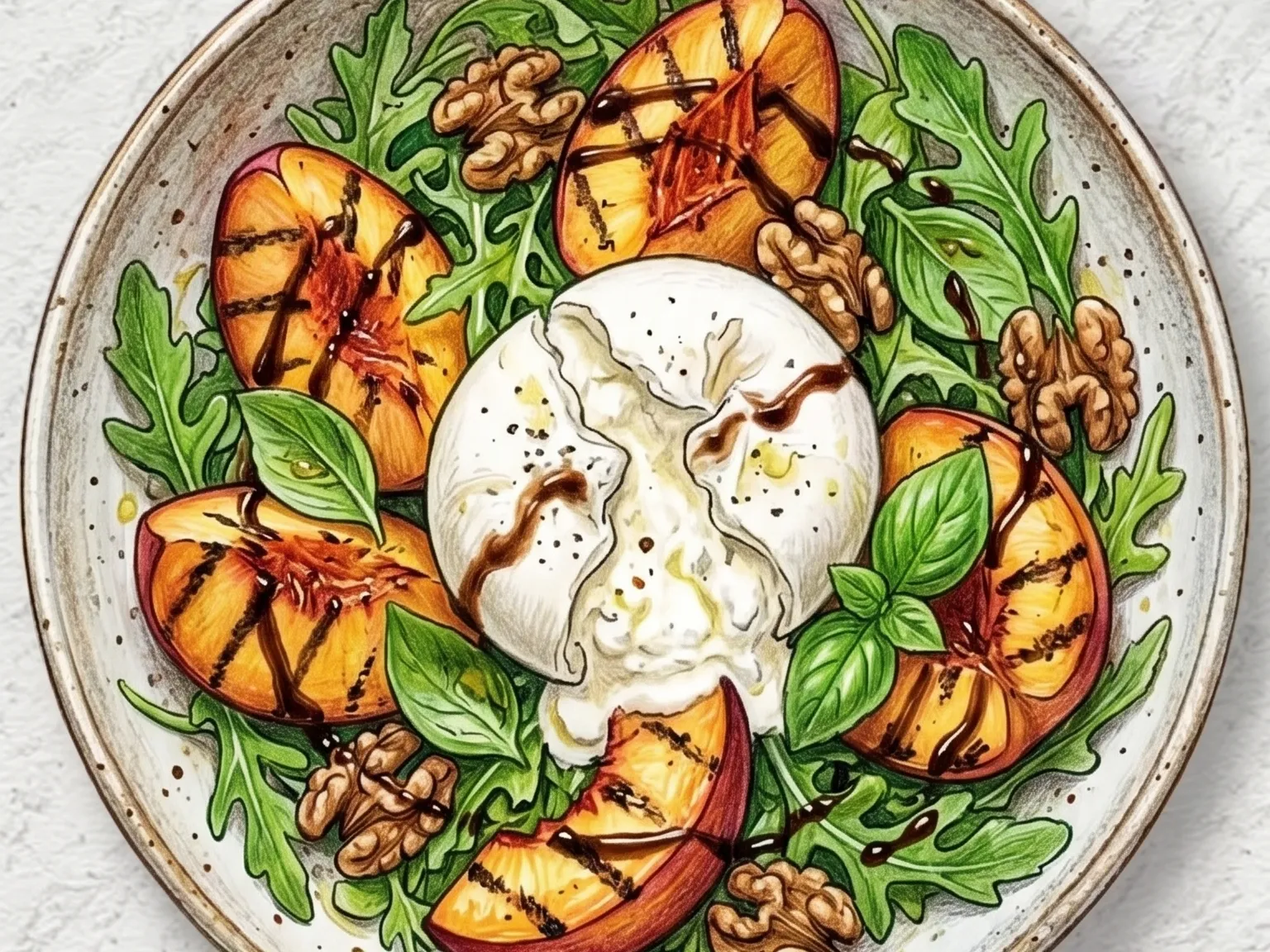
Grilled peach burrata basil salad brushes peach wedges lightly with olive oil and chars them on a grill pan for one to two minutes per side, concentrating their natural sugar into a caramelized sweetness with a subtle smoky note. Torn burrata cheese, arugula, fresh basil, and walnuts are arranged over the warm peaches and finished with a zigzag of balsamic glaze. Grilling caramelizes the fructose on the cut surface, producing a depth of sweetness that raw peaches cannot match. Taking the burrata out of the refrigerator ten minutes early allows the creamy interior to soften and flow, releasing its full milky flavor. Peppery arugula provides the counterpoint that keeps the sweet fruit and rich cheese from becoming one-dimensional, and the thick balsamic glaze ties all the elements together with its concentrated sweet-tart intensity.
Adjust Servings
Instructions
- 1
Pit and cut the peaches into wedges, then lightly brush with olive oil.
- 2
Grill peach wedges on a hot grill pan for 1-2 minutes per side until lightly charred.
- 3
Wash arugula and basil, dry thoroughly, and place in a large bowl.
- 4
Mix lemon juice, olive oil, and salt for a simple dressing, then toss with the greens.
- 5
Arrange greens on a plate, top with grilled peaches and torn burrata, then sprinkle walnuts.
- 6
Finish with a zigzag drizzle of balsamic glaze and serve immediately.
As an Amazon Associate, we may earn from qualifying purchases.
Tips
Nutrition (per serving)
More Recipes

Caprese Salad
Caprese salad arranges ripe tomato, fresh mozzarella, and basil leaves in alternating slices, relying on just three main ingredients dressed with extra virgin olive oil and salt. Because the recipe involves no cooking, the tomato's ripeness and the mozzarella's milky freshness determine the entire flavor profile. A thin drizzle of balsamic glaze adds concentrated grape-vinegar sweetness that contrasts with the cheese's fat, while basil's volatile aromatics release directly on the plate. Dressing the salad right before serving minimizes the moisture that tomatoes release when salted in advance.

Antipasto Salad
Antipasto - literally 'before the meal' in Italian - is a course of cured meats, cheeses, olives, and preserved vegetables served at the start of an Italian dinner, and this salad reformats that tradition into a single composed bowl. Crisp romaine or iceberg lettuce forms the base, topped with sliced salami, capicola, provolone, marinated artichoke hearts, roasted red peppers, and briny Kalamata olives. A red wine vinegar dressing with dried oregano and garlic ties the components together with a sharp, herbal acidity. The salad works because every ingredient brings a different intensity - salty cured meat, tangy cheese, sweet peppers, and bitter greens - so no two bites taste the same. Italian-American delis in New York and New Jersey popularized this format in the mid-20th century, and it has since become a fixture of catered lunches and family gatherings.

Panzanella Salad (Italian Ciabatta Bread Salad)
Stale ciabatta is torn into rough chunks, drizzled with olive oil, and toasted until crisp outside and slightly chewy inside. Ripe tomatoes are cut large so their juice soaks into the bread, creating the sweet-tart flavor central to the dish. Cucumber and red onion add crunch and sharpness, while torn basil leaves release their fragrance across the plate. A red wine vinegar and olive oil vinaigrette binds everything, and the salad peaks once the bread has absorbed just enough dressing to soften without going soggy - a practical Tuscan tradition born from using day-old bread.

Citrus Fennel Salad (Orange & Shaved Fennel with Arugula)
Fennel is shaved thin to highlight its anise-scented crunch, then paired with segmented orange for juicy acidity. Arugula contributes a peppery bite that offsets the citrus sweetness, and sliced almonds add a toasted crunch. The dressing stays minimal - olive oil and white wine vinegar - letting the raw ingredients speak clearly. This Italian-style salad works particularly well before rich meat or fish courses, as the citrus and fennel combination stimulates the palate.

Tomato Basil Soup
Tomato basil soup sautés onion and garlic in olive oil, adds canned whole tomatoes crushed by hand, simmers with vegetable stock for 15 minutes, then blends until smooth and finishes with cream and fresh basil. Crushing and cooking the tomatoes for the first five minutes before adding stock concentrates their natural sugars and reduces raw acidity, building a sweeter, deeper base. The 15-minute simmer lets the flavors merge without overcooking, and blending produces a velvety texture that cream enhances without masking the tomato. Basil is heat-sensitive - its volatile oils dissipate within minutes of cooking - so it goes in only after the heat is off, releasing its fragrance through residual warmth alone. A tablespoon of tomato paste can be stirred in during the sauté stage for a more intense tomato flavor if desired.

Pesto Genovese Pasta
Pesto Genovese pasta originates from Genoa in the Ligurian coast of Italy, where fresh basil leaves are ground with pine nuts, garlic, Parmesan cheese, and extra virgin olive oil to create an uncooked sauce. Basil oxidizes and darkens quickly when exposed to heat, so the pesto must be prepared either in a mortar and pestle or pulsed briefly in a food processor to avoid raising the temperature. Toasting the pine nuts in a dry pan before grinding intensifies their nutty flavor, and the olive oil must be extra virgin to contribute the grassy, fruity notes that complement the basil. When tossing the pesto with hot pasta, a splash of starchy pasta water emulsifies the sauce and helps it coat every strand evenly. The sauce should be warmed only by the residual heat of the pasta - direct heat would dull the vivid green color and diminish the fresh herbal aroma.