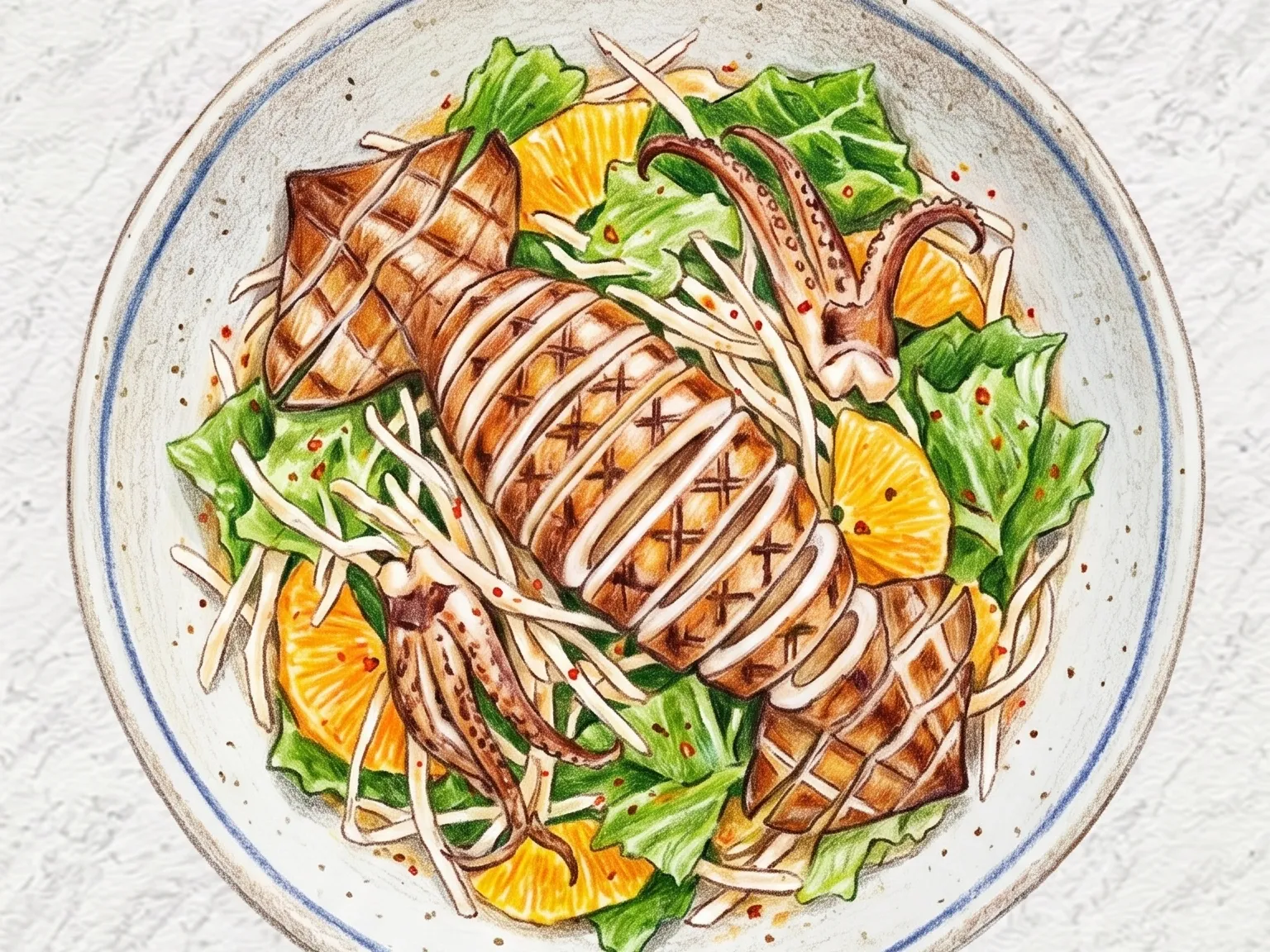
Grilled Squid & Bellflower Root Salad
Grilled squid and bellflower root citrus salad combines seared squid with soaked bellflower root, romaine, and orange segments in a yuzu-gochugaru dressing, drawing on classic Korean flavors to build a salad with genuine textural and flavor complexity. The squid tubes are scored in a crosshatch pattern before cooking, which ensures that heat penetrates evenly so the flesh cooks uniformly without curling into a tight coil; limiting each side to one to two minutes over high heat is equally important, as even a minute more will produce a rubbery result. Bellflower root is a traditional Korean ingredient with a pleasantly bitter edge that requires brief preparation: shredded into thin strips and soaked in lightly salted water for five minutes, it releases enough bitterness to become mild and yielding while retaining a satisfying crunch. The dressing is the component that unifies the dish: yuzu marmalade contributes a floral, layered acidity quite different from straightforward lemon or lime juice, while rice vinegar sharpens the finish, olive oil emulsifies and rounds the texture, and gochugaru adds a slow-building warmth that lingers after the citrus flavors fade. This combination bridges the savory, slightly smoky character of the squid and the subtle bitterness of the bellflower root. Fresh orange segments provide the final note, bursting with bright juice on each bite to lift the entire salad. The visual contrast between the ivory bellflower root, the charred squid, and the vivid orange makes the finished plate as attractive to look at as it is to eat.
Adjust Servings
Instructions
- 1
Score the squid, then season with salt, pepper, and 1 tbsp olive oil for 10 minutes.
- 2
Shred bellflower root, soak in salted water for 5 minutes, rinse, and drain.
- 3
Heat a pan on high and grill squid 1-2 minutes per side, then slice bite-size.
- 4
Whisk yuzu marmalade, vinegar, 1 tbsp olive oil, and chili flakes for the dressing.
- 5
Combine romaine, bellflower root, orange segments, and grilled squid; toss with dressing.
- 6
Serve immediately while textures stay crisp and tender.
As an Amazon Associate, we may earn from qualifying purchases.
Tips
Nutrition (per serving)
Goes Well With

Korean Cabbage Tuna Jeon (Crispy Shredded Cabbage Tuna Pancake)
Finely shredded cabbage, drained canned tuna, and thinly sliced onion are folded into a light batter of Korean pancake mix, egg, and salt, then spread thin in an oiled pan. As the cabbage cooks, it releases moisture and develops a natural sweetness that balances the tuna's salty, savory character. Spreading the batter thin ensures crisp edges throughout, and making smaller pancakes simplifies flipping. High in protein and relatively low in calories, this jeon doubles as a quick standalone meal or a diet-friendly option, finished with a scattering of chopped green onion on top.

Kongguksu-Style Cold Linguine
Kongguksu-style cold linguine reinterprets Korea's chilled soy noodle soup using Italian linguine in place of traditional wheat noodles. Unsweetened soy milk is blended with toasted sesame seeds and peanut butter into a thick, nutty cold broth poured directly over the pasta at serving. The linguine is cooked al dente and immediately shocked in ice water to firm up the texture and chill it completely before the broth goes on. Julienned cucumber and halved cherry tomatoes scatter on top for fresh crunch and color. Salt and sugar are adjusted at the end to balance the broth's natural bean flavor against the richness from the peanut butter. The full preparation takes about ten minutes, with stovetop time limited strictly to boiling the pasta, which makes it one of the more practical cold dishes to assemble in summer heat. Adding more peanut butter thickens the broth further, while extra sesame seeds push the nuttiness higher.

Soybean Paste Stew with Clams
Doenjang jjigae with clams is one of the most frequently made stews in Korean households, built on the combination of fermented soybean paste's deep, earthy flavor and the clean briny umami of manila clams. The clams are purged of sand before being added to a pot of doenjang-laced broth, where they open and release their salty, seawater-flavored liquor directly into the soup. The result transforms the base from something merely savory into something distinctly oceanic and complex. Zucchini softens in the bubbling broth and contributes a natural sweetness as it breaks down, while blocks of soft tofu act as sponges, soaking up the seasoned liquid and releasing it in a burst of hot, flavorful broth when bitten into. Sliced cheongyang chili peppers are added to interrupt the heaviness of the fermented paste and sharpen the overall flavor. The stew is typically served in an earthenware pot while still bubbling, alongside rice. Many Koreans ladle the broth directly over their bowl of rice. The recipe adapts to any season: assembled with leftover summer vegetables from the refrigerator for a lighter version, or cooked piping hot in a stone pot through winter.

Gazpacho
The secret to an authentic gazpacho lies in the interaction between stale bread and fresh garden vegetables. While tomatoes, cucumbers, and red bell peppers form the base, the addition of water-soaked bread creates a thick, velvety consistency that distinguishes this Andalusian specialty from a simple puree. Blending these ingredients with red onion, garlic, extra virgin olive oil, and red wine vinegar produces a smooth texture where the oil emulsifies the vegetable juices and the vinegar sharpens the natural sugars of the tomatoes. Patience is required after the blending is complete; the soup must rest in the refrigerator for at least two hours to allow the flavors to settle and integrate, a process that does not occur effectively at room temperature. Serving requires a final touch of drizzled olive oil and a handful of finely diced vegetables to create a crisp contrast against the liquid base. For the most refined results, passing the mixture through a fine-mesh sieve ensures a silky finish. Using fully ripened summer tomatoes provides the ideal acidity levels, and storing the leftovers in the fridge for a day or two often leads to a more developed profile.
More Recipes

Grilled Mackerel Perilla Salad
Grilled mackerel perilla salad starts by salting mackerel fillets for five minutes, then patting them completely dry before setting them skin-side down in a hot pan. The drying step draws surface moisture out of the fish so the skin crisps sharply in the pan rather than steaming, and the brief salt also damps down the mackerel's characteristic fishiness. Four minutes skin-side down followed by two minutes on the flesh side leaves the exterior with a firm, golden crust while the interior stays moist and just cooked through. Once off the heat the fish is broken into irregular pieces and scattered over a bed of romaine, thinly sliced perilla leaves, cucumber batons, and radish sprouts. A dressing of soy sauce, yuzu marmalade, and sesame oil brings the whole dish together: the aromatic acidity of yuzu cuts cleanly through the oily richness of mackerel in a way that a plain rice vinegar dressing cannot. Cutting perilla into thin ribbons rather than tearing it distributes the herb's peppery, anise-like fragrance evenly across every forkful so no bite is without it. The contrast of warm fish against cold vegetables and crisp greens makes each serving feel alive rather than flat.

Squid Naengi Chojang Salad
Preparing squid for a seasonal salad involves a quick blanching process in boiling water for less than thirty seconds. This precise timing keeps the seafood tender and prevents it from turning rubbery or tough. Shepherd's purse, or naengi, contributes an earthy aroma characteristic of early spring that complements the oceanic profile of the squid. Crisp lettuce and fresh cucumber provide a crunchy texture that contrasts with the soft seafood pieces. The dressing relies on a combination of gochujang, rice vinegar, and oligosaccharide syrup to create a spicy, tangy, and mildly sweet foundation for the ingredients. To finish the sauce, sesame oil contributes a nutty scent while minced garlic adds a sharp, aromatic quality that integrates the different components. Careful cleaning of the naengi to remove soil and fine roots is necessary before briefly blanching it in salted water to eliminate bitterness and preserve its fragrance. Serving this dish cold during the early spring months highlights the specific seasonal qualities of the ingredients. For variations, scallops or shrimp can replace the squid, as they both pair well with the spicy dressing. Similarly, spring cabbage or wild chives can substitute for the shepherd's purse to maintain the seasonal character of the salad.

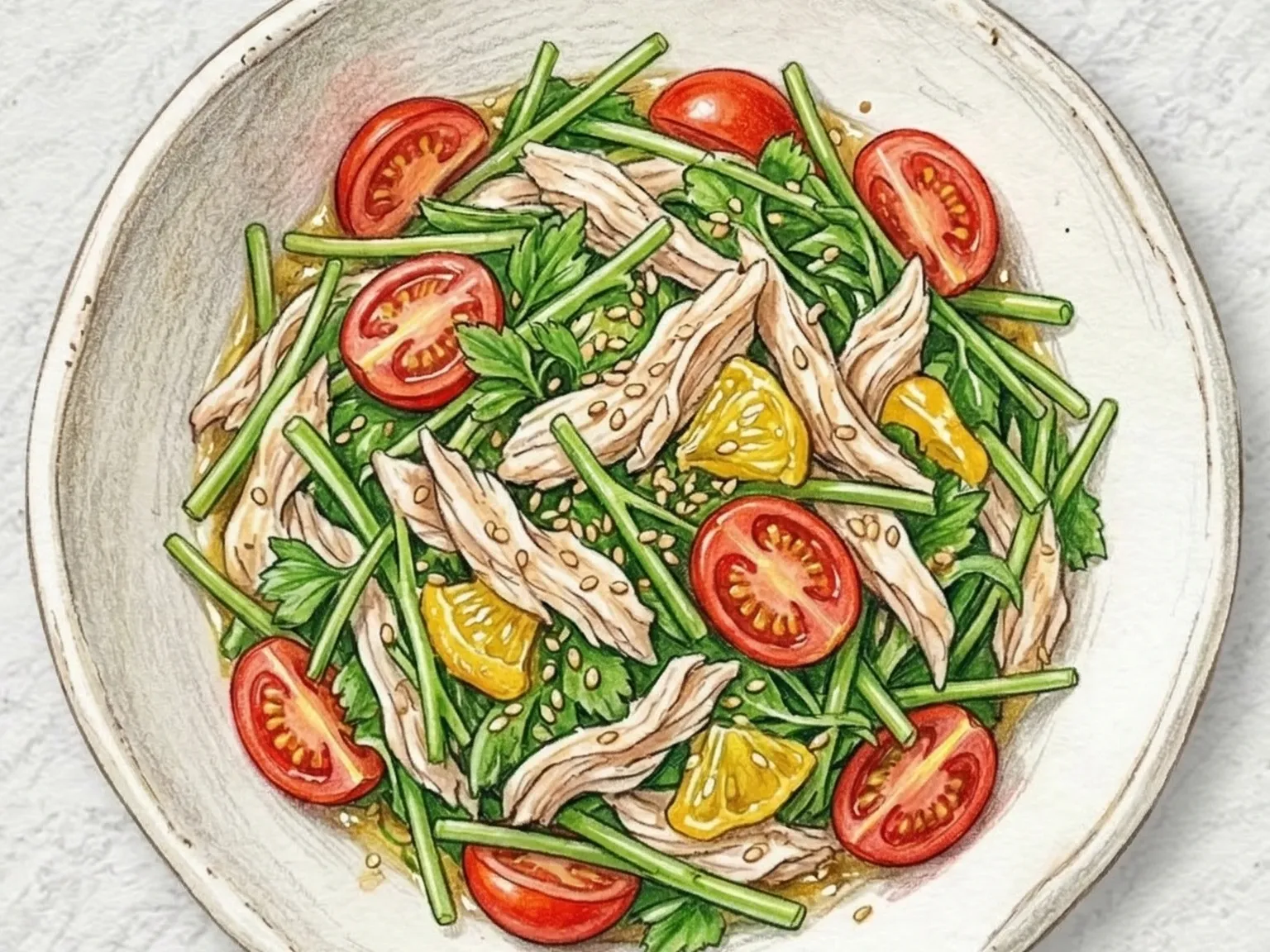
Deodeok Citrus Chicken Salad
Deodeok citrus chicken salad is a Korean-style dish that focuses on the interplay between various textures and flavors. The preparation involves pan-searing chicken tenderloin in a hot skillet until it develops a golden crust on the outside while the meat remains tender on the inside. This protein is paired with deodeok root, which is beaten or pounded before use to loosen its tough fibers and soften its structure. Deodeok provides a unique earthy quality and a subtle bitterness that is difficult to find in other root vegetables. Fresh orange segments are included to provide a bright acidity that balances the savory notes of the seared chicken and the natural earthiness of the deodeok. Arugula is used as the base of the greens, contributing a sharp, peppery layer to the overall composition. A simple dressing made from soy sauce and olive oil is used to integrate the Korean-inspired components with more Western salad elements. Because the dish contains a high amount of protein from the chicken and a significant volume of vegetables, it functions as a light meal that remains nutritionally complete.

Naengi Beef Salad (Shepherd's purse)
Fresh naengi - shepherd's purse - is blanched to mellow its earthy bite while keeping the fragrance intact. Beef sirloin is sliced thin and seared quickly so the surface chars lightly and the center stays moist. Julienned Korean pear bridges the beef's richness and the naengi's mild bitterness with clean sweetness. A dressing of soy sauce, vinegar, sesame oil, and plum extract balances salty, sour, and subtly sweet, while red onion and toasted sesame seeds finish with sharpness and nutty crunch.

Korean Grilled Bellflower Root
Bellflower root is shredded lengthwise, soaked in salted water, and blanched for one minute to draw out its characteristic bitterness without eliminating it entirely. A ten-minute soak in a sauce of gochujang, gochugaru, soy sauce, oligosaccharide syrup, garlic, and sesame oil seasons the root before it hits a medium-heat pan for three to four minutes per side. The result has a crisp, crunchy bite - distinct from any other vegetable - with a red-glazed surface that carries moderate heat. Open-flame grilling adds a smoky dimension that pairs well with the spicy coating, and sesame seeds provide a finishing touch.

Korean Grilled Deodeok Root
Deodeok-gui is a traditional Korean mountain vegetable dish where peeled deodeok roots are pounded flat with a mallet, coated in a paste of gochujang, gochugaru, honey, sesame oil, and garlic, then grilled over high heat. The pounding step is critical: it breaks down the tough fibers so the seasoning absorbs evenly and the root develops a pleasant chewiness instead of remaining stringy. Soaking the peeled deodeok in lightly salted water for about thirty minutes before pounding draws out the sharpest bitterness, leaving only the characteristic mellow, slightly medicinal aroma the root is known for. That bittersweet quality sits in balance between the fermented spice of gochujang and the sweetness of honey. Quick grilling at high temperature chars the glaze just enough to add smokiness while keeping the interior moist; applying the seasoning paste in two stages during grilling builds a thicker, glossier layer on the surface. Toasted sesame seeds scattered on top contribute nuttiness that complements the wild herb's earthy, resinous character.