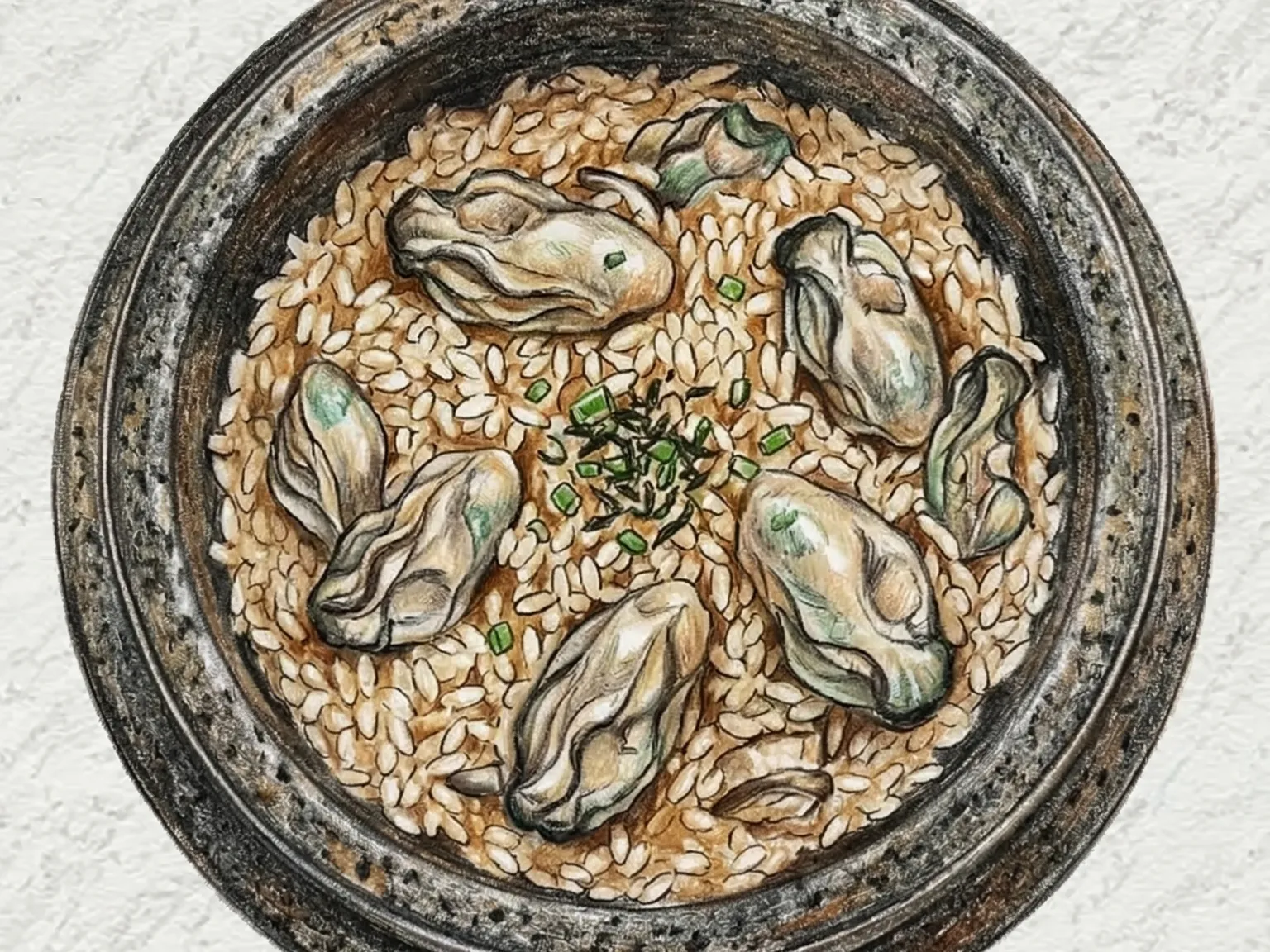
Korean Oyster Rice (Winter Pot Rice with Plump Oysters)
Plump winter oysters are steamed on top of rice during the final resting stage so they cook gently without shrinking or turning rubbery. Julienned Korean radish laid at the bottom of the pot prevents sticking and releases moisture and sweetness that subtly enrich the grains. The finished rice is served with a dipping sauce of soy sauce, sesame oil, red pepper flakes, and green onion, and mixing everything together lets the briny oyster juices merge with the sharp, nutty dressing. Timing the oysters to the very end of cooking is what keeps them tender and full-sized.
Adjust Servings
Instructions
- 1
Wash rice and soak for 30 minutes.
- 2
Gently wash oysters in salt water to remove impurities.
- 3
Julienne radish, place at the bottom of the pot, add rice and water.
- 4
Bring to a boil, reduce to low heat, and cook 12 minutes.
- 5
Place oysters on top, cover, and steam for 5 minutes.
- 6
Mix soy sauce, sesame oil, pepper flakes, and green onion for dipping sauce; toss to eat.
As an Amazon Associate, we may earn from qualifying purchases.
Tips
Nutrition (per serving)
More Recipes

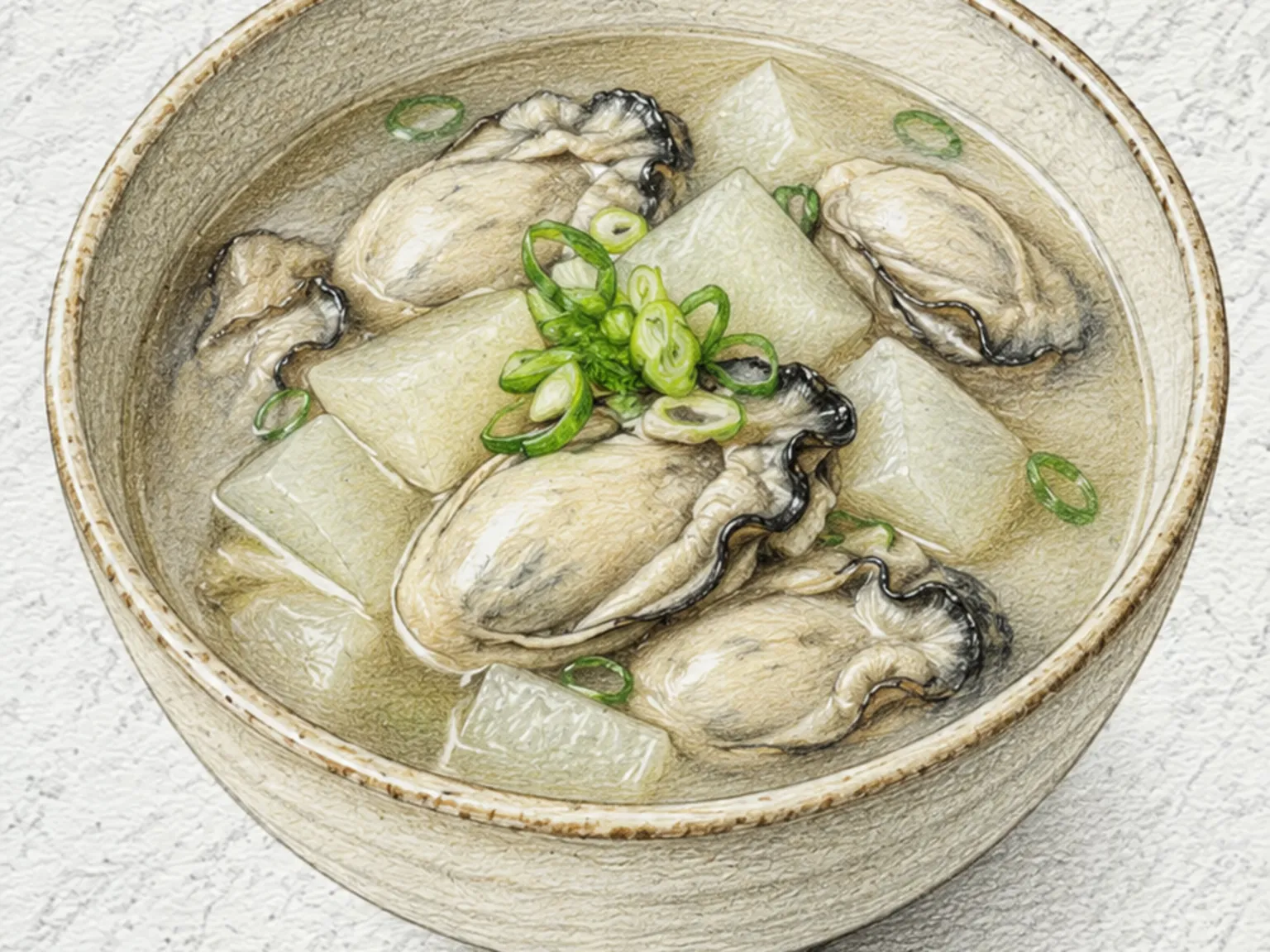
Korean Radish Rice (Julienned Radish Steamed with Short-Grain Rice)
Mu-bap is Korean radish rice where finely julienned radish steams on top of rice, releasing its natural moisture and sweetness into every grain. The cooked radish-rice is then tossed with a seasoning sauce of soy sauce, sesame oil, chives, red pepper flakes, and sesame seeds right before eating to keep the texture fluffy. Cutting the radish into thin, even strips ensures it cooks at the same rate as the rice. Winter radish, which is at its peak sweetness, makes this simple dish especially flavorful.

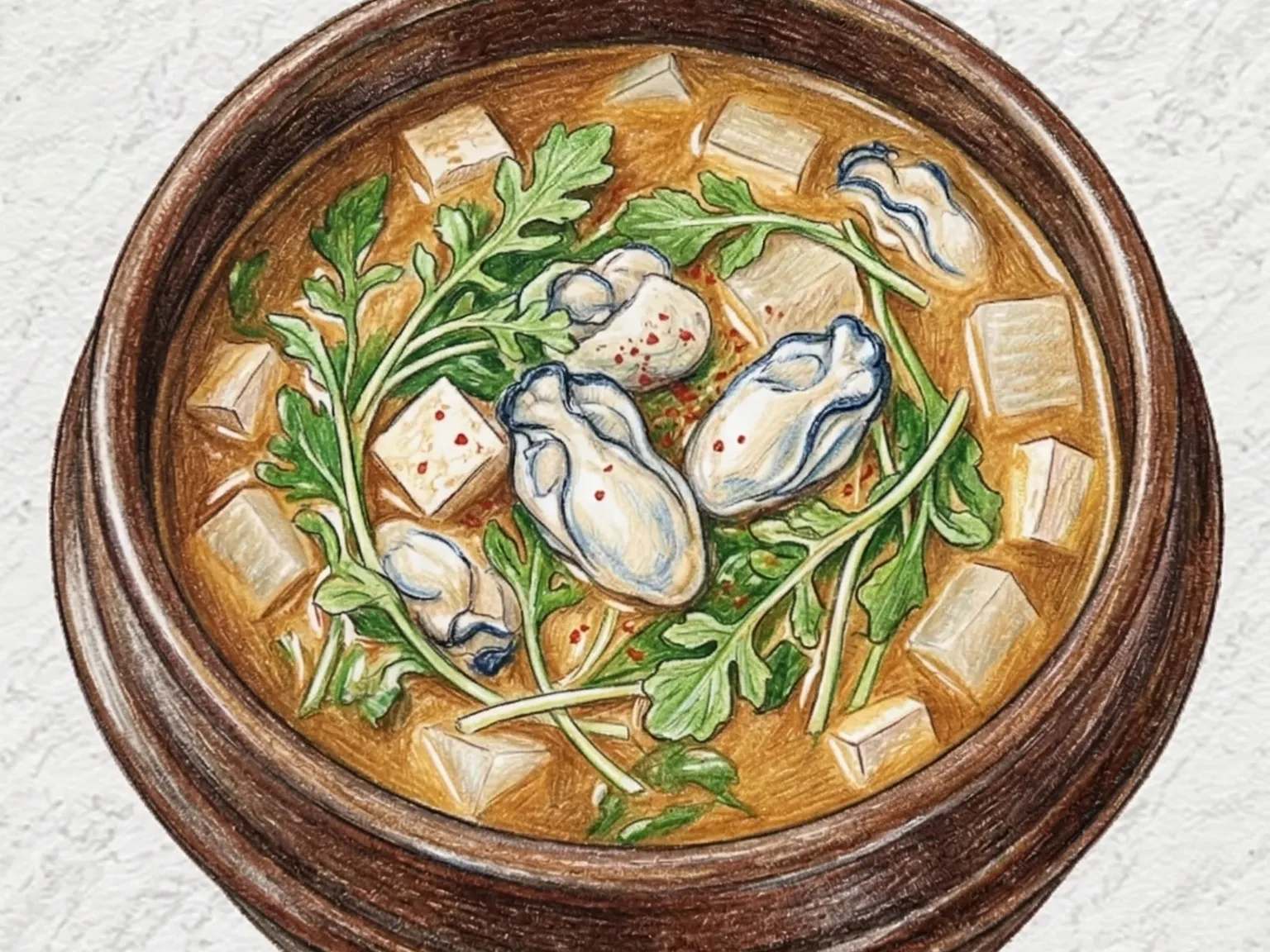
Korean Mussel Rice (Winter Pot Rice in Mussel Broth)
Rice is cooked directly in mussel broth so the ocean flavor permeates every grain, making this a prized winter pot-rice dish. Julienned Korean radish lines the bottom of the pot, preventing sticking while adding its own mild sweetness to the broth, and mussel meat is placed on top only after the rice finishes cooking to keep it from toughening. A dipping sauce of soy sauce, sesame oil, and red pepper flakes is mixed into each serving, layering salty heat over the shellfish umami. Water parsley garnish brings an herbal freshness that lifts the heavy marine aroma.

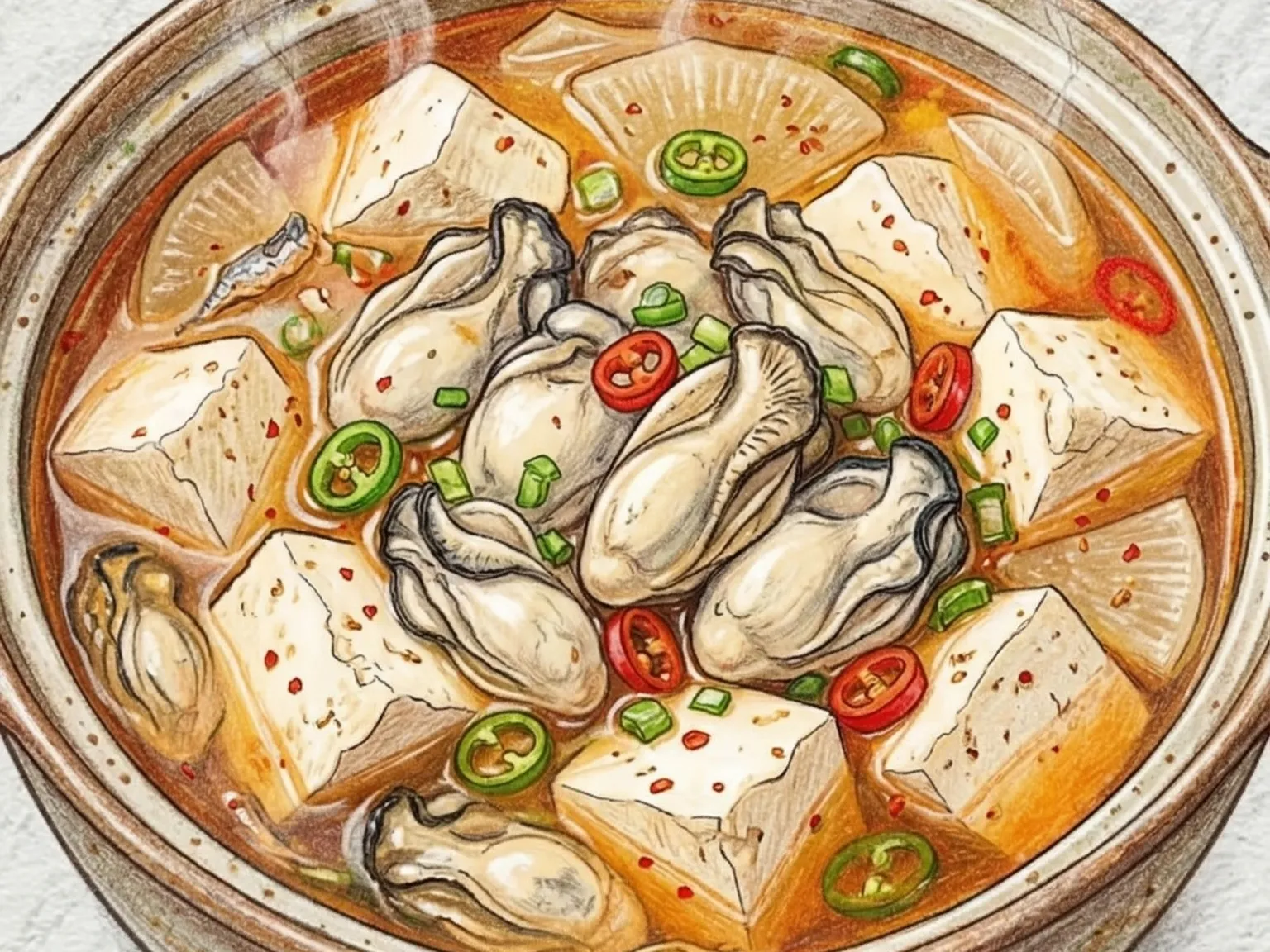
Korean Oyster Porridge (Savory Briny Rice Porridge)
Fresh oysters and soaked rice are first sauteed in sesame oil, then simmered with water and finely diced radish for twenty minutes before the oysters go in for a final seven minutes of gentle cooking. Adding the oysters late preserves their plump bite and prevents them from becoming chewy, while the radish dissolves slightly to lend a quiet sweetness to the broth. Soup soy sauce seasons the porridge without masking the natural brine of the shellfish, and a teaspoon of ginger juice can be added to temper any fishiness. The result is a warming, protein-rich bowl that soothes the stomach while delivering concentrated ocean flavor.

Korean Steamed Oysters
Gul-jjim is Korean steamed oysters cooked in their shells over high steam until they pop open. The shell acts as a natural vessel, trapping the briny liquor and keeping the oyster meat plump and moist. A dipping sauce of soy sauce, vinegar, and red pepper flakes adds a sharp contrast to the oyster's mild sweetness, while lemon wedges provide a clean finish. With minimal preparation and a cooking time under ten minutes, this is one of the simplest ways to enjoy fresh winter oysters at their peak.

Korean Truffle Mushroom Pot Rice
Shiitake and king oyster mushrooms are generously added to a pot of rice and cooked so their released moisture and earthy fragrance infuse every grain. The shiitake stays chewy while thick-sliced king oyster offers a meaty, substantial bite. Once the rice is done, a few drops of truffle oil are drizzled over the top, layering the mushrooms' natural earthiness with the truffle's deep, aromatic intensity. Mixing in a soy-seasoned sauce adds a salty edge that brings the whole bowl into balance.

Korean Salted Oyster Jeotgal
Gul jeotgal is a traditional Korean fermented seafood condiment made by curing fresh winter oysters in solar salt with gochugaru, garlic, ginger, and plum extract, then aging at low temperature. Salt draws moisture from the soft oyster flesh, concentrating its marine umami into a potent, briny paste. Gochugaru adds color and a spicy dimension, while plum extract suppresses any fishiness that develops during fermentation and contributes a balancing acidity. Beyond serving as a banchan on its own over rice, gul jeotgal is commonly folded into napa cabbage kimchi filling, where it elevates the kimchi's savory depth by an order of magnitude.