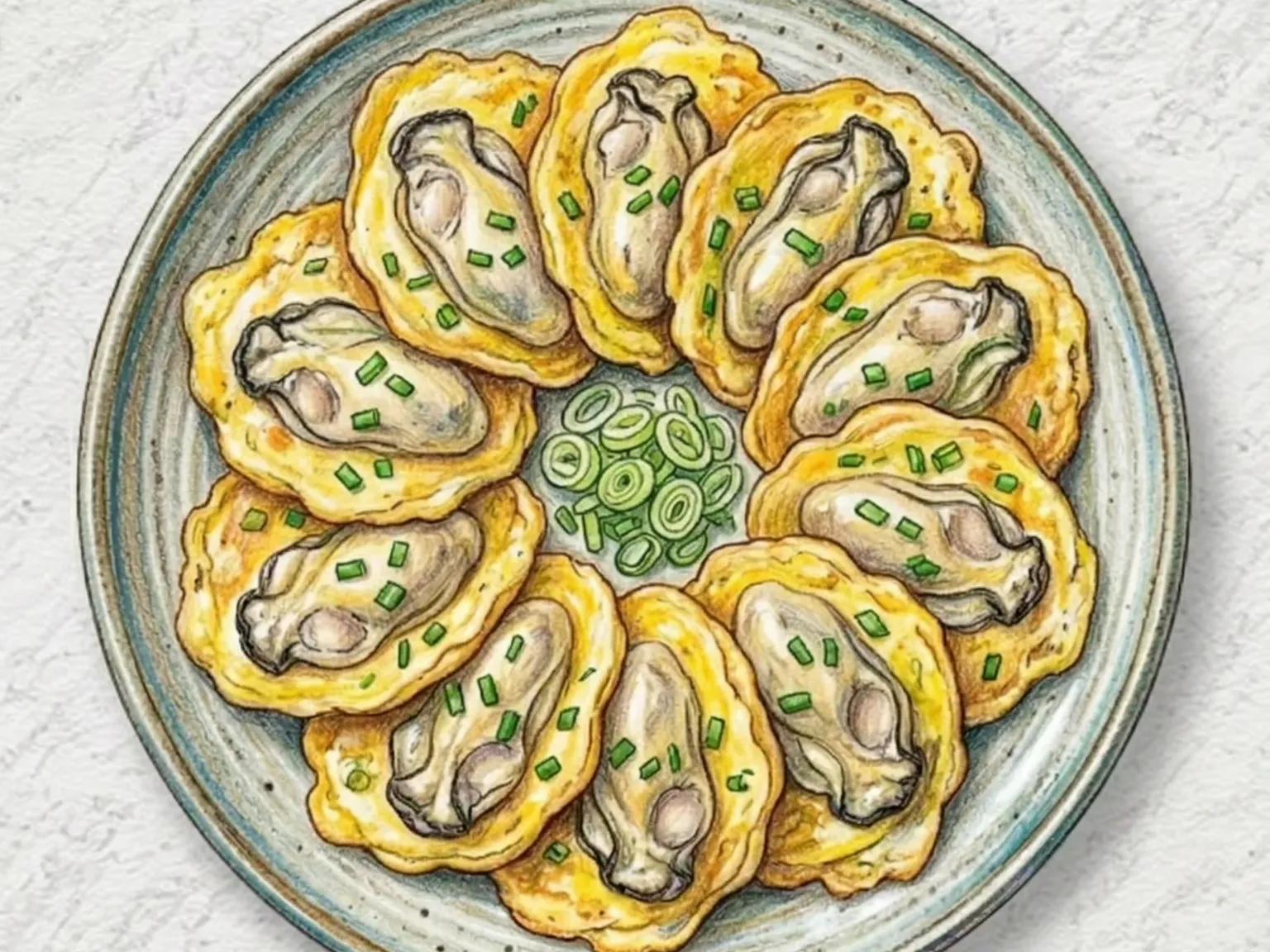
Korean Pan-fried Oyster Jeon
Gul-jeon is a Korean pan-fried oyster pancake where fresh seasonal oysters are rinsed gently in salted water, patted dry, dusted lightly in flour, dipped in beaten egg, and cooked over medium heat for about two minutes per side. Thorough drying is critical-residual moisture causes oil splatter and prevents the flour from adhering evenly, and a thick flour coating muffles the oyster's delicate brine, so the lightest possible dusting is the goal. The egg batter acts as an insulating jacket that transmits heat gently, keeping the oyster's interior moist and plump while the exterior turns a soft golden color that releases ocean-mineral aroma with each bite. Chopped garlic chives added near the end of cooking introduce a sharp, garlicky note that accentuates the oyster's mineral character.
Adjust Servings
Instructions
- 1
Rinse oysters gently in salted water and drain thoroughly.
- 2
Lightly season oysters with salt and pepper.
- 3
Dust oysters with flour, then dip into beaten eggs.
- 4
Pan-fry over medium heat for about 2 minutes per side.
- 5
Add chopped chives near the end for aroma.
- 6
Remove when golden, drain briefly, and serve immediately.
As an Amazon Associate, we may earn from qualifying purchases.
Tips
Nutrition (per serving)
More Recipes

Korean Chive Shrimp Jeon (Crispy Chive and Shrimp Pancake)
Buchu-saewu-jeon is a Korean chive and shrimp pancake where coarsely chopped shrimp, garlic chives, and sliced onion are folded into an egg-enriched batter and pan-fried. Leaving the shrimp in rough chunks rather than mincing fine means each bite delivers a distinct, bouncy snap of shellfish sweetness. The onion softens and sweetens as it cooks, balancing the briny shrimp, while a touch of black pepper adds subtle warmth in the background. Spreading the batter thin and cooking for three minutes before flipping ensures the shrimp-studded edges turn crisp and lacy while the chive-packed center stays moist.

Korean Tofu Jeon (Golden Egg-Coated Pan-Fried Tofu)
Dubu-jeon is a Korean pan-fried tofu dish where firm tofu is sliced into 1 cm thick pieces, seasoned with salt and pepper, dusted in flour, dipped in beaten egg, and fried until golden. Pressing the tofu for at least fifteen minutes under a heavy weight wrapped in paper towels is the most important step-excess moisture causes oil to splatter and prevents the egg coating from adhering properly. Each side needs three to four uninterrupted minutes over medium heat to develop an even golden crust; flipping too often strips the egg batter away. A dipping sauce of soy sauce, vinegar, and chili flakes transforms the mild, nutty tofu into something more complex, adding salt, acidity, and heat that complement the plain simplicity of the base.

Korean Stuffed Chili Pepper Pancake
Gochu-jeon is a Korean holiday pancake made by splitting mild green chili peppers lengthwise, removing the seeds, stuffing them with a filling of ground pork mixed with pressed tofu and garlic, then coating in flour and egg before pan-frying. The pepper's gentle heat wraps around the pork filling's savory richness and the tofu's silky softness, creating a layered contrast in every bite. Filling each pepper to about seventy percent capacity prevents bursting during cooking, and using cucumber peppers instead of regular green chilies eliminates nearly all spiciness for milder palates. This jeon is a fixture on Seollal and Chuseok tables, and it tastes best served warm with a soy-vinegar dipping sauce that brightens the meat filling's umami.

Korean Kimchi Pancake
Well-fermented kimchi is chopped fine and mixed into a batter of Korean pancake mix, kimchi brine, and chili flakes, then fried in oil until both sides turn golden. Adding the kimchi brine directly into the batter is the key step, as its lactic acid tang brings depth that plain water cannot. Cooking four minutes on the first side and three on the second produces a crisp exterior while the interior stays moist from the kimchi moisture.

Korean Kimchi Pork Jeon (Fermented Kimchi and Pork Crispy Pancake)
Well-fermented kimchi and pork shoulder are the backbone of this hearty Korean pancake. Kimchi brine is mixed directly into the batter, intensifying both the color and the tangy, fermented depth of flavor. A small amount of sugar balances the acidity, while green onion and onion add texture throughout. Pressing the pancake flat in a generously oiled pan over high heat produces deeply caramelized, crispy edges that contrast with the soft, savory interior.

Korean Kimchi Fried Rice (Kimchi Bokkeumbap)
Finely chopped aged kimchi is stir-fried with ground pork, and the fermentation tang meets rendered pork fat to build a deep, layered umami. Kimchi juice goes into the pan along with gochujang and a touch of sugar, coating the rice in a spicy-sweet glaze. High heat is critical - quick tossing keeps each grain separate and slightly crisp rather than mushy. A soft-fried egg on top lets the runny yolk temper the heat, and using well-fermented kimchi dramatically deepens the flavor profile. Variations with spam or canned tuna are equally popular across Korean home kitchens.