Korean Oyster Porridge (Savory Briny Rice Porridge)
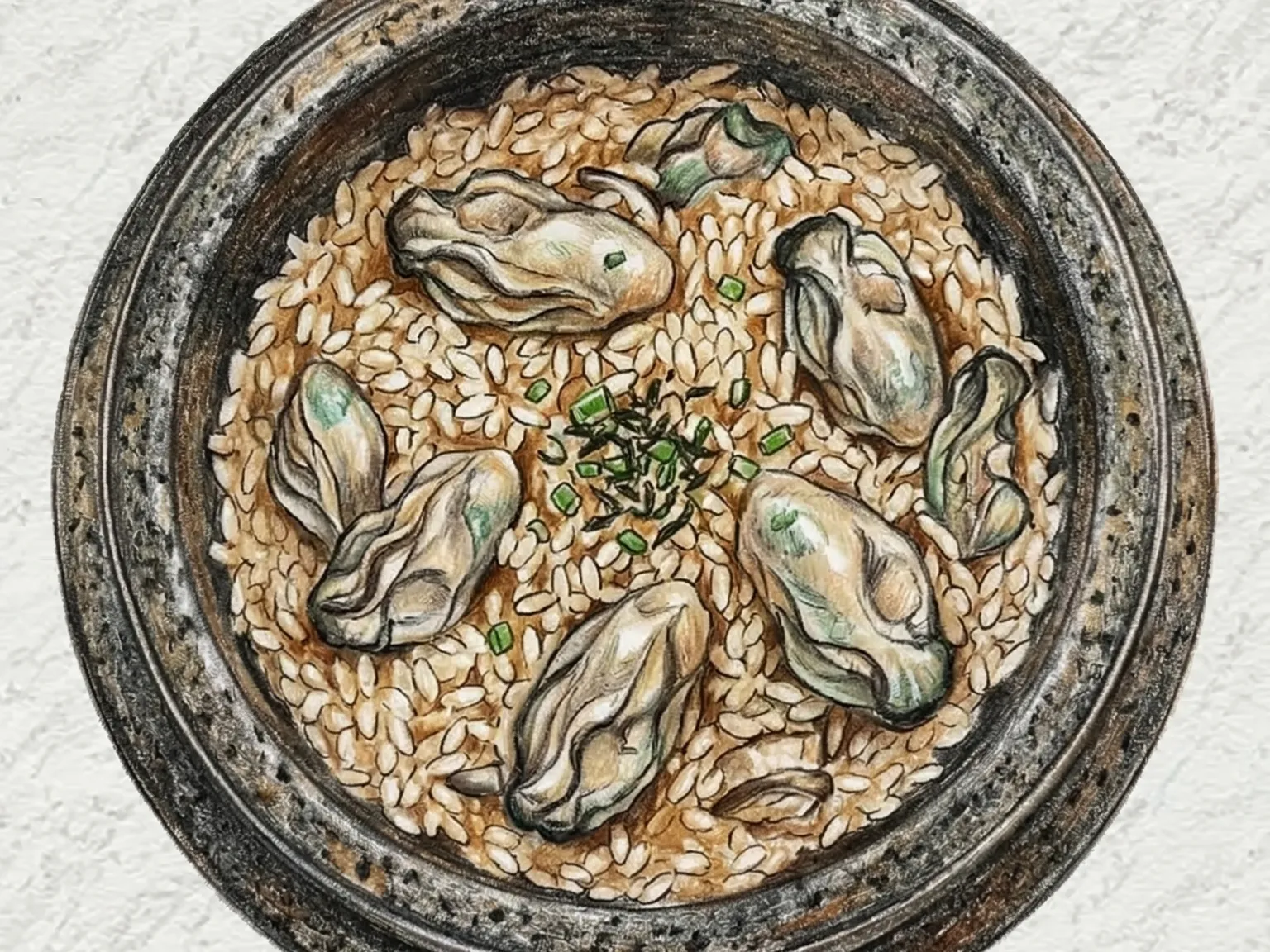
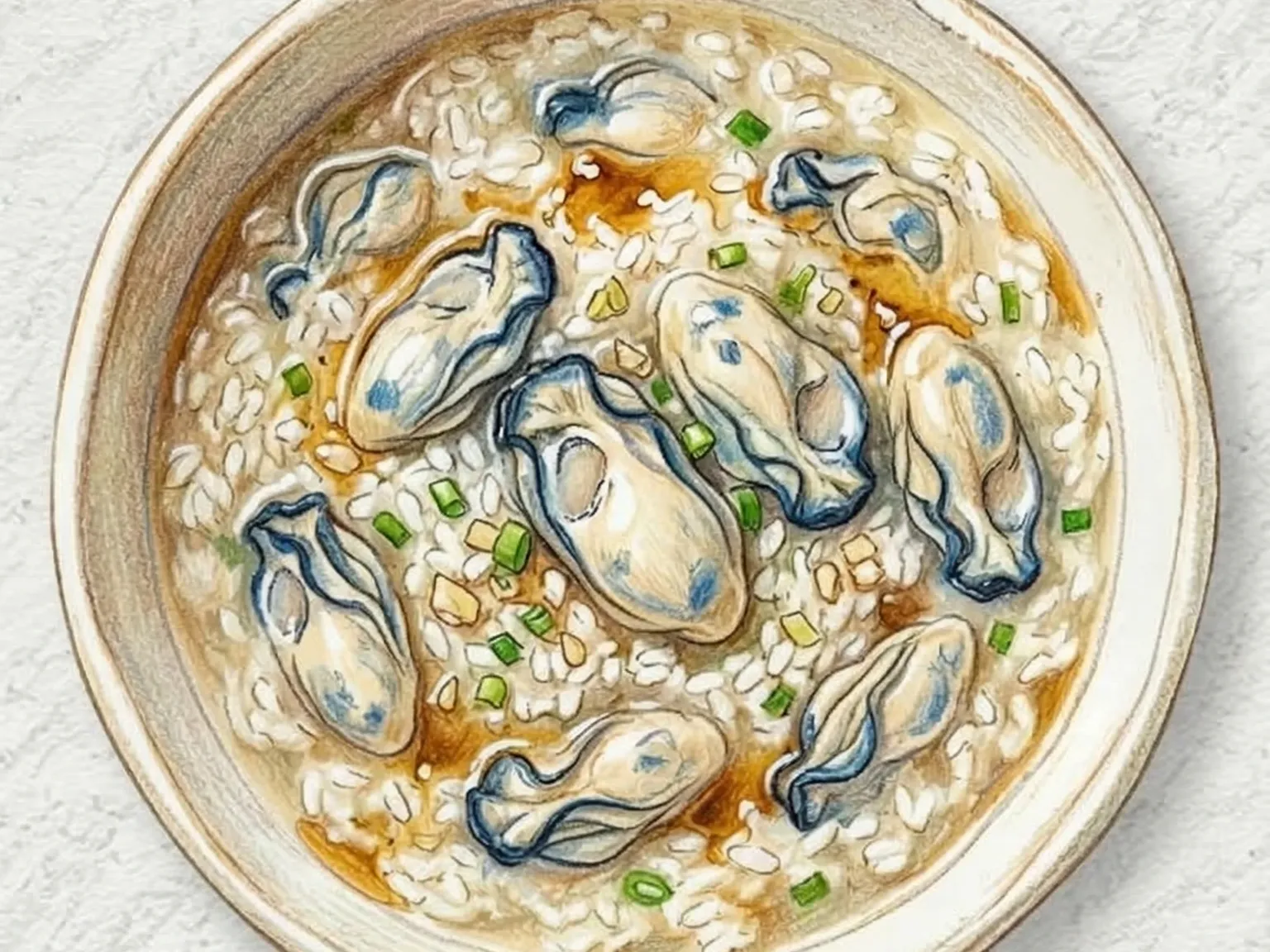
Fresh oysters and soaked rice are first sauteed in sesame oil, then simmered with water and finely diced radish for twenty minutes before the oysters go in for a final seven minutes of gentle cooking. Adding the oysters late preserves their plump bite and prevents them from becoming chewy, while the radish dissolves slightly to lend a quiet sweetness to the broth. Soup soy sauce seasons the porridge without masking the natural brine of the shellfish, and a teaspoon of ginger juice can be added to temper any fishiness. The result is a warming, protein-rich bowl that soothes the stomach while delivering concentrated ocean flavor.
Adjust Servings
Instructions
- 1
Soak rice for 30 minutes and dice the radish finely.
- 2
Rinse oysters gently in salted water and drain.
- 3
Sauté rice and radish in sesame oil for 3 minutes.
- 4
Add water and simmer for 20 minutes, stirring often.
- 5
Add oysters and garlic, then cook for 7 more minutes.
- 6
Season with soup soy sauce, turn off heat, and rest for 2 minutes.
As an Amazon Associate, we may earn from qualifying purchases.
Tips
Nutrition (per serving)
More Recipes

Korean Maesaengi Oyster Porridge
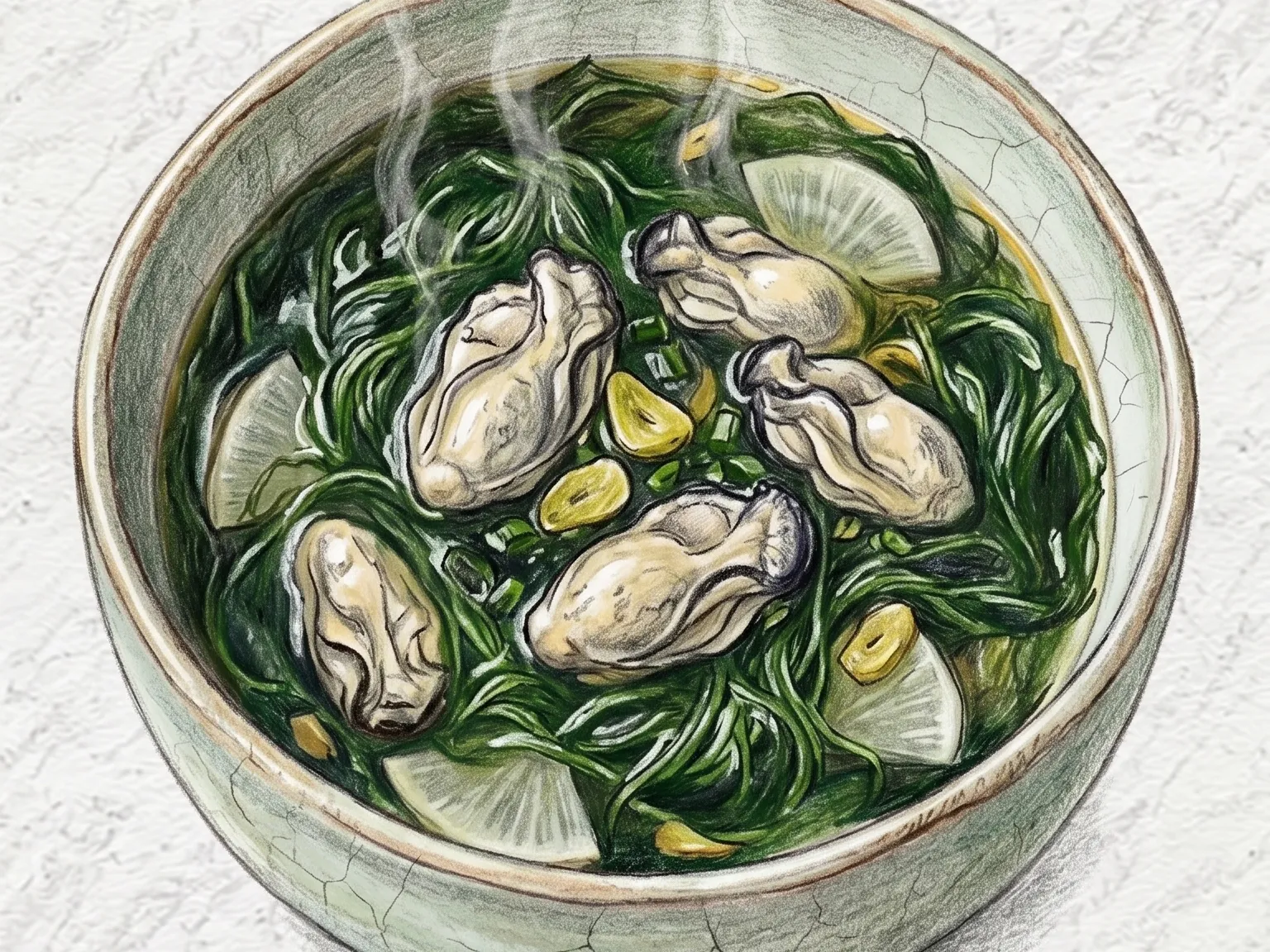
Maesaengi gul juk is a warming Korean winter porridge built on sesame-oil-toasted rice simmered in anchovy-kelp stock. Delicate strands of maesaengi seaweed lend a mild oceanic fragrance, while plump oysters release briny juices that deepen the broth. The rice is stir-fried in sesame oil before the stock goes in, giving the porridge a nutty backbone. Maesaengi goes in at the very end to keep its vivid green color and fresh sea aroma intact.

Korean Oyster Rice (Winter Pot Rice with Plump Oysters)
Plump winter oysters are steamed on top of rice during the final resting stage so they cook gently without shrinking or turning rubbery. Julienned Korean radish laid at the bottom of the pot prevents sticking and releases moisture and sweetness that subtly enrich the grains. The finished rice is served with a dipping sauce of soy sauce, sesame oil, red pepper flakes, and green onion, and mixing everything together lets the briny oyster juices merge with the sharp, nutty dressing. Timing the oysters to the very end of cooking is what keeps them tender and full-sized.

Korean Red Bean Porridge (Velvety Adzuki Porridge with Rice Dumplings)
Pat-juk is a traditional Korean red bean porridge made by boiling dried red beans until very soft, straining them to extract a smooth, deeply colored paste, and simmering that paste with rice until it thickens into a velvety porridge. Small dumplings rolled from glutinous rice flour - called saeal-sim - are dropped in toward the end, giving each spoonful a chewy counterpoint to the creamy base. The porridge carries a gentle, natural sweetness from the red beans, which can be adjusted with a touch of sugar. A dusting of cinnamon on top complements the earthy bean flavor. Traditionally served on the winter solstice, pat-juk is equally satisfying as an everyday warm meal or a light late-night dish.

Korean Chicken Rice Porridge
Dakjuk is a Korean chicken rice porridge built from a simple foundation: a whole chicken breast poached in water until tender, then shredded along the grain and returned to the broth with soaked rice. The rice is first sauteed briefly in sesame oil with minced garlic to coat each grain before the stock goes in, which adds a subtle nuttiness to the finished porridge. As the rice simmers and breaks down over twenty-five minutes of patient stirring, it releases starch that thickens the liquid into a smooth, flowing consistency. The chicken contributes lean protein without heaviness, and the garlic mellows into a gentle warmth rather than a sharp bite. Sliced green onion scattered on top provides a fresh contrast. Dakjuk has been a go-to restorative meal in Korean households for generations - eaten when the body is recovering, when the stomach needs rest, or simply when a warm, undemanding breakfast is what the morning calls for.

Gul-guk (Clear Oyster Radish Soup)
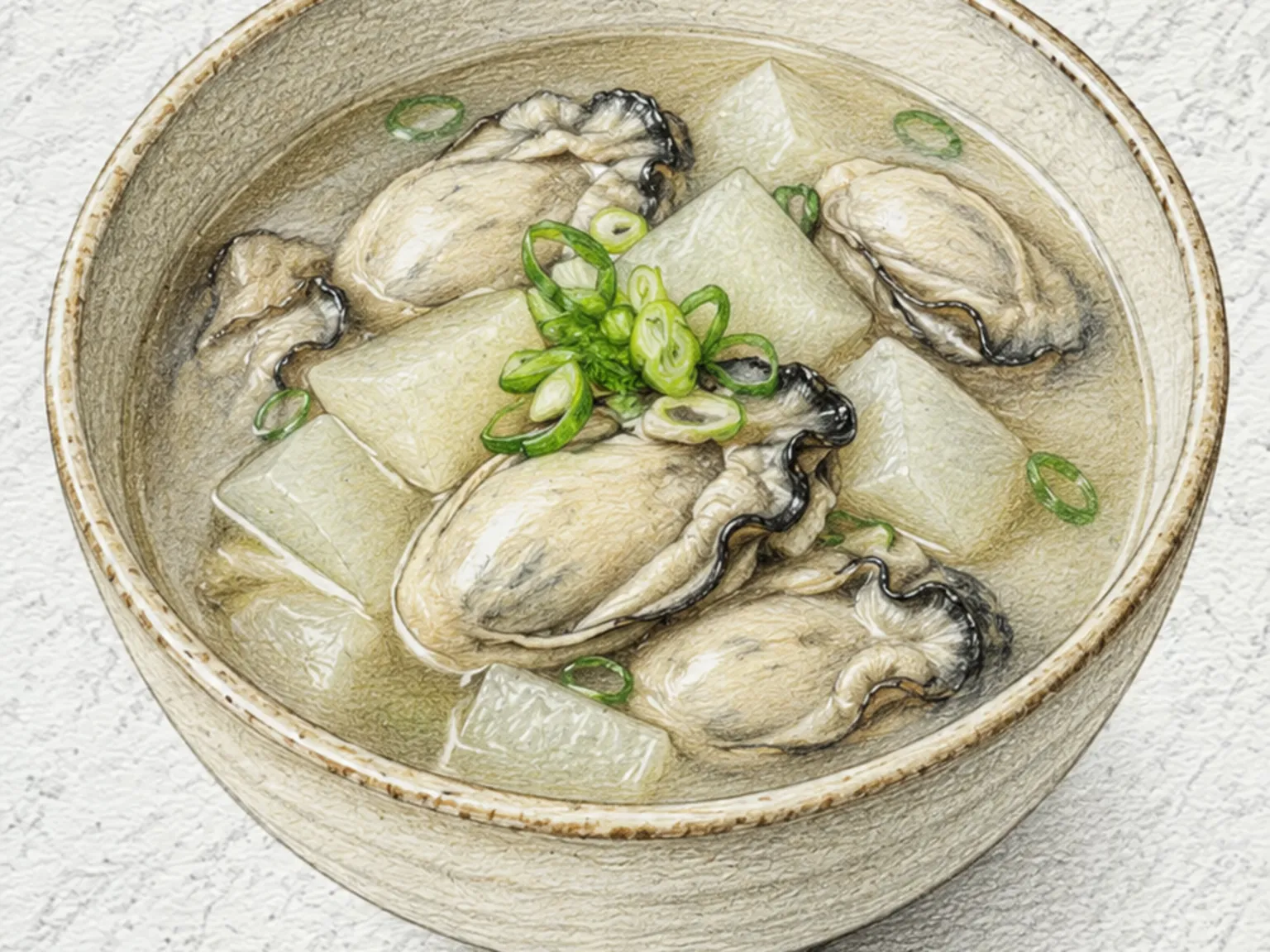
Gul-guk is a clear Korean oyster soup built on the simplest possible foundation: water, radish, and fresh oysters. The radish simmers first, lending a cool sweetness to the broth before the oysters are slid in near the end to preserve their plump, springy texture. Seasoning is deliberately restrained-soup soy sauce and minced garlic are enough-because the oysters themselves provide an intense, briny depth that needs no amplification. The resulting bowl is translucent and clean-tasting, with a lingering marine finish. Along Korea's south coast, where winter oyster harvests are abundant, this soup often appears on breakfast tables or as a gentle remedy after a long night.

Korean Oyster Kimchi Stew
This stew marries fresh oysters with aged kimchi, two ingredients that peak during the Korean winter. The oysters contribute a briny sweetness, while the well-fermented kimchi provides a deep, sour backbone. A tablespoon of perilla oil adds a nutty aroma that distinguishes this from standard kimchi jjigae. Simmered in anchovy stock with radish, gochugaru, and garlic, the broth develops a layered complexity that reflects the quality of its core ingredients.