Korean Egg Porridge (Silky Sesame-Scented Rice Porridge)
Quick answer
Gyeran juk is a mild, gentle rice porridge that starts by stir-frying soaked rice in sesame oil before any liquid is added, a step that coats the starch granules in oil t...
What makes this special
- Gyeran juk creates a mild, sesame-scented rice porridge where toasted grains and eggs add silkiness.
- Sesame oil toasting coats starch to prevent the porridge from setting into a solid mass
- Egg streamed in at the end and stirred for under one minute; longer cooking turns it rubbery
Key ingredients
Core cooking flow
- 1 Place 160 g soaked rice in a sieve and drain it for about 5 minutes.
- 2 Warm 1 teaspoon sesame oil in a heavy pot over medium-low heat.
- 3 Pour in 900 ml water and scrape the bottom as you stir, then bring it to a boil.
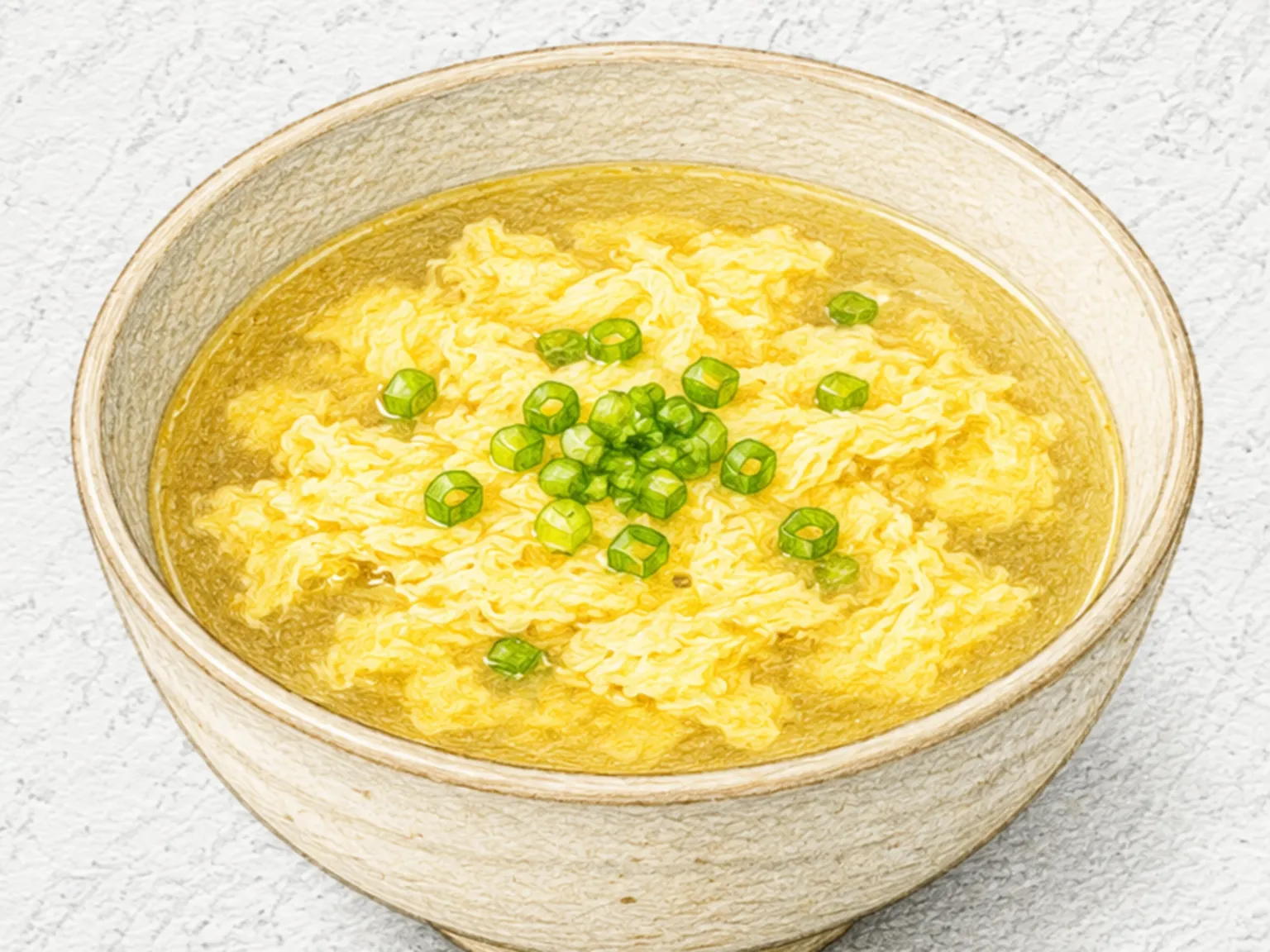
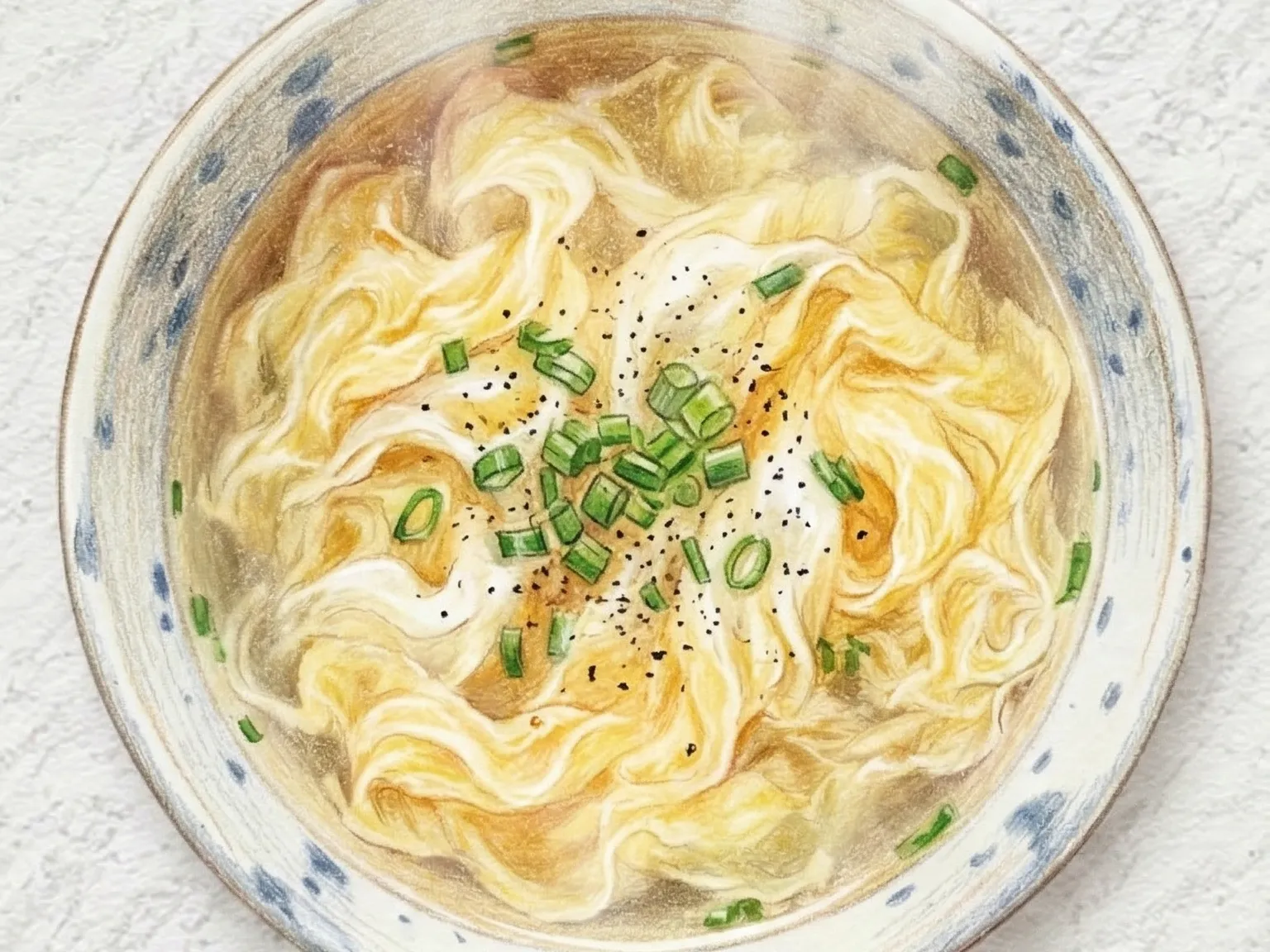
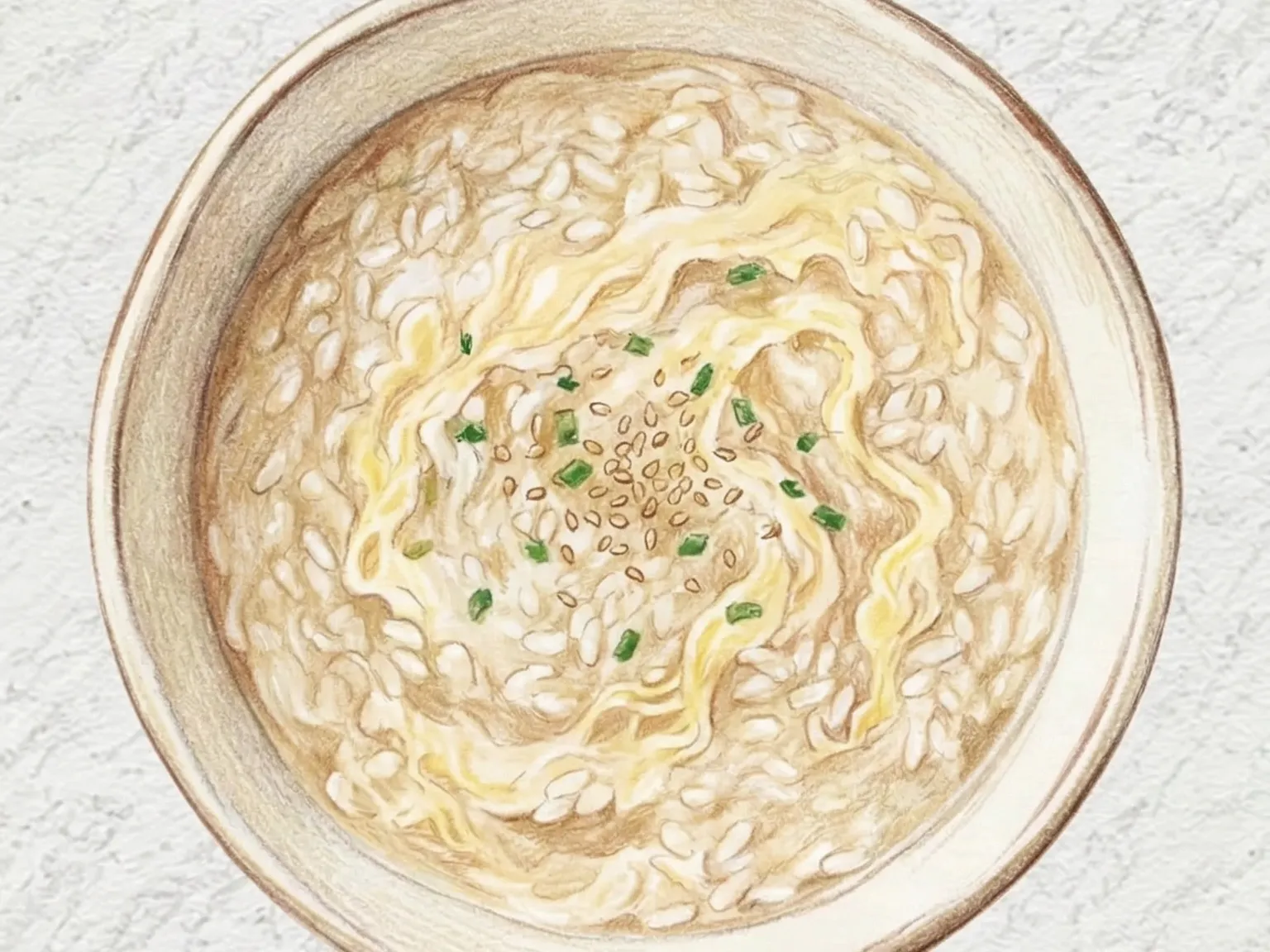
Gyeran juk is a mild, gentle rice porridge that starts by stir-frying soaked rice in sesame oil before any liquid is added, a step that coats the starch granules in oil to prevent the finished porridge from clumping and works the sesame fragrance evenly into every grain. Water is added and the pot simmers on low heat for twenty minutes with frequent stirring, breaking down the grains gradually until they dissolve into a smooth, cohesive base. Constant stirring on low heat is what prevents the rice from scorching on the bottom and what creates the uniformly silky texture that defines a well-made juk. Beaten egg is drizzled in at the very end in a thin stream and folded gently for just one minute, creating soft, ribbony layers of cooked egg throughout the porridge without allowing them to toughen. Soup soy sauce and salt provide restrained seasoning that stays behind the sesame fragrance rather than overpowering it, and sliced green onion scattered on top adds a fresh note over the warm nuttiness beneath. This is the kind of bowl that asks nothing of the stomach, which makes it the standard choice after illness, on mornings when appetite is low, or whenever a light and restorative meal is needed.
Instructions
Read the steps as a cooking flow: prep, heat, seasoning, doneness control, and finish.
- 1Step
Place 160 g soaked rice in a sieve and drain it for about 5 minutes.
If the surface stays too wet, it can splatter in the oil and dilute the sesame aroma.
- 2Control
Warm 1 teaspoon sesame oil in a heavy pot over medium-low heat.
Add the rice and stir for 2 minutes, coating each grain lightly so the porridge will stay loose instead of clumping.
- 3Control
Pour in 900 ml water and scrape the bottom as you stir, then bring it to a boil.
When small bubbles gather around the edge, lower the heat so the pot simmers without boiling over.
- 4Control
Simmer on low heat for 20 minutes, stirring often.
The grains should open and the porridge should cling softly to the spoon, so keep checking the bottom before any starch sticks.
- 5Season
When the rice is fully spread out and tender, add 1 teaspoon soup soy sauce and 1/2 teaspoon salt.
Let it bubble once, taste, and adjust only slightly so the seasoning stays clean.
- 6Finish
Beat 2 eggs and drizzle them in a thin stream over the porridge on low heat.
Stir gently for only 1 minute to keep soft ribbons, then top with 20 g sliced green onion and serve warm.
After the steps
Pick a recipe that fits this dish.
Continue with shared ingredients, meal pairings, or a similar method.
Recipes That Go Well With This
More Rice →Based on shared ingredients and meal pairing
Korean Dried Pollock Egg Porridge
Bukeo gyeran juk is a Korean porridge made by toasting dried pollock strips in sesame oil until fragrant, then simmering them with soaked rice until the grains fully break down, and finishing with beaten egg stirred in just before the heat is turned off. Dried pollock concentrates protein during the drying process, producing a clean, direct savoriness without heaviness. Toasting it in sesame oil first coats the fish in fat, which spreads a nutty richness throughout the porridge as it cooks. Adding the egg at the very end and stirring immediately keeps it from setting into firm pieces and instead creates soft, silky ribbons through the gruel. Soup soy sauce seasons the dish without darkening the color of the broth. Mild and easy on the stomach, this porridge is a reliable choice for the morning after drinking or whenever the body wants something warm and light.
Korean Bok Choy Crab Porridge
Cheonggyeongchae gesal juk is a Korean porridge that begins by sauteing onion and ginger in sesame oil to build an aromatic base, then simmering soaked rice with crab meat until the grains soften into a smooth, flowing consistency. Bok choy goes in near the end to preserve its bright green color and gentle crunch. The crab brings a mild sweetness that spreads evenly through the porridge and adds a refined savoriness, while ginger keeps the flavor clean and free of any fishiness; sesame oil's fragrance lingers subtly throughout. Soaking the rice beforehand allows the grains to break down evenly within a shorter cook time, and stirring regularly prevents sticking at the bottom. Light on the stomach and gently warming, this porridge suits a morning meal, a day when the body needs something easy, or the shift between seasons.
Korean Gangwon-Style Dried Pollock Hangover Soup
This Gangwon-province version of dried pollock hangover soup starts by stir-frying shredded dried pollock in sesame oil until it turns deeply fragrant and golden. That step is what sets it apart from other regions' pollock soups. The toasted sesame aroma permeates the entire broth and adds a richness that plain boiling cannot achieve. Radish simmers alongside, contributing a clean sweetness that tempers any fishiness. Garlic and soup soy sauce provide the savory foundation. Near the end, a beaten egg is swirled into the pot, forming soft, silky ribbons that give the clear broth a comforting body. The soup is intentionally mild and free of chili heat, designed to be gentle on an empty or troubled stomach. Koreans have relied on this kind of bugeo-guk for morning-after recovery for generations, and the Gangwon-style sesame preparation is considered one of the most satisfying versions. If the stir-frying step is rushed, the sesame oil does not coat the fish thoroughly, so cooking the pollock strands over medium heat until they are evenly golden is what draws out the full depth of flavor into the broth.
Korean Shrimp Porridge (Creamy Rice Porridge with Shrimp Broth)
Saeu-juk is a Korean shrimp porridge that simmers rice with shell-on shrimp to draw out a gentle oceanic broth. The heads and shells are cooked down to build a flavorful stock, while the shrimp meat is minced and stirred in separately so each spoonful carries bursts of umami. Diced zucchini and carrot add mild sweetness that balances the seafood character. Soaked rice is first toasted in sesame oil before the liquid goes in, which gives the finished porridge a nuttier base and slightly thicker consistency. The result is a light, nourishing bowl with a clean finish - commonly served as a gentle breakfast or a recovery meal, where the warmth and mild flavor are as important as the nutrition.
Serve with this
Korean Silken Tofu Seafood Stew
Sundubu haemul jjigae is a seafood soft tofu stew that combines silken tofu with shrimp and Manila clams in an anchovy stock seasoned with gochujang and Korean chili flakes. The aromatics are stir-fried in sesame oil first to build a deeper base before the stock is added. As the shrimp and clams cook through, they release their own briny juices into the spicy broth and push the umami noticeably higher. An egg cracked in at the end binds gently with the silken tofu, adding richness and a slight body to the broth. Deveining the shrimp and removing the back intestine keeps the flavor clean, and soaking the clams in lightly salted water beforehand purges any sand that would otherwise cloud the stock.
Korean Konjac Noodle Salad
Silgonyak-chae-muchim tosses 250 grams of blanched konjac noodles with julienned cucumber, carrot, and onion in a gochujang-based dressing spiked with vinegar, sugar, soy sauce, and garlic. Blanching the noodles for two minutes removes their faint alkaline smell and softens their rubbery chew to a pleasant springiness. The vegetables provide crisp contrast - cucumber adds a cool snap, carrot a mild sweetness, and onion a sharp bite. The dressing clings to the translucent noodles, turning them a vivid reddish hue. At only 95 calories per serving, this banchan relies on texture and bold seasoning rather than fat for its appeal. Chilling for 10 minutes before serving firms up the noodles and intensifies the tangy-spicy flavor profile.
Korean Chamnamul Kimchi (Pimpinella Kimchi)
Chamnamul kimchi is a spring kimchi made by salting chamnamul greens for just ten minutes to wilt them slightly, then dressing with gochugaru, anchovy fish sauce, and salted shrimp without rinsing. Skipping the rinse allows the residual salt to convert into umami during fermentation rather than being washed away, deepening the overall flavor. Pureed Korean pear and onion blended with sweet rice paste form the seasoning base, contributing a natural sweetness that rounds off the sharp edges of the chili heat. After three hours of initial fermentation at room temperature followed by refrigeration, the kimchi reaches its best balance within one to two days, when the grassy herbal aroma of chamnamul aligns with the fermented depth of the fish sauce. Because chamnamul has a high moisture content, fermentation moves quickly, and the kimchi softens past its peak if left too long. Best consumed within three to four days for optimal texture and fragrance.
Similar recipes
Korean Seaweed Rice Porridge
Miyeok-juk is a Korean porridge made by first stir-frying rehydrated dried seaweed in sesame oil before simmering it with soaked rice over low heat. The stir-fry step is what distinguishes this porridge: it drives off the seaweed's raw marine edge and allows sesame oil's nutty fragrance to permeate the entire pot. As the soaked rice cooks down with the seaweed, the grains break apart and release their starch, producing a smooth, thick consistency without the need for any thickener. Soup soy sauce seasons the porridge lightly so the natural depth of the seaweed comes through without salt overpowering it. A final drop of sesame oil just before serving revives the aroma. Because the result is easy to digest and gentle on the stomach, this porridge has long been a fixture at Korean breakfast tables, served to anyone recovering from illness, and prepared specifically for mothers in the weeks following childbirth. The tradition of eating miyeok-juk on birthdays traces back to this postpartum association, as mothers consumed it to rebuild strength and nourish their infants through nursing. Mild, warming, and requiring nothing more than pantry staples, the porridge remains one of the most reliably comforting dishes in the Korean kitchen.
Gyeran-guk (Egg Drop Anchovy Broth Soup)
Gyeran-guk is Korea's most accessible comfort soup: a clear, golden broth seasoned with soy sauce and garlic into which a beaten egg is drizzled in a thin stream. When the egg hits the rolling boil, it sets almost instantly into delicate, flower-like ribbons that drift through the liquid in pale yellow sheets. Sliced green onion and a drop of sesame oil added at the end bring a gentle fragrance that lifts the otherwise clean, mild broth. The result is soothing and restorative, mild enough for a sick day yet substantial enough to anchor a full meal of rice and side dishes. Its near-universal appeal on Korean dinner tables comes partly from the fact that nearly every household keeps eggs, soy sauce, and garlic on hand, making it the soup most likely to appear with no planning at all. From start to finish the bowl is ready in under ten minutes.
Korean Street Egg Toast (Cabbage Egg Omelet Sandwich with Sweet Ketchup)
Gilgeori egg toast is a Korean street food sandwich built around a rectangular omelet of shredded cabbage, carrot, and beaten egg, layered between slices of bread that have been toasted in butter until golden. The defining touch is a sprinkle of white sugar over ketchup applied directly to the bread before the omelet goes in. That sugar-ketchup combination produces a sweet-tangy sauce that balances the savory egg and the mild crunch of the vegetables in a way that no other condiment quite replicates. The egg and vegetable batter is folded over itself on the pan to create a thick, layered patty, so each bite delivers alternating textures of soft egg and crunchy toasted bread. Street vendors began selling this sandwich in front of Korean schools during the 1990s, and it has remained a constant fixture of Korean street food culture ever since, available at food stalls and snack trucks across the country as both a breakfast option and an afternoon snack.