Korean Seafood Fried Rice
Rice Medium

Korean Seafood Fried Rice

Quick answer

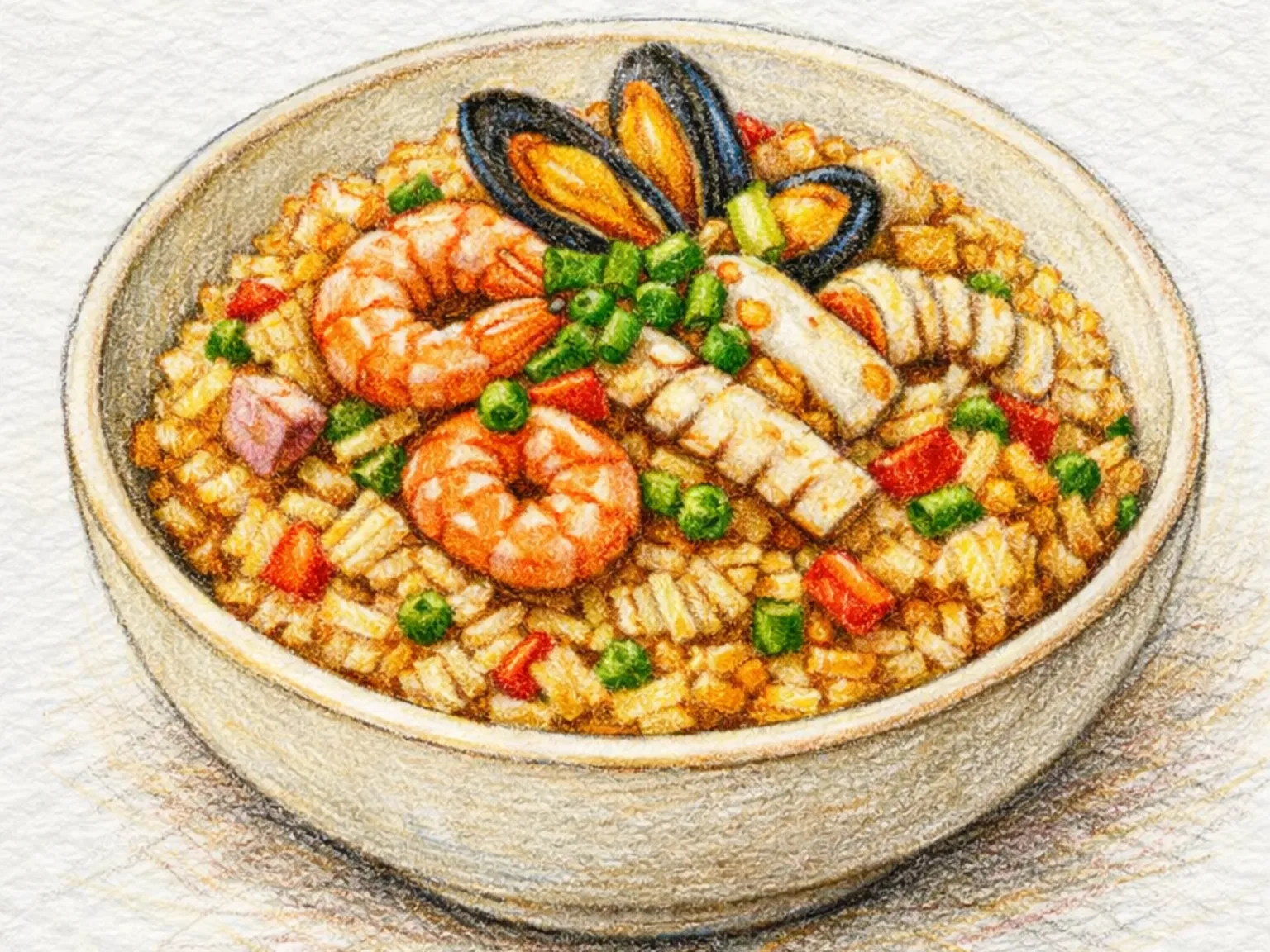
Mixed seafood including shrimp, squid, and mussel meat is stir-fried together on high heat until a smoky wok char develops.

What makes this special

  • Haemul bokkeumbap delivers a smoky wok char from high-heat tossing of shrimp, squid, and mussels.
  • Shrimp, squid, and mussels wok-tossed together on high heat for a char-edged smoky note
  • Cold rice dropped onto half-set egg gives each grain a thin coating
Total time
25 min
Level
Medium
Servings
2 servings
Ingredients
9
Calories
480 kcal
Protein
25 g

Key ingredients

cooked riceshrimpsquidmussel meategg

Core cooking flow

  1. 1 Loosen 2 bowls of cold cooked rice with your hand or a spatula before cooking.
  2. 2 Cut 100 g shrimp and 80 g squid into bite-size pieces, and dice 0.3 carrot small.
  3. 3 Heat the pan well over high heat, then add a thin layer of oil and the seafood.

Mixed seafood including shrimp, squid, and mussel meat is stir-fried together on high heat until a smoky wok char develops. Day-old cold rice works best because its lower moisture content lets the grains separate cleanly in the pan, and seasoning with soy sauce and oyster sauce layers additional depth on top of the seafood's own brininess. Cracking the eggs into the pan first and immediately tossing the rice on top coats each grain in a thin shell of egg, yielding a lightly crisp exterior. Sesame oil is drizzled only after the heat is off so its fragrance stays intact.

Prep 15min Cook 10min 2 servings

Instructions

Read the steps as a cooking flow: prep, heat, seasoning, doneness control, and finish.

6 steps
  1. 1
    Heat

    Loosen 2 bowls of cold cooked rice with your hand or a spatula before cooking.

    Pat the shrimp, squid, and mussel meat dry so they sear quickly instead of making the pan watery.

  2. 2
    Heat

    Cut 100 g shrimp and 80 g squid into bite-size pieces, and dice 0.3 carrot small.

    Keeping the pieces similar in size helps the seafood and carrot cook evenly during the fast stir-fry.

  3. 3
    Control

    Heat the pan well over high heat, then add a thin layer of oil and the seafood.

    Stir-fry for about 1 minute, just until the surfaces turn opaque and the seafood smell becomes clean.

  4. 4
    Heat

    Add the carrot and stir-fry for 30 seconds, then crack or pour in 2 beaten eggs on one side of the pan.

    When the eggs are half set, immediately add the rice on top.

  5. 5
    Season

    Press and toss the rice so the half-set egg coats the grains in a thin layer.

    Add 2 teaspoons soy sauce and 1 teaspoon oyster sauce, then stir-fry for about 2 minutes.

  6. 6
    Finish

    When the rice looks separate and dry, with a light toasted aroma from the pan, turn off the heat.

    Drizzle 1 teaspoon sesame oil, toss briefly so the fragrance stays fresh, and serve right away.

After the steps

Pick a recipe that fits this dish.

Continue with shared ingredients, meal pairings, or a similar method.

Recipes That Go Well With This

More Rice →

Based on shared ingredients and meal pairing

Korean Fish Cake Fried Rice
Shared ingredient: cooked short-grain rice Rice

Korean Fish Cake Fried Rice

Eomuk bokkeumbap is a Korean fried rice built around diced fish cake, carrot, egg, and soy sauce -- a dish that earns its place precisely because it comes together in under ten minutes from pantry basics. The fish cake develops a lightly crisped exterior when stir-fried in hot oil, and as it cooks, its mild, briny savoriness infuses every grain of rice it comes into contact with. Egg is scrambled on one side of the pan before being folded through, adding a layer of richness without complicating the overall flavor. Soy sauce seasons the rice throughout while a drizzle of sesame oil at the very end coats the finished dish with a glossy, nutty finish. Chopped green onion tossed in just before plating provides a fresh, aromatic contrast to the savory base. The saltiness can be dialed up or down easily by adjusting the soy sauce, and a scatter of toasted sesame seeds or crumbled dried seaweed over the top adds both flavor and visual appeal. The dish requires nothing more than leftover rice and a few pieces of fish cake, making it one of the most reliable quick-meal options in the Korean home kitchen, practical for a rushed lunch or a light after-school snack for children.

Korean Seafood Tempura (Korean Deep-Fried Seafood)
Shared ingredient: shrimp Street food

Korean Seafood Tempura (Korean Deep-Fried Seafood)

Haemul-twigim is a Korean assorted seafood platter of shrimp, squid, and clams coated in a light cold-water batter and deep-fried until crisp. Each type of seafood requires different prep: shrimp get their back tendons snipped to prevent curling, and squid are scored to stop them from shrinking in hot oil. The cold-water batter produces a thin, delicate coating that highlights the seafood's own flavors rather than burying them. Frying briefly at 170 degrees keeps the interiors from turning rubbery, and the platter is typically served with soy dipping sauce or salt alongside tteokbokki and fish cake soup as part of a bunsik spread. Substituting beer or sparkling water for plain cold water in the batter creates an even lighter, crispier coating, and draining the pieces thoroughly on a rack immediately after frying is what keeps them from going soggy before they reach the table.

Korean Stir-Fried Sweet Potato Stems
Serve together Side dishes

Korean Stir-Fried Sweet Potato Stems

Goguma julgi - sweet potato stems - are the above-ground vines of the sweet potato plant, a byproduct that Korean cooks transform into a summer namul rather than discarding. The most labor-intensive step is peeling each stem by hand, pinching the outer skin with a fingernail and pulling it away to reveal the tender core beneath. After blanching for two minutes and rinsing in cold water, the stems are stir-fried in perilla oil with garlic and seasoned with soup soy sauce. Perilla powder stirred in at the end thickens the remaining liquid into a nutty glaze. In season during summer, the stems are harvested from sweet potato fields before the tubers themselves are dug up.

Korean Stir-Fried Octopus Fried Rice
Similar recipe Rice

Korean Stir-Fried Octopus Fried Rice

Baby octopus is tossed with rice over high heat in a gochujang-and-red-pepper-flake sauce for a bold, spicy fried rice. The sauce coats each grain with a deep red glaze, and the octopus adds a springy, chewy bite throughout. Cleaning the octopus with flour before rinsing removes any sliminess, and a fast cook on high heat keeps the tentacles from toughening. Green onion and sesame oil go in at the very end for a fragrant finish. Controlling resting time and grain texture helps the ingredients cook evenly while keeping the final seasoning balanced.

Serve with this

Korean Pickled Taro Stems
Kimchi Medium

Korean Pickled Taro Stems

Torandae jangajji is a Korean pickled side dish made from taro stems. The outer fibrous skin is peeled away first, and the stems are salted and then blanched. Raw taro stems contain calcium oxalate crystals that cause an unpleasant prickling sensation in the throat, and blanching effectively neutralizes this before the stems are packed into the pickling liquid. The brine is made by bringing soy sauce, vinegar, and sugar to a boil, and it is poured over the stems while still hot so the seasoning penetrates quickly and evenly. Sliced garlic and ginger are simmered in the brine before it is poured, which infuses the liquid with deep aromatic warmth without any of the sharp pungency those ingredients carry raw. After two to three days of refrigerating, each piece develops a layered depth of salty, savory flavor with a clean vinegar brightness underneath. The defining characteristic of this pickle is its distinctive fibrous crunch, which stays satisfying even after the stems have fully absorbed the brine. It works as a rice accompaniment throughout the week and doubles as a drinking snack alongside soju.

🍱 Lunchbox 🏠 Everyday
Prep 30min Cook 15min 4 servings
Ojingeo-muguk (Korean Squid Radish Soup)
Soups Easy

Ojingeo-muguk (Korean Squid Radish Soup)

Ojingeo-muguk is a clear Korean soup that pairs squid and radish in a gently sweet, clean-tasting broth built without any chili or strong seasoning. Radish is added to cold water from the start and simmered for at least eight minutes, during which the vegetable slowly releases a natural sweetness that forms the flavor foundation of the soup. Squid is cleaned, sliced into rings, and added only after the radish has softened, and the timing here is critical: five minutes in the hot broth is enough for the flesh to turn fully opaque and pleasantly firm, but even a minute or two beyond that causes the proteins to tighten and the rings to turn rubbery and tough. Soup soy sauce seasons the broth without darkening it, and minced garlic provides depth without heat. Sliced green onion stirred in at the end neutralizes any residual seafood aroma and leaves the broth tasting bright and clean. The simplicity of the combination is the point: the radish's sweetness and the squid's umami reinforce each other in a broth that is light in body but surprisingly satisfying.

🏠 Everyday 🍺 Bar Snacks
Prep 15min Cook 20min 4 servings
Korean Seoul-Style Army Stew
Stews Easy

Korean Seoul-Style Army Stew

Seoul-style budae jjigae is a Korean army stew that uses a rich anchovy stock as its cooking liquid rather than plain water. The assembly starts by layering sliced kimchi at the bottom of the pot, then arranging Spam slices, scored mini sausages, and onions around the edges. Baked beans are placed in the center, which helps thicken the soup and contributes a mild sweetness to the broth. A seasoning paste made of gochujang, chili flakes, and minced garlic is added directly over the beans. The ingredients simmer together for ten minutes to merge the savory flavors of the meats with the anchovy stock. Finally, green onions and a block of instant ramen noodles are added to cook. The noodles absorb the spicy and savory broth, completing a filling dish that is best served hot straight from the stove.

🍺 Bar Snacks 🏠 Everyday
Prep 20min Cook 25min 2 servings

Similar recipes

Korean Spicy Baby Octopus Fried Rice
Rice Medium

Korean Spicy Baby Octopus Fried Rice

Jjukkumi bokkeumbap is a spicy fried rice built around webfoot octopus, where every element of the technique exists to preserve the squid's signature springy chew. The octopus is first rubbed with salt to strip off the surface slime, then cut to bite-size and seared over high heat for no more than three minutes. The gochujang-based sauce, bolstered with chili flakes, soy sauce, sugar, and garlic, concentrates spice and umami before the rice enters the pan and soaks up the red seasoning grain by grain. A drizzle of sesame oil at the end adds a nutty fragrance that lifts the dish slightly, and melted cheese is a popular addition for softening the heat without dulling the flavor. The oceanic character of the octopus - its brininess and elasticity - gives this fried rice a depth that ground pork or vegetables simply do not replicate. Not overcooking the octopus is the single most important decision in the recipe.

🏠 Everyday 🍱 Lunchbox
Prep 15min Cook 12min 2 servings
Korean Kimchi Fried Rice (Kimchi Bokkeumbap)
Rice Easy

Korean Kimchi Fried Rice (Kimchi Bokkeumbap)

Finely chopped aged kimchi is stir-fried together with ground pork until the fermentation tang of the kimchi and the fat rendered from the pork combine into a deep, layered umami base. Kimchi juice is added to the pan along with gochujang and a measured touch of sugar, glazing the rice in a spicy-sweet coating. High heat throughout the stir-fry is what keeps each grain separate and lightly crisp rather than soft and clumped; the pan also needs to be fully heated before the ingredients go in, or the rice will stick. A soft-fried egg placed on top lets the runny yolk temper the heat when it is broken and mixed in, and using well-fermented, deeply soured kimchi noticeably shifts the depth of the flavor. Adding spam or canned tuna are equally common household variations, and the dish adapts readily to whatever is available. A drizzle of sesame oil just before serving lifts a toasty, nutty fragrance over the finished bowl.

🏠 Everyday 🍱 Lunchbox
Prep 10min Cook 10min 2 servings
Korean Seafood Hot Pot (Shrimp, Squid & Crab Spicy Pot)
Stews Medium

Korean Seafood Hot Pot (Shrimp, Squid & Crab Spicy Pot)

Haemul jeongol is a Korean seafood hot pot that brings together shrimp, Manila clams, squid, and blue crab in a spicy kelp-based broth seasoned with gochujang and gochugaru. The two chili seasonings serve different purposes: gochujang contributes fermented umami depth and body to the broth, while gochugaru adds clean heat and the vivid red color that makes the dish visually striking. Each type of seafood contributes something distinct to the pot. The clams release their natural briny-sweet liquor as they open, forming the backbone of the broth's flavor. The blue crab sweetens the stock progressively as it simmers, adding a richness that builds over time. The squid provides a chewy textural counterpoint to the softer elements, and the shrimp contribute a clean, delicate sweetness. Tofu and zucchini round out the pot with soft contrast between the firm seafood, and soup soy sauce is used for final seasoning rather than regular soy sauce to avoid darkening the broth. Because jeongol is served bubbling at the table and eaten while still cooking, the seafood should not be fully cooked before serving - shrimp and squid in particular should be added just as the broth comes to a boil and cooked only briefly, since prolonged heat makes them rubbery and dry. The wide vessel and communal style of eating, with everyone reaching into the same pot, is central to what makes haemul jeongol a gathering dish rather than a solo meal.

🎉 Special Occasion
Prep 20min Cook 20min 4 servings

Tips

Day-old cold rice works better for fried rice.

Nutrition (per serving)

Calories
480
kcal
Protein
25
g
Carbs
65
g
Fat
12
g