Korean Seafood Rice Bowl (Shrimp Squid Clam Starchy Sauce Bowl)
Quick answer
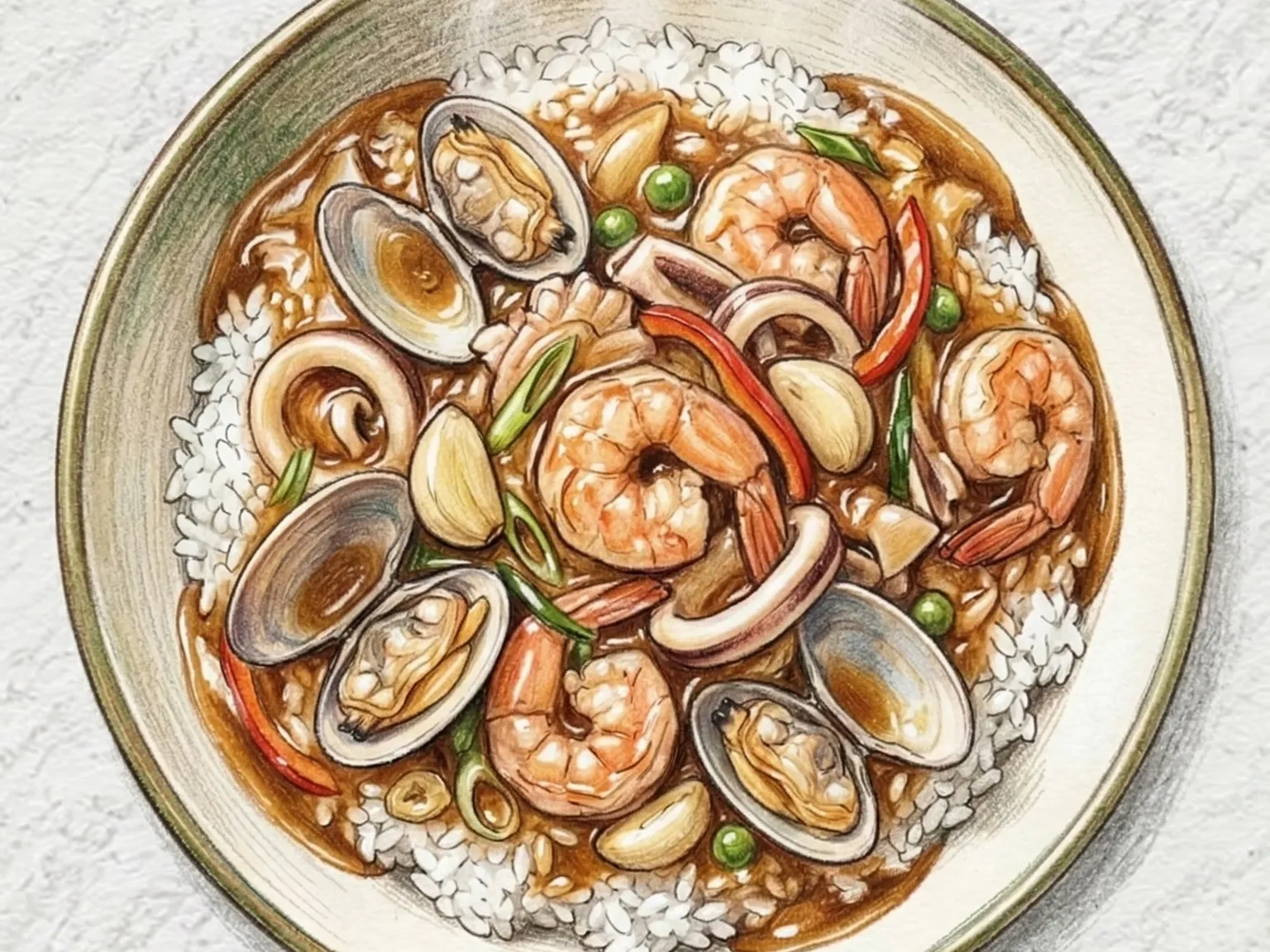
Haemul deopbap is a Korean seafood rice bowl built on a thick, glossy sauce that starts with garlic stir-fried over high heat before shrimp, squid, and clams are added an...
What makes this special
- Glossy starch sauce locks savory oyster-soy seasoning onto shrimp and squid in this haemul deopbap.
- Starch slurry adds gloss and locks seasoning onto each piece of seafood
- Clam liquor from the manila clams forms the savory-sweet umami base of the sauce
Key ingredients
Core cooking flow
- 1 Pat 100 g shrimp, 100 g squid, and 100 g clams dry before cooking so they sear instead of steaming.
- 2 Place 2 bowls of cooked rice in serving bowls while it is still warm.
- 3 Heat oil in a pan over medium-high heat, then add the garlic first.
Haemul deopbap is a Korean seafood rice bowl built on a thick, glossy sauce that starts with garlic stir-fried over high heat before shrimp, squid, and clams are added and tossed together. Oyster sauce and soy sauce form the seasoning base - the oyster sauce brings a rounded, caramel-like sweetness and body, while the soy adds depth and color. A cornstarch slurry stirred in at the end transforms the thin pan juices into a glossy, clingy sauce that coats every piece of seafood and, when ladled over rice, seeps downward slowly rather than running off. The key to keeping the seafood tender is to add it last and remove the pan from heat before it overcooks - squid turns rubbery within seconds of going past done, and shrimp loses its snap if left even a moment too long. Clams contribute their natural briny-sweet liquor to the sauce, adding a layer of umami that oyster sauce alone cannot replicate. Browning the garlic first in oil before anything else goes into the pan reduces any raw edge in the flavor and lays a savory, aromatic foundation for the entire dish. The whole process takes about 25 minutes from start to finish, making this one of the more practical weeknight meals in the Korean home kitchen.
Instructions
Read the steps as a cooking flow: prep, heat, seasoning, doneness control, and finish.
- 1Heat
Pat 100 g shrimp, 100 g squid, and 100 g clams dry before cooking so they sear instead of steaming.
Slice the squid into moderate pieces so it cooks at about the same speed as the shrimp.
- 2Season
Place 2 bowls of cooked rice in serving bowls while it is still warm.
Loosen the rice lightly with a spoon, since the thick seafood sauce will settle more evenly between the grains.
- 3Control
Heat oil in a pan over medium-high heat, then add the garlic first.
Stir just until the edges turn lightly golden and aromatic, reducing the raw bite without letting the garlic burn.
- 4Season
Raise the heat to high and add the seafood, tossing quickly for about 1 minute.
As soon as the shrimp begins changing color and the clams release their briny juices, move on to seasoning.
- 5Season
Add 2 tablespoons oyster sauce and soy sauce, stirring them into the pan juices.
Toss for only about 30 seconds so the seasoning coats the seafood without making the squid tough or the shrimp dry.
- 6Finish
Stir the 2 tablespoons cornstarch slurry again before adding it, then lower the heat and mix just until the sauce turns glossy.
When it coats a spoon, ladle it over the prepared rice and serve immediately.
After the steps
Pick a recipe that fits this dish.
Continue with shared ingredients, meal pairings, or a similar method.
Recipes That Go Well With This
More Rice →Based on shared ingredients and meal pairing
Korean Seafood Bibimbap (Mixed Rice with Shrimp and Squid)
Haemul bibimbap features shrimp and squid seared quickly on high heat to preserve their springy texture, arranged over a bowl of rice alongside seasoned spinach and other namul vegetables, then mixed together with gochujang at the table. The critical technique is brevity at high heat: seafood that cooks too long turns tough and rubbery, while a brief, fierce sear keeps each piece tender and allows the natural juices to release and seep into the rice below, enriching the base flavor of every bite. A fried egg is customary - breaking the yolk and mixing it through coats each grain in a rich, golden film that rounds out the sharpness of the chili paste and ties all the components together. Because shrimp and squid carry their own natural salinity, less gochujang is needed here than in a standard bibimbap, and the seasoning balance tips slightly toward the savory and briny rather than the fiery. The combination of contrasting textures - slippery seafood, tender greens, and yielding rice - makes each mixed spoonful different from the last.
Korean Boiled Seafood Broth
Haemul suyuk-tang is a clear Korean seafood soup where clams, shrimp, and squid are simmered together in lightly seasoned water with garlic and green onion. The defining quality of this dish is its restraint: no gochujang, no doenjang, no complex spice paste, just salt and the natural briny liquor each ingredient contributes to the pot. The clams open first and release their saline juice into the water, establishing the initial salinity of the broth. As the shrimp cook they turn pink and contribute a sweet current beneath the salt. The squid firms and curls into rings, adding a chewy textural counterpoint to the soft clam meat and the tender shrimp. Each of these three seafoods produces a different form of marine umami, and together they layer into a broth that reads as remarkably full despite being completely transparent. There is no competition from fermented paste or chili, so the ocean flavor comes through cleanly and directly. The visual effect of the finished bowl is also appealing: open clam shells scattered through the pot, curved pink shrimp, and white squid rings give the bowl a sense of abundance without heaviness. The soup works well as a light meal alongside rice, and it is the dish to reach for when the goal is to taste the seafood itself without interference from heavier seasonings.
Korean Stir-Fried Dried Seaweed
Gim bokkeum is one of Korea's most beloved banchan - dried seaweed crumbled by hand and toasted slowly over low heat in sesame oil until every last trace of moisture cooks off. As the seaweed dries out, its inherent oceanic character concentrates into a deep, nutty savory flavor and the texture becomes satisfyingly crisp rather than papery. A very small amount of soy sauce and sugar is all the seasoning needed to add a gently sweet-salty edge, finished with a scatter of sesame seeds. The technique requires restraint above all: high heat scorches the seaweed instantly, and too much oil turns it greasy and limp. Done correctly, this is one of those banchan that makes plain steamed rice disappear faster than expected, earning it the Korean nickname bap-doduk - rice thief. It keeps well in the refrigerator for over a week and works equally well tucked inside hand-formed rice balls or used as a filling for triangle kimbap.
Korean Salmon Rice Bowl (Marinated Raw Salmon over Warm Rice)
Preparing a bowl of Yeoneo deopbap begins with slicing sashimi-grade salmon and tossing it in a light dressing of soy sauce, sesame oil, and wasabi. This Korean adaptation of Japanese donburi relies on a delicate balance where the seasoning merely coats the fish rather than overwhelming its natural texture. Placing these seasoned slices over warm steamed rice creates a temperature contrast that slightly firms the bottom of the fish while keeping the center raw and buttery. Topping the bowl with shredded perilla leaves or nori adds an earthy, oceanic scent that balances the natural fats of the salmon. For a sharper profile, the amount of wasabi can be increased, or a few drops of lemon juice can be added to the soy base to provide a bright acidity. High in omega-3 fatty acids and protein, this dish also contains astaxanthin, making it a nutritious choice that demands the highest level of freshness. Including sliced avocado offers a creamy element, while a spoonful of salmon roe adds small pops of saltiness. Because the residual heat from the rice gradually cooks the fish, assembling the bowl right before eating ensures the salmon maintains its intended consistency and stays fresh on the palate.
Serve with this
Korean Pollack Roe Tofu Stew
Myeongnan-dubu-jjigae is a Korean stew built around whole pollack roe simmered in anchovy and kelp stock. As the broth comes to a boil, the roe gradually loosens and disperses into the liquid, releasing a briny, concentrated umami that permeates every ingredient in the pot. Using anchovy-kelp stock rather than plain water lets the oceanic character of the roe come through without competition. Firm tofu cut into one-centimeter slices absorbs the savory broth while holding its shape throughout cooking, unlike soft tofu which breaks apart. Red pepper flakes, minced garlic, and sliced green onion finish the stew with a clean, spicy edge. The grainy, textured bite of the intact roe kernels is what sets this stew apart from other Korean jjigae. Cooking time should be kept short: once the broth reaches a full boil, the heat is reduced immediately, because prolonged boiling dissolves the roe completely and erases the textural contrast. Spooning the broth and roe together over steamed rice and mixing it in is the most satisfying way to eat it.
Korean Mallow Soup (Joseon-Era Doenjang Mallow Soup)
Auk-guk - mallow doenjang soup - has been part of Korean home cooking since the Joseon era, when auk (mallow) was among the most commonly grown leafy greens in household kitchen gardens. An anchovy-kelp stock provides the base, and doenjang is pushed through a sieve directly into the simmering liquid so it dissolves without lumps. Garlic contributes a quiet, pungent undercurrent beneath the fermented paste. Mallow leaves, torn roughly by hand, wilt into the broth in under a minute. What separates auk-guk from other doenjang-guks is textural: the mallow's natural mucilage thickens the soup slightly and gives it a slippery, almost coating quality on the tongue, unlike the clean, transparent broth of spinach or radish versions. Korean folk tradition holds that nursing mothers ate auk-guk to support milk production, a belief that reflects how deeply the plant was embedded in everyday domestic life. The soup reaches its best in early summer when fresh mallow leaves are at their most tender.
Korean Salted Anchovy Jeotgal
Myeolchi jeotgal is a traditional Korean fermented anchovy preserve made by layering cleaned small anchovies with coarse sea salt in a sterilized container, pressing firmly to eliminate air pockets, then refrigerating for extended aging. As salt draws moisture from the fish, it begins breaking down proteins into concentrated umami compounds, stripping away the raw fishiness and building the deep, complex flavor that defines this preserve. On the fifth day of fermentation, minced garlic, grated ginger, chili flakes, and rice wine are folded in to add aromatic layers on top of the developing fermented base. The salt ratio must stay at or above twenty percent of the anchovy weight throughout the process, as dropping below this threshold allows harmful bacteria to take hold and risks spoilage. The finished jeotgal has two primary uses in Korean cooking: stirred in small amounts into kimchi seasoning paste as an umami backbone, or spooned directly over hot rice as a pungent, savory side dish. It can also substitute for fish sauce in doenjang jjigae or seasoned vegetables, adding a more pronounced fermented character.
Similar recipes
Korean Kimchi Rice Bowl (Stir-Fried Aged Kimchi over Steamed Rice)
Stir-frying aged kimchi in a hot pan drives off moisture and triggers caramelization, mellowing the sharpness into a deeper, sweeter intensity that raw kimchi cannot replicate. Cooking the kimchi over medium-high heat for five to seven minutes transforms its texture from wet and tangy to slightly charred and richly savory. A splash of soy sauce and a drizzle of sesame oil finish the seasoning with a salty, nutty note. Spooned over a bowl of steamed rice and topped with a single sunny-side-up egg, the dish is deceptively simple in construction. Using well-fermented kimchi like mukeunji introduces complex layers of lactic sourness and umami depth that more than compensate for the minimal ingredient list. Adding thin slices of pork shoulder or a can of tuna to the pan alongside the kimchi turns it into a more substantial meal with added protein. The whole dish comes together in under fifteen minutes, making it the first choice Korean rice bowl when the pantry is almost bare.
Korean Seasoned Seaweed Rice Bowl
This seasoned seaweed rice bowl stir-fries rehydrated wakame with garlic in sesame oil, seasons it with soy sauce, and spoons it over steamed rice for a quick and satisfying one-bowl meal. Soaking the dried seaweed until fully softened gives it a slippery yet pleasantly chewy texture that slides across the palate with each mouthful of rice. Cooking the garlic and seaweed together in sesame oil removes any raw oceanic sharpness and replaces it with a warm, nutty fragrance that layers over the natural sea-mineral character of the wakame. Soy sauce brings a savory edge that rounds out the seasoning and makes the bowl complete without any additional side dishes. With only five ingredients and a short cooking time from start to finish, this is one of the most efficient Korean rice bowls to prepare. The mineral richness of the seaweed gives the finished dish a depth that outpaces its simple ingredient list.
Korean Seafood Doenjang Stew
Haemul doenjang jjigae is a Korean soybean paste stew enriched with clams and shrimp. The broth is built on a kelp and dried anchovy stock into which doenjang is dissolved, then clams are added and the pot is brought to a boil. As the clams open, they release their clear, briny liquor into the doenjang base, adding a layer of ocean flavor that plain vegetable stews cannot replicate. Shrimp go in next and contribute their own distinct seafood sweetness. Tofu and zucchini round out the stew with soft, yielding textures that absorb the enriched broth fully. Clams should be purged in salted water beforehand to eliminate any grit, and doenjang is best added conservatively at the start and adjusted gradually during cooking to avoid over-salting. The seafood transforms the already satisfying doenjang stew into something noticeably more layered and complex, making it equally at home as a rice accompaniment or as food alongside drinks.